After Being Peeked at by the Emperor - Reviews

After Being Peeked at by the Emperor
+Add to Custom List
Sort
Add review
... Read More
This chapter is a masterclass in escalating tension and I need to break down why it works so well. It opens with Xu Ge Lao waking up from a faint — immediate physical stakes, someone has collapsed, something terrible has happened. Then we get the revelation that Yan Fenyi is also bedridden. Two key figures down. The court is destabilizing. And the emperor is hiding behind a screen. But then the author does something brilliant — instead of continuing the crisis, the scene shifts to a bureaucratic meeting about confiscating goods. It's almost mundane. Almost. And that's where the dread starts to build. Because we're watching officials discuss how to legally plunder a corrupt minister's property, and the reader is thinking: this can't be fine, this has to escalate. And it does. The escalation is gradual but relentless. First it's about prohibited items. Then it's about the insulting inscription. Then it's about the ancestral punishment laws. Then it's about exponential scaling. Then it's about theDi clan being so corrupt that the punishment laws can't possibly be enforced without destroying the state. The pacing here is like a slow car crash. You know it's coming. You can see it getting worse with each sentence. And the author never lets up. The chapter ends with the emperor saying "Go find the leatherworkers first" and Yan Ge Lao stepping forward trembling. The cliffhanger isn't a question — it's a promise. We know more suffering is coming. We know the system is going to crack. And we're desperate to read the next chapter. The scene transitions are also worth noting. The shift from Xu's private moment to the public court session is jarring in the right way — it mirrors how personal crises become political theater. And the satirical anecdote about the eight sets of clothes interrupts the tension perfectly, giving the reader a moment to breathe before the next wave of dread hits.
... Read More
Let me just say this about the pacing: the author is a absolute MASTER at building tension and then either defusing it or escalating it at exactly the right moments. Take the Li Miao incident. We get the setup — Liu Li receives devil peppers, creates these poisoned rice balls, gifts them to Li Miao. Then we get the aftermath described in this hilarious 'better left unsaid' way with the scribes thinking someone was slaughtering a pig. Then the Prime Minister investigates. Then he asks for a rice ball. Then Liu Li confesses. Then the lecture. Then the explanation of why public refutation is better than underhanded methods. That's a lot of content packed into what feels like a relatively short chapter, but it flows so naturally. Each beat leads to the next without feeling rushed. Then we cut to the Western Garden — 'There are no secrets within the Western Garden.' News of the Emperor's sudden rage spreads throughout the upper echelons of Beijing. The former Emperor Jianwen left on a cloud of white, the previous Emperor Wuzong dissolved like water, the current Emperor Qingmiao nearly combusted in flames. With such precedents, it's hard not to feel uneasy. But then the Emperor issues a decree appointing Yan Fenyi to oversee Goryeo tribute matters. The palace servants show no sign of concern. The suspicions dissipate. The tension is released. And then — BAM — the eunuch comes to check on the progress, reads the Emperor's words about frugality, and Yan Fenyi is struck by this reprimand and begins to sweat. The scene where he slips a silver note into the eunuch's hand? Perfect. The eunuch's quiet explanation about Emperor Gaozu's rules? Even better. And Yan Fenyi's nose bleeding from the stress? I'm wheezing. Meanwhile, the reform-minded officials are already mobilizing. Xu Ge Lao delivers news to his master. Zhou Zhicheng is excited. Gao Gaoxuan is cautious. Xu Shaohu is weakened from the golden elixir. The political maneuvering is happening in real time, and the pacing keeps everything moving forward without ever feeling like it's dragging. The chapter ends with the Feixuan Zhenjun flipping through memorials, asking about Yan Fenyi's reaction, and then deciding to reward the pure stream for their enthusiasm. Another release of tension, another setup for the next conflict. The author knows exactly what they're doing.
... Read More
Okay so let me just say this: the friendship dynamics in this novel are absolutely chef's kiss. Mu Qi, Liu Li, and Zhao Fei — three people from completely different starting points who stuck together through thick and thin. But oh man, the contrast between them? It's brutal. Mu Qi's father is injured and retired, serving at a mausoleum. Zhao Fei's apparently an orphan surrounded by turbulence with no trustworthy family. But Liu Li? Liu Li has the Prime Minister. The Prime Minister is like a TREASURE to him. And Mu Qi is sitting there typing out these long rants about how Liu Li is ungrateful, and I'm just over here feeling both jealous and frustrated FOR him. The moment where Mu Qi goes on this whole tirade about 'unity-criticism-re-unity' being a textbook political science concept — that's when it hit me. He's not just complaining. He's genuinely invested in Liu Li's growth as a ruler. He's spoon-feeding him governance skills step by step. Who else in this world would do that? And Liu Li just grumbles about it privately like it's no big deal. I love how Mu Qi vents his frustration at Liu Li's luck. It's not malicious — it's the kind of jealousy you feel for your friend who got everything handed to them while you're still struggling. And Liu Li knowing the Prime Minister has his best interests at heart but still needing to vent? That's real. That's human. The gray avatar labeled 'Deposed Emperor rubbing hemp' being offline for half a month? I'm already worried about Zhao Fei. Something tells me the battle for Shan Prefecture is not going well.
... Read More
There's a specific kind of emotional exhaustion that runs through this entire chapter and I need to process it. Xu Ge Lao's internal monologue is devastating in its simplicity: "Let it all end. Quickly. I'm exhausted." He says this twice — once when he wakes up and once when he realizes the Di clan punishment would require exterminating more than nine clans. This is a man who has survived by being careful, by reading the room, by not making waves. And now the divine book has shown him the truth and he has no idea what to do with it. The line that got me the most was when Xu thinks about Zhou Zhicheng: "Even if they hadn't been close in the past, two encounters were enough for him to grasp this relative's intellectual capacity." This is such a specific, painful kind of family obligation. You don't have to like someone. You don't even have to trust them. But they're your relative and if you don't guide them they'll do something catastrophic and then you'll be implicated anyway. And Yan Fenyi — the man who is literally bedridden from stress, and his first thought is: "Can you two hold it together? Don't ruin my retirement plans!" I laughed and also cried a little. This man has been trying to retire for chapters and his two potential successors are both collapsing. The emotional weight of that is enormous. The emperor's performance of anger is heartbreaking in its own way. He's trapped by his own mythology — he needs to be Gaozu but he can't actually be Gaozu. When he says "This realm belongs to Emperor Gaozu, to Emperor Taizong. Everything must be handled according to the laws of our ancestors!" — he's not being tyrannical. He's being desperate. He's a man who inherited a system he doesn't understand and can't fix, performing authority because the alternative is admitting he has no idea what he's doing. The text says: "[That old man is so disgusting, it makes my chest hurt! Forget it, no internal spy; let's go for a big An joke.]" This meta-commentary from the narrator is the emotional release valve — the author acknowledging that the emperor's performance is so exhausting that even the narrative voice can't sustain it.
... Read More
I've been thinking about this novel a lot, and I keep coming back to the glutinous rice ball incident. It's not just a funny scene — it's a symbol for everything that's wrong with the court system and everything that the Prime Minister is trying to fix. Liu Li receives these devil peppers from Mu Qi. He filters out the pigments, leaving only the juice. He mixes it with bean paste and brown sugar, wraps it in glutinous rice, shapes it into perfect little balls. These are then gifted to Li Miao — the conniving, scheming assistant minister who spreads malicious rumors. The rice ball is beautiful on the outside, fragrant and flawless, but inside it's pure poison. And yet, when the Prime Minister finds out, he doesn't praise Liu Li for his ingenuity. He lectures him for half a day. 'Ministers are duty-bound to offer criticism, and even if their opinions are wrong or unpleasant, underhanded methods should not be used against them. Affairs of the court must be handled openly and honestly, without resorting to deceit.' The Prime Minister argues that if Li Miao were spreading rumors privately, it would constitute divisive behavior warranting severe punishment. But since he voiced them openly in a memorial, it's part of his duty — even if his words are harsh, they are not criminal. 'As long as he is willing to speak publicly, he should be allowed to do so.' This is the core theme of the novel, isn't it? The tension between what's effective and what's right. Between underhanded methods and open confrontation. Between the desire for quick justice and the need for institutional integrity. The Prime Minister's solution — 'publicly refuting, uniting everyone' — is what Mu Qi recognizes as 'unity-criticism-re-unity,' a textbook political science concept. It's the cornerstone of organizational work. And Mu Qi is frustrated because he's been patiently teaching Liu Li these governance skills step by step, spoon-feeding him to become a competent emperor, and Liu Li is still grumbling about it. The rice ball was supposed to silence Li Miao. Instead, it became a lesson about the limits of power and the importance of transparency. The Prime Minister lived his life with nothing to hide and does not fear a single memorial. That's the real treasure — not the devil peppers, not the poisoned rice balls, but the integrity to face criticism openly. And yet... I still want to see Li Miao suffer. Just a little bit.
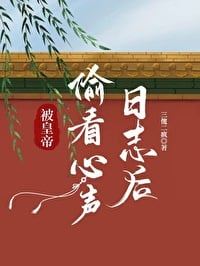
... Read More
The pacing in these chapters is absolutely razor-sharp. You start with Mu Qi getting the surveillance alert, and the moment he realizes the emperor might be making a move, the narrative accelerates. He's sprinting, shouting orders, planning his martyrdom—there's a breathless quality to it. Then it cuts to the emperor, and the pace slows to a creeping dread. The emperor's internal deliberation, his visit to the sealed chamber, the talismans, the ancestral sword—it's all built like a ritual, deliberate and heavy. And then the logbook appears with that white light and the message about martyrdom queueing. Boom. Cliffhanger. But what I love is how the author balances these two POVs. Mu Qi's section is all external action and internal sarcasm; the emperor's section is all internal paranoia and external performance. The transition from Mu Qi's frustrated homecoming to the emperor's midnight ritual feels natural because both are driven by the same fear: of being outmaneuvered. The scene with Jinbao reporting on Di Maoyan's arrest is a perfect breather—it's exposition, but it's delivered through a minor character who adds humor and stakes simultaneously. And Mu Qi's decision to still buy those terrible pancakes? That's a brilliant pacing choice. It grounds the high-stakes political maneuvering in mundane reality, reminding us that life goes on even when history is being made. The chapter ends on the emperor's realization that the logbook contains a prophecy of his downfall, which is a classic cliffhanger but feels fresh because of how intimately we've seen both sides of this conflict. The structure here is like a tense conversation between two enemies who can't stop thinking about each other, even when they're apart.
... Read More
The pacing in this batch is remarkably well-controlled, moving between high-stakes political intrigue and deeply personal moments with seamless transitions. Chapter 5 opens with the emperor's internal reckoning—a slow, methodical unraveling of his thoughts as he processes the book's revelations about Bingjie. This section moves at a deliberate, almost meditative pace, mirroring the emperor's own calculated temperament. We watch him transform from fury to excitement to strategic calm, and the author gives us just enough time to understand each shift without lingering too long. Then the narrative pivots sharply to Mu Qi's morning routine, and the pace accelerates. The revelation about the celestial texts, the servant's whispered report about the cabinet elders' afflictions, the graphic description of what happened in the Inner Cabinet—it all comes in a rapid-fire sequence that's both informative and deeply entertaining. The author doesn't shy away from the visceral details, and this willingness to embrace the absurd creates a rhythm that keeps you turning pages. The Liu Li subplot provides a perfect counterbalance. After the intense political maneuvering, we get Mu Qi's comedic envy, scrolling through daily updates that range from the mundane to the strangely moving. The pacing here slows again, but not because the story drags—it slows because we're given room to breathe and reflect on what these characters are actually going through. And the chapter ends on a cliffhanger of sorts: Liu Li's message about a petty official accusing the prime minister of 'abusing power,' which immediately raises the stakes and propels us into Chapter 6.
... Read More
What a fascinating dance between Mu Qi and the old wall lamp—the emperor, that is. You really see the emperor's entire psychology laid bare here. He's not just some generic tyrant; he's a man consumed by immortality pursuits, terrified of a prophecy that paints him as a tyrant who gets martyred. The scene where he reads the logbook and nearly has an apoplexy? Chef's kiss. It shows how deeply insecure he is beneath all that imperial authority. And Mu Qi—oh, Mu Qi is playing 4D chess while everyone else is playing checkers. He gets the surveillance warning and instead of cowering, he immediately starts planning his own martyrdom. The man's got a system task to leave his name in history, and he's willing to stage a whole public protest to achieve it. Their dynamic is pure cat-and-mouse, but with Mu Qi occasionally pretending to be the mouse while actually sharpening the cheese knife. The relationship with Yan Ge Lao is interesting too—the emperor secretly rewarding him for taking those gold pills shows he's watching everyone, even his loyalists. And Mu Qi's concern about Di Maoyan's early arrest? That's not just plot worry; it's Mu Qi realizing the butterfly effect is real and his allies might fall before their time. The steward Jinbao is basically the audience surrogate, confused by his master's weird plans but loyal anyway. I love how Mu Qi's internal monologue is so modern and sarcastic while his outward actions are perfectly period-appropriate. He's a transmigration veteran who knows the tropes, and he's weaponizing them. The emperor thinks he's controlling the narrative, but Mu Qi's already three steps ahead, ready to turn himself into a historical footnote if it means surviving the system's demands.
... Read More
I also considered dropping this novel by 200+ chapter due to dull, repetitive dungeoning and MCs OPness, but I persisted, and it pays me off. Before, I can’t count how many times I spouted a chapter as unnecessary, but turns out to be necessary. This novel got me attached to the side characters, more so to our beloved Happy. What’s interesting to this novel too is that no one can be considered villains; everyone had their own reasons why they struggle and fight, which are relatable and sometimes pitiful. The world building is excellent, story narration is flawless, and translation quality is top notch. This is the best web novel I’ve ever read.
... Read More
Standard IET stuff. Honestly all his books are the same and reading one means you read them all. I see no difference between Ji Ning, Qin Yu, Xu Jingming, etc are all literally the same character. But thats fine, people who are reading IET for the first time will get something that isnt straight garbage but I have a big problem with this particular novel.I can *feel* the nationalism when I read this. IET wasnt making it subtle whatsoever here. China #1 can be felt throughout my first 100 or so chapters, lemme explain. So the entire world is given VR technology and when they go online they can practice martial arts. After a while a ranking ranking is made with the strongest at the top and guess which nationality 2 of the top 3 are? Thats right folks, its granddaddy China with the other from Botswana. It just seems like China is naturally more talented than every other country by a wide margin. Lets not even get into the comments from the live streaming in VR, its constantly about oh man, these expert martial artists from [other country] are strong, but China is still better.I think the funniest example is in chapter 148 when the strongest from Korea is made out to be an arrogant mf who is going around challenging the top 3 just to get more views on his live stream. I feel like IET's recent novels have lost the magic from Desolate Era, Swallowed Star, COILING DRAGON, Stellar Transformation, etcand part of that is the nationalism here, while in the other recent novels its been a lot more logical. In his earlier works the MC got super lucky at the start and then had to muddle through the entire universe just to be the best and in recent time the MCs dont get lucky, they were just naturally talented and got some benefits here and there that make sense. My problem is that making sense doesnt carry the same *brilliance* of a moment like in Desolate Era where Ji Ning gets the inheritance and starts his journey or when Lou Feng died fighting the Gold Dragon.
... Read More
Absolutely the best novel of this genre that I have ever read, the story is top notch and the characters are well made, and the world is interesting and well made even though it is only the sixteenth chapter I am already absolutely hooked to this story. But if I had to say one bad thing that would be the typical reader problem of not enough chapters :( but do not take that as an insult or something like that since I totally get that putting out more than a few chapters per week or something like that is not possible with this kind of writing quality. This would be the first novel that I would be willing to pay for chapters even though I usually do not do that, but if possible would definitely prefer that it would be free. Keep up the great work and keep writing:) all the best to you.
... Read More
Dumb MC QWERRTYYUUIIOOPASSDFGGHJJKLLZCVNMMMNNMNNBBVCCXZLKKJHHGFFDDSSAPPOOIUUYYYTTRRREEWQ qwerrtyuiiopadfgjklzcbnm qetyuiadgjlzcmlkjgd gjjgddghkngddyh

Leave a comment

You must be logged in to leave comments. or
