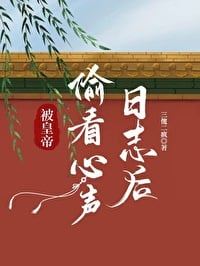
After Being Peeked at by the Emperor
Novel Info

Summary

... Read More

Mu Qi is a shut-in transmigrator bound by a deceptive contract with a historical live-streaming platform. He was promised the role of a powerful prince in a prosperous dynasty but instead woke up as the heir to the Prince of Mu in the late stage of a declining empire. The emperor is obsessed with alchemy, the court is paralyzed by factional strife, and the civilization is destined for a catastrophic dark age. Mu Qi’s mission is to reverse this decline and secure his name in history, but after facing the brutal realities of political bureaucracy, he suffers a mental breakdown and decides to abandon all effort, choosing instead to slack off and vent his frustrations through sarcastic daily work logs submitted to the system.

Unbeknownst to Mu Qi, his daily logs are transmitted through a glitchy server and manifest as a mysterious "demonic book" that descends from the heavens during the Emperor’s meditation. The book contains Mu Qi’s cynical rants about the Emperor’s heavy metal poisoning, the absurdity of court rituals, and the corruption of officials. The Emperor, Feixuan Zhenjun, interprets these modern insults and technical errors as divine omens or demonic curses. Initially enraged by the mockery, he becomes increasingly paranoid, suspecting that someone in the court is attempting a Taoist "death transcendence" through the book. This misunderstanding drives him to intensify his surveillance and manipulate court politics to uncover the source of the "heavenly decree."

The core conflict escalates when the Emperor orders the grand ministers to taste his alchemical elixirs, which are essentially toxic mercury and lead pills. While the Emperor believes this test will reveal loyalty, the heavy metals cause severe gastrointestinal distress among the aging ministers. Yan Ge Lao, a senior minister desperate to surpass his rival Xia Yan, consumes the pills recklessly to demonstrate his devotion, suffering nosebleeds but surviving due to his resilience. Meanwhile, Mu Qi remains oblivious to the chaos he has caused, focusing only on his goal of copying the "Great Cannon" encyclopedia to preserve knowledge for the future. He discovers that the imperial guards are surveilling his mansion and misinterprets this as an opportunity to stage a dramatic martyrdom to secure his place in history, preparing to protest in the streets.

A key turning point occurs during a midnight court session where the Emperor reads the ministers' devotional texts, or "qingzi." The system’s logbook appears in the Emperor’s sleeve, whispering Mu Qi’s sarcastic commentary directly into his ear. The Emperor realizes the author is present in the hall but cannot identify him among the dozens of officials. The book mocks Yan Ge Lao’s plagiarism and scandalous personal life, causing the Emperor to dismiss the submissions in a rage. This incident deepens the Emperor’s obsession with the book’s origins while simultaneously exposing the fragility of the Yan faction. The Emperor also orders the covert investigation of Di Maoyan, a corrupt salt official whose downfall was predicted in Mu Qi’s logs, further destabilizing the political balance.

The story direction shifts as Mu Qi attempts to collaborate with his friend Liu Li, who transmigrated into a warring states parallel world as a weak emperor served by a brilliant prime minister. While Mu Qi wallows in self-pity over his friend’s success, he continues his passive resistance, submitting logs that inadvertently influence the Emperor’s decisions. The Emperor, misinterpreting the logs as divine warnings, begins to make pragmatic political moves, such as allocating seized corrupt funds to pay arrears to officials, believing it will strengthen his mandate. Mu Qi’s apathy contrasts sharply with the Emperor’s frantic attempts to decode the "heavenly book," creating a comedic tension where the protagonist’s laziness inadvertently drives the fate of the empire. The narrative sets the stage for further misunderstandings as the Emperor closes in on the truth, while Mu Qi remains unaware that his digital complaints are shaping the very history he seeks to escape.

Latest Release
DateGroupRelease
2026-08-11shanghai fantasy c32
2026-08-11shanghai fantasy c31
2026-08-11shanghai fantasy c30
2026-08-11shanghai fantasy c29
2026-08-11shanghai fantasy c28
2026-08-11shanghai fantasy c27
2026-08-11shanghai fantasy c26
2026-08-11shanghai fantasy c25
2026-08-11shanghai fantasy c24
2026-08-11shanghai fantasy c23
2026-08-11shanghai fantasy c22
2026-08-11shanghai fantasy c21

Community Reviews

Rating(4.1 / 5.0, 47votes)
5 stars
20(43%)
4 stars
13(28%)
3 stars
11(23%)
2 stars
3(6%)
1 stars
0(0%)

Popular reviews

... Read More
Beneath the comedic surface of this batch lies a profound meditation on power, survival, and the human desire for transcendence. The concept of Bingjie—death transcendence—is the central symbolic engine driving the entire narrative. It represents not just immortality, but the ultimate escape from mortality's constraints. The emperor's obsession with this concept reveals something deeper about his character: despite his absolute power, he is still bound by the same fear of death that drives every human being. His decision to investigate covertly rather than publicly stems from a recognition that the workings of heaven must remain concealed—not just for political reasons, but because the very nature of immortality is tied to mystery and secrecy. The alchemical pills serve as a powerful symbol of the dangerous intersection between faith and power. Distributed by the emperor as divine blessings, they are literally poison—heavy metal toxicity disguised as spiritual elevation. The cabinet elders' suffering is both physical and political: they must endure agony while maintaining the appearance of gratitude and devotion. This is a brilliant metaphor for the cost of proximity to power, where even the emperor's 'blessings' can be deadly, and survival depends on who can endure the most while saying the right things. Mu Qi's transmigration adds another layer of thematic complexity. He is a man out of time, navigating a world where ancient Taoist practices coexist with a modern system interface. His daily struggles with celestial texts, his envy of Liu Li's apparent success, his reliance on system cheats—all of these speak to a deeper question about meaning and belonging. In a world where heaven sends miraculous books and emperors distribute poison pills, what does it mean to find your place? The answer, the story suggests, lies not in transcendence but in connection—with friends, with purpose, and with the absurd beauty of everyday survival.
... Read More
Okay so I need to talk about Xu Ge Lao because this man is a whole mood and also absolutely exhausted. Like, he literally fainted from a divine book falling from the sky and his first instinct is to check his pants for incriminating evidence. That is veteran energy. That is someone who has survived political storms by being smart, cautious, and deeply tired of everything. But the real gold here is his relationship with Zhou Zhicheng. Zhou is this eager, impulsive relative who crawls over on his knees whispering about submitting memorials and rallying scholars, and Xu's internal monologue is just... "I can't believe I have to manage this guy." He literally describes Zhou's intellectual capacity as insufficient without guidance, and yet he still lets him proceed because "as long as the disaster didn't implicate Xu's own family, what did it matter?" That is such a painfully honest assessment of human relationships. It's not loyalty. It's not even really affection. It's calculated distance wrapped in familial obligation. And the line where Xu thinks about losing face as a small price to pay for distancing himself from a "pigheaded ally" after seeing the book's contents? That hit me. This man has been fundamentally shaken to his core and his first thought is still about self-preservation. Then there's Xia Ge Lao, who steps in at the end with that desperate attempt to show mercy to the Di family. He offers the emperor a face-saving way out, and Li Zaifang immediately undercuts it by revealing that the Di clan's corruption network is so vast it would require exterminating more than nine clans. The look on Xia Ge Lao's face — the text says "Xia Ge Lao: …" and I literally laughed out loud because that ellipsis says everything. The power dynamics in this court are absolutely razor-sharp. Everyone is calculating, everyone is tired, and everyone is one bad decision away from being flayed and stuffed with straw.
... Read More
"Even martyrdom must have a sense of timing," Mu Qi writes, and honestly, this whole section is dripping with emotional tension. Not romantic tension—though there's definitely a queer energy in how Mu Qi and the emperor are obsessed with each other's moves—but the tension of a man trying to carve his name into eternity. The scene where Mu Qi sprints home, heart pounding with excitement, planning to wrap himself in white cloth and shout injustice in the streets? That's pure adrenaline. He's not just trying to survive; he's trying to become legendary. And when he finds out nothing's happening, his frustration is palpable. He's ready to go out there and make noise, but the world isn't cooperating. Meanwhile, the emperor is having his own emotional breakdown in that sealed chamber. The description of him clenching the altar, veins bulging, barely suppressing a mouthful of blood—this isn't just fear, it's existential terror. The man who controls an empire is being controlled by a prophecy. There's something deeply tragic about that. And Mu Qi's ranting against the "dog ratio system" and "reactionary feudalism"? That's not just comic relief; it's the emotional outlet of a guy who's been playing the long game for years and is tired of waiting for the right moment. The system uploading progress bar at the end feels like a quiet, almost mundane button on a huge emotional chapter. Like, sure, you're planning your martyrdom, but also your data's not syncing. The contrast is hilarious and humanizing. I found myself emotionally invested in both men—the emperor's desperate clinging to power and Mu Qi's calculated risk-taking. Neither is happy, neither is safe, but both are fiercely alive in their ambitions.
... Read More
The worldbuilding in this batch operates on multiple levels, and some of the most vivid scenes come from the most absurd situations. Consider the scene where Eunuch Li delivers the imperial elixirs to the cabinet elders, and by afternoon, the Inner Cabinet is described as having 'half the clerks gagging from the stench.' This is simultaneously horrifying and darkly comedic—a scene that could only exist in a world where alchemical immortality pills are distributed as casually as vitamins, and where the physical consequences are treated as an open secret wrapped in bureaucratic silence. The emperor's quarters are rendered with striking detail. He strikes a golden ruyi scepter against an incense burner with a 'resonant clang'—a sound that carries authority and finality. The fact that he spends a quarter of an hour working through his emotional response to the book's insults before arriving at a calm, strategic conclusion tells us everything about this world's power dynamics. The emperor isn't just a ruler; he's a cultivator, and the stakes of his personal cultivation affect the entire political landscape. But perhaps the most innovative worldbuilding element is the system itself. The friend communication tool, originally designed for solo mission participants to combat loneliness, has evolved into a marketplace for information trading across timelines. Mu Qi's server issues—taking over half an hour to load the homepage—add a layer of mundane frustration that grounds the fantastical elements in relatable reality. And the chili pepper subplot, where Mu Qi gifts spiciest varieties to his friends, is a small but telling detail that shows how transmigrators adapt and leave their mark on this world, one culinary innovation at a time.
... Read More
The dialogue in this batch is exceptional because it operates on two completely different registers, and each character's voice is instantly recognizable. The emperor's internal monologue is a masterclass in suppressed emotion and calculated speech. When he decides on a covert investigation, he murmurs to himself: 'It's best to have the Imperial Guard conduct a covert investigation for now; there's no need for a public uproar.' This is a man who never lets his true feelings show, even to himself, and the author captures this perfectly through understated, precise language. Yan Ge Lao's dialogue is equally distinctive. His correction of his son—'When discussing official matters, watch your wording. Remarks that harm unity must not be uttered'—is delivered with the weight of decades of political experience. And his later instruction about drafting the qingci, with its subtle historical references and veiled requests for more pills, shows a man who speaks in layers, where every sentence carries multiple meanings. The servant's whispered report about the cabinet elders' afflictions is another highlight, particularly when he struggles to find delicate language: 'It's just... it's just running away.' The comedic timing here is impeccable. Mu Qi's voice, particularly in his system communications with Liu Li, is refreshingly modern and relatable. His internal reaction to Liu Li's daily updates—'Ugh! How can someone say stuff like this every single day? If this isn't a prime example of a daddy's boy, what is it? Disgusting. Utterly disgusting!'—is pure, unfiltered transmigration frustration. The contrast between his formal courtly duties and his casual system conversations creates a narrative tension that's both humorous and deeply human.
... Read More
I have never felt so viscerally terrified by a math problem in my entire life. The scene where Li Zaifang explains the ancestral laws about corruption punishment is absolutely brutal and I cannot stop thinking about it. Embezzling 500 strings gets you sliced. 1,000 strings gets you flayed and stuffed with straw. But then Emperor Taizong adds the exponential scaling — every additional 50,000 strings doubles the number of implicated relatives. And Di Maoyan's illicit wealth is 800,000 strings of copper coins. Let me do the math with you real quick because apparently so did everyone in that hall: 800,000 divided by 50,000 is 16 doublings. Two to the sixteenth power is 65,536. Sixty-five thousand family members. All executed. And this is apparently considered reasonable by the founding and Taizong eras because back then embezzlement was only 10,000 to 20,000 strings. The text literally says: "The power of exponential growth was so horrifying that even the emperor Gaozu might pause." I SNORTED. The emperor who founded this brutal legal framework is apparently reconsidering his life choices in real-time. And the stakes here are absolutely enormous. This isn't just about one corrupt official — it's about whether the entire bureaucratic system collapses under the weight of its own ancestral laws. If they enforce this strictly, they'd need to execute tens of thousands. If they don't, they're admitting the founding emperor's laws are incompatible with the current reality. The emperor's reaction — choking sounds, then suddenly erupting in fury — is such a perfect depiction of someone whose performative anger is masking genuine terror. He wants to be Gaozu but he's not Gaozu. He inherited a system he can't actually enforce without destroying the state. "Go find the leatherworkers first. We'll discuss the rest later." That line is both a relief and a threat hanging over everyone's heads. The stakes just got a whole lot more personal.
See all reviews

Characters

See all characters

Custom lists

See all custom Lists