After being forced to marry an ugly husband (BL) - Reviews

After being forced to marry an ugly husband (BL)
+Add to Custom List
Sort
Add review
... Read More
The dialogue in these chapters is deceptively simple. On the surface it's just people talking about mundane things—where's my robe, have you eaten, Old Ma's cow had a calf—but underneath every conversation is carrying emotional weight. My favorite exchange has to be: "Didn't we agree to only have dinner at home and not come back for breakfast?" "I wanted to come back and see you." That's it. Two lines. No drama, no grand declaration, just... I missed you and I couldn't wait. Qiu Henian doesn't over-explain. Qingyan doesn't demand more. They just look at each other until Shen Min makes noise from the next room and they have to stop. This is how two people speak when they already know everything about each other. And Shen Min's dialogue is striking in its sparseness. "I've caused trouble for you." Simple. Heavy. Everything. Qiuniang's lines are perfect too—practical, warm, never sentimental: "Eat and drink more, gain some weight. You're too thin." She doesn't offer pity or advice, she offers food and a blunt observation. That's how real people in this world show love. The narration itself also has a distinctive voice—grounded, observant, never overwriting. When Qingyan worries about the coal slag on his hands mid-kiss, that internal voice is so specific and human. He's turned on and simultaneously annoyed at himself for being messy. That's a very real person. Every character sounds like themselves. No one speaks like the author trying to sound poetic. The simplicity IS the poetry.
... Read More
Wait, where's the emotional core? Because I'm looking for it and all I see is fear. The woman pushing the bearers—she's not happy about anything. She's anxious, rude, probably forcing someone into this marriage. The bearers are just trying to survive the night. Qingyan—well, he's dead. His last memory is a truck and regret about trusting the wrong person. That's a friendship betrayal, that's a life gone wrong, but it's not romantic. I keep waiting for some emotional thread to connect, some warmth in this freezing winter night. Maybe theCP energy? But there's no couple here—just a dead groom and a mysterious bride whose shoes we can't see. The only tender moment is almost funny: that delicate hand reaching out to clutch at the tall man's waist as he carries her inside. Is that affection? Or is it survival? clinging to power? I want there to be something here—some emotional anchor in this nightmare. A moment where I feel something other than dread. The tragedy of Qingyan's past life should matter to me. He lost everything, trusted the wrong person, ended up drinking himself to death. That's sad. That's human. But it's backstory, not current emotional experience. Right now, I'm mostly just scared for him. Which is valid, I guess, but I wanted more. Maybe the romance is coming? Maybe the bride and groom have some history? I don't know. All I know is this chapter left me cold—literally and emotionally. The winter setting is so vivid, the supernatural tension is great, but where's the heart? I need warmth. I need connection. Show me someone caring about someone else in this frozen nightmare. Please.
... Read More
Okay I need to talk about this ONE scene. The bath together. Qingyan was exhausted from cleaning the kang, covered in ash, and Qiu Henian just... washed his hair. Like, who writes this kind of thing and why does it hit so hard. "Warm, moist kisses gently brushed the nape of his neck and ears." — Qingyan hummed comfortably and drifted into dreamland. That's it. That's the moment. It's not dramatic, it's not confessional, it's just two people who've been through a lot literally just being tender to each other and I am NOT OKAY. And earlier when Qingyan was feeling warm and restless because of his fertile period — he couldn't even imagine having a baby but still thought "the child... seemed quite cute" — that's the most Qingyan thing ever. He's scared, he's uncertain, but somewhere underneath all that he's already softening toward the idea. And Qiu Henian just sits there saying "let nature take its course" like it's the simplest thing in the world, but we know he meant it with so much weight. The way Qiu Henian places a basin of snow along the kang to prevent nosebleeds? Doesn't even say anything about it. Just does it. That's love language people.
... Read More
The external conflict here is deceptively simple - Qiu Henian is ill and needs treatment - but the stakes feel enormous because we've watched him suffer through medication trials and acupuncture sessions. The real conflict isn't just about survival though, it's about vulnerability. Qiu Henian is someone who's always been the caretaker, the strong one, and now he has to LET someone else care for him. That's a different kind of danger. When Qingyan watches him sleep and notices how pale he's become, when he helps him walk home and they stop frequently - these moments carry the weight of 'what if this time it doesn't work out.' The chapter also introduces an internal conflict: Qiu Henian's control slipping away. He tries to maintain composure ('His calm eyes that were originally like a lake also stirred up waves') but we see the anxiety underneath. And then there's the cliffhanger itself - he kisses Qingyan and the text cuts off with 'with som'. Is it sorrow? Sorrow? Something else? The unresolved nature of that moment leaves us hanging with genuine curiosity about where this goes. The author makes us care about the outcome because we're invested in both their survival AND their relationship evolving.
... Read More
The dialogue in these chapters is surprisingly distinct per character, which is no small feat. Qiuniang's voice is warm and practical—'You delicate thing, maybe you should just deliver meals. If it gets too hot, you'll melt away!' That's a full personality in one sentence. She's the earthy, maternal presence who grounds everything. Then there's the young hired worker, slapping his thigh and saying things like 'even if the master watches every day, it's up to us how well or poorly the work is done'—brutally honest, a little reckless, and then immediately backpedaling when the older worker coughs. You can SEE him realizing he went too far. And Qiu Henian's dialogue is minimalist to the point of power. After the intimate scene, he asks 'What's wrong?' and 'Don't you want to sleep yet?'—short, functional sentences that carry enormous emotional weight because of what's unsaid. His most vulnerable line, 'Qingyan, tie me up,' is barely three words. The author trusts the reader to understand the subtext. Even Qingyan's internal monologue has a distinct voice—he's awkward, self-deprecating ('thought giant'), and genuinely surprised by his own desire. The dialogue never feels performative. These people sound like they actually live together.
... Read More
Okay so this chapter just... hit different. The Wang Yan reveal was such a gut punch. You think she's some gold-digging villain, right? And sure, she was using Qingyan, but then she drops this bomb that she has lung cancer. Both of them were dying and just wanted to make money before they pass away. Like. What kind of life makes someone resort to scamming wealthy women when they're already dying? And the next part where Qingyan goes back to that apartment and sees the elderly sick parents in the master bedroom and some old lady with a three-year-old kid in the other room?? That kid literally looks like the former tenant. This whole place was being used by people who actually needed it. Qingyan had planned to turn a room into a wardrobe for her but instead rented it to a family preparing for the college entrance exam. The man he scammed out of money was a father trying to provide for his kid. Then Qingyan just drinks and gets hit by a truck. The way the author connects these two storylines is brilliant. Wang Yan's desperation mirrors Qingyan's own choices, and his decision to help the family instead shows his real character. The plot doesn't just move forward, it loops back on itself in these really satisfying ways.
... Read More
Let me just say—this author's dialogue feels like actual human speech, which is rare. So rare. The exchanges between Qingyan and Qiu Henian never feel performed or theatrical. They sound like two people who know each other intimately, communicating in shorthand. When Qingyan says I made you happy for nothing, that's not drama for drama's sake—that's raw, vulnerable language from someone who feels they've failed at something fundamental. And Qiu Henian's response, It's not like that... followed by him swallowing and leaving the sentence unfinished? That's how real people talk when they're emotional. They trail off. They can't finish the thought. The business discussion later is equally natural—Qiu Henian laying out practical concerns about profit-sharing ratios and Qiuniang's financial situation, Qingyan immediately thinking about buyback protections. Neither character sounds like they're delivering exposition; they sound like intelligent people solving problems together. The narration voice also deserves credit. It's restrained, observant, never over-explaining emotions. When Qingyan blinks at Qiu Henian under the lantern lights and smiles brightly, the author doesn't tell us it's romantic or touching—they just show us the image and trust us to feel it. The sparse prose style lets the emotional weight land harder because it's not being hammered home.
... Read More
I need to address how these characters actually talk to each other because it's so distinctly NOT how most romance novels write dialogue. Qingyan: "Last year, we were so rushed with everything on the mountain. Why aren't we..." — trailing off mid-sentence because he can't even articulate what he's comparing. That's so him. He notices things but doesn't always have the words for them. Qiu Henian doesn't give him a big speech. He just... walks slower. Shows him mulberries and schisandra. Lets the answer be in the action. This man communicates in gestures and presence and it's honestly more romantic than any declaration I've read this year. Qi Yinglan's line — "You'll understand when you have your own child. Newborn babies change every day." — casual, practical, slightly teasing. Perfect friend energy. She's been through it, she's recovered beautifully, and she's dropping wisdom like it's nothing. And the narration itself has this warm, unhurried voice. "The chili sauce this time was made by Qingyan himself, a jar of sauce with a full pound of minced beef. When one chewed on the bits of beef, it was incredibly fragrant." Who writes food descriptions like this?? But it works because the whole narrative tone is cozy and observant — like someone telling you about their day but you can't look away. The author's voice here is so comfortable in its own skin. No drama, no forced tension. Just two people living a life and the narrative trusting us to care.
... Read More
"Qiu Henian turned sideways and hugged him, lowered his head to smell the fragrance of his hair, and gently stroked down his back from behind his neck with his large hand." This moment hits different after everything we've seen. The couple literally just installed a new lock to protect their money—paranoia from the break-ins, the trauma of losing everything—and then this small, tender gesture becomes this massive emotional pivot. Qingyan pressing his face against Qiu Henian's neck, humming comfortably… it's domestic intimacy at its most raw. But here's what got me: Qiu Henian's hand slides lower, touches Qingyan in a way that makes him stiffen, and Qiu Henian stops himself. "You've been tired these days. Don't move, just sleep." He notices. He reads the body language. He chooses gentleness over desire because he's been paying attention the whole time. That's the kind of love language that doesn't need grand declarations. And then the spoiler at the end—Qiu Henian drunk, repeating "Qingyan is still young, no rush" like a mantra. There's so much weight in that repetition. It's protective, almost self-reproachful, like he's reminding himself to be patient. These two have survived theft, violence, family destruction, and they still come back to each other in bed like this. It made me emotionally wrecked in the best way.
... Read More
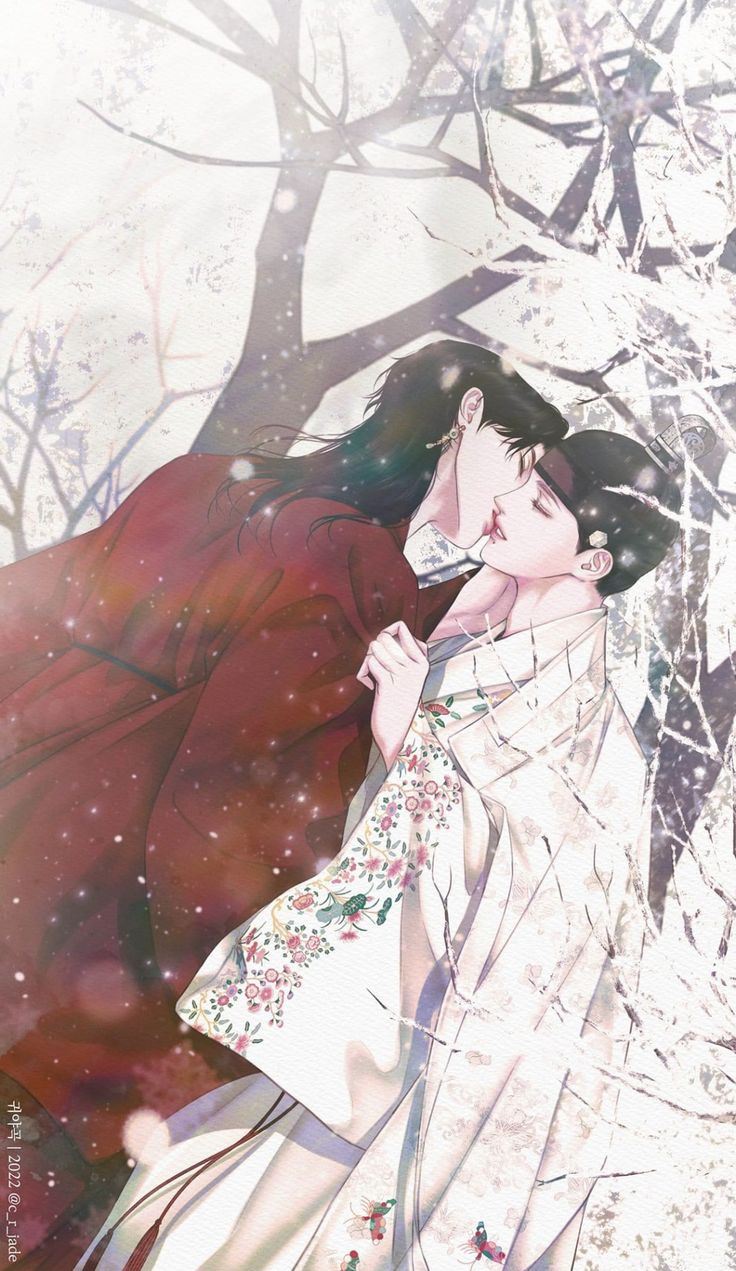
There's a particular quality of light in this book that I can't stop thinking about. It's always dusk. Always that golden-grey moment when the day's work is done and you can finally see the shape of things. "By dusk every day, Qiu Henian hurriedly left the shop, pushing a cart over, and with the two workers, he packed the dug-up sweet potatoes into bags and pushed them back home." I can SEE this. The dust on their legs, the weight of the bags, the way the light catches the sweat on their necks. It's not described with fancy adjectives. It's described with ACTIONS. The author trusts us to feel the world without being told it's beautiful. Then there's the harvest itself — soybeans needing two or three days to dry in the field, sweet potatoes that'll spoil if you wait too long, the whole agricultural calendar governing the rhythm of their lives. This isn't backdrop. This is THE story. The land decides when they eat, when they rest, when they worry. 'Every grain is hard-earned. Being a farmer is truly difficult throughout the year.' Qingyan says this to himself after tallying the accounts. Not complaining. Just... stating a truth he's lived. The blacksmith shop is always running — 'people coming and going from early morning till late at night.' The village roads, the county town, the inn where Qiu Henian met Qin Liangchuan, the fields stretching outside the village. Every location has weight. Every place matters because these characters actually LIVE there. They're not passing through. They're rooted, and the rooting is shown through what they tend — crops, a shop, each other. The scene with Liu Xiang at the road's edge — the pink silk cloth covering his basket, the way he moves it behind his back when Qingyan looks — is its own little painting. Rural worldliness. Young love, awkwardness, class hints all in one gesture. The author paints with details the way some authors paint with paragraphs.
... Read More
'I have to be, after all, I'm wearing everything I own. I need to earn some copper coins to eat.' — this line made me laugh out loud. Chen Yu says 'We're neighbors, is it necessary to be so calculating?' and Qingyan just turns it back on him like a knife. The exchange is basically: 'Why charge me?' 'Because I'm broke and you're not being reasonable.' 'Wait, what?' 'I'll wait until your master comes back!' 'Whether he comes back or not, we still need copper coins to buy food. We can't rely on other people's leftovers every day!' Chen Yu can't respond. He's used to people folding for him because he's a fellow villager, and Qingyan just refused to play that game. The dialogue does something really sharp here—it shows Qingyan's voice has changed. He used to be the quiet guy. Now he's 'sharp-tongued and sharp-witted,' as the narration admits. And the funniest part? Qingyan isn't even trying to be mean. He's just... honest. 'I'm wearing everything I own' is both a statement and a joke at the same time. The author writes dialogue like people actually talk—interrupted, defensive, deflecting. Chen Yu's lines all have that 'I've been wronged' energy even when he's clearly the one taking advantage. And Qingyan's responses are short, almost clipped, which makes them hit harder. The author also lets the narration breathe between lines—'Qingyan remained unruffled, still smiling' after Chen Yu storms out. That's the voice. Calm, observant, occasionally dry, never moralizing. I love it.
... Read More
I need to talk about this wrist scene because it wrecked me. Qiu Henian catches Qingyan's hand when he's about to drop the bow, holds his wrist for exactly three seconds, then pulls away like he burned himself. Qingyan stands there feeling 'a bit disappointed' and then immediately starts constructing evidence that Qiu Henian dislikes him. This is the wound from Wang Yan talking through everything—every touch, every silence, every glance gets reverse-engineered into rejection. But here's the thing I keep coming back to: Qiu Henian actually says 'You have to go. I don't feel comfortable leaving you alone at home.' That's not dismissive. That's protective. Qingyan just can't hear it because he's been hurt so badly he's running on autopilot suspicion. And then he jumps into Qiu Henian's arms like a rabbit and rubs his head against his neck and the text says Qiu Henian 'reached up to touch his own neck, feeling as if he had been affectionately approached by a furry little animal.' DAMN. That comparison—not romantic, not even really tender, just... animal warmth. Someone climbed into your space because they're happy to see you. That's the relationship telling us everything without saying it. Meanwhile Chen Yu is this bitter shadow of what Qingyan could have been—the guy who used to be 'one of the most outstanding young men' but now just sharpened tongue and sour looks because someone prettier arrived. The husband Zhang Wensheng mentioned in passing is apparently kind (never rushes villagers on tuition) which makes Chen Yu's bitterness even more tragic—he's mad at a good man for being good. Three relationship dynamics in one chapter, all about whether people deserve each other.

Leave a comment

You must be logged in to leave comments. or
