Summary

... Read More

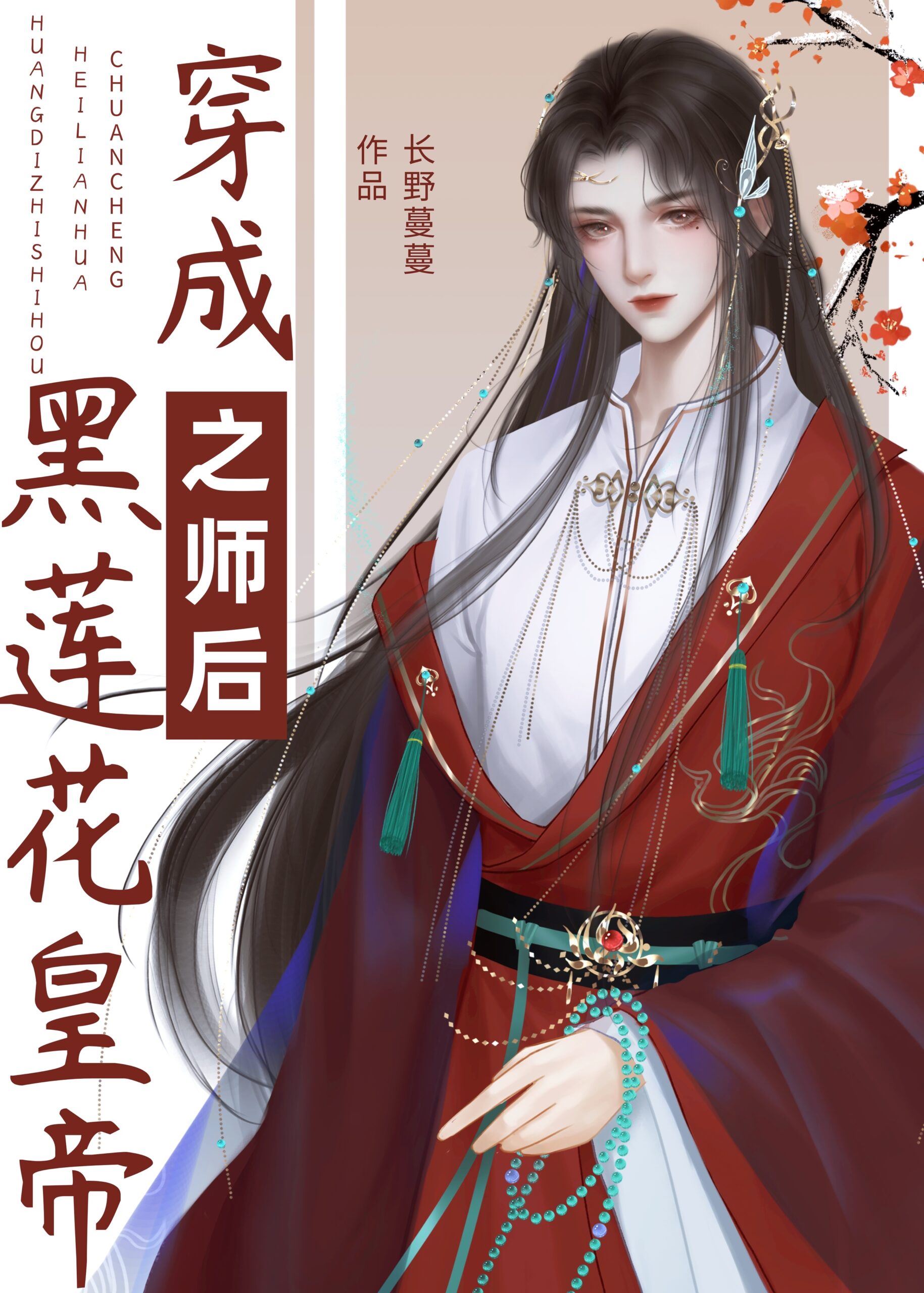
Shen Qingzhuo is a twenty-first-century history graduate student and novelist who writes a critical review of a political novel titled "Dayong Dynasty." The story centers on Xiao Shen, the Seventh Prince, who suffers a brutal childhood in the cold palace, abused by his insane mother and bullied by royal brothers, before ascending the throne as a tyrant and executing the novel's protagonists. Shortly after publishing his review, Shen Qingzhuo suffers a myocardial infarction and transmigrates into the book, binding with System No. 007. He discovers he has inhabited the body of Shen Qingzhuo, a nineteen-year-old minor prince and hostage of King Zhenbei, who serves as the Imperial Preceptor to the twelve-year-old Xiao Shen. In the original narrative, this character tortured the young prince and was later subjected to a slow slicing execution by the tyrant.

The system assigns Shen Qingzhuo a critical mission: prevent Xiao Shen from turning completely evil and killing the protagonists, thereby averting the collapse of the dynasty. The system reveals that two previous hosts failed this task, leaving it with most functions disabled due to sanctions. Shen Qingzhuo realizes that eliminating Xiao Shen is not an option because the system strictly requires influencing him through positive means. The story opens with the original owner having just ordered the young prince to kneel in the snow for two hours, a punishment that nearly freezes the boy to death. Recognizing the immediate danger, Shen Qingzhuo rushes out into the blizzard to retrieve the unconscious child, carrying him back to warmth and administering medical care for his frostbite and high fever.

Throughout the night, Shen Qingzhuo tends to the delirious prince, feeding him medicine and cooling his fever. The interaction breaks the cycle of abuse Xiao Shen has endured his entire life. When the prince wakes, initially suspicious and hostile, Shen Qingzhuo establishes a new dynamic based on mutual benefit and clear boundaries rather than cruelty. He explains that while past punishments were real, they are now replaced by tutoring and care. Shen Qingzhuo also confronts the palace's political reality, visiting the Crown Prince Xiao Yichen to secure his position and neutralize threats from spies while maintaining a facade of loyalty. He encounters Pei Yanqi, the Crown Prince's junior preceptor, whose past connection to the original Shen Qingzhuo adds another layer of complexity to the court intrigue.

A pivotal moment occurs when Shen Qingzhuo intervenes to save Xiao Shen from his mad mother, Noble Consort Zhao, who attempts to strangle the boy in a frenzy. This act of rescue deepens the prince's confusion and budding trust. Shen Qingzhuo formally agrees to teach Xiao Shen to read and write, using psychological strategies to ensure the boy’s cooperation. He punishes the eunuchs who mistreated Xiao Shen and forces the prince to apologize, reinforcing a code of conduct that blends strictness with protection. The narrative shifts from survival to education as Xiao Shen begins his lessons, marking the first step in altering the trajectory that leads to the tyrant's rise. Shen Qingzhuo navigates the treacherous court politics while aiming to guide the young prince toward a different future, balancing the demands of the system with the immediate needs of his charge.

Latest Release
DateGroupRelease
2026-09-26knoxt c41
2026-09-26knoxt c40
2026-09-26knoxt c39
2026-09-26knoxt c38
2026-09-26knoxt c37
2026-09-26knoxt c36
2026-09-26knoxt c35
2026-09-26knoxt c34
2026-09-26knoxt c33
2026-09-26knoxt c32
2026-09-26knoxt c31
2026-09-26knoxt c30

Community Reviews

Rating(4.1 / 5.0, 362votes)
5 stars
124(34%)
4 stars
137(38%)
3 stars
101(28%)
2 stars
0(0%)
1 stars
0(0%)

Popular reviews

... Read More
The sensory writing in these chapters is insane. Let me start with the bathtub scene—the steam, the wooden barrel, the smell of red plum blossoms after snow. The author describes it as 'both cool and fragrant, fascinating' and I could literally smell that. It's early spring but Xiao Shen's cheeks are burning. The contrast between the cool plum scent and the hot water and his own internal heat creates this whole atmosphere of simmering tension without saying a single word about it. Then you cut to the hunting grounds—vast royal forests, imperial army preparing months in advance, the massive procession with dragon chariots and sedan chairs. The shift from this intimate, steamy private space to this enormous public spectacle is jarring in the best way. And then the horse scene! The wind whistling in Shen Qingzhuo's ears, the dust, the galloping, Xiao Shen watching from behind with his whip raised. There's a cinematic quality to all of this that I can't stop thinking about. The hunting ground itself feels alive—animals, forest, the royal camp set up like a temporary city. It's such a rich backdrop for all the character drama happening on top of it.
... Read More
Can we just sit with the fact that Xiao Shen has NEVER cried like this before? The narrative itself notes: "No matter if it was the little wolf cub he first met three years ago or the high-spirited youth three years later, he would act like a spoiled child and pretend to be pitiful to gain sympathy, but he had never shed tears so heartbrokenly." There's a difference between performative crying and THIS. This is genuine, visceral, soul-crushing fear. This is someone who has spent his entire life alone in a cold palace, who found one person who mattered, and watched them bleed in front of him. And the author gives us this gorgeous devastating detail — large round tears falling "like a string of pearls that had broken off the string, and hit the ground." Poetic but also so painfully real. You can hear them hitting the dirt. Then the embrace. "He used so much force that it seems if he let go, he would lose the whole world." That's not just attachment. That's survival. Shen Qingzhuo isn't just his master — he's the only person Xiao Shen has ever had in this entire world. And for a split second, it looked like he might lose him. I'm still not over it. The note at the bottom with their banter about nicknames feels almost cruel after that moment of raw emotion. Like the author wanted to give you a punch to the heart and then immediately offer you a tissue and a joke.
... Read More
I need to talk about this one moment. Just one. Xiao Shen, all sweaty and aggressive after training, suddenly wraps his arm around Shen Qingzhuo's thin shoulders and says—in this totally vulnerable, almost desperate voice—"No matter what happens, I can share your burden." And then when Shen Qingzhuo tests him with "Don't you trust Master?" the kid basically loses it: "Of course not! In this world, I only trust Master!" I literally stopped reading. Like, actual stop. My heart did that thing. This is the kind of emotional beat that doesn't come around often in this genre. It's not romantic love, exactly. It's not just gratitude. It's the kind of bond that forms when someone has been alone their whole life and then another person becomes their entire world. Xiao Shen spent the whole chapter pretending to be scared and weak in front of the Emperor, and the second he's alone with Shen Qingzhuo, ALL of it drops. The performance ends. He's just a kid who trusts one person completely in a palace full of predators. And Shen Qingzhuo—cold, calculating Shen Qingzhuo, who just dropped a classical Chinese idiom like it's nothing and smiles calmly about whatever dangerous scheme he's cooking up—pauses. He actually pauses. Then he reaches out and touches Xiao Shen's sweaty cheek. Not pushing him away gently, not ignoring it. TOUCHING his face. That single gesture says everything the dialogue doesn't. He cares. He cares deeply, even if he'll never say it outright.
... Read More
"The minister is just telling the truth." / "What a good way to tell the truth." That exchange alone could power a whole essay on how this author writes dialogue. Two sentences. Zero actual information exchanged. Maximum subtext. I love it. The court scenes in particular are written like verbal fencing matches. Both the Emperor and Shen Qingzhuo are constantly using honorifics and self-deprecation as weapons. Shen says he's inadequate, the Emperor says he's overmodest. Shen refuses the role, the Emperor insists. But neither of them is ever saying what they actually mean. The entire conversation about the Seventh Prince runs on three levels: the polite surface layer, the political maneuvering underneath, and the personal history between them that neither dares name outright. What's fascinating is how distinct each character's voice feels even within this formal court register. The Emperor's lines carry this casual authority—he interrupts himself, he sighs, he drops formalities like "forget it." Shen Qingzhuo is always precise, always measured, never raising his voice or breaking composure. Even his internal monologue is controlled: "Why are you pretending to be a good person, old man?" That's the only crack in the armor, and it's beautifully rendered because it's so brief. The author's note interjection is pure tonal whiplash in the best way. One second we're in full court drama, the next it's a fuzzy little wolf cub pouting. It's like the narrative itself is winking at us.
... Read More
The stakes have never felt higher, and yet they're presented with such casual calm. Xiao Shen is physically broken—feverish, bandaged, weak—all because of a twelve-year vendetta rooted in his mother's death. The Crown Prince isn't just a bully; he's a hypocrite 'good at playing power games' who murdered a concubine and blamed her son. That's generational trauma weaponized into political tyranny. But here's the scary part: Shen Qingzhuo knows all this. He's reading history books, analyzing the fictional dynasty's lore, and he's already being summoned by the very person responsible for his predecessor's misery. The conflict is multi-layered. External: survive the Crown Prince's ‘chat.' Internal: maintain his cover as a transmigrator while navigating palace politics. Interpersonal: protect Xiao Shen without making himself a target. The suspense is suffocating in the best way. Every polite greeting from Xiao Yichen feels like a countdown. 'You are weak, it's freezing cold...' concern that sounds like a threat. I'm holding my breath every time Shen Qingzhuo enters a new room. What are they really plotting? And what happens if Xiao Shen's fragile trust in Shen Qingzhuo shatters when he finds out how deep the palace rot goes?
... Read More
The stakes in this chapter are deceptively simple on the surface—caught visiting a brothel—but they're actually enormous when you think about what's really at play. On the external level, Shen Qingzhuo is facing what can only be described as maximum social death. He's a person of status, a respected young master, and his disciple has just caught him in the most compromising situation imaginable. The author makes you feel every ounce of that embarrassment. When Shen Qingzhuo 'began to think seriously: Could he end this extremely socially deadly dilemma by jumping down directly from the railing on the second floor?'—you know the stakes are personal, immediate, and devastating. But the real stakes are internal. What is Xiao Shen actually angry about? Is it just the brothel? Or is it something deeper—something about trust, about loyalty, about where he stands in Shen Qingzhuo's life? The author deliberately withholds the answer. We get shadows, implications, loaded questions. 'Master came to this place just for these things?' That's not a simple question. That's a man questioning everything he thought he knew about his master. And the suspense—the author doesn't resolve anything. They just grab Xiao Shen's wrist and walk away, leaving Tan Ruizhe behind in a fog of confusion. The chapter ends with a door opening and a girl greeting them, and I literally could not move. The tension is excruciating. The conflict is mounting. And I need to know what happens next immediately.
See all reviews

Custom lists

See all custom Lists