Across Thousands of Stars - Reviews

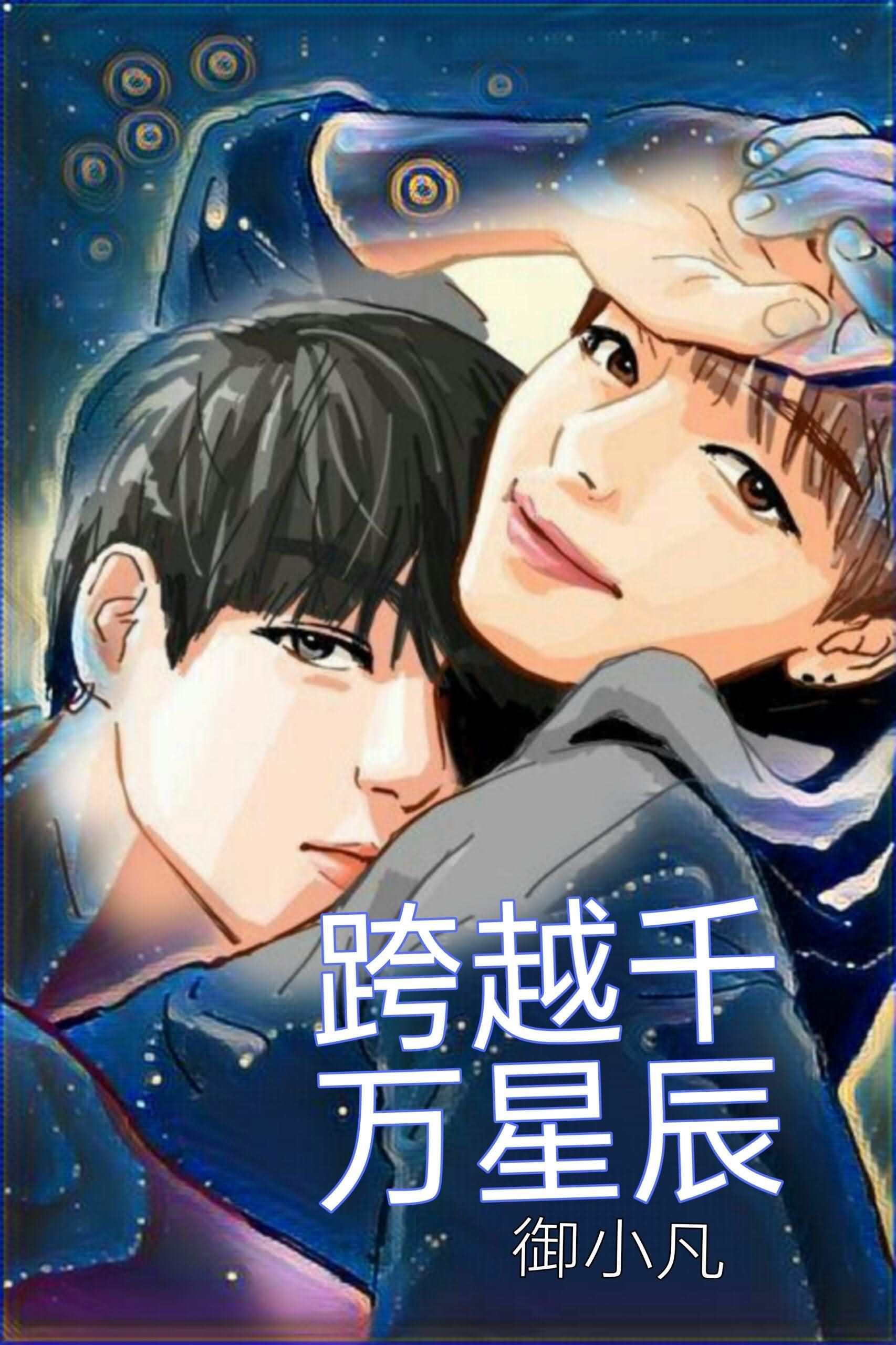
Across Thousands of Stars
+Add to Custom List
Sort
Add review
... Read More
There is a scene in these chapters—just a dinner scene, nothing spectacular on paper—where the atmosphere is so thick you could cut it with a knife. Four people sitting around a restaurant table, all wearing different versions of the truth, and the author makes you feel every single one of them. Tsuna is the host, bright and expectant, flickering smile on his face, genuinely trying to connect. Ken is mentally calculating which word might get him killed. Chikusa is surviving through tea and careful fabrication. And Mukuro? Mukuro is observing from behind a half-smile, chin in hand, watching his two worlds collide and realizing neither one is ready for the other. The author's use of physical detail here is what makes it land. Mukuro putting his teacup down with a crisp CLICK. The temperature dropping when he gets serious. Ken blowing a bubble gum bubble that pops like a tiny stress release. The flickering lights on the 12th floor as if the building itself is uneasy. Even the elevator—a steel box between floors, confined space, Mukuro's blurred reflection visible on the door surface. These aren't just setting details, they're emotional barometers. The world of this story feels lived-in because every object and space seems to respond to the tension in the room. And that ending. Mukuro fumbling his key at the door. Not taking off his shoes. Not turning on the light. Just standing there in the dark threshold while Tsuna watches and decides, yet again, to be soft instead of pressing. The darkness of that entryway says everything the dialogue won't.
... Read More
I haven't had a steamy dream for a long time. This single line from Tsuna's internal monologue hits like a ton of bricks. The author just handed us one of those moments where everything shifts beneath your feet without making a sound. We were sitting with Mukuro — consumed by obsessive, almost feral possessiveness — and then *cut* to Tsuna waking up confused, wondering if it was real. That's not just a scene transition; that's narrative whiplash done right. What strikes me about this section is how the plot operates on two completely different frequencies simultaneously. On one level, we have Mukuro's inner world: the dark, all-consuming thought process where love and possession blur into something almost unrecognizable. "You will be dragged down along with me. You must indulge in the same emotions as me." This is the kind of line that should make readers sit up and reconsider everything they thought they knew about these characters. On the other level, Tsuna's morning after plays out like a completely different genre — almost a romantic comedy. He counts the women he knows (ten!), panics about being a 27-year-old virgin, and worries about having vomited on Mukuro. The tonal pivot from darkness to this deeply mundane anxiety is jarring in the best possible way. It's like the plot itself is breathing — inhaling heavy, gothic obsession and exhaling awkward workplace comedy. Then there's the Ryo-nii subplot, introduced almost casually through a phone call. Something happened to him — his profession is inherently risky, and his character makes it "only a matter of time before something bad happens." This feels like the author planting seeds for future conflict, but the execution is so light and offhand that it almost slips past you. I wonder if the author themselves didn't intend to divide so many sections — as the author's note humorously complains, "People said it was like I posted advertisements." But the fragmentation actually serves the narrative rhythm: short, sharp bursts of intensity followed by breathing room. The chapter also gives us the Uni reveal — that she made the call to Mukuro that night, not Tsuna. This small detail rewires the entire previous evening's meaning. Every assumption we (and Tsuna) had about how events unfolded gets questioned. That's sophisticated plotting: not a twist for its own sake, but a quiet recontextualization that rewards careful readers. By the end, we're left with the author's Q&A where Mukuro says simply, "I want him," and the author's exasperated reaction. The plot isn't just moving forward — it's consolidating its central tension around an unspeakable desire that neither character has fully named yet.
... Read More
I need to talk about this elevator scene because it exists in my head like a film frame I can't delete. Rain just stopped. Two guys soaked. An old woman sneezes. The speaker on the phone is broken — so when Mukuro says 'Your birthday is coming soon,' it's not an overheard conversation, it's intentional. Tsuna hears it because Mukuro WANTS him to. The sliding door sound, the woman's exit, the silence between them, then the words cutting through the noise of Tsuna's work stress. 'That day. Remember to go home for dinner.' Eyes bent in a smile. This is cinematic in a way most novels don't even attempt. Then you've got the dartboard scene — mahogany table, tungsten steel darts, Reborn squinting one eye, hitting the double division to end the round like some kind of punctuation mark. The office setting is barely described but the details land perfectly. This isn't a cozy space; it's somewhere dangerous things happen casually. How is a kid playing with weapons in an office and it doesn't phase anyone? That's worldbuilding through normalized absurdity. And the apartment — Tsuna comes home to food already on the table. Not ordered. Cooked. The kitchen counter is being cleaned. There's this profound domesticity that exists alongside everything else. Rain, work stress, impossible sales targets, death-defying sports equipment — and somehow dinner is ready when you walk through the door. The world feels lived-in because the characters live in it with such specific, concrete routines.
... Read More
The word "family" appears three times in this passage, and each time it means something different—and that's not accidental. First, Tsuna says it as a shield: "You meant it as a family member and that you would always be with me." He's using the language of familial bond to protect himself from romantic rejection, to create a category of relationship that can't end. Then Mukuro tears that category apart by refusing the boundary it creates. When he says at the end, "do you think I would want to go back and continue treating you as just family?"—he's declaring that family was never sufficient, never what he wanted, and the violation was the logical endpoint of that realization. The congee is another symbol I can't stop thinking about. Food as care, food as control, food as the thing that makes resistance impossible. Tsuna hasn't eaten in over twenty-four hours. His body literally cannot sustain defiance when it's starving. Three bowls and he's closing his eyes contentedly. The author writes that the fulfillment "seemed to spread throughout his body"—and I kept reading that line wondering if the author meant it metaphorically too. Not just satisfaction, but surrender. Once your body is satisfied by the person who hurt you, what happens to your will? And the bath water. Hot water entering his intestines. This is such a visceral, almost violating image of forced intimacy—cleanliness as another form of penetration, care as another word for control. Mukuro says it matters for health reasons, and Tsuna processes it slowly, too exhausted to find the contradiction between care and violation. The theme that emerges isn't just about toxic attachment—it's about how language itself can be weaponized. "Beautiful thing." "Taking care of you." "Family." These are all words we associate with love, and the author is showing us how hollow they become in the wrong context. Or maybe how they were never hollow at all, but just never belonged to Tsuna to begin with.
... Read More
OK so let's talk about how this section is STRUCTURED, because the pacing choices here are genuinely interesting and I need to unpack them. Chapter 140-144 covers what amounts to one continuous event—the confrontation, the act itself (which is censored/redacted), and the aftermath—but the author fragments it across multiple chapters with trigger warnings and translator notes interrupting the flow. And you know what? That interruption actually works in a weird way. The break between the bedroom scene and the bathroom scene gives you just enough space to breathe and then pulls you back in with Mukuro saying "Your stomach will hurt if we don't clean up properly" like he's discussing laundry instead of what he just did to the guy. The transition from Chapter 33 to Chapter 34 is masterful in its cruelty. Chapter 33 ends mid-act with a translator begging for help because she posted wrong. Chapter 34 opens with "Mukuro did it twice more afterwards." TWICE MORE. No warning, no softening, just—here we are again. That structural choice to not even acknowledge the gap between chapters mirrors how Tsuna experiences it: consciousness slipping in and out, time collapsing, never quite knowing where one moment ends and the next begins. Then the morning-after scene drags deliberately. Slow. Methodical. Every action—water, congee, wiping the mouth—takes its time. This is where the pacing does the most emotional work. If the author had rushed through the aftermath, it would feel like filler. But by slowing down, by making us sit in this quiet domestic horror, every gesture becomes a knife. And then—the ending. Mukuro's final line, delivered so calmly: "do you think I would want to go back and continue treating you as just family?" The chapter ends there. No resolution. No Tsuna's answer. Just that question hanging in the air like the steam from the bathroom. Perfect cliffhanger. Absolutely vile. I needed to read the next chapter immediately.
... Read More
I need to talk about the coffee shop scene because honestly it wrecked me a little and I wasn't expecting that from chapter one. Ryo-nii. Former big brother figure from Tsuna's junior high days. The guy who used to take care of him. And now we see him with dark circles under his eyes, looking absolutely defeated, sipping lemonade like his whole world just collapsed. There's this line where the narrator says it's 'extremely rare for him to look like that. He would usually face any case with a strong will.' That one sentence does SO much emotional work. We understand instantly: this man has seen something that broke his usual composure. And then the milk tea moment — 'The milky fragrance gradually spread out, filling his senses with such a warm scent.' Right in the middle of this heavy conversation about kidnapped children and government failures, there's this tiny sensory detail about warm milk tea. It's almost cruel how normal it is. Like, life goes on, the waiter comes by, everything is mundane, while Tsuna is absorbing information that should make anyone nauseous. What got me the most was when Ryo-nii asks 'Is there anything that I can do for you?' and Tsuna responds 'Is there anything that I can do for YOU?' The role reversal is heartbreaking. This person who used to TAKE CARE OF Tsuna is now coming to HIM, broken and asking for help. The friendship history between them is barely sketched but it lands. You can feel the weight of all those years of Ryo-nii being the reliable one, and now he has nowhere else to turn. Also the father call! 'I didn't prepare a Christmas present for you' — so casual, so warm, completely separate from the darkness descending on Tsuna's life. That juxtaposition of familial love against institutional betrayal hit harder than I expected.
... Read More
Okay so this chapter is absolutely wild for how much it packs into these scenes between Tsuna and Mukuro. Like, the elevator moment where Mukuro says he's making up his mind and suddenly drops that he's applying to Brown University? I literally gasped. Not because of the school choice but because of the sheer coldness of how he delivers it. He doesn't even hesitate. One moment he's talking about after high school casually and the next he's announcing an entire life overhaul like he's ordering food. But here's what gets me — the narration says Mukuro hadn't actually thought about leaving Tsuna voluntarily before and that just thinking about it causes physical pain. And then he does it anyway. That contradiction is everything. It tells me this isn't impulsive. This is deliberate self-sacrifice dressed up as independence. The wrist-gripping detail is also not lost on me. He's holding Tsuna so tight it's painful and then apologizes like nothing. Six years of routine and he's the one who's going to break it by walking away. Tsuna keeps asking questions like a broken record — which university, how's the application, what major — and I think he's trying so hard to find some crack in Mukuro's armor, some reason this won't happen. But Mukuro just keeps shutting him down with these perfectly calm answers. Brown University. Mathematics. TOEFL at the end of the year. All facts, no feelings. And that's what makes me so suspicious. Who decides to go to America for math and then starts preparing two months before exams? That's not preparation, that's performance.
... Read More
Okay can we just talk about how Mukuro's voice operates on like five different frequencies in this one chapter? First there's the teasing layer: "You know, as long as you say it, I'll never refuse you." Charming, smug, absolutely calibrated to get under Tsuna's skin. Then immediately after—"I've always been a bit mean"—said with this casual, almost bored tone while his face is doing that thing where he clearly wants to be pets. The contrast is hilarious and so character-true. But then it pivots HARD. "What do I need to do for you to like me a bit more?" Fourteen words. Fourteen words that carry reluctance, impatience, caution, and desolation all stacked on top of each other. And the narration doesn't even need to explain it—the delivery just... breaks something open. Tsuna's internal voice is equally distinct. His thoughts are all over the place in the best way: skeptical, affectionate, exasperated, suddenly soft. "Such words were better suited for charming girls" and then later "I'm not serving you anymore!"—this is someone who's been with this person long enough to have running commentary about them in his own head. Their dynamic reads like a real marriage, not some scripted romance. They interrupt each other's energies, they misread each other, they land on something tender without either of them admitting it out loud. And Mukuro's explanation of the website? Dry, matter-of-fact, almost bored—but underneath, you can feel him gauging Tsuna's reaction with every sentence. He's performing normalcy while desperately watching for a crack. That's not just good dialogue. That's someone who knows exactly how to sound casual while having a conversation that could change everything.
... Read More
The recurring motif of domestic rituals in this excerpt isn't accidental — it's deeply symbolic of what Tsuna is running toward and what he's been denied. Cake decorating, baking, preparing food for someone: these are acts of love in their purest form. Haru is literally trying to bake her feelings into something tangible, something Tsuna can hold and taste and maybe, just maybe, swallow without choking on the truth. But here's what haunts me: Tsuna is participating in this domestic fantasy while his heart belongs to someone who represents the absolute antithesis of warmth and comfort. Mukuro is chaos and manipulation and psychological warfare. And yet Tsuna describes Mukuro using the language of tenderness — gentle, understanding, considerate. This is the central paradox of their relationship that the entire novel seems built upon: the most dangerous person in Tsuna's life is also the only one he trusts with his fragility. The aprons are doing heavy thematic lifting too. Pink with red bunnies. Peach hearts. These symbols of softness and romantic innocence are forced onto a man whose life has been defined by violence, duty, and the weight of leadership. Tsuna wearing a bunny apron is almost a metaphor for everything stolen from him — the simple, uncomplicated romance that Haru offers and that he cannot accept despite how much he deserves it. And the eggs — raw, fragile, needing to be beaten into submission before they can become something beautiful — well, I think we all know what that represents for Sawada Tsunayoshi's emotional state at this point in the narrative.
... Read More
Okay so can we talk about how this scene basically ambushes you? It starts SO gentle. Mukuro gives Tsuna a watch. He says it isn't expensive, he's picking it out carefully, his fingers are literally touching Tsuna's wrist to measure it — that intimate, deliberate touch — and then he kisses Tsuna's fingertips. "Like encountering the first snow," the narrator says. I actually paused there because it genuinely sounds poetic, romantic even. My brain was like 'aww they're so cute' and then TWO PARAGRAPHS LATER everything implodes. The line that absolutely wrecked me was when Mukuro says 'beautiful things have to be hidden' — which was clearly a callback to something earlier in the story when Tsuna helped him with contact lenses and smiled at him. Tsuna thought HE was being sweet, being nice, being kind — and Mukuro filed that moment away and weaponized it later. That is NOT romance. That is obsession wearing a very pretty mask. And the worst part? Tsuna still tries to de-escalate. 'I like you too' — said while he's pinned down, tied up, terrified. That line broke something in me. The fact that his instinct, even in that moment of panic, is still to soften, to not hurt Mukuro's feelings? That's tragic beyond words. And then Mukuro says 'Of course I know you like me' while undoing Tsuna's buttons like it's nothing. Like he's talking about the weather. The casualness is what makes it horrifying.
... Read More
Okay so I just finished these chapters and my hands are literally shaking. Let me just process what happened before I write anything coherent. Ryo-nii casually mentions that everyone at the police station is adopting kids because apparently there are children who won't even be able to apply for household registration. Tsuna's reaction is peak him—immediately trying to dodge responsibility with his classic deflection energy. I love him. But then Ryo-nii just casually reveals there's one extra child because someone already left, and Tsuna's face says everything. The guy has never even had a girlfriend and now he's being handed a 12-year-old. The plot didn't even give us a warning. One second we're in rom-com territory and the next the author yanks the rug out from under us. And the reveal scene? Brutal. Ryo-nii takes Tsuna to the archive room and literally plays footage from the Millefiore Research Institute. Not metaphorically, not offscreen—we get the full unflinching description of what these kids endured. The kid who lost his eyelids. The skin turning black, blisters bursting, colorful pus oozing out. And Tsuna's reaction isn't some heroic speech, it's just him silently dry-heaving into his throat. No drama, no performance. Just a regular guy realizing the world is genuinely broken. What struck me most is how the plot threads are connecting without announcing themselves. This isn't just a 'let's adopt a sad kid' story—there's clearly a larger organization (Millefiore Research Institute) operating in the shadows, and Tsuna's family (the Vongola connection) is about to get dragged into it whether he likes it or not. The way he calls his dad at the end, saying 'you're about to have a grandson,' like it's some casual announcement—that's the calm before the storm. I can feel it.
... Read More
The stakes in this chapter are enormous, and the author manages to communicate them without a single explicit threat. Everything hangs on what Mukuro will do next, and the reader is trapped in the same position as Tsuna: knowing too much and understanding too little. Mukuro's internal monologue establishes the central conflict with brutal clarity. He has decided — not in a moment of weakness, but with deliberate, cold calculation — that Tsuna will never leave him. Not physically, not emotionally, not in any way that matters. "You can only look at me. And we both can sink into the abyss together." This isn't the rambling of a jealous lover; it's the manifesto of someone who has made a conscious choice to destroy the only good thing in his life rather than live without it. The stakes are layered. On the surface, there's the obvious sexual tension — Mukuro's physical reaction to seeing Tsuna's body, the pituitary-driven dizziness, the unfinished act that hangs in the air like a promise or a threat. But the deeper stakes are psychological: what happens to Tsuna's sense of self when the person he cares about most decides that his autonomy is unacceptable? What happens to Mukuro's fragile connection to the world when his obsession consumes everything else? Tsuna's perspective raises different but equally urgent stakes. His panic about being a 27-year-old virgin isn't just comic relief — it's a glimpse into a man who has built his entire identity around duty and work, with no plan for personal happiness. "If this continues, Tsuna will be a bachelor for the rest of his life. The virgin will become the greatest virgin." The humor is genuine, but underneath it is a profound loneliness that makes Mukuro's obsession almost sympathetic. Tsuna has nobody. Mukuro has everyone he wants — but only if he can keep him trapped. The Ryo-nii subplot introduces external stakes. A friend is hospitalized. His profession is dangerous. His character makes disaster inevitable. This isn't just backstory — it's a ticking clock. When Mukuro volunteers to visit, he's stepping outside his self-imposed isolation for the first time, and the reader wonders: is this genuine growth, or is it another way to maintain control over Tsuna's life? The Uni reveal adds another dimension. She made the call that night. Not Tsuna. This means Tsuna's assumptions about the evening's events may be wrong — and if he's wrong about that, what else has he misunderstood? The stakes of miscommunication here are catastrophic, because every interaction between these two men is filtered through layers of unspoken meaning. By the end, with Mukuro's simple declaration of "I want him," the author has crystallized the central conflict into its purest form: two people who need each other desperately, in ways that may be destructive rather than healing. The question isn't whether they'll end up together — they already are. The question is what that togetherness will cost them, and whether either of them will survive it intact.

Leave a comment

You must be logged in to leave comments. or