Summary

... Read More
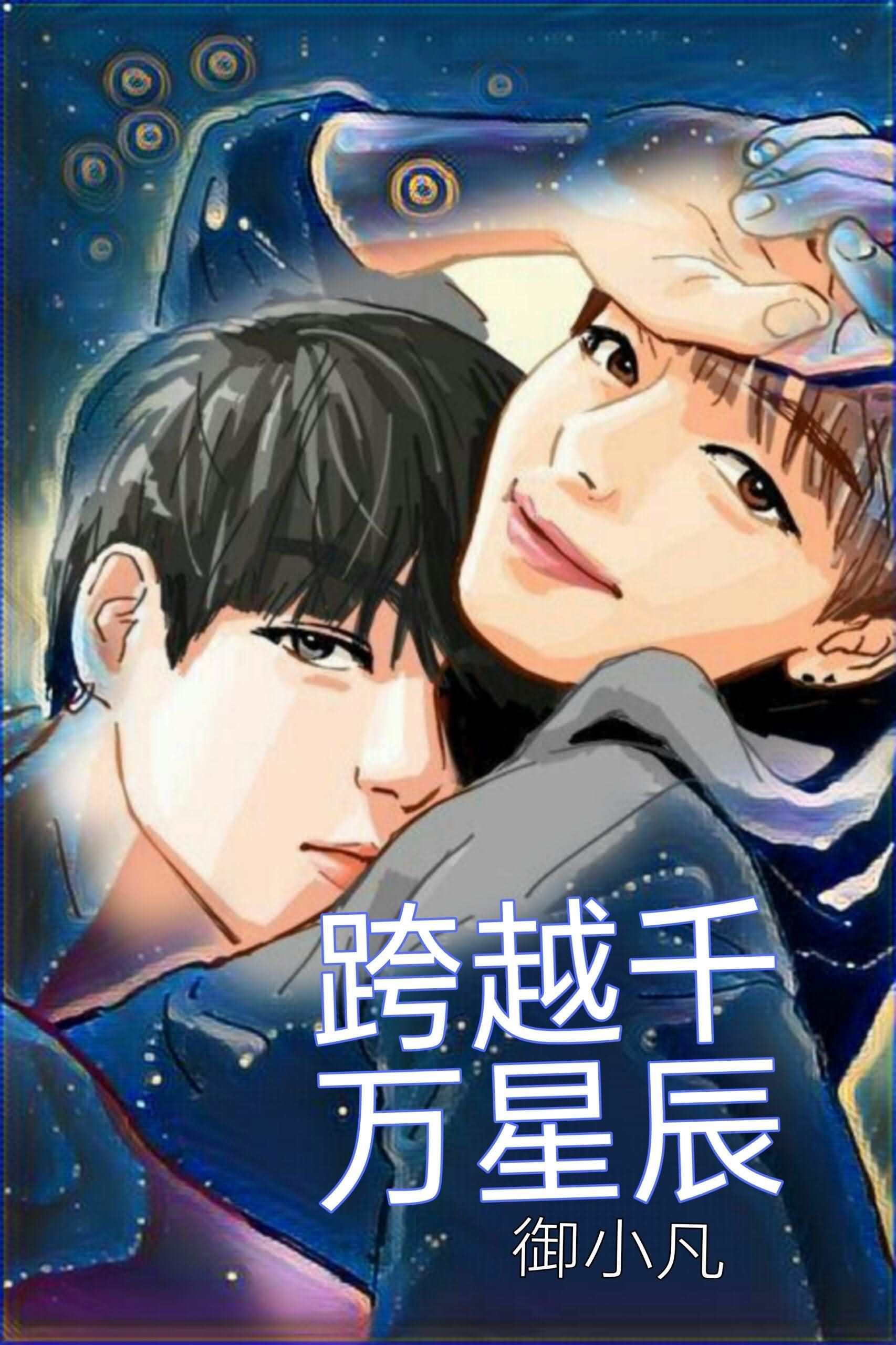
Sawada Tsunayoshi is a 22-year-old office worker living in Japan. His life is ordinary and mundane, defined by long hours of overtime and a family history marked by the early death of his mother and the frequent absences of his father, Iemitsu. Tsuna spends his days working in the planning department of a company, maintaining a quiet existence without romantic entanglements. On Christmas Eve, his routine is interrupted by a message from Sasagawa Ryohei, a police officer and old friend. Ryohei requests a meeting to discuss a critical issue involving the Millefiore pharmaceutical company, which has been raided for conducting brutal human experiments on children. The incident has left numerous traumatized orphans without guardians, and the police force is struggling to find placements for them.

Ryohei reveals that most officers have adopted one child each, but there is one remaining boy who was rejected by previous prospective parents due to his unsettling appearance. This boy is Rokudo Mukuro, a 12-year-old with heterochromia; one eye is a vivid, glowing red resulting from the experiments. Tsuna is initially hesitant, feeling unprepared for such a massive responsibility. However, after viewing graphic footage of the torture Mukuro endured at the research institute, Tsuna’s perspective shifts. He recognizes the depth of the boy’s trauma and agrees to adopt him. The adoption process is swift, and Mukuro is transferred to Tsuna’s care.

When Mukuro first arrives at Tsuna’s apartment, he is silent, emotionless, and displays severe deficiencies in basic life skills. He has never showered, brushed his teeth, or eaten a proper meal independently. He refers to himself as a possession, reflecting the dehumanizing treatment he suffered in the lab. Tsuna responds with patience and kindness, establishing a foundation of trust. He teaches Mukuro how to perform daily routines, from bathing to eating, and gently encourages him to express his preferences. Over time, Mukuro begins to show signs of emotional awakening, experiencing moments of joy and curiosity that were previously suppressed.

Tsuna enrolls Mukuro in Kokuyo Junior High, a school with a reputation for delinquency but which accepts students who have fallen behind in their education. Mukuro adapts quickly to the academic curriculum, surprising Tsuna with his intelligence. He also begins to cook for Tsuna when the latter works late, taking pride in providing for his new family. The two develop a close bond, with Tsuna acting as both guardian and father figure. However, the outside world remains indifferent or hostile toward Mukuro’s appearance. During a shopping trip, strangers stare at his red eye with fear and disgust, causing Mukuro distress. Tsuna counters this by buying contact lenses and reassuring Mukuro of his beauty, reinforcing the boy’s sense of self-worth.

The narrative takes a sharp turn when Mukuro is accused of attacking a classmate, Ishibashi, who is known as a bully. According to the school, Mukuro stabbed Ishibashi’s hand with a chopstick during lunch. Tsuna is shocked by the accusation, given Mukuro’s gentle nature. At the hospital, Mukuro calmly admits to the act but explains that he deliberately avoided severing any nerves, ensuring no permanent damage. His composure and casual attitude toward violence deeply unsettle Tsuna, revealing a darker side to Mukuro’s psyche that stems from his experimental past. The incident marks a turning point, suggesting that while Mukuro is healing, the trauma has left permanent scars that manifest in unpredictable ways. The story concludes with Tsuna grappling with the complexity of raising a child who is both vulnerable and dangerous, setting the stage for further conflicts as Mukuro navigates his new life amidst the shadows of his past.

Latest Release
DateGroupRelease
2026-09-26knoxt c40
2026-09-26knoxt c39
2026-09-26knoxt c38
2026-09-26knoxt c37
2026-09-26knoxt c36
2026-09-26knoxt c35
2026-09-26knoxt c34
2026-09-26knoxt c33
2026-09-26knoxt c32
2026-09-26knoxt c31
2026-09-26knoxt c30
2026-09-26knoxt c29

Community Reviews

Rating(3.9 / 5.0, 213votes)
5 stars
60(28%)
4 stars
79(37%)
3 stars
73(34%)
2 stars
1(0%)
1 stars
0(0%)

Popular reviews

... Read More
This chapter had me going from casual worry to full-blown panic in the span of a few scenes, and honestly? The pacing was perfect. It starts so casually—Mukuro's eye looks weird, he blames it on computer screen time, Tsuna insists on the hospital. Nothing screams DANGER YET, right? But then the doctor asks for more tests. Mukuro protests, calls it a money grab, and I knew right then something was seriously wrong. Authors who make characters dismissive about medical issues always make me tense because I know what's coming. The chapter break between 51 and 52 is smart too. Chapter 51 ends with Tsuna calling Reborn, this long conversation about their relationship status, Reborn's sarcastic remarks, all building this emotional tension. Then Chapter 52 opens with the doctor's office again, but now we know what's at stake. The transition from personal drama to medical crisis is seamless. And that ending—"After the removal, we'll see." It cuts off right when you need more information. Classic cliffhanger. I immediately wanted to keep reading. The author knows how to dangle just enough detail to keep you hooked without giving everything away. It's a delicate balance and they nailed it.
... Read More
The pacing in these chapters is insane and I need to unpack why. It starts at maximum intensity—Tsuna and Mukuro face to face, words like weapons—and then instead of staying at that peak, the author deliberately deflates it into this mundane sequence of packing a suitcase, kicking someone in the leg, checking into a hotel, ordering pasta, applying medicine to himself. That last detail alone—the image of Tsuna reaching behind himself to apply anti-inflammatory ointment—is so deliberately awkward and unglamorous that it grounds the whole scene in painful reality. No cinematic music, no dramatic poses. Just a guy in a hotel room doing something humiliating because he has to. Then there's the Reborn phone call which comes out of nowhere and gives Tsuna two days off. Reborn's parting shot about responsibility because he took courage to ask for leave is classic—cold, practical, and weirdly supportive in his own twisted way. And the transition to the next morning where Tsuna becomes a conscientious office worker again? That's the real punchline. No matter what happens, life goes on. You go to work. The pacing refuses to let you wallow in any single emotion for too long, which I think is brilliant for this kind of story. It mirrors how trauma actually feels—you don't get to stay in one emotional state, you just keep moving, numb, surviving.
... Read More
I keep coming back to one question after reading these chapters: what is this story ACTUALLY about, beneath the surface plot of a pharmaceutical scandal? Christmas is doing a LOT of symbolic work here. It's the holiday of sacrificial giving — the gift of a savior, the miracle of children saved from despair. And right in the middle of all that religious and cultural symbolism about sacrificial love, we get a story about children being SACRIFICED for profit. Byakuran literally frames his atrocities in utilitarian math: more lives saved than lost, therefore justified. It's a grotesque parody of the Christmas narrative. The irony is almost too on-the-nose, except I don't think it's accidental. The children themselves are the central symbol. They've been 'growing up in the research institute' — they don't know the outside world. They're tabula rasa, blank slates upon which science has written its experiments. And now they're 'a bit different' because of drug accumulation, and even orphanages refuse them. They are literally and figuratively unrecognizable to the society that should have protected them. There's also the Christmas present motif running through the background — Tsuna's dad says he didn't prepare one, and Tsuna expects one in return. Gifts, exchange, obligation. The whole holiday is built on the language of giving, and the Millefiore incident is about TAKING — taking children, taking their bodies, taking their futures. The contrast between a society that celebrates generosity and a corporation that practices systematic extraction is the story's beating heart. I also can't stop thinking about the title — 'Across Thousands of Stars.' What does that mean in relation to all this? Is it about distance? About hope? About the children who were lost, scattered like stars? The thematic resonance is still unfolding but the foundations are already there.
... Read More
Beneath the immediate crisis lies a meditation on loss, acceptance, and the transformation of love. The surgical removal of an eye is not just a medical event; it becomes a metaphor for painful clarity. Tsuna's realization—"I truly, really like him"—comes only after confronting the possibility of permanent change. The author suggests that loss strips away illusion, forcing us to confront what truly matters. This theme is echoed in the recurring motif of "goodbye": "Since birth, people must constantly learn to say goodbye." The passage lists goodbyes to childhood innocence, teenage naivety, youthful enthusiasm—a progression toward maturity through separation. The eye itself symbolizes perception and vulnerability. Mukuro's beautiful eyes, once a source of pride, become the site of sacrifice. After surgery, his bandaged eye represents both concealment and adaptation. Tsuna's emotional journey mirrors this: he moves from panic (blindness to his own feelings) to acceptance (seeing clearly what he loves). The line "Life itself is a prolonged consumption of actions. Your soul would be shaped and expended within it" frames the entire experience as part of a larger process of becoming. Even the temporary dysfunction—Mukuro knocking over cups—becomes a test of resilience. The author doesn't romanticize suffering; instead, she presents it as a catalyst for deeper connection. The theme of sacrifice is present but not martyrdom: Mukuro chooses surgery to live, Tsuna chooses to support him, Reborn chooses to intervene. Each act of giving oneself another is a small death that leads to renewal. The symbolism is woven seamlessly into the narrative, never heavy-handed, always serving character and plot.
... Read More
The stakes in this conflict are incredibly high, even though on the surface, nothing dramatic has happened. No one has died. No one has left. They're just… not talking. But the emotional stakes? They are life-or-death for these characters. For Mukuro, the conflict is about identity and belonging. He has spent his entire existence being the outsider, the fake, the thing that doesn't fit. Tsuna is the only person who has truly accepted him, who has pulled him into the light. Kyoko represents a threat to that singular bond. If Tsuna starts prioritizing Kyoko—if he starts building a life that excludes Mukuro—then Mukuro loses his anchor. He goes back to being alone. The shout of 'You like her' is a plea for reassurance. He's essentially screaming, 'Am I still your priority? Or am I just the weird guy you live with while you go live your normal life?' For Tsuna, the conflict is about confusion and helplessness. He doesn't understand why his kindness is being perceived as betrayal. He's trying to be a good partner, a good friend. He's trying to integrate the people he cares about. When Mukuro rejects the invitation, Tsuna feels rejected. He's hurt, but he's also angry. Why won't Mukuro just *try*? The stakes for Tsuna are proving that he can have a happy, normal life with someone as broken as Mukuro. If this fails, it validates all his deepest fears that he's not good enough, that he can't save anyone, that he's doomed to be alone. The internal conflict is where the real tension lies. Mukuro knows he's being unreasonable. He knows Kyoko is nice. He knows Tsuna didn't do anything wrong. But he can't stop the envy. It's a self-destructive loop. He pushes Tsuna away to protect himself from the pain of being second choice, but in doing so, he creates the exact scenario he fears. Tsuna is forced to choose between peace (staying away from Kyoko) and his own happiness (seeing his friend). By demanding isolation, Mukuro is essentially holding a gun to the relationship and threatening to pull the trigger. And the external conflict? It's just Kyoko's dinner party. A simple, mundane event. But the author weaponizes it. It becomes the battleground where these two men fight their war for dominance in each other's hearts. The suspense isn't 'will they go to the dinner?' It's 'will they survive this argument?' The author makes us care because we've seen how much they need each other. We know their history. We know the weight of their silence. Every word left unsaid feels like a physical blow. The tension is razor-sharp because we know that if they don't resolve this, they might lose everything. And the reader is left begging them to just communicate, to lower their shields, to admit they're scared. It's a tense, gripping exploration of how fragile trust can be.
... Read More
I need to talk about what I assume happened the night before these chapters because the emotional subtext is SO thick you could cut it with a knife. Tsuna can't look Mukuro in the eye. He's smiling stiffly in the kitchen. He FORGOT that Mukuro is still handcuffed to him and yanked him across the room when the doorbell rang. These are not small details. The author is showing us, not telling us, that something massive shifted between them and neither of them knows how to process it. "Before what happened last night, Tsuna would definitely drag Mukuro to take a bath together." This line alone destroyed me. It's stated so matter-of-factly but it carries so much weight — they HAD a routine, they had comfort, and now that comfort is gone. The fact that Mukuro doesn't even suggest bathing together anymore shows he's just as affected, maybe more, since he's the one processing it internally rather than panicking outwardly. And then Enma's storyline! The part where Tsuna reads about his promotion and actually laughs out loud — genuine happiness, not forced politeness. "Tsuna is afraid that he is the only one who has a good relationship with him in the company." Oof. That hit different. It mirrored something about Tsuna himself, didn't it? Two people who struggle to connect, finding solace in each other. The parallel between Tsuna-Mukuro and Tsuna-Enma is doing a lot of heavy lifting emotionally here.
See all reviews

Custom lists

See all custom Lists