Summary

... Read More

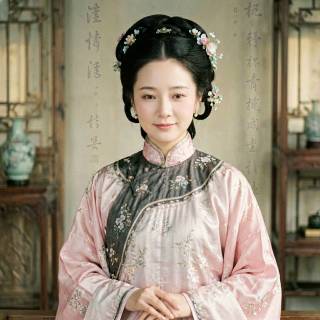
Xiao Anlan, the eldest son of the wealthy Xiao family in Liucheng, returns from studying in Britain with modern views on free love and arranged marriage. His grandfather had long ago promised him in marriage to Yu Wanru, the daughter of his family's business partners, to seal an alliance against the predatory Sun family. When the Yu family renews the engagement, Xiao Anlan is displeased and visits them with the intention of persuading Wanru to break it off together. He finds her shy, gentle, and delicate, but his blunt approach causes her to cry, leading her to agree to the breakup. However, the Yu family, desperate to avoid a marriage to the notorious Sun Er, refuses to cancel the engagement and instead proposes swapping the groom to Xiao Anlan's younger half-brother, Xiao Anze.

Xiao Anlan initially accepts this arrangement, believing it frees him from the obligation. Yet, upon returning home, he feels an inexplicable unease and regret. He learns that the Yu family's situation is dire due to harassment by Sun Er, who forcibly took a concubine and ruined the Yu family's businesses. Realizing that breaking the engagement would leave Wanru vulnerable to the Sun family, and feeling a growing attachment to her, Xiao Anlan changes his mind. He decides to pursue Wanru himself, starting with a sincere apology and thoughtful gifts, including books and Western pastries, which she accepts with polite reserve.

As Xiao Anlan courts Wanru, he seeks advice from his friend Zhou Sheng and plans dates, such as a trip to a horse ranch. During these interactions, Wanru remains proper and reserved, often accompanied by her mother or aunt, but gradually warms to his kindness and sincerity. Xiao Anlan becomes increasingly smitten, noting her gentle demeanor and shared interests. Meanwhile, Madam Yu and Madam Xiao negotiate the terms, with the Xiao family officially proposing again. Wanru, aware of the political necessity of the alliance and touched by Xiao Anlan's efforts, agrees to the marriage, though she remains shy and uncertain about her feelings.

The story follows Xiao Anlan's transition from a reluctant participant in an arranged marriage to an active suitor determined to win Wanru's heart. He navigates family dynamics, including his close relationship with his younger sisters and the complex hierarchy of his father's household. Wanru, in turn, balances her filial duties with her growing comfort around Xiao Anlan. Their courtship is marked by small gestures, such as shared meals, storytelling sessions, and a horseback riding outing where Xiao Anlan helps Wanru mount her horse, symbolizing his protective and attentive nature. The narrative sets the stage for their deepening relationship against the backdrop of societal expectations and external threats from the Sun family.

Xiao Anlan's efforts to integrate into Wanru's traditional world, such as reading classic Chinese literature to find common ground, highlight his dedication. Wanru's family, particularly her mother, observes his genuine interest and approves of him as a suitable husband. The engagement is formally re-established, and preparations for the wedding begin. The story captures the evolving dynamic between the modern-minded Xiao Anlan and the traditional Yu Wanru, as they navigate the transition from strangers to engaged partners. Their interactions reveal mutual respect and growing affection, contrasting with the initial reluctance and social pressures that defined their early encounters. The narrative concludes with the couple moving closer to marriage, supported by their families and friends, while the threat of the Sun family looms in the background.

Latest Release
DateGroupRelease
2026-08-11shanghai fantasy c71
2026-08-11shanghai fantasy c70
2026-08-11shanghai fantasy c69
2026-08-11shanghai fantasy c68
2026-08-11shanghai fantasy c67
2026-08-11shanghai fantasy c66
2026-08-11shanghai fantasy c65
2026-08-11shanghai fantasy c64
2026-08-11shanghai fantasy c63
2026-08-11shanghai fantasy c62
2026-08-11shanghai fantasy c61
2026-08-11shanghai fantasy c60

Community Reviews

Rating(3.9 / 5.0, 17votes)
5 stars
5(29%)
4 stars
7(41%)
3 stars
3(18%)
2 stars
2(12%)
1 stars
0(0%)

Popular reviews

... Read More
Okay I need to talk about this one moment because my heart actually stopped. Xiao Anlan lifts Yu Wanru onto the horse and the text literally says he was 'clench[ing] his fist behind his back, relishing the memory of her slender waist.' AND THEN 'His future wife's waist was really slim.' I AM NOT OKAY. This man is trying so hard to play it cool, giving her all these practical instructions about posture and reins, but inside he is absolutely losing his mind over touching her waist. The contrast between his composed exterior and what's happening in his head is everything. And Wanru? She feels 'the lingering ache in her waist from his grip' but instead of pulling away, she refocuses on the riding. She's flustered but curious, tempted but unsure. That push-and-pull is so well done. The author doesn't need grand confessions or dramatic moments—just one accidental lift and a shared glance and you can feel the entire romantic tension crackling between them. Also the horse nuzzling Little White Cloud and bringing them closer together? The universe is shipping them and I am here for it. Who needs fireworks when you have equine intervention?
... Read More
Let's talk about what's actually at stake here, because on the surface this looks like a simple arranged marriage drama but there's a whole web of political pressure underneath. The Sun family. Just mentioned in passing at first, right? "The Sun family is still watching us like a hawk." But every time it comes up, the stakes get higher. Madam Yu's reaction to the idea of the Sun family is visceral — she says she'd rather jump into the Li River with her daughter than let that happen. That's not hyperbole, that's genuine terror. And we learn that Sun Er is described as a brute, a scoundrel. The implication is clear: the Sun family is dangerous, and they're circling. So the Yu family can't just cancel the engagement with the Xiao family. If they do, the Sun family pounces. Wanru gets married off to someone terrible. That's the external stakes. But the internal stakes are just as good. Wanru's dignity. Her sense of self-worth after Xiao Anlan rejects her. Her mother's fear and desperation. Xiao Anlan's guilt and discomfort — he can't even go home after the meeting, he needs to escape to a hotel. And then Master Yu drops this bomb: what if they switch the engagement to the second young master of the Xiao family? The son of a concubine, but capable and ambitious. This changes everything — it introduces a new character, a new dynamic, and raises the question: will the Xiao family agree? Will the second young master even want this? The tension is layered. It's not just romantic tension, it's family survival tension. And the author is doing a great job of making me care about all of it.
... Read More
I keep coming back to the imagery in these chapters and I think there's more going on than just setting the scene. The heat. It's emphasized repeatedly. "The weather was stifling." A basin of ice on the floor does "little to cool her down." This isn't accidental. The oppressive heat mirrors the suffocating pressure Wanru is under — the engagement, the political maneuvering, the Sun family threat. She's literally and figuratively overheating. And then there's the ice. A basin of ice that can't cool her down. How fitting. The Xiao family's promise is supposed to be like ice — solid, reliable, coldly binding. But it's not protecting her. It's making things worse. The lotus metaphor when Wanru is described as resembling "a lotus flower adorned with morning dew" — that's significant too. Lotuses grow in mud but remain pure. They're beautiful but delicate. Wanru is in a muddy situation (political marriage, family pressure) but she's maintaining her grace and kindness. The morning dew suggests freshness, youth, something that could easily be scorched away. The grandfather's promise — "once he gave his word, it was as good as a bond" — this is another motif. The weight of old promises binding the living. Xiao Anlan's grandfather fell ill from shame over the aunt's elopement and then spent his remaining energy securing this engagement. Now his dead words are controlling young lives. There's also the contrast between the Xiao family's modern Western mansion and the Yu family's traditional courtyard. Two worlds, two approaches to life, being forced together by a promise made decades ago.
... Read More
There's this one line that keeps haunting me: "In the West, roses symbolize love, and men give roses to express their affection when pursuing women." Xiao Anlan says this while presenting Yu Wanru with a rose-shaped breakfast bun, and on the surface it's just him showing off his worldly knowledge. But I think the author is doing something much more layered here. Let me start with the dandelion. This image appears at a crucial moment in the chapter, and I think it's representing something about Yu Wanru's position in this story. Dandelions are everywhere—they grow in cracks, they're considered weeds by some, but they're also resilient, adaptable, and beautiful in their own quiet way. Xiao Anqi wants to blow the dandelion seeds into the wind, letting them scatter and find new homes. There's something prophetic about this. Yu Wanru, like a dandelion seed, is about to be carried by circumstances into a new life, a new family, a new world. And Xiao Anlan? He's the one who disrupts that gentle moment, who blows the seeds away before she's ready. But he also comes back with more dandelions, ensuring she has enough to plant wherever she goes. The horse ranch itself is a symbol worth examining. This is Xiao Anlan's domain, his territory, where he's comfortable and skilled. But Yu Wanru is a visitor here, someone who doesn't quite belong in this world of dust and sweat and horseback riding. Yet she's there, holding Xiao Anqi's hand, brushing dust off Xiao Anlan's clothes, trying to navigate a space that wasn't made for her. The ranch becomes a metaphor for the cultural and social gap between them—the wild, open freedom of his world versus the more structured, refined world she comes from. And then there's the rose bun. Xiao Anlan explains the Western symbolism of roses, but I think the author is playing with the idea of translation itself. He's translating Western meaning into a Chinese context, just as he's trying to bridge the gap between his world and Yu Wanru's. The bun is both a rose and not a rose—it's an approximation, a gesture, an attempt to communicate something across cultural boundaries. This is exactly what their relationship is about: two people from different worlds trying to find common ground, to translate their feelings into a language the other can understand. The family dynamics also carry symbolic weight. Madam Xiao's comment about sons being harder to keep than daughters, and Master Yu's thought about forgetting one's mother after marriage—these aren't just casual observations. They're comments on the theme of displacement, of leaving one family for another. Yu Wanru is about to leave her family, just as Xiao Anlan will eventually have to balance his loyalty to his parents with his commitment to his wife. The ranch, the dandelion, the rose bun—all of these are small pieces of a larger puzzle about what it means to build a life with someone from a different world. What I love most about this chapter is how the author uses everyday objects and moments to carry these deeper meanings. There's no heavy-handed symbolism here—just a dandelion, a horse ranch, a fancy bun. But each one resonates with meaning that goes beyond its surface function. The author trusts the reader to pick up on these threads and weave them together, and that's what makes this such a satisfying reading experience.
... Read More
I just finished these first seven chapters and I have thoughts about how the author builds tension here. Chapter 1-2: Setup. Xiao Anlan learns about the engagement, argues with his mother, decides to meet Wanru. The pacing here is deliberate — we get his internal conflict (he doesn't want this marriage but feels bound by his grandfather's promise) and we get the political context (Sun family threat) without it feeling like an info dump. Madam Xiao's exposition about the engagement history is woven naturally into a mother-son conversation. Chapter 3-5: The Meeting. This is the emotional core. The author takes their time here — Wanru getting dressed, her nervousness, the garden scene, the actual conversation. The pacing slows down exactly when it should, because this is the moment everything changes. And then it pivots hard when Wanru breaks down and her mother reveals the Sun family stakes. The transition from personal rejection to family crisis is seamless. Chapter 6-7: The Aftermath and New Direction. Master Yu proposes switching to the second young master. Madam Yu visits the Xiao family. Wanru orders green bean ice like nothing happened. Xiao Anlan can't go home. These parallel threads are moving in different directions but all pointing toward complication. What I appreciate most is that the author never lets the reader settle. Just when you think this is a simple romance setup, the Sun family enters. Just when you think Wanru will be devastated, she shows remarkable composure. Just when you think Xiao Anlan is the problem, we see he's struggling with guilt too. The chapter ending with Xiao Anlan finding his mother waiting up for him — classic cliffhanger energy. I need to know what happens next.
... Read More
I am not okay. I am genuinely not okay after reading the dandelion scene and I need to process this because the author just destroyed me with what should be a simple, innocent moment. Let me set this up for you. Sunset. Ranch. Xiao Anqi has found a dandelion and wants to blow it with Yu Wanru. They're crouched down together, the red sun casting this rosy glow over them, and it's supposed to be this perfect, peaceful moment. And then Xiao Anlan—this absolute menace—blows the dandelion out of their hands and sends the seeds flying. Xiao Anqi bursts into tears. But here's the thing that got me: Yu Wanru doesn't scold him. She doesn't get angry. She just turns to him and says, "Please, Young Master Xiao, find another dandelion for her." There's this faint reproach in her eyes, but it's so gentle, so forgiving, and Xiao Anlan's reaction is to just scratch his nose and resign himself to going find another one. And then he comes back with four or five dandelions. Four or five! He didn't just find one—he found enough so she wouldn't have to choose. That is the most Xiao Anlan thing to do. He's awkward about emotions, he expresses care through action rather than words, and he's clearly already imagining a future where he's the big brother providing multiple dandelions because that's just what he does. But the moment that really wrecked me was right after. Yu Wanru is watching Xiao Anqi run around, smiling, and Xiao Anlan is watching HER. And when she notices him looking, she feels uneasy and lowers her head. This girl is so flustered by his attention that she can't even hold his gaze. And then he calls out "Wanru..." and she stops. She actually stops. She doesn't run away, she doesn't pretend not to hear him. She just... stops. And then he asks her to call him by his name instead of "Young Master Xiao." This is him trying to bridge the gap between them, to make their relationship feel less formal, less distant. And her reaction—cheeks slowly turning red, shaking her head slightly—is the most adorable display of romantic tension I've read in months. Then Yang Shidong yells from across the yard, ruining the moment, and Yu Wanru runs off "like a startled rabbit." I swear to you, I laughed out loud. She didn't just walk away quickly—she fled. She was so flustered by the almost-moment that her body just reacted on instinct. And Xiao Anlan? He just glares at Yang Shidong like he's personally offended that his friend interrupted what could have been something real between them. The rose bun scene later is basically the cherry on top. He goes out of his way to buy this fancy bun, explains the symbolism of roses in Western culture, and she's just sitting there processing how much he knows about the world while she's been reading about it in books. The gap between them isn't just social status—it's lived experience. And yet he's clearly drawn to her precisely because she's different from everyone else in his world.
See all reviews

Characters

See all characters

Custom lists

See all custom Lists