"There were no women in this world, only people with bright red vermillion mole between their eyebrows called Gers, who can give birth to children."
This one line, right here, changes EVERYTHING about how you read the story. It's not just a quirky worldbuilding detail—it's the foundation of every theme the author is exploring.
Let me unpack this. First, the reversal of gender roles. In this world, the ability to bear children defines a person's social position in ways that mirror our own history's treatment of women. Men can give birth, which means male pregnancy is normalized but also potentially politicized. Zhong Ziqi's reaction to this—his bemusement, his detachment because he's gay—raises interesting questions about how power and vulnerability shift when biological roles flip.
The red vermillion mole itself is symbolic. It's a visible mark, something that can't be hidden. It marks those who can give birth as different, as a category apart. In literature, visible marks often signify destiny or social assignment—think of the scarlet letter or branded slaves. These Ger-marked people are defined by their biology in a way that has profound social implications.
Then there's the theme of commodification. Zhong Ziqi is literally sold for one tael of silver. His body, his future, his autonomy—all reduced to a transaction. But in this world, the ultimate commodity is reproductive capacity. His uncle didn't just sell him as a laborer; he sold him into marriage, into a role that determines his entire existence. The marriage market in this world operates exactly like the ones in our history, just with different bodies doing the bearing.
Zhong Ziqi's sexual orientation adds another layer. He's gay in a world where same-sex relationships might be the norm—or at least, where the biological imperative to reproduce through marriage still exists. His desire to "avoid having children" despite being forced into marriage is a quiet act of resistance against a system that treats reproduction as mandatory.
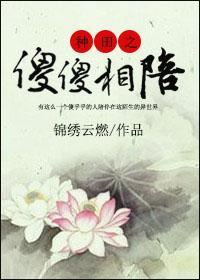
The title itself—"Accompany by a Fool to do Farming"—is loaded with meaning. "Accompany" suggests partnership, but also subordination. "Fool" could mean literal intellectual disability, or it could be commentary on who the real fool is in this society. And "farming"—tilling the land, survival, the earth. The title tells you exactly what this story is about: two broken people trying to build something from nothing, in a world that has already decided their fate.
This story is so much smarter than it looks on the surface.