Accompany by A Fool to do Farming - Reviews

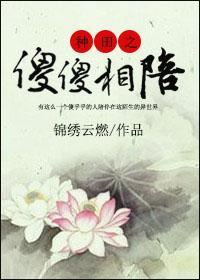
Accompany by A Fool to do Farming
+Add to Custom List
Sort
Add review
... Read More
The pacing in these chapters is masterful, I can't even. You start with an intimate, slow-burn scene that builds almost comedically — Ziqi keeping finding excuses, each one shorter and more frantic than the last, and Zhao Zheng'an just relentlessly but gently shutting them all down. Then BAM, time skip. “The moon had risen.” You don't get the explicit stuff but you ALSO don't need it, the author is smart enough to know what you imagined. Then it cuts to the dogs outside, which is such a brilliant pacing device because it gives you comic relief while also marking the passage of time, and then transitions into the gentle morning-after care scene. That whole middle section where Zhao Zheng'an cleans up and makes porridge has this incredibly tender, quiet rhythm. And then Zhao Ning arrives and drops the bomb: he's leaving today. The pace suddenly sharpens. The languid morning warmth gets slashed by the reality of separation. The chapter ends with Ziqi realizing it's almost noon and Zhao Zheng'an is already gone. That's a perfect structural beat — you're left with this hollow feeling of absence right where you want to turn the page. The author doesn't rush the emotional beats, lets them breathe, then catches you completely off guard with the departure news.
... Read More
This batch is a masterclass in pacing and I'm still processing it. We open with an almost impossibly cozy scene—two people on a bed, coins clinking, lazy banter. It's so domestic it hurts. And the author lets it breathe. Doesn't rush. Lets us actually sit in the warmth of it. Zhao Zheng'an playing with coins, Zhong Ziqi smiling blankly at him, the whole thing has this golden-hour quality. Then—the business discussion starts, and suddenly we're in a completely different register. Analytical, strategic, forward-looking. The dialogue shifts from flirtatious to practical, but it never loses the underlying intimacy. They're building something together, literally and figuratively. And then the transition to the next morning is SO smooth it's almost insulting. Zhao Zheng'an waking up alone, eating breakfast Zhong Ziqi left for him, carrying pastries out the door like some kind of gentle ghost. The prose slows down even more here. Short sentences. Deliberate details. 'Strolling along the path and facing the breeze.' I actually had to pause and appreciate this writing. But then—just when you're fully settled into the coziness—you get Zhang Feng Cai appearing with that 'shady voice' and everything tilts. The pacing slams on the brakes right there. The chapter ends mid-tension. No resolution. No comfort. Just... hanging. It's manipulative, honestly. The author knew exactly what they were doing. They gave us four hours of literary sunbeam before pulling the rug out. And I hate that I'm already desperate for the next batch.
... Read More
I keep coming back to the vegetable garden. Not because it's flashy, but because it's everywhere. The row of crops is "ready-made" — inherited from the previous generation of the Zhao family. The bamboo fence is "crooked and out of shape." Zhong Ziqi follows his memory of farming. This isn't just setting; this is the thesis of the entire passage wrapped in soil and seeds. Think about it: the garden is already there, but it needs tending. It was built by ancestors, but someone has to maintain it now. The fence is imperfect — crooked, out of shape — but it still holds. And Zhong Ziqi, who just came back from town with new seeds, has to decide what to plant before the autumn heat arrives. If he waits too long, there's nothing to eat this year. That's the metaphor, isn't it? The garden is the community. It's inherited. It's damaged. It needs work. And if you don't sow before the season changes, you starve. But here's what really gets me: the word "stupid." In Zhong Ziqi's territory, that word is forbidden. He replaces it with "Brother Zheng'an." This is linguistic landscaping — he's clearing weeds from the vocabulary the way he clears weeds from the garden rows. The three children, raised on the word "stupid" because that's what the adults call him, have to learn a new name. And when they do — "Brother Zheng'an, Brother Ziqi" — Zheng'an giggles. The word change transforms the relationship. Language isn't neutral. It's the fence. It's the seeds. It's the difference between a garden and a wasteland. Zhao Zheng'an's condition — his inability to navigate the world the way others do — is never explained. The author doesn't medicalize it. He doesn't pathologize it. He just shows us what happens when someone treats a disabled person as a brother instead of a fool. The theme isn't disability. The theme is dignity, and how easily it can be cultivated or destroyed depending on who's holding the watering can. Have you noticed how many gardens appear in this novel? I'm starting to think the whole book is one long metaphor for sowing before the heat comes.
... Read More
Let's talk about stakes for a second because on the surface this is just kids selling noodles. But the fifth coin - five coins, that's it, that's the first transaction - and the way the text describes Ziqi padding them in his hand, the satisfaction washing over him, the way Zhao Sheng breaks the jar and they all start chanting together... this is the moment where everything changes. Not because five coins is life-changing money, but because it's proof of concept. The external conflict is obvious - other vendors, the heat, the two established noodle shops on the pier who are probably already plotting how to squash this competition. But the internal stakes hit harder. Ziqi is a 'half-grown ger' operating in a world of experienced vendors who see him as either a joke or a threat. Every bowl sold is a vote of confidence in him as a legitimate businessperson. When the big man from the docks sits down and eats, he's not just a customer - he's a gatekeeper. If the working class of this market rejects Ziqi, the whole thing dies. If they embrace it, word spreads faster than any advertisement. The real tension isn't whether they'll make money today, it's whether they'll exist tomorrow when the heat hits and the competitors are waiting for them to fail.
... Read More
So this chapter is basically Slice-of-Life but make it business. The plot moves slow—Zhong Ziqi and Zhao Ning go help out at the shop, Huang Jin Lei shows up and starts working too. It feels like the story is just... breathing. But there's actually something clever happening here. The author is building world around these characters without any big dramatic events. You can feel the warmth of everyday life—the mud on the roads, the busy shop, people eating together. It's like watching a cozy drama where nothing huge happens but you still want to keep watching. The side CP between Huang Jin Lei and Zhao Ning is being set up slowly, subtly. One moment I noticed was when Huang Jin Lei rolled up Zhao Ning's sleeve because it got wet while washing dishes. Such a small thing! But it's the kind of moment that makes my heart do a little flip. The chapter ends with Zhao Zheng'an off on his first merchant trip somewhere in Jiang Nan. That's a thread being planted for later. I'm curious where that's going.
... Read More
I have to say, the way Huang Jin Lei walks back into his parents' life feels like a subtle but important pivot in the story. Up until now, the focus has been mostly on Zhong Ziqi and Zhao Ning's daily routines, their little restaurant drama, the matchmaker chaos. This introduces a new character who clearly carries weight—Zhong Ziqi even notes he 'must have killed people before.' That line alone sends a chill. It's not explicit violence; it's the implication of a past that will inevitably collide with the quiet village world we've seen so far. The plot smartly doesn't rush into action. Instead, it gives us a warm reunion, a meal in the rain, easy banter about embroidery and marriage prospects. But beneath that domestic surface, something is shifting. Huang Jin Lei is 'different,' serious, almost intimidating when stern. That contrast with his mother's joyful tears and his father's humble shopkeeper life tells me he's either returned for a reason tied to the larger conflict, or his presence will force the protagonist group into a new direction. I'm curious whether his soldier background will become central or just color how he interacts with this community. Either way, the author knows how to layer backstory into casual observation. The rain motif also works nicely here—literally closing in as they rush home, mirroring how outside forces are about to disrupt this stable environment.
... Read More
I honestly didn't expect this batch to hit me so hard, but man, the pacing in chapters 167-170 is genuinely masterful. Let me back up—when the story first zooms into the business angle with Zhao Bao Gen and all the gossip about what Zhong Ziqi might be involved in, it feels like filler, right? Just village drama. But then, oh then, it pivots so smoothly into the autumn harvest scenes and suddenly you're living in this world. The author doesn't rush the romance at all, which is either brave or masochistic, and I am HERE for it. The dumpling scene alone—Zhao Zheng'an failing miserably at making dumplings while Zhong Ziqi laughs his ass off—that's where the chapter truly earns its warmth. It's not plot-driving, sure, but it's emotionally driving, and that's harder to do. What really works is the structural contrast: the villagers being jealous and scheming on one side, and this soft, quiet moment of two guys making dumplings on the other. The tension isn't from will-they-won't-they anymore—it's from watching two people who already care for each other finally just… be themselves together. And that last line? "If you laugh again… I'm going to kiss you." That's a perfect structural button to end on. Not a full-on confession, not even a proper make-out scene, just a threat wrapped in affection. The author knows exactly what they're doing with pacing here.
... Read More
What I love about this scene is how the stakes operate on multiple levels simultaneously. On the surface, it's a family argument about money and labor — pretty mundane, right? But the author keeps pulling the camera back to reveal deeper wounds. The initial conflict: Zhong Ziqi vs. a family that sold the previous owner. That's betrayal at the most fundamental level — family as predator. The financial subplot adds another layer: Grandfather's two Guan salary, the house renovation, who pays for daily expenses. All of this creates a picture of systematic exploitation that went unchecked for years. But the real stakes escalation happens when Zhao Zheng'an enters the conversation. Now it's not just about Zhong Ziqi's past — it's about threatening his present and future. The family is trying to take his husband's business, essentially extending their parasitic reach even after being cut off. And Zhong Ziqi's response — 'it's just a matter of hands to deal with you' — raises the stakes from financial dispute to physical threat. What makes this work so well is that every character genuinely believes they're in the right. The family isn't cartoonishly evil — they're convincingly entitled. 'We are all one family, that means we should help each other.' How do you argue with that? That's the brilliance of the conflict design.
... Read More
Okay, we need to talk about Zhao Zheng'an because something about his choice in this chapter has me deeply unsettled—in the best way. He sees Zhong Ziqi being attacked, and instead of running, instead of strategizing or even considering his own safety, he just… goes. "He rushed directly to Zhong Ziqi's side, pushing those two men away and looking at them with a fierce face." That's not calculated. That's instinct. And then he's overwhelmed. The text says he was "too busy to take care of himself" and ended up lying on top of Zhong Ziqi, protecting him. That image is everything. He becomes a shield. He becomes something broken so the other person stays whole. But here's what really gets me: Zhong Ziqi's reaction. He's not just scared—he's furious, panicked, then desperately hopeful. "Zheng'an! Zhao Zheng'an … you wake up … Don't scare me! Or else I won't want you!" That line. That's not just affection. That's terror disguised as a threat. It's the kind of thing someone says when they're trying to convince themselves the worst won't happen. And then, later, the narrator tells us: "He had never felt this kind of emotion before… He thought that perhaps he had become somewhat fond of him in this slow contact." Wait. "Slow contact." That's the key. Their relationship wasn't built on grand gestures or early confessions. It was built in the quiet moments, the routine, the shared life. And now, faced with potential loss, Zhong Ziqi is realizing that Zhao Zheng'an isn't optional. He's not "not essential." He's necessary. The attack strips everything away—the business worries, the daily annoyances, the distance—and leaves only this: the fear of a world without him. And Zhao Zheng'an's silence, his unconscious state, forces that realization to the surface. Their dynamic shifts from something tentative to something irreplaceable. The chapter doesn't show them healing together; it shows Zhong Ziqi alone, holding a body, understanding what he stands to lose. That's character development through vulnerability. And it's devastating.
... Read More
What strikes me most is how relationships define everyone here. Ziqi and Zhao Zheng'an share an unspoken tenderness—he calls her 'my wife' with such proud simplicity, and she patiently guides him through bedtime routines. It's not flashy romance; it's built through small acts like wiping his face or accepting his helplessness with a sigh. Meanwhile, Zhao Ning and Zhao Sheng bicker like typical siblings, but there's clear affection underneath. Zhao Ning teasingly complains about being sidelined, yet he still brings eggs as a gift. Even Zhao Amu, though off-screen, shows care by sending the eggs. These dynamics feel lived-in and real. The author doesn't over-explain; we see love through actions, not declarations.
... Read More
I keep thinking about how food is basically the language this story speaks in. The pregnancy reveal literally happens because of a greasy smell — Ziqi smells oil and immediately heaves. Food is what makes him sick AND what might keep him alive, because Zhao Jiang's advice is to cook with vinegar, make things sour, find what he can tolerate. It's almost poetic, right? The thing that sustains life is also what rejection happens to. And ZZA's response — buying sour radish — is him trying to navigate this paradox. Then there's 'Quite Delicious,' the restaurant where the whole family gathers. It's a place of nourishment, literally and figuratively. Everyone eating together, talking about past pregnancies, sharing wisdom — the restaurant is the stage where family bonds are performed and reinforced. And the name itself, 'Quite Delicious,' feels like a statement of pride and hope. This family builds things. They cook, they serve, they sustain. The pregnancy itself is a symbol I can't ignore. This is a world where men can get pregnant, where the impossible is just... normal. But the story treats it with such domestic realism — morning sickness, sour cravings, worried partners — that the supernatural element fades into the background. What's really being celebrated here isn't the mpreg mechanic; it's the ordinary miracle of creating a family, of loving people enough to panic-buy sour radish and stand in doorways watching the people you love take care of each other.
... Read More
Okay so there's this one detail in these chapters that I literally did a double-take on. Zhong Ziqi tiptoes out early in the morning to dig bamboo shoots so he doesn't wake Zhao Zheng'an. And the narrator drops this line: He was completely unaware that he was gradually unable to let go of Zhao Zheng'an. He was becoming more and more comfortable with his role as a nanny, a father and also as a wife. I AM NOT OKAY. This is classic dramatic irony at its finest. The narrator is basically whispering spoilers directly to us while Zhong Ziqi is over here cluelessly playing domestic life like nothing is happening. And the most beautiful part is that this isn't some big romantic gesture — it's just him quietly making sure Zhao Zheng'an has breakfast material ready, being considerate in the smallest ways. That's how you build a relationship in fiction. Not with grand declarations but with someone tiptoeing through the dark so they don't disturb their companion's sleep. Also the structure here is interesting — we get this gentle morning slice-of-life followed immediately by the Jin Hua Restaurant chapter, which I assume sets up new plot complications. The author knows how to pace these quiet domestic moments against the looming business drama. Zhao Amu's warning about the whole village finding out about the vegetable deals — that's a ticking clock I can feel from here. Who's going to come knocking? What happens when Zhong Ziqi's secret sourcing operation gets exposed? The plot is quietly setting up some serious conflict and I'm already sweating.

Leave a comment

You must be logged in to leave comments. or
