Summary

... Read More

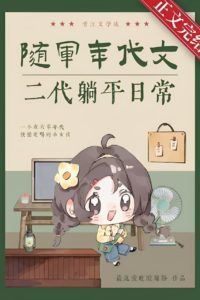
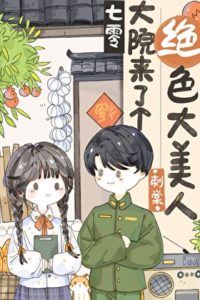
Su Yin is a nineteen-year-old orphan from a rural county in southwest China. After her grandfather passes away, she discovers that her third uncle and aunt intend to sell her into a forced marriage with the militia commander’s son to secure a bride price. A week prior, Su Yin suffered a high fever and experienced a vivid dream in which she learned her life was a fictional narrative. In that story, she was a minor character who married her abusive husband, was denied the opportunity to take the college entrance exam, and died young. Determined to alter her fate, Su Yin flees to Beijing, where her grandfather had entrusted her to an old comrade-in-arms, Gu Hongkai, a retired military commander. She arrives at the Gu family compound with the specific goal of hiding there for a year and a half until the college entrance exam is reinstated, hoping to use her knowledge of the future to secure a university education and a new life.

Upon arrival, Su Yin is introduced to the Gu family, including the formidable Old Master Gu and his grandson, Gu Cheng’an. Gu Cheng’an is a twenty-year-old rebellious young man who despises the arranged marriage his grandfather has imposed upon him. He is arrogant, sharp-tongued, and initially refuses to acknowledge Su Yin’s existence, viewing her as an unwanted obstacle to his freedom. The family dynamic is complex; Gu Cheng’an’s mother, Qian Jingfang, is wary of Su Yin’s intentions but treats her with polite distance. Meanwhile, Su Yin navigates her new environment with caution, relying on her wits to avoid conflict. She befriends Aunt Wu, the family housekeeper, by offering helpful suggestions for meals that improve the household’s dining experience, thereby securing her place within the home without overstepping.

A pivotal moment occurs when Su Yin encounters Song Yuan, a former educated youth she met on the train, who is now working at a local supply cooperative. This connection allows Su Yin to access newspapers and submit an essay to the Provincial Daily, earning her a small income and a sense of independence. Simultaneously, Gu Cheng’an begins to notice Su Yin’s quiet competence and intelligence. He discovers she purchased the last copy of a newspaper that contained subtle hints about upcoming economic policy changes, specifically regarding agricultural reforms. This observation challenges his initial dismissive attitude toward her, revealing that she possesses a sharp mind despite her rural background.

The core conflict revolves around Su Yin’s dual existence: she must maintain the facade of a shy, obedient countryside girl while secretly preparing for the college entrance exam. She also faces the threat of her third uncle and aunt, who track her down to Beijing and attempt to slander her character to the Gu family, claiming she is immoral. However, Old Master Gu’s authority and Su Yin’s own dignified conduct neutralize this threat. As the weeks pass, the tension between Su Yin and Gu Cheng’an shifts from outright hostility to a grudging respect. Gu Cheng’an, who initially sought to avoid her, finds himself intrigued by her calm demeanor and strategic thinking. Su Yin, in turn, recognizes that her survival depends on navigating the political and social currents of the era, using her foresight to make careful decisions.

The story direction moves toward Su Yin’s academic preparation and her evolving relationship with the Gu family. She continues to study diligently, leveraging her knowledge of future events to guide her actions without revealing her secret. Gu Cheng’an begins to spend more time interacting with her, testing her responses and gradually breaking down his own prejudices. The narrative sets the stage for a deeper emotional connection as both characters confront their respective expectations and societal pressures. Su Yin’s ultimate goal remains clear: to pass the college entrance exam and escape the fate outlined in her dream, while Gu Cheng’an’s rigid opposition to arranged marriage begins to soften as he sees Su Yin not as a burden, but as a capable and intelligent companion.

Latest Release
DateGroupRelease
2026-08-11shanghai fantasy c61
2026-08-11shanghai fantasy c60
2026-08-11shanghai fantasy c59
2026-08-11shanghai fantasy c58
2026-08-11shanghai fantasy c57
2026-08-11shanghai fantasy c56
2026-08-11shanghai fantasy c55
2026-08-11shanghai fantasy c54
2026-08-11shanghai fantasy c53
2026-08-11shanghai fantasy c52
2026-08-11shanghai fantasy c51
2026-08-11shanghai fantasy c50

Community Reviews

Rating(4.1 / 5.0, 10votes)
5 stars
4(40%)
4 stars
3(30%)
3 stars
3(30%)
2 stars
0(0%)
1 stars
0(0%)

Popular reviews

... Read More
I need to talk about the Wen Jun moment because honestly it was one of the best three minutes of reading I've had in a while. Su Yin is talking to Wen Jun—polite, grateful, asking for directions—and Gu Cheng'an appears behind her like a storm front moving in. "No need." His voice is cold. He doesn't even look at Su Yin. His gaze stays locked on Wen Jun, and his words are described as "shards of ice." What makes this scene work so well is that the stakes feel genuinely high even though nothing dramatic is happening. No one is fighting. No one is yelling. But the emotional tension is razor-thin. Gu Cheng'an is claiming Su Yin—"I'll take her. You go about your own business"—and he's doing it with the casual authority of someone who has never been told no in his life. Wen Jun raises his brows, nods, and leaves. He doesn't push back. He understands the hierarchy. And Su Yin? She's just standing there confused. "Why was he acting so strangely?" She's digging through her memory of the book's plot trying to figure out who Wen Jun even is. The reader knows she's a transmigrator or at least has knowledge of the story, but in this moment she's genuinely lost, and that vulnerability makes us root for her. The internal conflict is equally sharp. Gu Cheng'an's whole rule is "minding his own business," and yet here he is, leading Su Yin through alleys, taking her to a different recycling station, carrying her books, buying her lunch. Every action contradicts his stated philosophy. The author makes us feel this dissonance without ever spelling it out. Xin Mengqi's conflict runs in parallel and it's devastating in its own way. She brings lunch in the scorching sun. She's been circling him every day. And he's polite to everyone else in the compound but never has a kind word for her. The contrast isn't just cruel—it's informative. It tells us exactly what Gu Cheng'an values and what he refuses to give, and it makes us understand Xin Mengqi's pain without making her a villain. The stakes here are emotional survival. For Su Yin, it's about finding her place in a household where she's both valued and used. For Gu Cheng'an, it's about confronting feelings he has no vocabulary for. For Xin Mengqi, it's about loving someone who will never love her back the way she needs. And the author keeps all three threads taut without ever letting any of them snap.
... Read More
I've been turning over what this story is really about beneath the surface, and I keep coming back to the idea of books as both literal and symbolic objects. Su Yin buying secondhand textbooks and exercise books isn't just a plot detail—it's an act of faith. The text tells us that "in the past decade of mass movements, teaching in many places had been neglected." Books are scarce. They're found in recycling stations among battered pots and pans. But Su Yin digs through them anyway. She's not just collecting knowledge; she's collecting a future. The three neat stacks on her desk—textbooks, exercise books, storybooks—are a taxonomy of survival. The first two are for getting ahead. The last one is for staying human. And then there's the knitting. Su Yin buying yarn to make sweaters for the Gu family. This is such a quiet, domestic act, but it's loaded. She's using her earned money—not family money, not charity money, her own ten yuan from manuscript fees—to create something warm for people who aren't her blood. The old madam says "Yinyin is promising!" and it's clear that Su Yin's value in this household is being measured not just by her obedience but by her usefulness, her productivity, her ability to contribute. The sweaters are also a kind of armor. Winter is coming—"by the end of October, sweaters would come in handy." Su Yin is preparing for hardship before it arrives. She's always been a planner, a survivor. Then there's the recurring image of Gu Cheng'an carrying things for her. The heavy sack of books. His hand pausing on his chopsticks when he sees her eat without picking. The way he lifts the bag from her arms because her wrist looks like it could snap. These small acts of physical care are the story's way of showing emotion without naming it. He can't say he cares, so he carries her burden instead. The old man using Su Yin as a moral example against Gu Cheng'an at dinner—that's another layer. She's being held up as the model citizen, the productive worker, while he's the privileged one who needs correcting. But the story seems to be asking: who is really thriving here, and who is just performing it?
... Read More
"The yellow glow of the electric lamp bathed the table and climbed the towers of books." I need to just sit with that sentence for a second. That's it. That's the whole note. The author takes this moment—Su Yin alone in her room, sorting secondhand books by lamplight—and turns it into something that feels almost sacred. Three stacks: textbooks, exercise books, storybooks. Like she's organizing her entire future into neat little piles. And the worldbuilding around her is equally understated but so vivid. The post office. The Xinhua bookstores with nothing. The recycling station deep in a narrow alley, piled with battered pots and pans, the wooden door weathered gray. You can smell it. You can hear the clatter of the pots. The towering stack of books beside the door like treasure waiting to be dug up. Then there's the canteen scene—most employees already eaten, not crowded, Gu Cheng'an ordering two meat dishes and two vegetable dishes because he has meal tickets to spare. The contrast between his world and hers is built through these tiny environmental details, not through exposition. She has no meal tickets. He does. She's counting every cent. He tosses money around like it's nothing. The Gu family home itself feels alive too. The old man reading the newspaper in the sun. Aunt Wu shelling corn. Qian Jingfang coming home from work. These aren't backdrop—they're the texture of daily life in this era, and the author doesn't overexplain any of it. We just absorb it. I also love how the compound alleys feel—blue brick walls, crisscrossing in all directions, enough to get lost in. Su Yin gets dizzy just looking at them. It's a maze, and she's navigating it both literally and socially.
... Read More
Here's what's actually impressive about the pacing: the author could have spent three chapters on the train ride and it would have been fine, because every scene has a purpose. Chapter 1 establishes Su Yin's situation, her motivation, and drops the big reveal that she knows she's in a book. Then it immediately pivots to the journey itself—the physical discomfort, the hunger, the small kindness from the middle-aged woman offering tugela, the conversation with Song Yuan. None of it feels filler. The structure is clever too. The author uses a flashback within the train narrative to explain WHY Su Yin is running, which is way better than just starting with exposition. We learn about the fever dream, the arranged marriage, the beatings, the torn-up exam registration form—all of it woven into Su Yin's thoughts as she's looking out the window. By the time we get to Beijing, we already care deeply about whether she'll be safe. And then Chapter 2 immediately pivots to the third uncle and aunt discovering she's gone. The scene where Su Jianshe realizes she's in Beijing and they've lost the two hundred yuan bride price? That's a perfect counterpoint to Su Yin's relief. The stakes just doubled. The author is playing with two timelines—Su Yin's journey toward safety, and the people she's escaping closing in. That's classic tension-building, and it's done in just two chapters. The only thing I'd say is that the transition from the train to the military compound felt slightly rushed, but honestly, I was too invested to care.
... Read More
I need to talk about the opening chapter because the sensory details in that train carriage are absolutely insane. The author didn't just describe a train—they built an entire world inside those six hours of rattling metal. Let me just quote this part because it stuck with me: "Bundles and bags were piled high. Men and women dressed in coarse black, gray, and dark blue cloth bustled about, trying to cobble together a dinner to quiet their stomachs." That's it. That's the whole vibe. No fancy adjectives, just the color palette of 1970s rural China—black, gray, dark blue—and the sound of people trying to make something edible out of nothing. And then there's the contrast when Su Yin arrives in Beijing. The military compound with its phoenix trees, dappled golden light, white two-story houses, red-brick buildings. The Red Flag sedan. The black-and-white TV sitting on a cabinet like it was nothing. All of this is filtered through Su Yin's eyes, and that's where the worldbuilding really works—you're not getting an info dump, you're getting a country girl's first impression of urban prosperity. She notices the loquat tree in the yard, the vegetable patch, the fact that the walls are "white and spotless." These are the details that matter to someone who grew up in a drafty thatched house. The author also drops in these small worldbuilding moments without making them feel forced—the zhiqing returning to the city, the iron rice bowl jobs, the fact that going anywhere required an introduction letter. It all feels lived-in, not researched. I could practically smell that train carriage.
... Read More
I absolutely lost it at this exchange: "Where is Su Yin?!" Su Jianshe's patience was wearing thin. "What? I can't hear you, my ears aren't good…" Pointing at her ears, the great-aunt played deaf. That's it. That's the entire scene. The great-aunt has been feigning deafness this whole time because she knows exactly where Su Yin is and she is NOT talking. The fact that Su Jianshe gets so frustrated and they leave empty-handed? Chef's kiss. This is the kind of darkly comic moment that makes a story feel alive. And Su Yin's dialogue is perfectly calibrated—she's reserved, cautious, giving just enough information to seem polite but not enough to be vulnerable. When Song Yuan asks if she's a zhiqing, Su Yin says "No, I'm going to Beijing… to visit relatives." The ellipsis does so much work there. She's lying by omission and she knows it. The narration itself has this dry, observant voice that never feels intrusive. When Liu Maoyuan thinks about how well-matched Su Yin and Gu Cheng'an would look together, the author doesn't moralize or comment—it just sits there, letting us judge for ourselves. That's confident writing. Song Yuan's voice is the most distinct—she's warm, chatty, uses exclamation points like they're going out of style. "Ah?! I thought you were from Beijing! You really can't tell…" Those dimples, that energy—she feels like a real person, not a plot device. I'm already invested in their friendship.
See all reviews

Characters

See all characters

Custom lists

See all custom Lists