A Soldier's Wife in the 1960s Frontier
+Add to Custom List
Novel Info
  • Author:
  • 鸩离
  • Status:Ongoing

Summary

... Read More

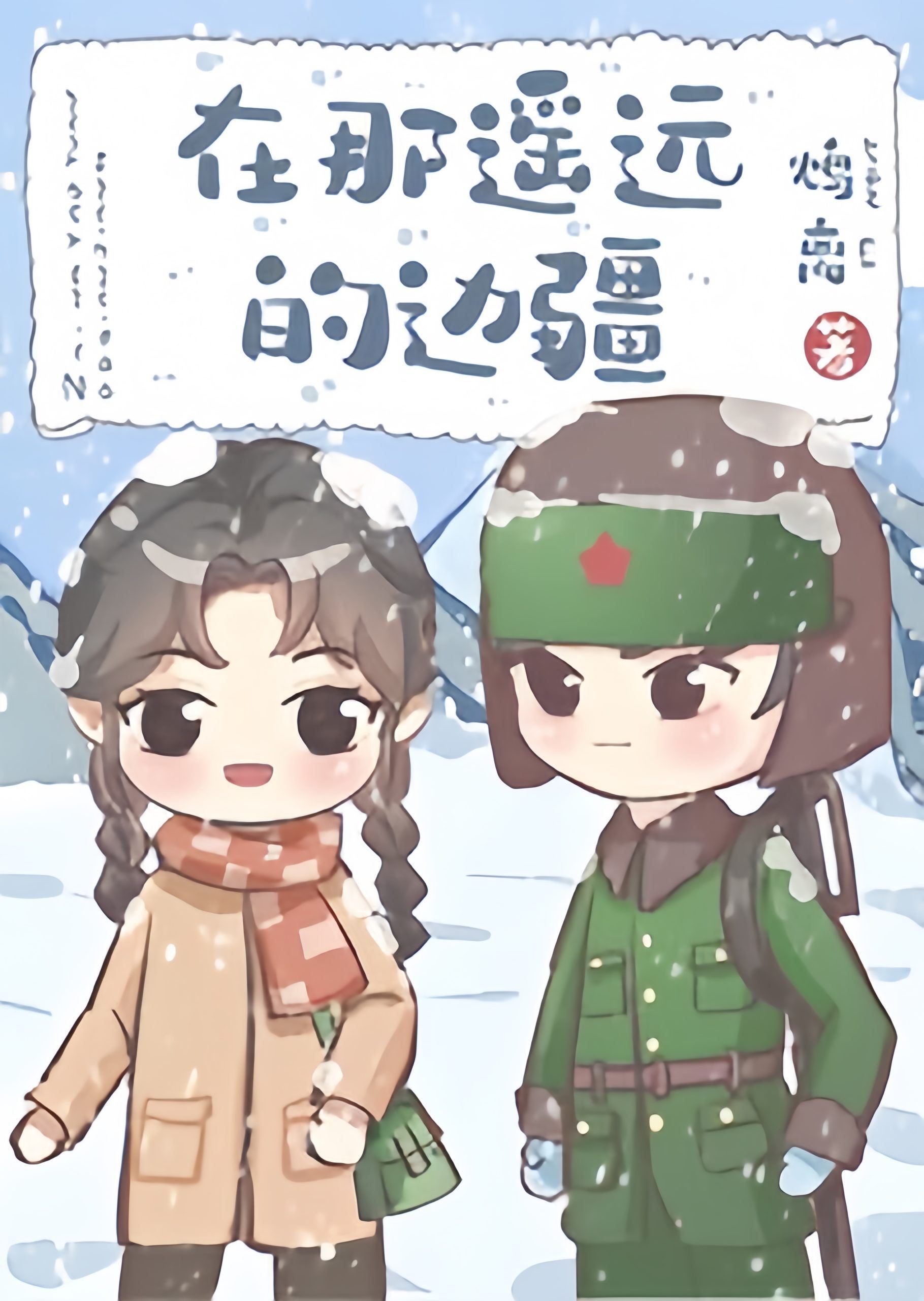
Yang Qiujin is a strong, capable woman living in the Pioneer Production Team in rural southwest China during the Cultural Revolution era. She works as the brigade accountant and raises her six-year-old son, Chen Tianyou, alone while her husband, Chen Shengqing, serves in the army. Chen Shengqing left shortly after their marriage seven years prior, sending money home regularly but never returning. Yang Qiujin endures village gossip and hostility from her second sister-in-law, Tian Chunlian, who resents Yang Qiujin’s relative prosperity and her mother-in-law’s favoritism. Despite her tough exterior, Yang Qiujin harbors deep fears about her husband, having witnessed his cruel nature as a child. She recalls seeing him brutally kill a rabid dog and threaten her with violence when she discovered his dark secrets. She knows he is a "smiling tiger," gentle on the surface but ruthless underneath, and she dreads his return.

The story shifts when a letter arrives announcing Chen Shengqing’s promotion to battalion commander and his imminent return. Yang Qiujin feels a mix of relief and dread, knowing that his return disrupts the fragile stability she has built. Simultaneously, the political climate intensifies as Red Guards arrive in the village, targeting "feudal" elements. Yang Qiujin secretly aids two disgraced professors, Zheng Jitong and Cai Zhengmao, who were sent to the countryside for reeducation. She risks her own safety to provide them with food and medicine, reminding them to stay alive and hopeful despite the persecution they face.

Chen Shengqing returns with his former fiancée’s brother, Ji Mingchen, who is also a military officer. The reunion is tense and awkward. Chen Shengqing presents a charming facade to the villagers and his mother, claiming he was on secret missions in the Soviet Union and could not return. He expresses gratitude to Yang Qiujin for caring for his family, but his eyes remain cold and calculating. Ji Mingchen’s presence adds another layer of complexity, as he and Yang Qiujin share a complicated past involving a framed scandal orchestrated by Shi Fangfang, the women’s director and Yang Qiujin’s enemy.

Shi Fangfang, who stole Yang Qiujin’s original marriage prospect through deceit, now holds a position of power and resents Yang Qiujin’s success. She watches the reunion with jealousy, wondering if Chen Shengqing will take Yang Qiujin with him or if Ji Mingchen will return for her. Meanwhile, Yang Qiujin’s sister, Yang Qiuyue, seeks her help to escape an abusive marriage to Ke Jian, who falsely accuses her of infidelity. Yang Qiujin supports her sister’s desire for divorce, contrasting her own trapped situation.

As Chen Shengqing settles into the family home, he begins to assert control, questioning Yang Qiujin’s independence and her relationship with Ji Mingchen. He brings gifts and acts the part of the devoted husband, but Yang Qiujin remains guarded, aware of his true nature. The household dynamics shift as Chen Shengqing’s authority reasserts itself, threatening the autonomy Yang Qiujin has fought to maintain. The story sets the stage for a confrontation between Yang Qiujin’s resilience and Chen Shengqing’s hidden cruelty, while the broader political turmoil continues to threaten the community.

The narrative explores themes of survival, female agency, and the impact of political upheaval on personal lives. Yang Qiujin’s strength is tested not only by her husband’s return but also by the volatile social environment. Her secret support for the persecuted professors highlights her moral courage, even as she navigates the dangers of the Red Guards’ campaigns. The arrival of Chen Shengqing disrupts the delicate balance of her life, forcing her to confront the man she fears and the past she thought she had escaped. The story ends with the family reunited but the underlying tensions unresolved, promising further conflict as Yang Qiujin fights to protect her son and her independence against a husband whose true intentions remain unclear.

Latest Release
DateGroupRelease
2026-08-11shanghai fantasy c8
2026-08-11shanghai fantasy c7
2026-08-11shanghai fantasy c6
2026-08-11shanghai fantasy c5
2026-08-11shanghai fantasy c4
2026-08-11shanghai fantasy c3
2026-08-11shanghai fantasy c2
2026-08-11shanghai fantasy c1

Community Reviews

Rating(4 / 5.0, 36votes)
5 stars
13(36%)
4 stars
12(33%)
3 stars
8(22%)
2 stars
3(8%)
1 stars
0(0%)

Popular reviews

... Read More
Okay, let me just say—this family drama is WILD. The whole setup with the Chen family splitting into two camps is one of the sharpest plot devices I've seen. You've got Tian Chunlian's side and Yang Qiujin's side, and the tension between them isn't just petty gossip—it's rooted in actual survival economics. After the split, Tian Chunlian's family is scraping by while Yang Qiujin's side is eating sweet potato porridge with yellow-heart varieties. That contrast alone tells you so much about who won and who lost. But here's the thing that really got me: the fake illness. Tian Chunlian suspects Li Xiu'e faked her sickness to manipulate the property division, and honestly? The narrative doesn't completely rule it out. Li Xiu'e recovers overnight after the split, energetic and able to work. That's suspicious. Whether she actually faked it or not, the fact that Tian Chunlian believes it says everything about the atmosphere of distrust in this household. The plot also layers in Yang Qiujin's backstory with her father in a way that explains her current personality. The stabbing incident, the pig's head beating—this isn't just backstory for flavor, it's the foundation of why she's so fiercely independent and unafraid of conflict. The author is smart about not dumping all this info at once either. We get it in pieces: first the family rivalry, then Chen Shengqing's dark nature, then her father's abuse. Each revelation makes you recontextualize everything that came before. And that ending with Chen Shengqing's threat—"Next time, remember to hide better. If I find you again, I'll dig out your eyes." That line is a plot bomb. It reframes their entire marriage. She married a man she saw committing violence as a child, and now she's trapped in it. The dramatic irony here is absolutely brutal.
... Read More
I am not okay. I am literally not okay after reading the scene where Chen Shengqing watches Yang Qiujin walking toward him under the red sunset. Let me just sit with that image for a moment. She's wearing a simple azure blue cotton coat, her ponytail swaying, walking 'like a morning glory in the breeze.' And he's thinking—this woman took care of me and my son for seven years without complaint, and as long as she's by my side, I will make it up to her. I will never leave her again. I will grow old with her. Seven years. She raised their son alone. She fixed the lightbulb herself before he even got there. She worked around the village schedule to avoid gossip while still being a present mother. And he notices ALL of it in this one quiet moment. Not with grand words, but with this internal vow that hits so much harder than any declaration. And Tianyou! The boy who had stopped dreaming about having a father because disappointment wore him out—suddenly he's laughing on his dad's shoulders, shouting 'Go go go!' and protecting his dad's honor in front of his classmates. That shift from 'didn't the aunties say my dad was dead?' to 'this is my dad, he's an officer, he can drive tanks' broke me. The emotional arc from resentment to pride to joy, all in one afternoon. Also Yang Qiujin's bitter thought when she sees him dressed up for Tianyou but not for her? 'He's truly a jerk. The child is more important to him than me.' Oof. She's not wrong to feel that, even if the reader knows he actually did shave and shower specifically to impress HER. The dramatic irony is killing me.
... Read More
Let's talk about how this chapter moves, because the pacing is actually really interesting. It opens with an unpacking scene — basically a prop reveal — and you'd think this would be slow, right? Seven cans of malted milk, five bags of milk powder, ten cans of fruit... the author could have just said "he brought lots of gifts." But no. They itemize everything. And I think that's deliberate. The slow unpacking mirrors the slow rebuilding of a marriage. Each item is a brick in the foundation of trust they're trying to lay. Then the money reveal hits like a drum solo. 1,200 yuan. The pacing accelerates — Yang Qiujin counts it, is shocked, Chen Shengqing softens. We get the hand-holding moment, the thank you, the deflection, the exit. Quick emotional beat, quick exit. Then — and this is where I appreciate the author's craft — the scene shifts to the kitchen almost immediately. No transition paragraph, no "meanwhile." Yang Qiujin just walks out and we're in the next room. This is how real life flows. You don't get chapter breaks between emotional moments and practical ones. The Tian Chunlian interruption is where the pacing gets clever. She knocks, Yang Qiujin opens the door, hands over a portion, closes it. Fast. Efficient. Then the chapter follows Tian Chunlian into her own home where she complains to her husband, and THEN the Red Guards arrive. The pacing here is almost comedic in its speed — one moment she's demanding more gifts, the next she's on the ground trembling. The Red Guard scene itself is short but devastating. It doesn't linger. The author doesn't give us a long horror sequence — just a quick knock, a kicked gate, a confirmation of military status, and they leave. This brevity is actually more powerful than a longer scene would be. It mirrors how these raids happened in real life: sudden, brief, terrifying. Then we're back to the Chen household for dinner, and the pacing slows again. The rice-swapping scene with the mother-in-law plays out in real-time dialogue, almost like a short play. By the time the chapter ends, we've had gift-reveal speed, emotional acceleration, comedic interruption, political terror, and domestic drama — all in one chapter. That's tight pacing. No filler. Every scene earns its place.
... Read More
"No need to thank me. I just don't want to part with the money you gave me." This line. This absolute line. I have read it three times and it gets funnier and more devastating every time. The dialogue in this chapter is genuinely excellent because every character sounds like a different person. Chen Shengqing speaks in short, measured sentences — he's a soldier, he's not used to emotional expression, and it shows. When he says "Qiu Jin, thank you. Thank you for waiting all these years and staying by my side," it's almost awkward in its directness. He's trying. The reader can see him trying. Yang Qiujin's dialogue is her armor. Every response is a deflection, a joke, a practical statement that avoids the emotional core. "Wasn't he working at the Capital Military Region Hospital?" — she immediately pivots to Ji Mingchen's career when confronted with her husband's gratitude. "I divided the items into three parts" — she talks logistics when the moment demands vulnerability. Her voice is sharp, practical, and deeply wounded, and the author never lets us forget it. Tian Chunlian is a different creature entirely. Her dialogue is loud, demanding, performative. "Your third brother is back, but didn't even visit you. His wife only gave us these small things. It's like charity!" This is someone who lives in other people's business and makes it her own. Her voice is instantly recognizable. Chen Shenggui is the quiet counterpoint. He speaks sparingly but each line lands: "Don't stir trouble in his household. When the time comes, my third brother and his wife will deal with you. Don't blame me then." This is a man setting boundaries with the calm threat of someone who has patience. And Li Xiu'e's dialogue is the most layered. Her performative sacrifice at the dinner table — "Try it. This is the meat the team distributed after the pig slaughter last year. Qiu Jin's bacon is much better than mine." — this is a line that works on two levels. She's offering food, but she's also performing goodness. And Yang Qiujin's response, "If outsiders see this, they'll think I'm abusing you. As a daughter-in-law, I eat the good rice, and you, as the mother-in-law, eat brown rice" — this is dialogue as warfare. Polite, correct, and absolutely devastating. The author's narrative voice is restrained, almost documentary in its observation. It doesn't tell us how to feel about these conversations. It just presents them, and the subtext does the heavy lifting.
... Read More
Let me just say this: the fifty-yuan deposit slip is the most important object in this entire novel. Think about it. Old Chen saved it specifically for Li Xiu'e because he worried that if he died in the war, his son and daughter would abandon his wife. He knew his other children—Chen Shenggui and his sister—wouldn't care. He knew Tian Chunlian and the others were greedy. So he left money to protect the one person who had suffered most. And when Chen Shengqing hands that slip to his brother, it's not just a transaction. It's a judgment. 'If anything happens to her and you don't step in, then our brotherhood is over.' That line carries the weight of the entire family's moral history. The deposit slip symbolizes everything: a father's love for his wife, the betrayal of his other children, the burden Chen Shengqing now carries as the 'good son,' the financial independence Yang Qiujin has earned through years of sacrifice. And then there's the grave itself—'a solitary grave, its weeds cleared, looking even lonelier amid the croaking crows.' That image of Old Chen's grave, isolated on the back mountain, surrounded by crows, is the visual embodiment of the family's fractured state. The father died with his eyes open, unable to see his third son return. The mother is left alone in the village. The brotherhood is broken. The only thing holding it together is that fifty-yuan slip and Chen Shengqing's promise. What's the deeper meaning here? Maybe that family isn't blood—it's obligation, love, and the choices we make when no one's watching.
... Read More
Okay so this whole section where Chen Shengqing confronts his brother and sister-in-law about their treatment of their mother? That was actually a pretty solid payoff. The setup was clear—Chen Shenggui and Tian Chunlian had been ignoring Li Xiu'e's illness for years while quietly dividing family property. When Chen Shengqing shows up with that deposit slip and lays out exactly what their father saved for his mother, it hits different because we've been watching this slow-burn resentment build. The author doesn't even need big dramatic speeches. Chen Shengqing just says 'Now that Dad is dead, the bond between us brothers and sisters is gone, isn't it?' and Tian Chunlian's whole performance of hospitality just... crumbles. That moment where she grabs the deposit slip eagerly and her eyes light up at the fifty yuan? Chilling. It shows exactly what kind of people they are without the narrator having to tell us. And then the grave scene—Li Xiu'e crying out to her dead husband, Chen Shengqing kowtowing repeatedly calling himself an unfilial son—that's the emotional peak of the whole arc. The plot here is doing exactly what it should: resolving the family conflict that's been simmering since Chapter 1, setting up the departure, and giving us that bittersweet moment before they leave. The transition from confrontation to grief to packing to departure feels natural, not rushed. One thing I'm curious about though—what happens when they actually reach the military camp? Will the frontier setting bring new conflicts, or is this more of a domestic drama now?
See all reviews

Characters

See all characters

Custom lists

See all custom Lists