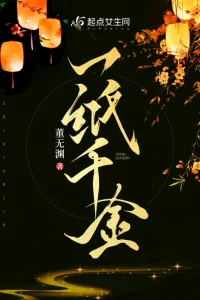
A Sheet of Gold
Novel Info

Summary

... Read More

He Xianjin, a modern woman with a weak heart who died at twenty-four, transmigrates into the body of a fifteen-year-old girl in the Great Wei dynasty. This new He Xianjin is the daughter of He Ai, a concubine in the wealthy Chen family papermaking clan, and a previous husband. After her mother’s death, she finds herself in a precarious position within the Chen household, where her father, Third Master Chen, is a romantic but incompetent man obsessed with his late wife. The family is led by the formidable Old Madam Qu, while Third Master’s legitimate wife, Madam Sun, harbors deep resentment toward He Ai and her daughter.

During the funeral rites, He Xianjin faces immediate threats. Chen Silang, Madam Sun’s youngest son, attempts to assault her, but she defends herself by pouring hot wax on his hand and threatening him with violence. This act shocks the household and draws the attention of the matriarch. Meanwhile, Madam Sun schemes to marry He Xianjin off to an aging, impoverished bookkeeper named Mr. Nian, hoping to remove her from the family and seize control of a profitable workshop. He Xianjin is subjected to starvation and neglect as part of this plan.

Refusing to accept her fate, He Xianjin sets fire to the latrine in the Yi Courtyard to force an audience with Old Madam Qu. She presents a meticulously kept ledger using a double-entry bookkeeping system she introduces from her modern knowledge, demonstrating her accounting skills. Impressed by her competence, Old Madam Qu challenges Mr. Nian to a calculation contest. He Xianjin wins decisively using mental math and the multiplication table, humiliating the traditional bookkeeper. As a result, she is appointed as the official bookkeeper for the Chen family’s Jing County workshop, accompanied by Third Master Chen, who is sent there to manage the business after being disciplined by his mother.

Upon arriving in Jing County, He Xianjin encounters resistance from the local staff, particularly Manager Zhu, who has been falsifying accounts to embezzle funds. The previous bookkeeper was reassigned rather than dismissed, indicating a entrenched network of corruption. Manager Zhu attempts to stall her by presenting fake ledgers and trying to move the real records, but He Xianjin asserts her authority, insisting on inspecting the actual accounts and taking control of the bookkeeping room. She recognizes the hostile environment and prepares to root out the corruption while establishing her position in a male-dominated field.

The story follows He Xianjin’s struggle to survive and thrive in a feudal society that offers women few opportunities. By leveraging her modern business acumen and accounting knowledge, she transforms from a marginalized concubine’s daughter into a valuable asset to the Chen family. Her journey involves navigating complex family politics, confronting corrupt employees, and asserting her independence against those who seek to control her fate. As she settles into her role in Jing County, she begins to build a new life defined by her own capabilities rather than the circumstances of her birth.

Latest Release
DateGroupRelease
2026-08-11shanghai fantasy c56
2026-08-11shanghai fantasy c55
2026-08-11shanghai fantasy c54
2026-08-11shanghai fantasy c53
2026-08-11shanghai fantasy c52
2026-08-11shanghai fantasy c51
2026-08-11shanghai fantasy c50
2026-08-11shanghai fantasy c49
2026-08-11shanghai fantasy c48
2026-08-11shanghai fantasy c47
2026-08-11shanghai fantasy c46
2026-08-11shanghai fantasy c45

Community Reviews

Rating(3.6 / 5.0, 9votes)
5 stars
2(22%)
4 stars
1(11%)
3 stars
6(67%)
2 stars
0(0%)
1 stars
0(0%)

Popular reviews

... Read More
Okay so let me just say—He Xianjin setting fire to the latrine is the most unhinged and brilliant thing I've read in ages. Like, think about it. She's being systematically starved, her space is being cleared out, and instead of sitting there pouting like the original owner would've, she literally ignites the toilet and calls it in. The woman chose ARSON as a communication strategy. I love her. The way the plot threads are weaving together is also satisfying. You've got the Chen family's internal power struggle on one track—Madam Sun scheming to marry off Jin-jie'er to Mr. Nian while Old Madam Qu is playing the long game with her third son's exam prospects. Then there's He Xianjin's survival arc, which is quietly escalating from neglected to actively hostile. These two tracks are about to collide and I am HERE for it. Also the KPI competition between the Jing County workshop and the mulberry bark workshop? That's such a clever detail. Chen Fu's fate literally hinges on profit margins. The author keeps these systemic pressures in the background while the personal drama plays out, and it makes everything feel grounded. When Nanny Zhang drops the information about the workshops' contrasting profitability—Manager Jiang's wife shopping freely versus Manager Zhao's wife wearing three-year-old patched clothes—it's such a casual way to deliver worldbuilding. But it also basically dooms Chen Fu. He's competing against a rigged system and doesn't even know it.
... Read More
The stakes in this text are layered in a way that keeps escalating, and what's terrifying is how each level of conflict feeds into the next. At the surface level, He Xianjin is being starved. The food goes from adequate to prison-rations to outright neglect. The cook literally tells her "Your mother's watching!" while serving her boiled greens. This is psychological torture disguised as filial piety. The conflict is personal, intimate, and daily. But beneath that, the Chen family is in a full power struggle. The eldest master is dead. The second son is "honest but slow." The third son is imprisoned and exiled on a KPI gamble. Madam Sun is maneuvering to control the mulberry bark workshop through a marriage alliance. Old Madam Qu is playing three-dimensional chess while mourning her dead favorite son. Every decision about He Xianjin's future is actually a move in a much larger game. And then there's the historical stakes. The text establishes this is a dynasty blending Song, Yuan, and Ming features—a time when women's status wasn't extremely low but still restrictive. The three-year mourning period is treated as flexible depending on whether you're a scholar's family or a rural one. This isn't just backdrop; it's the cage He Xianjin is trapped in. The suspense works because all three levels are happening simultaneously. You're worried about whether she'll eat, whether Chen Fu will return, and whether the family will survive their own infighting—all at once. When she kneels in Castor Hall and admits to the fire, the stakes just exploded. What happens next?
... Read More
The way this text transforms the Yi Courtyard from a setting into a psychological space is remarkable. Let me walk through the progression because it's basically a horror story told through domestic details. First, the removal of Chen Fu's belongings—four attendants packing up his clothes and amusements. Then the two maids in red and green spending half a day sealing He Xianjin's room with paper seals. "Such blatant precautions, not even trying to hide it." The text doesn't need to say the courtyard is becoming a tomb; it just lists the actions and lets the image sit there. Then the food degradation is almost clinical in its precision: one egg and congee to half a steamed bun and rice water to a plate of boiled greens and unhulled grain. This isn't dramatic description—it's a ledger of decline. You can feel the starvation happening in real time. But the most vivid scene is the latrine fire itself. A shivering figure huddled in the courtyard wall wrapped in coarse hemp cloth, surrounded by Nanny Zhang and Old Madam Qu, while inside the courtyard there are no flames and no smoke. Madam Sun arriving in a panic expecting disaster and finding... nothing. The absurdity of it. Who plays with fire in a latrine? The text itself asks this question. And yet He Xianjin's secret, radiant smile as she's led away—this is the moment the whole power dynamic shifts. She's not a victim anymore. She's the one holding the match.
... Read More
The narrative voice in this text is absolutely deadpan and I am obsessed with it. The author has this incredible ability to let the absurdity speak for itself without any commentary, and then occasionally drop a line that's so perfectly timed it made me actually laugh out loud. Take this exchange between Nanny Zhang and He Xianjin about the three-year mourning period: "I'm still in mourning… Isn't marriage forbidden for three years?" "Oh, you silly girl! That three-year rule is for officials and scholars. Go ask around in the countryside—who actually mourns for three years?!" The narration doesn't need to explain the class hypocrisy here. Nanny Zhang's voice does all the work. She's uneducated, she's practical, and she's the only person being honest in the entire text. And the narrator's asides are chef's kiss. "Most of those excuses were understandable. But the sow giving birth? That one was truly unforgivable. Couldn't they at least put some effort into their lies?" This is the narrator judging fictional servants for their creative writing skills. I'm not ready for this level of commitment. Then there's He Xianjin's internal voice, which is basically a modern woman trapped in a historical drama running a continuous commentary track. "Ah, so it's a KPI competition now." "This is either genuine devotion or catastrophic poor judgment. Probably both." The contrast between her modern sensibility and the world she's in creates this constant low-level humor that keeps the reading experience from getting too heavy. Madam Sun's dialogue is also wonderfully distinct—her rapid-fire scheming, her eager enthusiasm, the way she pivots from cruelty to flattery in a single breath. You can hear her voice. Old Madam Qu speaks in measured, deliberate sentences that carry the weight of someone who has survived by being cold. Each character has a rhythm.
... Read More
The shadow puppetry scene is genuinely one of the most vivid set pieces I've encountered in this novel. Let me just... sit with it for a moment. It's the twelfth lunar month, wind and frost and rain have just swept through Jing County, and night has fallen. Sixth Master Chen and Manager Zhu are hosting Chen Fu at the Changqiao Guild for a southern shadow puppet show and dinner at Tianxiang Restaurant. Xianjin is there too, obviously, because she's been tagged along like a very sharp, very dangerous pet. And then the author just... drops this description: "one performer manipulating eight puppets in four simultaneous fights, with all role types—sheng, dan, jing, mo, chou—appearing together." That's it. That's the sentence. No fancy adjectives, no flowery prose. Just the raw image of one person controlling eight puppets in four different battles at once. And the narrator adds, almost reverently, "It truly was one mouth tells all under heaven, two hands command a million troops." What I love about this scene is how the physical space maps onto the power dynamics. Chen Fu and his group are in a private box upstairs—elevated, separated, watching. Xianjin sits beside him, and the text says their profiles overlap in the glow of the stage: "The girl's eyes sparkled; the romance-brained boy leaned forward in anticipation. Two very different profiles overlapped." This is such a specific, cinematic image. You can see it. Two faces, side by side, lit from below by the puppet theater's lamp, both captivated but for completely different reasons. Then the camera pans down to the main hall, and we're suddenly in a completely different world. Zhou Ergou and his crew are squeezed in among laborers in short jackets and sun-darkened skin. They spent their last three wen just to get in—three wen that could've bought a bowl of plain noodles. The contrast is brutal. Upstairs: private box, tea being poured respectfully, three wen is pocket change. Downstairs: workers who haven't eaten, three wen is a day's survival. And the theater itself—the low barrier to entry, the sardine-packed main hall, the upstairs boxes for the wealthy—this is a world that feels fully lived-in. The author doesn't need to explain the class structure. It's right there in the seating arrangement. Rich or poor, everyone could watch, but seating varied. That's the entire economic hierarchy of this world in one sentence. Nanny Zhang's perspective is the perfect lens for all of this. She's a widowed matron who's seen Chen family drama before, but this? This is new. She watches Xianjin extort eight hundred taels and then immediately redirect it to workers' wages, watches Chen Fu sit with a bruised backside and still lean forward for the puppets, and she just... tilts her head at the same angle to watch the show seriously. The image of three people in a box, all watching the same puppets from different positions in their lives, is genuinely beautiful.
... Read More
I need to talk about Chen Fu because the way this text handles him is genuinely surprising. At first read, he's just the lovestruck fool—tied up in the stables, beaten fifty times, running a fever, scraping together whatever silver he has to send food to He Xianjin through Nanny Zhang. The kind of guy who makes terrible decisions for love. But then you realize: he's the only person in this entire household who is actually being kind to her. Madam Sun? She's arranging to marry He Xianjin off to a widowed bookkeeper as part of some elaborate scheme to gain control of the mulberry bark workshop. Old Madam Qu? She's coldly calculating how long the mourning period can be shortened. Second Madam Qu? She's pouring tea and making dry observations. Everyone is using everyone else. And Chen Fu, who the text explicitly calls a brainless second-generation rich kid, is the one sneaking food through a window lattice at night and sending his last coins. The detail that killed me: "He told you not to clash with Third Madam—bear with it. When he succeeds and returns, he'll find you a good match." This man has been physically beaten and imprisoned by his own family and his immediate instinct is to protect HER from further mistreatment. That's either genuine devotion or catastrophic poor judgment. Probably both. And He Xianjin's reaction—she was stunned. She'd always thought of him as unreliable. The text doesn't moralize about this; it just shows her clutching the silver pouch, stunned into recalibrating her entire understanding of him. That's good character work. Not stated, shown.
See all reviews

Characters

See all characters

Custom lists

See all custom Lists