I Became a Migrant Worker in the Martial Arts World - Reviews

I Became a Migrant Worker in the Martial Arts World
+Add to Custom List
Sort
Add review
... Read More
Okay so first off let me just say this chapter was a masterclass in tension without a single drop of blood being shed. The entire interview scene reads like someone's running a background check on a suspicious foreigner and our protagonist is sweating bullets internally while maintaining the calmest poker face imaginable. Like literally, he's got a FABRICATED STORY prepared in advance because he knows exactly how this goes. Remember that line where he thinks about it being the friends who lack details who run into trouble? That's the thesis statement for his entire existence in this world now. He's not just surviving, he's been systemically optimizing his cover identity like some kind of transmigration corporate strategist. And then Baek Reung-hwa goes full detective mode in that post-interview scene, reconstructing his backstory even harder than he did himself. She basically writes her own version of his life and settles on 'failed military family caught in a coup' which is honestly less exciting than it could be but perfect for keeping him off the radar. The whole thing is this elaborate game of 'how much can I reveal without revealing too much' and I love it. It reminded me of those scenes in spy movies where two people are having a completely normal conversation but both know the subtext is a life-or-death negotiation. Except here the protagonist is negotiating with literally everyone around him. The escalation from 'guy asking about my hometown' to 'woman mentally filing me under politically inconvenient but too useful to discard' was incredible.
... Read More
Okay so this chapter basically does the classic bait-and-switch on me and I am HERE for it. We start with the protagonist diving deep into sect lore — the whole system of when a disciple gets permission to use their sect's name, the punishment for screwing up (seriously, severing tendons AND destroying your dantian? That's a fifth-grade disability right there, bro), and we learn about Baek Seung-il who apparently got that permission at FIFTEEN. That's the setup, right? That's the 'hey, this world has rules and hierarchy and this guy is clearly someone you don't want to mess with' kind of exposition. And then we pivot HARD into the Jeong Family Estate, meet this gorgeous Second Wife Lady Nan-hwa, have a whole emotionally charged encounter, and then — get this — we're just standing on guard duty like normal people sharing stories. Jwa Gun-pyeong opens up about not being able to read, the protagonist offers to teach him in exchange for martial arts tips, and you can literally FEEL the warmth building between these two guys. They're about to make a deal, a friendship is forming, and then— *rustle rustle* —SLASH. Jwa Gun-pyeong's chest becomes a fountain and the chapter just ends there. The pacing in this section is absolutely vicious in the best way. The author lets you settle into this calm, almost domestic moment — two guys on night watch, talking about their futures, making a mutually beneficial pact — and then yanks the rug out. No warning shots, no dramatic buildup, just a single rustling sound and your buddy is dead. That's how dangerous this martial world actually is. One moment you're negotiating, the next you're bleeding out. The tension before the strike was barely there at all, which makes the actual strike hit so much harder because you genuinely thought you were safe. Who did it? Why now? What was Jwa Gun-pyeong about to say before he got cut off? I need to know everything.
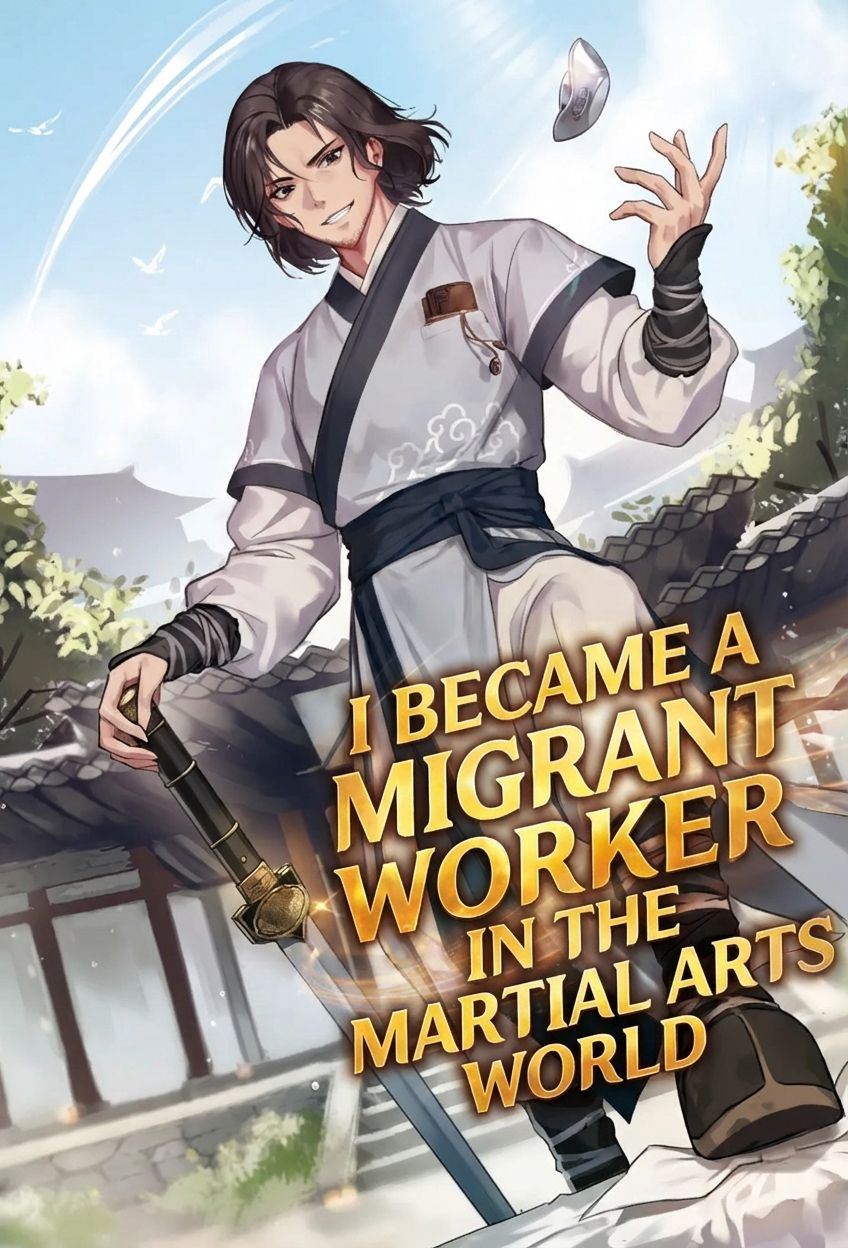
... Read More
I cannot stop thinking about this internal monologue: "I want to kill them all and then die." Said immediately after being pranked during a courage test. The narrator's voice is just *perfect*. There's this wonderful disconnect between how dramatic everything feels to him internally versus how silly the situations actually are. He's screaming at imaginary ghosts, then immediately pivoting to financial anxiety. The comedic timing is relentless. And the dialogue between characters? Flawless. Watch this exchange: "Brother, have you been well?" "Of course, and has our cowardly younger sibling been safe as well? Hahahaha!" Suppressed impulse to strangle him, obviously. That single stage direction in parentheses tells you everything about their relationship without needing a paragraph of explanation. The narrator has this self-aware, slightly paranoid energy that makes every internal thought feel like a confession. He'll apologize to Buddha mid-flight, worry about rice prices while his life is technically in danger, and mentally threaten murder over something as petty as embarrassment. The humor comes from this genuine voice—someone who takes himself seriously enough to be dramatic but not so seriously that he can't see the absurdity of his own life. Even Sa-ma Yul's dialogue is distinct. His laughter alone—"Puhahahahahahaha!!!" versus the Instructor's " Kuhahahaha"—you can hear different personalities just from how they cackle. The author clearly put thought into giving each character a verbal fingerprint.
... Read More
I need to talk about the narrative VOICE because this is genuinely distinctive and I haven't seen anything quite like it in the isekai genre. Our protagonist narrates like a tired Korean office worker who got stuck in a wuxia novel. The internal monologue is full of modern comparisons—Ulsan, job hunting, resume writing, Goguryeo tomb murals, legal terms like Chokbeop Sonyeon (though explained in-universe). He references Sri Lanka being called Ceylon, he talks about mandatory conscription being pitied even in pre-modern times. This isn't a transmigrator pretending to belong; this is someone who has ACCEPTED this world exists but refuses to stop thinking in modern terms. The dialogue with Sa-ma Yul is deceptively simple. On the surface it's just two guys making small talk after a battle. But underneath, you can feel the cultural negotiation happening. Our MC says he's from Goryeo because that's the only explanation that lands with these people. He could say Joseon or Korea or whatever and they'd just look confused. So he code-switches. It's a small moment but it reveals SO much about how he's adapted. And the humor! It's dry and unintentional. He describes kicking a severed head like it's a sport: "Man, that thing can fly." He stomps a dead man's head because he can't handle watching it twitch. He calls the bandit a "lad" throughout the fight like he's mildly inconvenienced rather than fighting for his life. The casual tone against extreme violence creates this weird comedic friction that's either really funny or really unsettling depending on your mood. One line that showcases the voice perfectly: "If you dropped any escort warrior into the modern era, I bet taking over a metropolis the size of Ulsan as their territory would be a piece of cake." That's not just worldbuilding—that's the narrator's personality bleeding through every observation.
... Read More
So I need to vent about this one character who showed up for maybe three paragraphs and completely stole the scene. Gwak Du-san. The guy who barely broke a sweat during the worst cardio workout of their lives, who has a MONIKER (which in this world apparently means something significant), who demonstrates martial arts forms that make the training instructors look amateur, and yet he's working at a small-to-medium-sized escort agency branch in Maeyang County. I have so many questions and zero answers and I am HERE FOR IT. He pulls out a liquor bottle from his BOSOM like a raccoon discovering wine, acts like the eldest brother of the group, and everyone immediately gravitates toward him. The way the other recruits' eyes turned red 'like vampires who hadn't eaten in ten years' when they saw the bottle—that single detail told me everything I needed to know about this man's vibe. He's the type of character who has a tragic backstory written in three chapters but is currently just enjoying a drink with the newcomers. And the protagonist's dynamic with him is already intriguing. Seong Ra-jun had to step up and lead the self-introductions because everyone else was too awkward, but Gwak Du-san's presence shifted the entire room. There's this unspoken hierarchy forming and I'm watching it like a sociologist. The protagonist is observing everyone, reading the room, cataloging threats and allies—the way he thinks 'I doubt any of them had it as rough as me' while simultaneously being the most transparent person in the room because he's literally a foreigner who made up a backstory is delicious dramatic irony. What does Gwak Du-san think of him? Does he see through the act? Or is he just another person the protagonist hasn't fully assessed yet?
... Read More
Let me just geek out about the sensory details in this text because the author clearly understands atmosphere. The opening battle scene reads like a camera panning across a warzone. We get the whoosh of axes, the crack of skulls, the visceral description of an eyeball hitting the ground like a watermelon bursting. But then it pivots to something almost funny—the protagonist giving the twitching body a soccer kick because he can't handle the morbid spectacle. The tone shifts from horror to dark comedy in one sentence and it works so well. Then there's the worldbuilding woven into combat observations. The protagonist notices escort warriors are actually competent—not the broke street-level fighters from typical wuxia, but people who could "take over a metropolis the size of Ulsan" if dropped into the modern era. He compares their salary to luxury car transport drivers. This is GENIUS because it grounds a fantasy world through the lens of someone who has modern references. The Mugang Mountain setting itself is painted through necessity rather than description—we never get a panoramic view, we get survival logic. Narrow entrance blocked by carts, hills at the back for watch duty, a basin formation perfect for camping. The author tells us this is the protagonist's military training from his previous life kicking in. Every environmental detail serves the plot. And the after-battle descent! Four shijin—eight hours of forced marching in darkness, carrying loads, injured comrades bleeding, no one complaining because the Escort Chief himself is hauling cargo. That image of a group of exhausted fighters moving through the night with nothing but fear and discipline keeping them going? Cinematic AF. I can literally see this as a film sequence.
... Read More
There's a theme running beneath all this violence and adventure that I keep coming back to, and it's about what it costs to survive without becoming something you don't recognize. The protagonist killed a man. Thirty knee kicks to the stomach. He watched yellow corn pop out of someone's mouth. And the worst part? He couldn't even pretend it felt righteous or necessary. It just felt like drinking horribly tasteless coffee. That bitterness—the absence of moral satisfaction—is the core thematic statement of these chapters. Human life is cheap here. Five porters died and were immediately abandoned. The escort warriors are considered barely above beggars in the social hierarchy. Bandits attack without warning. The world operates on pure survival logic. And yet the protagonist STILL feels something when he takes a life. That's the point the author is making: morality isn't about whether you can afford to be good, it's about whether you choose to be, even when nothing rewards you for it. The copper coins he loot from the dead bandit represent this theme perfectly. It's side income, practically nothing, and he feels bad taking it. He's not robbed—he killed the guy in self-defense—but even this tiny act of theft weighs on him. In a world that has normalized taking what you can, he still distinguishes between what he needs and what is right. Another recurring symbol is the carrier—the A-frame load carrier. It appears multiple times. Porters carry it. Escort warriors carry it after battle. Even the dead man's carrier is noticed. It represents the burden of existence itself, the weight each character must bear to survive. The protagonist picks up a dead man's carrier almost instinctively, and that small gesture says more about his character than any speech ever could. The beggar section at the end introduces another layer—the idea that even the lowest people in this hierarchy have their own brutal code. "Law-proof beggars" who've learned to navigate a world without mercy. It's a mirror to our protagonist: both are outsiders, both have adapted to cruelty, but both retain something human underneath.
... Read More
Okay can we just talk about how smoothly this whole job application process went? Like, I was genuinely bracing myself for drama, right? You know, some sabotage attempt or a rival showing up or something. But no — the protagonist just quietly greased the wheels with two bolts of cotton fabric and everything basically fell into place. And honestly? That's what made it so tense. Because you KEEP waiting for the other shoe to drop. Every time he did something smooth, my brain was like "sure, but what's the catch?" The reveal about the Joseon Hometown Association though — that hit different. It reframes everything. This isn't just a guy trying to get a job. He's operating within a whole network, a whole underground system of mutual support among Koreans in this foreign land. The cotton fabric wasn't just a gift, it was SUPPLY from an organization. They paid for his drinks too. He's not some lone wolf hustler — he's part of something bigger, and the book is slowly, casually peeling back layers of that world. Also worth noting: the interview setup with Baek Reung-hwa sitting ABOVE the Escort Chief? That's a plot detail that doesn't get enough attention. She's literally positioned higher than someone who runs missions worth tens of thousands of silver taels. That's not background decoration — that's the author telling us this woman matters, and we're supposed to notice it. The fact that the protagonist immediately recognizes her status shows he's sharp, which means when things go wrong later, it won't be because he's oblivious. It'll be because he's in over his head on purpose.

Leave a comment

You must be logged in to leave comments. or
