Diary Of A Knight
+Add to Custom List
Genres:
Tags:
Novel Info
  • Author:
  • A
  • Status:Ongoing

Summary

... Read More
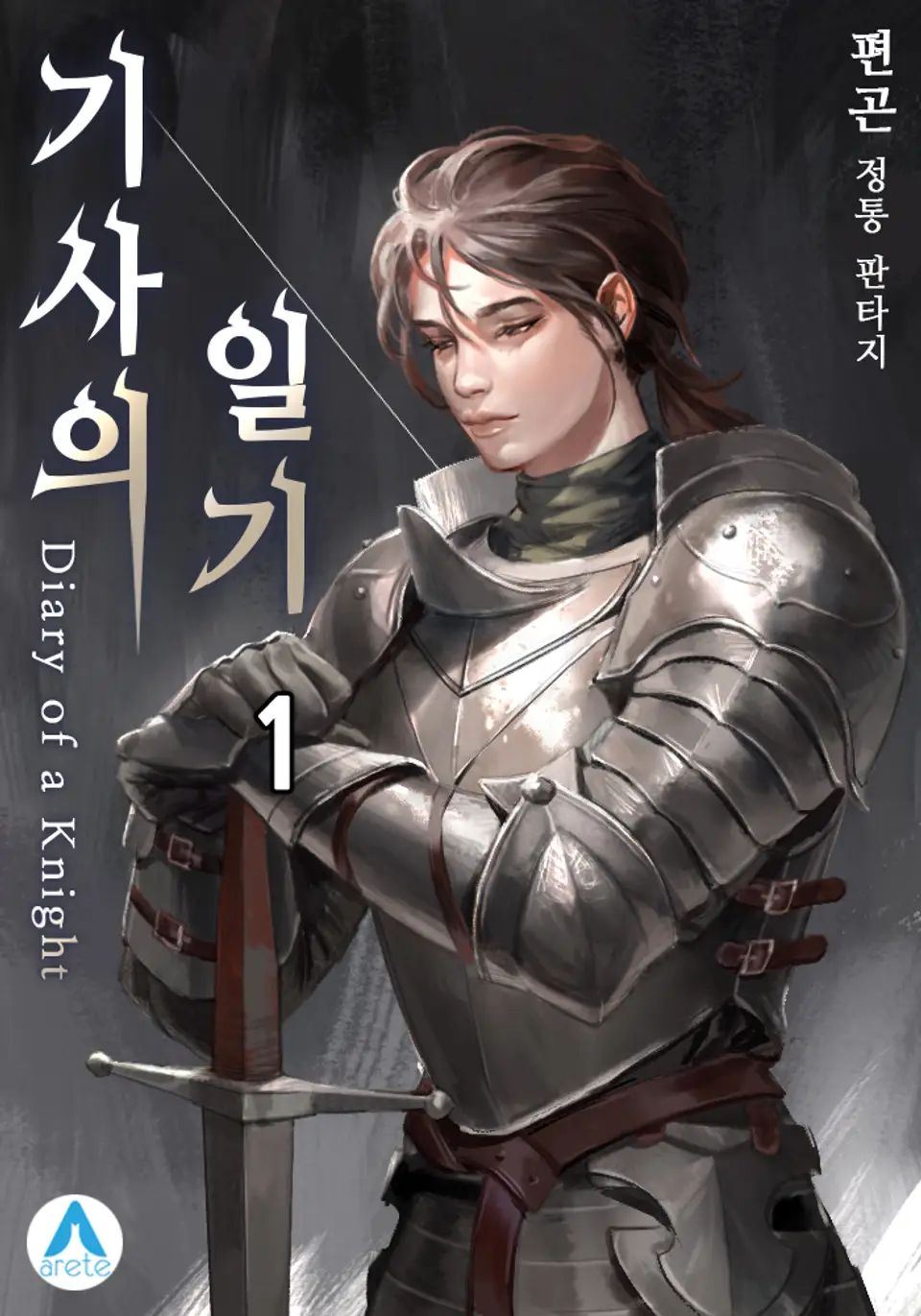
Lovell Rodrick is the Grand Champion of the Phobia Kingdom, celebrated as the strongest knight and a minor lord of the Boltan Peninsula. Behind the public persona lies a dangerous secret: Lovell is actually a woman, the youngest daughter of the Rodrick family, who has assumed her dead brother’s identity. Her real brother, also named Lovell, was a gentle theologian who died by suicide due to depression and poverty after inheriting the family. The current Lovell, an introverted girl raised in a monastery, discovered she possessed a dormant genius for martial arts. When their father died and the family faced ruin, she disguised herself as her brother to save the Rodrick estate. Now, she manages a nearly bankrupt territory with only three hundred subjects, relying on tournament prize money and strict frugality to survive.

The story begins with Lovell competing in a grand jousting tournament, where she defeats the previous champion, Wolf Satro. Following her victory, she returns to her dilapidated castle, where she is managed by a diligent young butler. Despite her wealth from tournaments, the territory remains impoverished. Lovell maintains the respect of her villagers by lowering taxes and sharing her limited resources. During a routine wolf hunt in the forest bordering her lands, she encounters Viscount George Dottnum, the son of a powerful local count. The Viscount and his men attack Lovell’s mercenaries, accusing them of trespassing. In the ensuing conflict, Lovell single-handedly defeats nineteen armed soldiers using her superior swordsmanship and combat tactics. She spares Viscount Dottnum’s life but beats him severely, declaring it a lesson in honor.

This act of violence against a noble of the Dottnum family triggers significant political tension. Viscount Dottnum’s father, Count Wale Dottnum, known as the hero of the Widow's War, is enraged by the humiliation of his son. However, Count Wale chooses to visit Lovell personally rather than launch an immediate military assault. During the visit, the two discuss the incident with a degree of mutual respect, and Count Wale apologizes for his son’s behavior. Lovell hosts the Count warmly, and they share a meal, temporarily defusing the conflict. The atmosphere shifts further when Lovell acquires two wolf cubs during the hunt. Unable to sell them, she travels to a nearby city to find a buyer and encounters Circe, a young witch who lives in the North Mountain. After defeating a pack of werewolves that ambush them, Lovell invites Circe to return to the castle. Circe, eager to live in a castle and amused by Lovell, agrees to stay, adding another unusual character to the household.

Days later, during the harvest festival, a devastating message arrives: Count Wale Dottnum has been murdered in the forest near the Rodrick territory. Viscount Dottnum immediately accuses Lovell of the murder, sending a messenger with vulgar threats and demanding blood revenge. Although Lovell declares her innocence and offers to prove it through a duel, the Viscount refuses, likely aware he cannot defeat the Grand Champion in fair combat. Instead, he begins mobilizing forces, turning the situation into a looming war. Lovell recognizes the severity of the threat and initiates emergency preparations. She orders the conscription of able-bodied villagers, though they are poorly armed and trained. She commands her butler to prepare the women and children for evacuation, instructs her mercenaries to secure food supplies, and sends envoys to Duke Francis to seek political mediation. The story ends with Lovell standing before her ragtag militia, fully armored and awaiting an enemy army that far outnumbers her forces, knowing that the fate of her territory and the secret of her identity hang in the balance.

Latest Release
DateGroupRelease
2026-10-01dawn translations c52
2026-10-01dawn translations c51
2026-10-01dawn translations c50
2026-10-01dawn translations c49
2026-10-01dawn translations c48
2026-10-01dawn translations c47
2026-10-01dawn translations c46
2026-10-01dawn translations c45
2026-10-01dawn translations c44
2026-10-01dawn translations c43
2026-10-01dawn translations c42
2026-10-01dawn translations c41

Community Reviews

Rating(0 / 5.0, 43votes)
5 stars
0(0%)
4 stars
0(0%)
3 stars
0(0%)
2 stars
0(0%)
1 stars
0(0%)

Popular reviews

... Read More
There's a moment in this text that I cannot stop thinking about. Lovell eats barley bread—tasteless, rough, the kind of food that peasants survive on—and instead of complaining or sending it back, she gives a slight nod of thanks. That's it. That one gesture contains an entire philosophy of leadership. She knows the difference between what her farmers can eat and what the urban poor eat. She knows about the moldy black bread stretched into three-day gruel. And yet she sits in her crumbling castle and eats the same thing her people eat, sharing the tiniest pieces of crow breast meat with mercenaries who risk their lives for barely enough to survive. Is this genuine compassion or performance? The text deliberately leaves this ambiguous. "It was hard to say whether this was kindness or miserliness." And maybe that ambiguity IS the point. Because ruling a poor territory in constant danger means every act of generosity is also an act of calculation. How much can I give without weakening my position? How much sacrifice can my people endure before they rebel? The crow scene broke me in a weird way. A child shouting that their dad caught a crow and they're eating crow meat—this is normal life in Rodrick. This is celebratory. And Lovell's eyes SPARKLE at the word. Not because she's hungry (though she probably is), but because this is MEAT. Real protein. Something rare. The Young Butler thinks she's strange for getting excited about crow, but I understand completely. In a world where people make moldy bread last three days, two walnutsized pieces of breast meat are a miracle. Then there's Lovell sharing that meat. Breaking it into bean-sized pieces. Distributing it among the Butler and Captain Pulp. This is either the most generous or the most calculating act I've read in a while, and honestly I hope it's both. What moves me most is the relationship between Lovell and her people. They respect her. They call her "Lord" with genuine warmth, not fear. Lower taxes, no extortion, providing food during hard labor—these aren't radical policies, they're basic decency. And in this world, basic decency makes her exceptional. I just... I really hope this story gives her the peace she deserves. She carries so much on those narrow shoulders.
... Read More
'A granite wall surrounded the hill path, and at each of its vertices stood a seven-story high circular tower. It was a sight as if the hill were wearing a skirt.' I have never — and I mean never — encountered a description like this in any fantasy novel and lived. The Castle of Roses isn't just big; it's geographically dressed up. The hill itself is the body, the towers are the hem. It's absurd. It's brilliant. It's the kind of image that lodges in your brain and refuses to leave. And Francis City proper? Twenty years of construction by one duke, sitting on the Inland Sea, gateway to the Eastern Expedition. That's not worldbuilding — that's architectural history. You can feel the trade routes, the cultural mixing, the sheer density of it. Short Ingvia people, dark-skinned Ireland folks, red-haired Nail Duchy beards — the author doesn't pause to explain any of this. These people just exist in the streets like they've always been there. Then cut to the banquet hall: meat and wine piled like mountains, nobles arranged by friendship like chess pieces, the stench of hundreds of horses outside. The Castle of Roses isn't a backdrop. It's a character. And it's watching all of this happen with its thirty-five-foot walls and rose gardens that can't even be visited because it's autumn. The beauty is always just out of reach, isn't it?
... Read More
Okay let's talk about how this author builds a world without infodumping, because it is genuinely impressive. From the very first paragraph describing Rodrick Castle, I was transported. Three or four centuries old. Earth piled into hills, logs for walls, a wooden keep, a single stable. The previous lord tried to modernize with stone but ran out of money and manpower. The Young Butler's aside—that it would have been better not to start at all—is such a perfect character beat while simultaneously telling us everything we need to know about the economic reality of this place. "Quaint" is what the text says politely. "Smells of poverty" is the honest version. And somehow, that makes it feel REAL. This isn't some gleaming fantasy castle. This is a place where the Lord eats barley bread—the kind made only from barley flour, completely tasteless—and the urban poor make moldy black bread last three days as gruel. The detail about the bread size being "the size of a child's torso" is both funny and heartbreaking. That's the kind of specific, visceral detail that sticks with you. Then there's the forest scene during the wolf hunt. The author doesn't just say "they went into the woods." We get the torches waving, the wolves being driven, the sound of howling growing closer, the rank smell. When Lovell draws her sword and cuts through branches on horseback, the prose actually makes you feel the motion. "Swinging her sword freely up, down, left, and right, on a horse running at a canter was truly a work of art." I literally saw this in my head like a movie sequence. The contrast between the quiet intimacy of the castle kitchen—stirring stew with two walrus-sized pieces of crow meat—and the sudden violence of the viscount's soldiers appearing is masterful pacing through setting. Even the mercenaries' descriptions are worldbuilding. Three people total. A middle-aged man, a one-armed man, a one-eyed man. "None of whom would be accepted on a proper battlefield." Yet they're the best Rodrick has. That's not just character description—it's a statement about the entire territory's desperate situation. This author understands that atmosphere isn't created through grand descriptions but through accumulated small, specific details. The crows. The barley bread. The metallic clack of studded leather boots on hard floorboards. Every detail earns its place.
... Read More
The naming of the mercenary group as the "Wolf Mercenary Group" is clearly intentional symbolism, and it's rich with meaning. Wolves are pack animals. They hunt together, defend together, raise their young together. In a story about a lord building an army from scratch, the wolf is the perfect metaphor. Lovell isn't just hiring soldiers; she's creating a family—a pack that will survive winter and war together. The wolf siblings, Aya and Iyaka, reinforce this. They're not pets; they're companions who mirror the humans' behavior. When they roll in the snow, the mercenaries delight. When Lovell apologizes to them, it shows her empathy. They're the emotional barometer of the household. But there's another layer: wolves are also survivors. Washed-up mercenaries, one-armed veterans, boastful rookies—they're the outliers, the ones who don't fit elsewhere. The wolf pack takes in the rejected. It's a metaphor for marginalized communities finding strength in solidarity. The snow itself functions symbolically too. It covers everything equally, muffling sound, softening edges. But underneath, the ground is frozen, the streams are ice, and life is waiting. The winter lull before war is like that—peaceful on the surface, dangerous beneath. When Lovell says the snow will melt into blood, she's acknowledging this duality. There's also the theme of cycles. The year begins, snow falls, spring arrives. Farmers plant beans before barley to enrich the soil. The land goes fallow and then produces again. War follows its own seasonal logic—the forty-day service limit, the summons arriving in early spring. Everything moves in rhythms, and human conflict is just another phase of the natural world. The composite armor Lovell removes at the beginning is another symbol. It's heavy, restrictive, designed for battle. When she puts on the houppelande—a flowing, wide-sleeved gown—she's shedding the warrior identity, if only temporarily. But by the end, she's back in the saddle, cloak tightened, ready to ride. The armor comes back on, but so does the responsibility. I'm not sure the author intended all these readings, but the text supports them. That's good writing.
... Read More
"The season had just turned the corner of summer, but the northern tip of the Boltan Peninsula already had a touch of autumn in the air." Let that sit with you. In one sentence, the author establishes geography, climate, and mood—the north is already cooling, already preparing for hardship, just like the people who live there. Then we move to the wheat fields: men with scythes, women gathering grain, a golden lake of harvest. It's warm, exhausted, alive. The violence that follows doesn't erase this world; it carves through it. Soldiers die on a road that smells of curing leather and pig droppings. Horses piss in the street. A merchant guild master kicks children away from a snarling wolf cub. This isn't a fantasy kingdom of marble halls and clean swords. It's mud and market days and wolves that won't sell. What keeps haunting me is the warhorse used as a draft animal. Lovell pats it, apologizes, gives it boiled beans. A knight's mount reduced to pulling a creaking wagon—her status, her privilege, her weapons all compressed into something pragmatic. The world feels lived-in because nobody's treating anything like sacred. Even the city gate check is handled with bureaucratic casualness: guards let a clearly armed knight pass because pride demands it, and the guards know better than to test that pride. Every detail breathes. Every smell, sound, and texture anchors us in a place that exists whether heroes rise or fall.
... Read More
Let me just say this out loud: Lovell is being asked to accuse a VISCOUNT of murder and potentially start a war with the MARQUIS. That is not a small political situation. That is 'your castle might get burned down and your people might die' level stakes, and the narrative knows it. The Young Butler lays it out plainly: 'Accusing him in the Council of Nobles is different [from ignoring a frame-up]. One wrong move and it's war with the Satro Family!' And Lovell's response isn't heroic bravado, it's just... 'Let's think about it some more.' She buys time. She doesn't have the luxury of being impulsive when the entire territory's safety is on the line. What's brilliant about how the stakes are built is that they keep escalating while the surface-level scenes stay mundane. One minute you're reading about people pulling down a two-hundred-year-old tree with ropes and celebrating like it's a victory, the next you're learning that a young squire rode all night because his viscount murdered his own father and the marquis won't punish him because he wants to keep the castle. The tonal whiplash is intentional and it works. The wolves add to the tension too—Aya and Iyaka appearing out of nowhere and startling Merle Brick, drooling on Lovell's chausses, chewing her sleeve. They're playful but they're also PREDATORS, and the narrative keeps reminding you that this household surrounds itself with dangerous creatures that everyone else finds unsettling. When the chapter ends with everyone searching for Lovell after she hears a wolf howl, you know something bad just happened and you have to keep reading. The viscount's warning to Lovell earlier—'if you don't kill me now, you will surely regret it in the future'—echoes throughout. He's a villain who knows he's played himself into a corner, and that desperation makes him unpredictable.
See all reviews

Custom lists

See all custom Lists