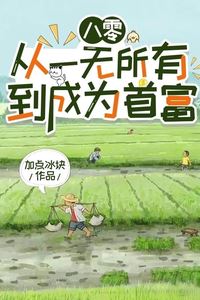
1980s: From Having Nothing to Becoming the Richest Man
+Add to Custom List
Novel Info

Summary

... Read More
Lin Yun, a modern woman, transmigrates into the body of a fifteen-year-old girl in rural China during the summer of 1982. The original host had been forced to drop out of high school due to her family's extreme poverty, a decision driven by her mother, Zhao Lanxiu, who prioritized her son, Lin Yonggang, over her daughters. Upon waking in this harsh new reality, Lin Yun is immediately confronted with the brutal difficulties of survival. She endures a diet consisting almost entirely of sweet potatoes, sleeps on a hard bed, and uses an outdoor latrine that terrifies her. Despite her initial shock and psychological distress, she quickly accepts her situation and sets a clear goal: to earn enough money to return to school and eventually pass the college entrance exam, which is her only realistic path to escaping the village. Lin Yun’s first attempts to generate income involve understanding the local economy. She learns from her brother that black-market trading is dangerous and that the village lacks the infrastructure for easy commerce. Realizing she has no capital or special skills, she turns to the natural resources around her. She discovers that centipedes are in demand at the local purchasing station, selling for significant sums depending on their size. Although she is initially repulsed by the creatures, her desperation for money drives her to overcome her fear. She devises a strategy to catch centipedes at night, a method her brother had never tried because villagers typically searched during the day. Her plan proves successful, yielding a massive haul that earns her over three hundred yuan, enough to cover her tuition and improve her family’s diet. The narrative explores the complex family dynamics within the Lin household. Zhao Lanxiu is a strict, traditional mother who favors her son and views her daughters as temporary residents destined for marriage or labor. Lin Yun confronts this dynamic by asserting financial independence, refusing to hand over all her earnings, and demanding the right to continue her education. Her older sister, Lin Yumei, who had also dropped out of school, begins to reconsider her future after Lin Yun encourages her to study. Lin Yun proposes a partnership where they study together during the day and collect centipedes at night, offering Lin Yumei a chance at a different life. As the story progresses, Lin Yun navigates the social landscape of the village. She purchases meat for the Dragon Boat Festival, encountering the emerging black market where goods can be bought without ration coupons. She also attends a community movie screening, where she overhears gossip about local families and marriage prospects. These experiences highlight the isolation and limited opportunities for rural women in this era. Lin Yun remains focused on her academic goals, reviewing high school textbooks and planning her studies despite the physical exhaustion from farm labor. The story establishes her determination to use her future knowledge not for grand schemes, but for practical survival and educational advancement, setting the stage for her long journey toward college and a better life.
Latest Release
DateGroupRelease
2026-08-11shanghai fantasy c52
2026-08-11shanghai fantasy c51
2026-08-11shanghai fantasy c50
2026-08-11shanghai fantasy c49
2026-08-11shanghai fantasy c48
2026-08-11shanghai fantasy c47
2026-08-11shanghai fantasy c46
2026-08-11shanghai fantasy c45
2026-08-11shanghai fantasy c44
2026-08-11shanghai fantasy c43
2026-08-11shanghai fantasy c42
2026-08-11shanghai fantasy c41

Community Reviews

Rating(4.1 / 5.0, 11votes)
5 stars
6(55%)
4 stars
1(9%)
3 stars
3(27%)
2 stars
1(9%)
1 stars
0(0%)

Popular reviews

... Read More
I want to talk about how this section handles pacing because it's doing something really interesting. On the surface, almost nothing happens. Lin Yun studies, walks to a movie with her sister, listens to gossip, watches a film, thinks about the future. There's no dramatic plot twist, no sudden confrontation, no cliffhanger. And yet — and this is the thing — I couldn't put it down. The author understands that tension doesn't only come from external conflict. The real drama here is internal: Lin Yun deciding her academic path, Lin Yumei wrestling with whether to go back to school, the unspoken question of what happens to this family when the economic situation changes. These are the moments that build a story's foundation, and the author gives them space to breathe. Look at the structure of the movie night sequence. It starts with Lin Yonggang inviting them, moves through the walk (where we get all the gossip), arrives at the screening, endures the team leader's speech, watches the first film, waits through the intermission (with mosquito complaints and zoning out), and then... it just cuts off mid-thought. "It made" — and that's it. The chapter ends on an incomplete sentence. That's a bold choice. It's not a cliffhanger in the traditional sense, but it creates this lingering feeling, like you were in the middle of something and now you're pulled away. The chapter transitions are also smooth. We go from studying (quiet, internal) to the movie invitation (social, external) to gossip (observational) to the screening (atmospheric) to the sister conversation (emotional). Each scene shifts the energy naturally, like a real evening would. There's no jarring jump from one tone to another. What's impressive is how the author uses the movie itself as a structural device. Shangganling — a film about sacrifice, endurance, collective struggle — mirrors the family's own situation in subtle ways. The elderly leaving during the war film while the young stay for the wuxia creates a natural rhythm, a breathing pattern in the narrative. The pacing of the scene within the scene (the movie) affects the pacing of the actual scene. And that ending — Lin Yun zoning out, her thoughts drifting, the chapter cutting off — it's perfectly suited to the mood. She's tired, it's late, mosquitoes are everywhere, and she's thinking about things she can't fully articulate yet. The structure matches the emotional state. That's craft.

... Read More
Let me be honest — if you're looking for dramatic plot twists in this section, you won't find many. But that doesn't mean the plot isn't happening. It's just happening on a different frequency, and I think that's what makes it compelling. The main storyline thread here is Lin Yun's academic journey. She's decided on the science track, she's created a study plan, she's thinking about English despite it not being required yet. These are small decisions on the surface, but they're enormous for a transmigrator trying to build a better life in a time period where education is still recovering. The college entrance exam has been reinstated — that's huge. It's the thing that changes everything for characters like Lin Yun and Lin Yumei. The subplot with Lin Yumei considering tailoring is where the real emotional stakes live. This isn't just about career choices — it's about two sisters potentially going in different directions. If Lin Yun becomes a college student and Lin Yumei becomes a tailor, their lives will diverge in ways neither of them can fully predict. Lin Yun knows this because she has future knowledge, but she also knows she can't force the decision. "This kind of decision was up to the individual." That line carries so much weight. It's the transmigrator's curse — seeing the future but being powerless to change everyone's path. There's also the Zhao Defa subplot simmering in the background. The gossip about his daughter dating the projectionist isn't just flavor — it's a social map. It tells you about marriage economics, about how families navigate limited opportunities, about the informal networks that determine who marries whom and why. Zhao Defa is apparently willing to marry his daughter off to an older man for money, which says something about the family's desperation. This is the kind of background detail that will probably pay off later. And then there's the question of electricity. Lin Yun studying by daylight because there's no electricity at home — it's a small detail but it grounds the entire narrative in its time period. The ration ticket question about mosquito coils, the four-to-five-hour walk to the nearest town that sells them — these are the constraints that shape every decision the characters make. The plot isn't about big events. It's about the accumulation of small choices — what to study, whether to go back to school, how to earn money, which path to take. And that's actually more realistic and more tense than any fabricated drama could be. Because these are the decisions that change lives.
... Read More
Okay so this whole arc is built around this one income stream—collecting centipedes at night—and the plot keeps finding new ways to test it. First night they go out, second night they bring in the sister, third night they're all three out together and then—the parents catch on and start doing it too. That twist genuinely surprised me. I didn't expect Zhao Lanxiu and Lin Chuntian to be out there stringing centipedes by oil lamp at midnight. It adds this whole layer of family solidarity that the story hadn't fully leaned into before. Then there's the snake moment in Chapter 7. Lin Yun sees this shedding snake and freezes up, and Yonggang just casually bags it with fire tongs like it's nothing. I love how the plot uses that to shift our understanding of him—he's not just a goofball, he's been out here surviving alongside Qiangzi and the others. The snake becomes this second income stream that opens up a whole new possibility. But the real plot engine kicks into gear when they get to town. They sell over a thousand centipedes for 336 yuan, feel this massive relief, and then immediately hit the meat ticket wall. The plot keeps giving them a win and then immediately taking something away—that's solid storytelling. It's what keeps me turning pages. The black market vendor at the end of this batch is setting up the next obstacle or opportunity, and I'm genuinely curious which one it'll be.
... Read More
There's this one line from Zhao Lanxiu that I keep coming back to: 'Soon it'll be the Dragon Boat Festival. Selling these centipedes will help us have a better meal.' She's apologizing to her daughter for something she can't fix, and Lin Yun's internal response is basically 'I don't feel wronged, so don't worry about it.' That restraint—choosing not to answer the second part because she genuinely doesn't hold a grudge—is so quietly powerful. The whole family unit working in secret at night, the parents staying up stringing centipedes by oil lamp so the kids don't have to do it alone, Lin Yumei warning them not to let anyone see because envy is dangerous—this is a family that's clinging to each other in a world where they have almost nothing. The emotional core of this story isn't some romance or dramatic betrayal, it's just... people trying to survive together. And then the ice pop. Lin Yun bargaining so hard to save a few fen, counting her money, stressed about everything—and then she still buys two popsicles and shares one with her brother. The emotional payoff of that moment is huge because we understand what she's giving up. That's the kind of quiet, everyday love that makes me actually care about these characters. Not grand gestures, just this one kid sharing a six-cent ice pop with her brother after walking twenty kilometers.
... Read More
Okay so this movie screening scene is absolutely packed with atmosphere and I need to talk about it. The whole setup — the sea of people, the ladders, folks climbing trees, the white screen in the distance — it just paints this incredibly vivid picture of rural 1970s China. I could literally see this as a film. "What lay before her was a sea of people" — that line alone does so much work. It's not just a crowd, it's a whole community event, the biggest thing to happen in the village probably all year. And the sensory details! The mosquitoes coming out in full force, Lin Yun in her short sleeves getting bitten, the loud rumbling of the projector or generator, the sniffles around her during the war film, the cheers when the enemy gets defeated. These little moments make the scene feel alive in a way that most novels don't achieve. You're not just reading about a movie night — you're sitting on that stool with them, swatting bugs, shifting your weight, waiting impatiently for the second film. The detail about the team leader with the megaphone droning on about commune affairs while the crowd boos and jeers? That's such a specific, authentic touch. It tells you everything about the relationship between the people and their local officials without any exposition. And then the contrast between the elderly people leaving after the war film and the younger crowd staying for the wuxia — that's worldbuilding through behavior, not description. The author doesn't need to explain the generational divide, it just shows up naturally. I also love how the projectionist is treated like a celebrity. People losing their minds over who he is, whether he's the limping one, the aunties joking about having a projectionist as a son-in-law. It's a small detail but it tells you so much about social hierarchy and what constitutes status in this rural setting. A projectionist isn't rich, but he's practically a star. "Twenty-three yuan a month" — that number gets dropped casually but it carries so much weight for these women discussing marriage prospects. The whole walk to the screening, eavesdropping on the aunties' gossip, feels like one of those moments where the author is just letting the world breathe. It's not advancing the plot directly but it makes the setting feel like a real place where real people live. I kept thinking about how in most novels, rural settings are just backdrops. Here it's actually a character itself.
... Read More
I need to talk about Lin Yun and Lin Yonggang because honestly this sibling relationship is everything. When she first sees him, she's got this assumption—he's just a spoiled troublemaker hanging with bad kids, right? Typical rebellious brother energy. But then she watches him walk twenty kilometers in the dark, not complaining, and she starts to see him differently. That moment of recalibration is so well done. The ice pop scene in Chapter 8 though—give me a medal. She's counting every jiao, she's bargaining with the vendor like her life depends on it (and honestly it does, she only has 7 jiao to her name), and then she still buys him an ice pop. And his reaction? He beams. Just completely lights up. That's not a spoiled kid, that's a kid who's been hungry and hard done by and who sees his big sister making sacrifices for him. And then there's the moment when he's holding her hand after they get the money, gripping it in excitement but only showing it physically because he's trying to be composed. That detail about him suppressing his emotions in public? That tells me so much about this kid. He's got a lot of heart but he's also learned to keep things contained. Meanwhile Lin Yun, the transmigrator with future knowledge, is the one who's actually carrying the family's hopes on her shoulders. These two balance each other so well.
See all reviews

Characters

See all characters

Custom lists

See all custom Lists