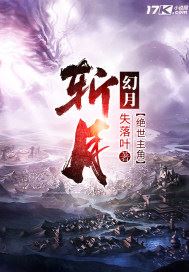
Zhan Yue
Novel Info

Summary

... Read More
Li Xiaoyao, formerly the head data analyst at Destiny Corporation, finds himself in a catastrophic personal and professional decline after being dumped by his girlfriend Wang Siyu and subsequently fired from his high-paying job. His bank accounts are frozen by his father, forcing him to move into the modest apartment of his childhood best friend, Ah Fei. The two gaming enthusiasts prepare to launch into "Illusionary Moon," a highly anticipated virtual reality MMORPG developed by Li's former employer. Using a rare limited-edition Glory Helmet that Li obtained through his previous professional connections, they log into the game simultaneously on server launch day.Upon entering the game, Li discovers he has been granted three extraordinary items unknown to other players: the Shura Secret Codex, the Achievement Manual, and an Ancient Bracelet. The codex transforms him into the hidden race Shura, specifically manifesting as a Skeleton Assassin in the neutral undead territory known as Black Castle. Unlike Ah Fei, who starts as a standard human player in the beginner village of Autumn Moon, Li is thrust into a role that places him on a different plane of existence. He encounters Lin Buyi, a mysterious senior skeleton who offers guidance before being instantly killed by a giant undead creature, highlighting the lethal dangers of Li's new environment.Li is conscripted into the Reincarnation Valley, a soul-refining workshop where undead cultivate by processing souls. His system elf companion, Little Secretary, explains that he must earn contribution points to survive and grow. During the first Wind Cloud Platform tournament, a battle royale for undead cultivators, Li utilizes his exceptional Comprehension stat of 94 and optimal growth rates to defeat powerful NPCs, including the arrogant Purgatory Lion. His victory earns him the title of Copper Ghost General, an Elite Boss, and allows him to descend into the player zones as an enemy.As an Elite Boss in Autumn Moon Village, Li begins hunting players to gain contribution points and experience. He effortlessly dismantles parties of low-level adventurers and even defeats a coordinated trio of level 10 players with job advancements, demonstrating the overwhelming power disparity between a Boss class and standard players. However, he also recognizes the limitations of his current form; sustained combat against higher-level opponents poses a genuine threat. After completing his initial trial, he returns to Black Castle, where his performance catches the attention of Deacon Elder Ding Heng.Ding Heng accepts Li as his disciple, granting him a token that exempts him from manual labor and provides access to advanced cultivation areas. Li uses his accumulated contribution points to purchase weapons and skills at the Precious Treasure Pavilion. He learns that his path involves absorbing spiritual energy through meditation to break through cultivation realms, a system distinct from the standard leveling process. With his master's guidance and his unique advantage of knowing the game's data and mechanics from his time as a developer, Li begins his ascent in the undead hierarchy, setting the stage for future conflicts with both the player population and the powerful NPC factions of Black Castle.
Latest Release
DateGroupRelease
2026-10-03hosted novel c58
2026-10-03hosted novel c57
2026-10-03hosted novel c56
2026-10-03hosted novel c55
2026-10-03hosted novel c54
2026-10-03hosted novel c53
2026-10-03hosted novel c52
2026-10-03hosted novel c51
2026-10-03hosted novel c50
2026-10-03hosted novel c49
2026-10-03hosted novel c48
2026-10-03hosted novel c47

Community Reviews

Rating(0 / 5.0, 23votes)
5 stars
0(0%)
4 stars
0(0%)
3 stars
0(0%)
2 stars
0(0%)
1 stars
0(0%)

Popular reviews

... Read More
Okay, I need to talk about Ding Heng because honestly he is the standout here. You've got three potential masters and two of them are immediately shutting the door in your face. Lei Chang is straight-up hostile — scoffs at you, calls your lack of potential an insult before you've even said two words. Zhuang Huai Shui? Polite on the surface but his rules are clearly designed to exclude you. And then Ding Heng just... asks. 'Are you willing to become my disciple?' No conditions, no attitude, just a straight offer with genuine warmth. What's interesting is how Ding Heng's kindness contrasts with everything else in this story. This is a world where power is everything and you're evaluated on sight — your skeleton body, your level, your contribution. Everyone else sees a weak NPC and moves on. Ding Heng sees a player who just dominated the Wind Cloud Platform and thinks: this kid deserves a chance. That says something about his character without any exposition dump. Then there's the dynamic with Zhuang Huai Shui, who immediately becomes an antagonist-adjacent figure by putting up barriers. His disciple Long Yilan shows up hot and bothered about losing last time — there's that rivalry seed planted right there. And Two Balls? The Purgatory Lion calling me out like we have history is intriguing. What happened between us that I apparently forgot? That's a relationship thread I'm dying to pull on.
... Read More
The stakes setup in these chapters is surprisingly effective for a section that doesn't feature direct combat. Right from the beginning, there's this undercurrent that the protagonist just did something that made powerful people notice him — and not all of them are happy about it. Lei Chang's rejection isn't just rudeness; it's a warning shot. He's a Deacon Elder, a former demon, and he's already dismissing a level 7 skeleton. That hierarchy is brutal and the story makes it clear: climbing it will require more than winning a single tournament. Then Long Yilan shows up — Zhuang Huai Shui's personal disciple, an Elite Boss at level 12, openly declaring that their next meeting on the Wind Cloud Platform will settle things. This is textbook foreshadowing done right: specific, personal, and tied to a concrete future event. We know exactly when and where the next confrontation happens. But the most interesting conflict might be the quietest one. The protagonist realizing that the beginner village mobs are cleared out and he can't train there. His level 7 vs Ah Fei's level 10. The Prestigious Treasure Pavilion having insufficient equipment for undead cultivators. These aren't dramatic conflicts but they're real obstacles — systemic ones that make progression feel earned rather than handed down.
... Read More
The pacing in this section is really fascinating because it does something unusual — it lets you breathe after a high-intensity chapter. We open mid-action aftermath: ten minutes of survival, a bell rings, points tally up, and suddenly I'm the richest skeleton in the valley. That's a proper payoff moment and the author doesn't rush through it. The system notifications, the white light teleportation, the body transformation — each beat gets its own space. But then it shifts. The scene with Zhuang Huai Shui and the elders is shorter, more compressed, almost casual despite the weight of the content. It's like the author is saying: okay, big battle done, let's move to the next story beat without overstaying our welcome. And I respect that. A lot of novels would turn this into a three-chapter court intrigue episode and I would have lost interest. The real pacing masterstroke is the transition from the Prestigious Treasure Pavilion — all action, commerce, worldbuilding — into that quiet mountain path with Ding Heng, ending on the cultivation scene. The tension drops from 'will I survive' to 'I need to get stronger' and it works because we've already earned that dopamine hit from the battle. The author knows when to let the reader exhale.
... Read More
Okay, so I've been thinking about the master-disciple dynamic here and it's actually super layered. Ding Heng isn't doing the classic proud mentor speech—yeah, he says 'you really didn't disappoint me,' but the way he phrases things, 'I really picked up a treasure this time,' feels more like an investor acknowledging a solid return. There's a transactional chill to his warmth that I find fascinating. He's not just nurturing a student; he's cultivating a weapon. And yet, the text shows his physical presence—'in the wind, Master Ding Heng's image appeared'—he descends literally from the atmosphere to watch, then personally dispatches Two Balls with a death wind. That's not indifference; that's a very specific, controlled form of care. He handles the aftermath so July Wildfire doesn't have to stain his hands, or perhaps so July doesn't witness the raw power exerted directly upon him. Then you have Two Balls. His shift from 'Purgatory Lion' nickname to being forced back by Long Yilan's contempt is brutal, but his immediate reaction isn't self-pity. It's rage on July's behalf. 'Don't call me that!' he snarls at being called Two Balls, yes, but the subtext is clear: his identity is tied to defending his ally. When he yells 'July Wildfire, be careful!' during the duel, that's not spectator anxiety; that's a fighter recognizing a threat and wanting to intervene, powerless as he is. Their alliance feels forged in this arena of undead cultivators where loyalty isn't given, it's earned through shared vulnerability. July Wildfire's response—'I will take revenge for you!'—isn't empty bravado. It's a debt acknowledged. The relationship isn't about affectionate banter (though Ah Fei provides that); it's about mutual recognition in a hostile hierarchy. July just proved he's not prey, and Two Balls needs that confirmation for both of them.

... Read More
I have to give credit where it's due — the dialogue in this section is genuinely charming and that's rare for this genre. Lei Chang's opening line is perfect: 'An initial stage Skeleton Warrior, who doesn't even have potential, wants to be my disciple?' That's not just exposition, that's character. In one sentence you know exactly who he is — arrogant, status-conscious, and completely dismissive. No need for narrative description because the words do the work. And then there's the banter between Ding Heng and the 'weird old fellow' in Heaven and Earth Pavilion. 'Old Ding, who did you call old?' / 'Junior brother Lin can play yourself!' This is such natural, lived-in dialogue. These two have history. They've known each other forever and they're comfortably insulting each other. It makes the world feel inhabited rather than staged. The protagonist's internal voice is also consistently funny. The moment with his ribs nearly breaking from puffing out his chest after everyone's judging him — that's physical comedy written through narrative, and it lands perfectly. His interaction with Ah Fei at the end has this casual, almost sitcom-like rhythm: 'Are you level 10 yet?' 'Yes.' 'D*mn... Noob!' Simple, sharp, and genuinely funny. My only critique is that some of the system notifications feel slightly mechanical compared to the organic dialogue around them, but that's arguably intentional design.
... Read More
Okay so this whole section is basically a masterclass in escalation and I can't stop thinking about how the author sets up Team Breaking Dawn like they're the final bosses before the real final boss even shows up. You've got Breaking Dawn Ash arriving with his four pillars—Ash, Destruction, Dust, Fate—and every single one has this cold, calculated presence. They're described almost like a military unit rather than just players in a game. And then our protagonist just... jumps down. No warning. Straight into the lion's mouth. The plot twist here isn't some big revelation—it's the sheer audacity of the fight itself. He goes in stealth, backstabs Ash (who is basically the founder and leader), then immediately gets swarmed by everyone and everything. The beauty is that the author doesn't give us a clean win. August takes out Ash, Dust, and a few others, but he's going from full health to 2% in like ten paragraphs. That's not a hero moment—that's a desperate survival run. And then the call to Ah Fei? GENIUS. Because on the surface, you think the protagonist is calling for backup. But the real plan—he needs Ah Fei to attack HIM so he can use the City Return Scroll and escape while everyone else is distracted. The line where he tells Ah Fei to just hit the Boss and then walks into the fireballs like some kind of suicidal ghost? Chilling. Because we literally see Ah Fei's panic in his eyes. These two have built up so much rapport that the reader knows August would never actually hurt him—but August uses that trust as a tool. That's cold. The subplot of all these other guilds showing up—Flame Slayers, Winter Thunder, Dragon Alliance—all desperate to snatch the first kill while August is literally being torn apart in the middle—is brilliant worldbuilding. It makes the game world feel alive and ruthless. The plot never slows down here. Every paragraph escalates something.
See all reviews

Custom lists

See all custom Lists