Your Grace, Your Sudden Obsession Causes Misunderstandings! - Reviews

Your Grace, Your Sudden Obsession Causes Misunderstandings!
+Add to Custom List
Sort
Add review
... Read More
The stakes in these chapters shifted so seamlessly from external to internal that I barely noticed the transition until I was already invested. On the surface, Eileen's conflict is straightforward: she lost to Aaron, and she wants revenge. Her plan is clean and logical—get close to Cordelia, use her relationship with Aaron, strike when it matters most. The stakes are clear. If she succeeds, she gets her revenge. If she fails, she loses everything again. But then the kidnapping scene happens, and something changes. Cordelia is actually terrified. Those orange eyes full of real tears, that genuine fear in her voice—this isn't a scripted moment anymore. This is a real person whose heart is pounding, whose breath is blocked, who's thinking about how she should have brought a knight escort. Eileen is watching all of this and feeling her resolve crack. The internal conflict that follows is where the real tension lives. Eileen tells herself "You need revenge, revenge!" but every interaction with Cordelia makes that mission feel dirtier. Cordelia trusts her. Cordelia thanks her. Cordelia makes her a gift and then immediately makes another one for herself because she's that excited to have a friend. And Eileen has to sit there and accept it while knowing exactly why she's really there. The dinner at the Royton mansion raises the stakes even further. Now Eileen isn't just pretending to be a hero—she's being welcomed into Cordelia's family. Count Roman is crying, thanking her, kissing her hand. If Eileen's plan ever comes to light, she won't just lose her revenge; she'll destroy someone who looks at her like she's a savior. Meanwhile, there's the unanswered question of Aaron. He defeated her once. How long until he figures out what she's really doing? How long until he sees through the friendship necklace and the dinner invitations and the careful performances? The brilliant part is that the author never lets us forget the external threat while we're wrapped up in the internal one. Eileen is constantly aware that this could all collapse—that Aaron might find out, that her cover could blow, that her carefully constructed revenge could implode. Every tender moment with Cordelia is shadowed by that possibility.
... Read More
Okay so this whole arc is built around this deceptively simple premise—Eileen walks into Luke's house for a "business meeting" about tableware, but really she's trying to set up the original meet-cute between him and Cordelia at Etoile Hill. And it works! Or it's supposed to work. Until... it doesn't. Because OF COURSE Aaron shows up with Luke. Not just Luke, but Luke WITH a companion, who turns out to be Aaron. The plot twist hits you like a truck and honestly I love it. This is the moment the whole story shifts from "oh sweet romance remake" to "wait, nothing is going according to the script." And then Duke Andrew appears—this random nobleman who somehow knows about Aaron's past trauma with his parents' death—and just DESTROYS the atmosphere. It goes from awkward picnic to full-on psychological warfare in three seconds flat. The way the author layers these reveals is masterful. First the teacup triggers Eileen's memory, then Aaron's unexpected alliance with Luke, then Andrew's entrance. Each beat escalates the stakes. But here's what's killing me: Eileen is out here trying to preserve the original plot while her entire world is unraveling around her, and she's somehow still functioning enough to defend Aaron from Andrew like it's nothing. The contrast between her internal panic and external composure is chef's kiss.
... Read More
Let's talk about Aaron's dialogue for a second because WOW. "If you hadn't interfered with my business in the first place, this wouldn't have happened." "You really like the word 'interfere.' You probably lost to me because you're incompetent." These two lines exchanged at the banquet in the first chapter—clean, sharp, perfectly calibrated. Neither one backs down. Neither one blinks. The subtext is so thick you could cut it with a knife, and yet the surface-level conversation is just two nobles trading polite(ish) insults in front of a crowd. But the real winner of the dialogue game is definitely Aaron in the coffee scene. Listen to this gem: "Hmm? I don't quite understand what you're talking about, Lady Eileen." The audacity. The deliberate feigned ignorance. And then: "Today, the coffee tasted exceptionally sweet." He says this AFTER winning. AFTER destroying something Eileen loved. The coffee is sweet because HE is victorious. The narrative literally tells us this, and I'm sitting here thinking this man is a walking red flag wrapped in a velvet suit. And the contrast with Eileen's dialogue! Her lines to Count Brooks are warm, genuine, almost giddy. Her lines with Aaron are clipped, controlled, simmering with barely contained rage. The author gives each character a distinctly different vocal texture, and it never blurs. Even secondary characters like Mary have a clear voice—her concern is plain, simple, heartfelt. She doesn't use complex sentences or hidden meanings. When she says "Miss, are you okay?" in the carriage, it lands with genuine emotional weight because her dialogue has always been straightforward and warm. The dialogue in this book isn't just functional—it's characterization in motion. Every line reveals who these people are without needing narration to explain it.
... Read More
Okay, I need to talk about Aaron. Like, I genuinely did not expect to find myself sympathizing with someone who has done the most insufferable things to the protagonist, but here we are. The scene where he watches Eileen laughing outside the theater and thinks, "Eileen, you should feel this dirty feeling too"—that was not the monologue of a pure villain. That was the monologue of someone who is genuinely broken and doesn't know how to process anyone else's happiness. His relationship with Eileen is so layered. On the surface, they're political rivals, two dukes duking it over business and power. But underneath that? He keeps trying to pull her down to his level because her optimism and warmth make him uncomfortable. Every time she wins, it highlights what he has lost. Every time she smiles, it reminds him of his own stagnation. "There's no reason. You simply lost the theater to me because of your incompetence." He says this to Eileen, but honestly? I think he's saying it to himself too. He's trapped in this cycle of needing to prove that his cruelty has rational grounds, when really it's all just petty revenge masked as justice. And Eileen—she's not naive. She knows exactly what he's doing. She confronts him directly, calls out his manipulation, and still walks away trembling. That takes a kind of courage that's far more impressive than any political maneuver. Their dynamic reminds me of two people who understand each other too well to ever be allies, but also too well to ever truly hate each other either. It's this toxic codependency where every interaction shifts the balance ever so slightly. Who won this chapter? I don't know. And that uncertainty is exactly what makes their relationship so compelling. Who do YOU think is winning in the bigger picture? Because I'm still not sure.
... Read More
Let's be real—the stakes in this section just went from "help the main couple fall in love" to existential threat in about thirty pages and I am NOT okay. On the surface, Eileen's goal is simple: recreate the original novel's plot by bringing Luke and Cordelia together at Etoile Hill. But the moment Aaron appears with Luke, the ground shifts. Her entire plan was built on knowing the script, and now the script is rewritten without her permission. Then there's the Aaron situation. His conflict with Eileen has been escalating since Chapter 1—personal, violent, deeply emotional. But when Duke Andrew shows up and drags up his parents' death, the stakes become something else entirely. This isn't just about rivalry anymore. This is about a man who is so deeply wounded that verbal abuse from a stranger reduces him to silence. And Eileen—the person he's been trying to crush—saves him. The external stakes are mounting: who is Duke Andrew, what does he know, why does he have power over Aaron? The internal stakes are even messier: Eileen is realizing that her understanding of this world is incomplete, that the novel she thought she memorized doesn't match reality, and that every character she's been treating as a plot device has depths she hasn't accounted for. She walked into that hill planning a picnic. She's walking out of it with her entire worldview questioned. And honestly? I've never been more invested in what happens next.
... Read More
The pacing in these chapters is absolutely insane and I have no words. Let me walk through the structure because this is textbook tension-building: Opening: gentle business discussion, tea, polite conversation. Soft lighting. Eileen notices a teacup that feels familiar. This is Chapter 47-48 energy—slow, atmospheric, almost cozy. Then: Etoile Hill. Flowers. Rainbow. Cordelia being sunshine personified. You'd swear this is a rom-com at this point. The author LULLS YOU INTO A FALSE SENSE OF SECURITY. Then: LUKE AND AARON APPEAR TOGETHER. The original plot's timeline shatters. Eileen's internal panic spikes. Still manageable—she has a plan, right? Then: she tries to isolate Cordelia and Luke, asks Aaron to walk with her instead. They have their tense confrontation. The air between them is literally described as cold enough to freeze everything. Then: Duke Andrew walks in and everything EXPLODES. That's five escalating beats in what amounts to one continuous scene. No breathers. No chapter breaks to catch your equilibrium. The author doesn't let up for a single paragraph after the picnic starts. And it works—by the time Andrew opens his mouth about Aaron's parents, my heart was literally racing. This is why I can't sleep.
... Read More
The structural genius of this passage is disgusting (in the best way). It opens with Eileen already in motion — confronting Andrew, grabbing his collar, screaming. Maximum intensity from line one. Then it dips inward for the Aaron reveal, the quiet "why" moment, the hug. Readers get to exhale. We think we're in the calm part. And then immediately — drop. Fall. Cliff. "D*mn it, Eileen!" Cut to black. That transition is ruthless. One second we're in this warm, aching moment of two broken people finally understanding each other, and the very next paragraph someone is plummeting through the air. The author doesn't even let us process the hug before yanking the rug out. "The moment she realized the situation, time that had felt slow, stretched out by someone, instantly returned to normal." That line about time stretching — it's the literary equivalent of a gasp caught in your throat. And ending on "Sob... it hurts so much" with the ellipsis trailing off? Chef's kiss. Leave me stranded in the darkness like this.
... Read More
I need to talk about this one moment because it wrecked me. Eileen steps between Duke Andrew and Aaron when Andrew starts dragging up Aaron's dead parents. And the text says: "She was just like light. A warm ray of light descending upon him as he struggled in the dark mire created by guilt." Aaron just stares at her like she's an illusion. Like he can't believe someone actually just... defended him. Without asking for anything in return. And earlier in this same scene, Eileen had been so openly hostile toward him! She called him out, stared him down, told him if he crushes her she'll crush him back. And now she's physically putting herself between him and this guy who's verbally eviscerating him? That pivot is wild and I'm not ready. Also: the fact that Aaron immediately went from 'I want to kill her' to silently enduring Andrew's verbal abuse because he's too shaken to respond? That's not weakness, that's someone whose entire foundation just cracked open. And Eileen is the only one who noticed and reacted. Meanwhile Cordelia and Luke are having their cute picnic moment across the hill, completely unaware that the ground beneath everyone else has turned to quicksand. The emotional whiplash is real.
... Read More
I laughed so hard at the beginning of this batch and then completely fell apart by the end. The tonal whiplash is unreal. So Eileen gets a letter from Count Brooks offering her the theater—the dream theater she visited as a child, the one that made her happiest—and I am SOBBING with her. The scene where she runs to her parents, eyes wide, saying "Can I go out now? I want to go to the theater to meet Count Brooks!" That pure, unguarded joy. Her father's concern melting away because her mother smiles. The whole family wrapped in sunlight. It was so tender and I was fully invested. Then—BOOM. Aaron buys all of Count Brooks's debts. Two days to pay or lose the theater. Just like that. The thing she loved most, the one thing that wasn't about politics or power or survival, gone because of someone who couldn't stand to see her happy. And the detail about the lemon tart! She's sitting there trying to eat something nice after the party, and Aaron's voice plays in her head. The lemon cream filling her mouth makes her mood worse, not better. The tanginess becoming an instrument of her suffering. I literally gasped at that imagery. "Although the ownership of the theater has gone to Duke Aaron, that doesn't mean your memories have gone to him too, right?" Mary says this in the carriage, desperately trying to comfort her mistress, and I lost it. Because the memories haven't gone to Aaron, but the joy she felt when she got the theater? That's tainted now. Every time she thinks about that place, she'll think of his cold purple eyes. This is peak romance-novel emotional manipulation and I am HERE for it.
... Read More
Okay so this batch is all about Eileen and Aaron finally running into each other after all that running around. Let me just say — the tension here is *chef's kiss*. The setup is brilliant. Eileen gets this mysterious letter from the villain himself, Duke Aaron de Monston, asking to meet her. And her reaction? Pure panic. 'I don't want to read this letter. I feel like it might contain something scary...' She's literally trembling. Not because she likes him — because she KNOWS who he is in the original novel. The guy who tries to exterminate the male protagonist's family later on. She's been avoiding him for five years basically, and now he's appearing at HER party. But here's the thing that made me spit out my tea — Aaron ALSO knows about their encounter in Fresher! When he forcibly lifts her chin and says 'Lemon tart?' and she replies 'Annoying silver hair?' — oh my god. That's a full circle moment. They've been calling each other names behind each other's backs and neither knew it was the same person! The irony is absolutely delicious. Aaron came to this party specifically to catch Eileen (he changed his entire schedule for it), and Eileen thought she was being smart by going to a different party on the same day. Of COURSE he showed up. Of course. The universe in this novel clearly has its own agenda. What really sold me though is how the author builds the confrontation scene. First there's the Count welcoming Eileen and casually dropping the bomb that Aaron is also attending. Then Viscount Ante tries to chat with her. Then Aaron appears and shuts him down with a single glare. Each beat escalating the pressure on Eileen until she's literally backing away step by step. The pacing is tight and I couldn't look away. And that ending line — 'What did you j' — cut off mid-sentence! Absolute cliffhanger energy. I needed the next chapter immediately.
... Read More
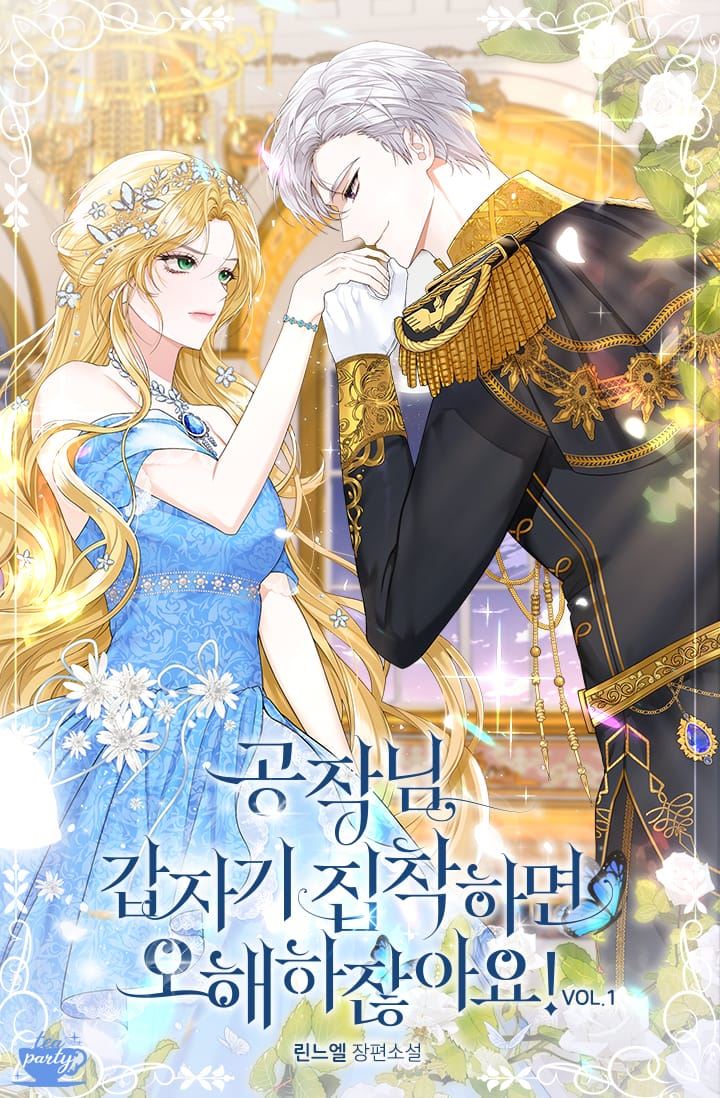
There's a lot happening beneath the surface of these chapters, and the symbolism is doing heavy lifting without being obvious about it. The friendship necklace is the biggest symbol, obviously. Two necklaces, same design, different stones—one peridot for Eileen's green eyes, one imperial topaz for Cordelia's orange ones. They're connected but different. Cordelia made them as a symbol of equality in friendship: we're the same, but we're also ourselves. Eileen, who entered this relationship with an agenda, receives this symbol and feels bitterness because hers represents a lie while Cordelia's represents truth. Then there's the kidnapping itself as a symbol. Eileen is literally recreating the story she's supposed to be a part of—the moment where the female protagonist gets rescued by the male lead. But she's stealing that moment. She's inserting herself into someone else's narrative, playing a role that isn't hers. The forest scene becomes a stage, Daniel is her stagehand, and the kidnapped Cordelia is both victim and unwitting participant in Eileen's performance. Hair is another recurring symbol. Daniel cuts off the kidnapper's hair—not to injure him seriously, but to destroy what he values most. Hair growth tonic, expensive brushes, pride in appearance. It's almost comedic, but it also mirrors Eileen's situation: she's been reshaping herself, grooming herself, presenting a version of herself that isn't quite authentic. The hair loss scene is almost a mirror of Eileen's own losses throughout the story. The theater Eileen lost earlier represents her stolen identity—the dream she had, the role she was supposed to play. By inserting herself into Cordelia's story, she's trying to reclaim agency. But every step she takes toward revenge also pulls her away from her original purpose, because Cordelia's genuine goodness keeps undermining her cold calculations. And then there's the seasonal imagery—spring, warm winds, blooming flowers—contrasting with Eileen's internal coldness. The world is moving toward renewal while she's stuck planning destruction. That dissonance is the whole theme right there.
... Read More
Okay so this whole Cordelia situation is eating at me in the best way possible. Let me tell you about Eileen and what she's doing. She literally staged a kidnapping to befriend the female protagonist. And I say staged because Daniel literally knocked out the kidnapper's hair first, creating a distraction. This isn't some accidental meeting—this is calculated manipulation disguised as heroism. And that makes me love Eileen so much more. But here's the thing that got me: the friendship necklace. Cordelia hands Eileen this peridot necklace—matching her green eyes, no less—and then reveals she made an identical one with orange imperial topaz for HERSELF. A friendship necklace. She made them both because she genuinely, purely wanted to be friends with Eileen. And Eileen's reaction? "Unlike herself, who acted with a purpose, Cordelia was purely happy to have made a friend." That line destroyed me. Eileen came in with a mission—to get close to Cordelia and use her to get revenge on Aaron—and somehow this innocent girl ended up looking at Eileen like she saved her life. Like she was someone worth being friends with. The scene where Count Roman kisses Eileen's hand and cries because she "saved" his daughter—Eileen even compares it to Duke Kyle's tears. She knows what gratitude looks like because she's been on the receiving end of it from people who think she's someone she's not. Every time Cordelia calls her "Lady Eileen" with those big puppy-dog orange eyes, Eileen's conscience gets another poke. "Get a grip, Eileen! You need revenge, revenge!" she tells herself. But how do you unfeel something when the other person is being this genuinely kind? How do you maintain a revenge plot when the person you're using keeps offering you matching friendship jewelry? This is what makes their dynamic so painful to watch. Cordelia doesn't know she's being manipulated. Eileen knows she's manipulating her, but she's also starting to care. The relationship is built on a lie, but the feelings on Cordelia's side are real, and now they're becoming real on Eileen's side too.

Leave a comment

You must be logged in to leave comments. or
