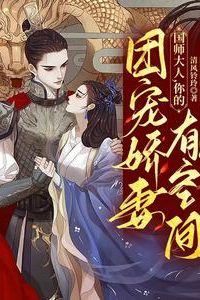
Your Excellency the Grand Seer Your Beloved Spoiled Wife Has a Dimensional Space
Novel Info

Summary

... Read More

An Xiyan, a survivor of a zombie apocalypse, transmigrates into the body of a fourteen-year-old girl in ancient times. Upon waking, she discovers she is the daughter of the An family, living in a remote town with her five-year-old brother, An Xixuan, and a loyal household staff led by the Meng family. Her new identity is that of a playful, food-loving young miss who recently fell into a coma after choking on a peanut. An Xiyan quickly adapts to her new life, noting that her personality in this world matches her previous apocalyptic self—assertive, quick-tempered, and physically strong. She also learns that her parents, An Junlin and Xiao Lengyu, are deeply affectionate and have a modern, progressive mindset that defies the patriarchal norms of the era.

Shortly after waking, An Xiyan receives a letter from her parents revealing that they have disappeared. The letter explains that they are fleeing enemies and instructs An Xiyan and her brother to travel to the capital to seek refuge with their maternal grandparents, the Duke and Duchess of Qiming Kingdom. The letter also reveals that An Xiyan has a fiancé, Yu Qinghan, who serves as the Imperial Astrologer and is highly trusted by the Emperor. Her parents urge her to rely on him for protection and to marry him, promising that he is gentle, faithful, and powerful. An Xiyan, pragmatic and focused on survival, accepts these arrangements, viewing the engagement as a strategic alliance rather than a romantic commitment.

As An Xiyan prepares to leave, she discovers a hidden room filled with immense wealth, including chests of gold, silver, pearls, and rare treasures. Her mother had anticipated this need and left a detailed ledger for her. An Xiyan uses her supernatural spatial ability, inherited from her previous life, to store all the valuables efficiently. She also plans to start a business selling modern candies and treats once they reach the capital, aiming for financial independence. The Meng family, aware of her secrets, pledges their loyalty and agrees to help manage her affairs.

Before they can depart, Meng Guangping brings urgent news: enemy troops from Dongyang Kingdom are attacking the border, and traitors within Qiming Kingdom have sealed off information to prevent panic. An Xiyan decides to warn the townspeople to evacuate before the invasion reaches their remote town. Using her connection to the Imperial Astrologer, she gains an audience with the town chief and successfully convinces him of the impending danger. The town chief, recognizing the authority of Yu Qinghan’s name, organizes the evacuation of the citizens.

With the town prepared and their belongings secured, An Xiyan, her brother, and the Meng family set out for the capital. Along the way, An Xiyan reflects on her new reality, balancing her desire for a peaceful life with the responsibilities thrust upon her. She remains determined to protect her brother and navigate the complex political landscape of the kingdom, relying on her strength, wit, and the resources left by her parents. The journey marks the beginning of her new life in a world of nobility, intrigue, and potential danger, where she must assert her identity and secure her future.

Latest Release
DateGroupRelease
2026-08-11shanghai fantasy c16
2026-08-11shanghai fantasy c15
2026-08-11shanghai fantasy c14
2026-08-11shanghai fantasy c13
2026-08-11shanghai fantasy c12
2026-08-11shanghai fantasy c11
2026-08-11shanghai fantasy c10
2026-08-11shanghai fantasy c9
2026-08-11shanghai fantasy c8
2026-08-11shanghai fantasy c7
2026-08-11shanghai fantasy c6
2026-08-11shanghai fantasy c5

Community Reviews

Rating(3.8 / 5.0, 11votes)
5 stars
4(36%)
4 stars
1(9%)
3 stars
6(55%)
2 stars
0(0%)
1 stars
0(0%)

Popular reviews

... Read More
Okay so let me just say—this chapter had me doing the double-take more than once. An Xiyan gets the letter from her parents, immediately starts planning to pack, and then BOOM, the Meng family knows her secret. Like, they already know about the space? And her mom has a storage pouch?? That is a cultivation-realm-level item, people. This isn't just some ordinary historical setting—this is a world with magical elements hiding just beneath the surface, and the author is doling out information like a master chess player. I love how the plot unfolds through conversation rather than exposition dumps. Meng Guangping accidentally lets slip that her parents know martial arts, and suddenly An Xiyan is connecting dots. The pacing here is deliberate but never boring because every revelation opens a new mystery. Who are her parents, really? What is this world? Why did they send her away? The letter is the inciting incident that kicks everything into motion, and I'm already dying to know what else is coming. Also, the subplot about opening a candy shop? It seems small on the surface but it's actually brilliant worldbuilding—it gives them a reason to interact with commoners, earn money, and potentially gather information in the capital. Classic protagonist move. One thing that stood out: An Xiyan's internal monologue is SO sharp. She suspects the Meng family is hiding things, then confirms it, and instead of being upset, she immediately pivots to how she can USE this knowledge. That's not a passive protagonist—she's calculating and resourceful, and I respect that. The plot is moving at a good clip, and I'm genuinely curious about what happens when they reach the capital. What's with the fiancé? What's her parents' real situation? The story is setting up layers of intrigue and I'm here for it.
... Read More
"Do your best and leave the rest to fate." I keep coming back to this line because it's not just something the mayor says—it's basically An Xiyan's entire emotional posture in this whole scene. She shows up, warns people she'll never see again, refuses any gratitude, and leaves. No expectations, no emotional entanglement. And yet—the moment the mayor starts thanking her profusely, she literally feels light-headed and gets goosebumps. Can you imagine? This person who carries jade pendants in spatial storage and travels with bodyguards is somehow awkward about basic human kindness. It's kind of adorable, honestly. I also love the subtle undertone about her parents. She thinks of them as 'two unreliable parents'—no, wait, 'they told Uncle Meng.' The way she corrects herself mid-thought is such a specific kind of affectionate exasperation. She doesn't know her father, but she clearly has a complicated relationship with both of them. And then there's the mayor's internal narration about his wife, which is honestly kind of dark in a mundane way. He despises her family, considers divorce, but stays for the children. Meanwhile his wife is just... pouting and worried about her parents being included. It's such a realistic, unglamorous marriage dynamic dropped into the middle of an epic warning scene. The contrast is jarring but effective. It grounds the story in something human and messy while An Xiyan operates on this almost ethereal level of duty and detachment.
... Read More
The internal monologue in this passage is honestly one of the funniest things I've read. An Xiyan thinks: "I might as well use my future husband's title—it'd be a waste not to." This is a person who is literally warning a town about an impending military invasion and her first thought is about leveraging her fiancé's name for credibility. It's so casually pragmatic and slightly absurd, and I love it. Her dialogue with the mayor is also great—formal, polite, but with this undercurrent of someone who knows she's doing a good deed and doesn't need anything in return. "Whether they believe it or choose to flee—that will be their own decision." That's not just dialogue; that's a philosophy. And then there's Meng Guangping, who barely speaks but when he does, it's pure professional courtesy. "It's easier to deal with the King of Hell than with his little devils." What a line. He's talking about the guards, but it's also basically the thesis of his entire existence. The mayor's dialogue is more functional—he's giving orders, explaining himself, trying to manage a crisis. But even he gets moments of voice: "Do your best and leave the rest to fate." It's a genuine philosophical statement that comes from a place of limited power. And the wife's dialogue at the end—"can you send someone to inform my family?"—is so perfectly self-absorbed it hurts. Every character has a distinct voice, even in brief appearances. The author isn't just writing dialogue; they're writing personalities.
... Read More
There's one image that just stuck with me and I can't stop thinking about it. An Xiyan emerging from the carriage: "a flowing white gown, with three thousand strands of jet-black hair cascading like a waterfall down her back and over her chest." The author could have just said 'she was beautiful' and moved on. Instead we get this almost cinematic reveal—white gown, black hair, ethereal air, described like a celestial maiden. And then the guards and the mayor's sons just stare. Blatantly. Lustfully. And Meng Guangping coughs as a warning. It's such a specific visual beat, and I think the author is establishing An Xiyan's presence in the world through this moment of being seen and being almost too much to look at. The jade pendant description is equally vivid—vibrant green, carved with a single character 'Han' in bold sweeping script. Only two pieces exist in the entire empire. One with the Imperial Advisor, one with a close family friend. This detail does so much worldbuilding in one sentence. It tells us about the rarity of objects, the importance of the Imperial Advisor, the existence of secret family connections, and the value system of this world all at once. The town itself feels lived-in too—over ten thousand residents, a decade of peace, generational homes. The mayor's study, the residence, the streets where gongs will be struck. It's not just a backdrop; it's a functioning community about to be upended. And the carriage itself—finely crafted, with a curtain that can be lifted. These small details make the world feel tangible.
... Read More
The dialogue in this passage is genuinely one of its strongest assets. Every character has a distinct voice, and I can tell who's speaking without looking at the name tags. An Xiyan's voice is modern, witty, and sharp. She has this internal monologue that's almost like she's narrating her own life with a dry sense of humor—'Was this what people meant by being born with a cheat code?' 'This… this was totally a main-character setup, right?' She's self-aware without being pretentious, and her thoughts feel like something a real person would actually think. Then there's An Xixuan, whose dialogue is perfectly calibrated for a young child. 'Sis, you're amazing! You can make things appear out of nowhere!' 'Xuan'er doesn't want big sister to die.' The use of 'Xuan'er' and the slightly formal yet childlike sentence structure makes him feel authentically young without being annoying. He Lianrong's voice is warm but sharp, the kind of mother who teases but also means business. Her exchange with Tangyuan about proving herself is classic parent-child banter—'If you don't want me to underestimate you, then prove it—go on and make something.' Tangyuan's immediate indignation and rapid-fire response feel exactly like a teenager caught off guard. Meng Guangping's dialogue is more restrained, thoughtful. When he says 'Welcome back, Miss. Our entire family already knows the truth. Please don't treat us like outsiders,' there's a weight to his words that shows his loyalty and his slight anxiety about having let something slip. The humor in the dialogue is well-timed too. The whole 'pigs climbing trees' scene, Meng Guangping's internal crisis about becoming a 'kept man,' He Lianrong feeling guilty after An Xiyan sneezes—these moments land because the dialogue feels natural, not forced. The author isn't trying too hard to be funny; the humor emerges organically from character interactions. One thing I noticed: the narrative voice sometimes slips into a more modern, almost meta tone ('main-character setup,' 'cheat code'), which creates an interesting contrast with the historical setting. It's a stylistic choice that either works brilliantly or feels jarring, depending on your taste. For me, it works—it makes An Xiyan feel like a transmigrator or someone out of time, which fits the story.
... Read More
On the surface, this is a story about a girl packing up and moving to the capital. But read between the lines and there's a lot more going on thematically. The 'space' is the most obvious symbol—An Xiyan's private, hidden world that only she can access. It represents self-sufficiency, a secret power that could make her target but also her greatest asset. The fact that she's willing to share it with her trusted family speaks to the theme of building chosen bonds versus forced ones. Her parents sent her away for protection, but the people who become her real family are the ones who choose to stay by her side. The lollipops are a fascinating symbol too. They're modern, artificial, bright-colored—completely out of place in this historical setting. Yet they become a tool of connection, a way for An Xiyan to bond with people, to create joy, to establish something uniquely hers that she can share. When she talks about opening a candy shop, it's not just about making money—it's about creating something that belongs to her, on her terms. Financial independence is a recurring theme. He Lianrong's speech about women needing strong hearts and never relying on men, An Xiyan's enthusiastic agreement about 'financial freedom,' Tangyuan's dream of keeping a handsome young man—all of this points to a story that's exploring female agency in a patriarchal setting. The arranged marriage to the fiancé looms in the background as a counterpoint to this desire for autonomy. There's also the theme of secrets and trust. The Meng family knows An Xiyan's secret, her parents know their children have extraordinary abilities, and everyone is navigating the tension between disclosure and concealment. In a world where knowledge can be dangerous, trust becomes the most valuable currency. The parents' absence is itself symbolic—they're the ghost in the machine, the reason everything is happening. Their martial arts, their storage pouch, their mysterious whereabouts all point to a larger world that An Xiyan is only beginning to understand. She's being prepared for something, and the story is slowly revealing the pieces. What I find most compelling is how these themes weave together without feeling heavy-handed. The story trusts the reader to pick up on the symbolism rather than spelling it out.
See all reviews

Characters

See all characters

Custom lists

See all custom Lists