Summary

... Read More

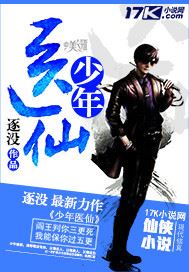
Qin Lang is a high school student who transfers to Xiayang City No. 7 Middle School, carrying a concealed background shaped by years of rigorous training under an eccentric master known as Old Poison. While appearing to be an average teenager with poor academic grades, Qin Lang possesses extraordinary physical conditioning and keen sensory abilities, particularly an acute sense of smell. His past involves mastering lethal poisons and martial arts, disciplines that he continues to practice in secret, including the Subduing Dragon Stance, which has elevated his physical strength to superhuman levels. Upon arrival, he immediately distinguishes himself through his interactions with Tao Ruoxiang, a stunningly beautiful biology teacher who is newly assigned to the school. Their initial meeting occurs during a health education film, where Qin Lang uses his sharp observation skills to notice Tao Ruoxiang’s discomfort and protect her from a mosquito bite. This act catches her attention, leading to a confrontation in the corridor where Qin Lang reveals he can diagnose a private medical issue she has been too embarrassed to treat. Recognizing her distress and his own potential, Qin Lang leverages his knowledge of traditional medicine and rare ointments to cure her boil, establishing a complex dynamic between student and teacher that sets the stage for further entanglement.

The core conflict surrounding Qin Lang is not merely romantic but deeply rooted in the social hierarchies and dangers of his new environment. His pursuit of Tao Ruoxiang places him in direct opposition to Sun Bo, the English teacher and homeroom advisor, who views Qin Lang as a rival for Tao Ruoxiang’s affection. Sun Bo attempts to assert dominance and humiliate Qin Lang during a dinner outing, orchestrating a drinking contest that backfires when Qin Lang reveals his superior physical control and wit. The situation escalates when local thugs, led by Ponytail, confront the group after Sun Bo accidentally spills beer on one of them. Instead of submitting to intimidation, Qin Lang effortlessly neutralizes the threat, displaying martial prowess that shocks both his classmates and the local underworld figures. This incident draws the attention of Han Sanqiang, a powerful underground boss who arrives with reinforcements to retaliate. However, Qin Lang’s acute perception allows him to detect that Han Sanqiang is suffering from chronic arsenic poisoning, likely from contaminated seafood. Rather than engaging in a violent brawl, Qin Lang uses this medical knowledge to intimidate Han Sanqiang into submission, forcing the crime boss to apologize and grant him safe passage. This event cements Qin Lang’s reputation as someone not to be trifled with, bridging the gap between the school’s social hierarchy and the criminal underworld.

As the story progresses, Qin Lang’s dual life becomes more pronounced. By day, he navigates the challenges of high school academics and the persistent attentions of Tao Ruoxiang, while by night, he adheres to the demanding regimen imposed by Old Poison. The master’s instructions are ruthless, commanding Qin Lang to seize the assets of An Desheng, a local figure who wronged him, leaving no trace for Qin Lang to investigate. This directive introduces a layer of tension, suggesting that Qin Lang’s involvement with the criminal element is not just about self-defense but part of a larger, ongoing vendetta. Despite his dangerous connections, Qin Lang maintains a facade of a typical student, though his behavior often betrays his true capabilities. He forms a tentative friendship with Zhao Kan, a fellow transfer student and president of the poetry club, which provides a glimpse into his social integration. Meanwhile, his relationship with Tao Ruoxiang evolves from awkward encounters to a more comfortable camaraderie, as she begins to rely on his unique skills and insights. The narrative highlights the contrast between his mundane school life and the lethal world he inhabits, creating a suspenseful undertone that permeates every interaction.

The trajectory of the story points toward an increasing unraveling of Qin Lang’s hidden past and its inevitable collision with his present. The acquisition of An Desheng’s assets serves as a looming threat, suggesting that Qin Lang’s actions will have far-reaching consequences beyond the school gates. His encounter with the mantis and the snake during his morning training further emphasizes his connection to the natural world and his readiness to confront danger at any moment. These events foreshadow future conflicts where his martial arts and poison mastery will be tested against increasingly formidable opponents. The dynamics with Tao Ruoxiang remain a central focus, as her growing curiosity about Qin Lang’s abilities creates both opportunities and risks. The story establishes a framework where personal ambition, romantic pursuit, and criminal intrigue intertwine, setting the stage for a narrative driven by power, survival, and the complexities of teenage life overshadowed by a dark legacy.

Latest Release
DateGroupRelease
2026-09-25knoxt c13
2026-09-25knoxt c12
2026-09-25knoxt c11
2026-09-25knoxt c10
2026-09-25knoxt c9
2026-09-25knoxt c8
2026-09-25knoxt c7
2026-09-25knoxt c6
2026-09-25knoxt c5
2026-09-25knoxt c4
2026-09-25knoxt c3
2026-09-25knoxt c2

Community Reviews

Rating(4.3 / 5.0, 18votes)
5 stars
11(61%)
4 stars
2(11%)
3 stars
5(28%)
2 stars
0(0%)
1 stars
0(0%)

Popular reviews

... Read More
"Willing to help Teacher Tao with your… unspeakable problem." — This line alone justifies reading the entire series. The way he drags out that pause before 'unspeakable problem' is comedy gold. He absolutely knows what she's dealing with and he is weaponizing politeness to make her squirm. And Tao Ruoxiang's response? "Since school's over, as your elder I'll take you out for a good meal" — the speed at which she pivoted from 'I want to embarrass you publicly' to 'let me reframe this as a family thing so nobody gossips' shows how sharp she actually is. She didn't just react, she outmaneuvered him in real time. Two birds, one stone, as the text says. That is a woman who does not lose easily. Then we get the walking scene and it is pure golden dialogue: 'Qin Lang, walk in front' / 'I don't know the way' / 'Even if you don't, walk in front!' / 'Unreasonable demands are a woman's prerogative.' The internal narrator just fully endorsed her nonsense and Qin Lang just accepted it. This is not forced comedy — this is two extremely competent people whose energies genuinely clash in a way that feels electric. "Teacher Tao, that's a question you shouldn't be asking me — you should be asking yourself" — said while being openly harassed by a student and yet acting like HE is the one being improper. The gaslighting is immaculate. And the leech reveal? "I brought one." Like bro you just carry around medical leeches in your pocket like they're Tic Tacs. Tao Ruoxiang's reaction of 'Ah! Get that thing away!' while simultaneously being desperate for a cure is the kind of character inconsistency that makes people feel real. She is repulsed but she needs help. Classic. The narrative voice throughout this section is doing so much work too. It comments on Qin Lang's thoughts, frames Tao Ruoxiang's calculations, and occasionally drops lines like 'inviting a wolf into her home' that perfectly capture the dangerous intimacy of their dynamic. The author trusts the reader to pick up on subtext without overexplaining.
... Read More
The dialogue in this section is genuinely excellent, and I want to highlight why each character's voice feels distinct. Qin Lang's dialogue is sharp, layered with double meanings, and always carries an edge. "What's called 'weaving your own cocoon'? What's called 'digging your own grave'?" — this internal narration followed by his calm external demeanor shows a character who is thinking three steps ahead while appearing relaxed. When he tells Ponytail "Did that recycled beer knock your brains out?" that's not just mockery; that's a line delivered with perfect timing and complete confidence. His voice is cool, controlled, occasionally sardonic. Sun Bo's dialogue, on the other hand, is wheedling and self-preserving. "Xiao Qin... enough is enough... You're still a student after all. If you drink too much... it's not good. How about this — you drink up... I'll just sip." Listen to the hesitation markers, the way he pivots mid-sentence. This is someone who is losing control and desperately trying to save face. And later: "Two thousand… this is extortion!" — his voice cracks with indignation that masks pure fear. The author gives Sun Bo a distinctly different rhythm of speech, one full of stammers and retreats. Then there's Ponytail, whose dialogue is pure street aggression: "Dry clean your mother!" and "Call the cops? Fine!" — short, crude, escalating. His voice has no subtlety, which makes him instantly recognizable as a thug character. And Han Sanqiang enters with "Did you just fall into a pile of shit or something? Get away from me—don't stink me up!" — aristocratic disdain masking brutality, which tells us everything we need to know about his character in one line. Tao Ruoxiang speaks sparingly but with authority when she does: "Since Teacher Sun can't go on, let's stop here." Measured, professional, trying to maintain order. Her voice is the anchor in a scene full of chaos, and the author uses her sparingly to maximum effect.
... Read More
Can we just talk about how Qin Lang absolutely dismantled Sun Bo in that opening scene? I have never loved a plot twist like this. Sun Bo thought he was the clever one, trying to outdrink a student to make him lose face, and what does Qin Lang do? He pretends to be weak, matches him bottle for bottle, and then just flips the entire dynamic. By the time the third beer went down, Sun Bo had already dug his own grave. The sheer satisfaction of watching someone get outplayed by their own scheme — this is peak narrative payback. But then the author throws a curveball that genuinely caught me off guard. The whole restaurant chaos that follows? That escalated so fast and yet felt completely organic. Beer foam meant for the floor ends up soaking a thug's pants, Sun Bo accidentally pukes on Ponytail's face, and suddenly what started as a drinking contest becomes a full-blown street conflict. The domino effect was brilliant — nothing forced, every beat triggering the next. And then Qin Lang's response to Ponytail? "This is between you and him — nothing to do with us!" Walking away while the enemy expects confrontation. That's not just clever plotting; that's character-defining behavior wrapped into a single line. He could have fought them all, but he chose the smarter path, which made his eventual kick of Ponytail three meters out the door feel even more earned. What really impressed me was how the subplot threads connected. Sun Bo pretending to be hurt on the floor — Qin Lang calling him out, Tao Ruoxiang covering her embarrassment, and then Sun Bo bolting without paying the bill. Every character got their moment, and none of it felt wasted. The scene ended with Han Sanqiang arriving, a much bigger threat than Ponytail ever was, and I was immediately hooked on what comes next.
... Read More
I need to discuss the WAITRESS. Not the main characters. THE WAITRESS. Because this author has done something absolutely brilliant here that most writers would miss. Every time Sun Bo opens his mouth to perform, the narrative cuts to the waitress's INTERNAL MONOLOGUE. 'What a poser!' 'This fake show-off is really something.' She becomes this running commentary track — basically the Greek chorus of a low-stakes social warfare drama. And get this: she KNOWS the 'free-range' chicken is a LIE. The text explicitly says free-range is 'just a marketing gimmick to jack up the price and fleece customers.' So the entire restaurant is built on performative authenticity, which mirrors Sun Bo's performative generosity, which mirrors Qin Lang's performative weakness. Everything in this scene is a costume. Everyone is playing a role. And the waitress? She's the only one who sees through all of it and just silently judges everyone equally. The dialogue throughout is also fascinating because Sun Bo's lines are ALL performance — 'Bottoms up! At the table there's no teacher or student — only brothers.' This is not how a real person speaks when they're genuinely relaxed. This is how someone speaks when they're trying to CONVince you they're relaxed. Qin Lang's dialogue, on the other hand, starts timid and controlled ('I can't drink much — one bottle at most') and then SHIFTS mid-scene to something sharper and more dangerous. The voice change is subtle but it's there.
... Read More
Okay, I need to talk about this one moment because it kept coming back to me. After they escape the restaurant, the text literally says: "Qin Lang didn't really need to run, but he wasn't going to pass up such a perfect chance to hold Tao Ruoxiang's hand." That's it. That single sentence. I nearly dropped my phone. Think about the context — there are thugs, reinforcements are coming, a criminal boss just arrived, and Qin Lang's primary concern is finding an excuse to hold Tao Ruoxiang's hand. This is not some grand romantic declaration. This is something far more endearing. It's casual, confident, and completely in character. He's a student who just fought off street thugs and his brain immediately goes to... romance opportunity. The contrast is everything. And Tao Ruoxiang's perspective in this scene is also so subtly written. She stepped in to protect Sun Bo, her colleague, showing loyalty and a sense of responsibility. But she also saw through Sun Bo's cowardice — watching him play dead on the floor, then bolt without paying. There's this whole layer of her slowly realizing that the people around her aren't as respectable as she thought, while Qin Lang, the student, is the one acting with integrity and courage. The chemistry between Qin Lang and Tao Ruoxiang doesn't come from dramatic confessions or love scenes. It comes from moments like running down the street together, his hand finding hers, the unspoken understanding that they're in this together. The author trusts the reader to feel the weight of those small gestures. No melodrama, just genuine connection building through shared experience.
... Read More
The pacing in these chapters is absolutely relentless and I mean that in the best possible way. Let me break down why this works so well. Act one: the drinking contest. We start slow but with immediate tension — Sun Bo trying to ambush Qin Lang with alcohol, Qin Lang turning it around. This section builds nicely because every bottle consumed raises the stakes. We're waiting for the moment Sun Bo cracks, and when he does, it's both expected and satisfying. Act two: the thug encounter. This is where the pacing accelerates dramatically. A group of shady characters walks in, a trivial misunderstanding about beer on a chair escalates into extortion, and then Sun Bo accidentallyProjectile-vomits on Ponytail's face. Each beat hits faster than the last, and by the time Ponytail threatens Tao Ruoxiang, the scene has reached full chaos. The author doesn't slow down for breath — they just keep feeding the fire. Act three: the escape and the boss arrival. Qin Lang grabs Tao Ruoxiang and runs. Sun Bo runs in the opposite direction. Then twelve motorcycles appear. Han Sanqiang steps out of a black sedan. The stakes just went from 'street thugs' to 'organized crime boss.' The escalation is clean, purposeful, and leaves us exactly where we need to be for the next chapter. What I love most is how the author uses Sun Bo as a pacing valve. He's the comic relief who keeps things from becoming too serious, but he's also the source of most of the problems. His cowardice at the end — running away while everyone else faces consequences — gives the chapter a sharp emotional landing before the cliffhanger hits. The structure is basically a rollercoaster and I was locked in the entire time.
See all reviews

Custom lists

See all custom Lists