You Were There at the End of Winter
+Add to Custom List
Genres:
Novel Info
  • Author:
  • Status:Ongoing

Summary

... Read More

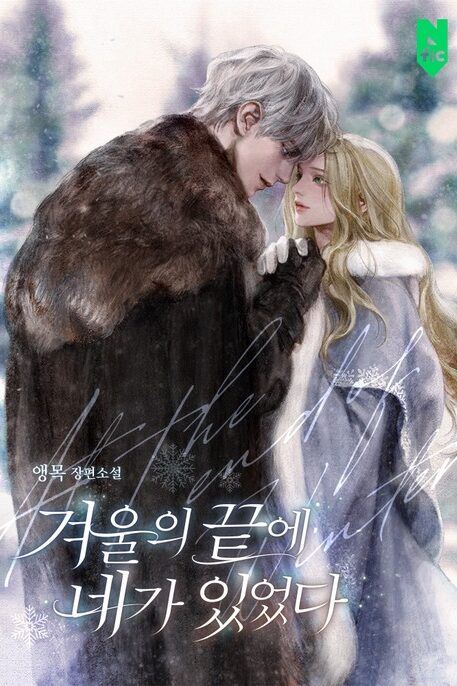
Eunice von Pavlone, the illegitimate daughter of Duke Rockford of the Tranche Kingdom, has spent her life as an outcast within her own family. Treated as a burden and despised by her stepmother and half-siblings, she found solace only in her childhood nursemaid Marie, who died when Eunice was seven. Despite her low status, Eunice proved herself competent by managing the vast Pavlone duchy estates from her home in Saint Laurent. However, her life takes a dramatic turn when King Wilhelm II of Tranche summons her to the capital, Melbourne. There, amidst the kingdom's nobility, she is informed that her hand has been promised in marriage to Johannes Reinhardt, the King of Nordish—a northern kingdom separated from the south by the perilous "Land of Death."

The Kingdom of Nordish is infamous for its harsh climate and its ruler, Johannes, who is rumored to be a cruel, emotionless monster who unified the north through fear and brute force. This marriage is a political alliance designed to prevent war, as Nordish military buildup threatens Tranche’s fertile southern lands. While Eunice’s father and stepfamily eagerly sacrifice her for political gain, Crown Prince Callian, who has long pursued Eunice obsessively, interrupts the announcement. He forcibly removes her from the palace, desperate to keep her close, but Eunice makes it clear she would prefer the unknown dangers of Nordish over remaining under Callian’s control.

Crown Princess Richena, Callian’s wife, later reveals the geopolitical reality: the marriage is necessary to secure peace, and Eunice was chosen precisely because she was considered unwanted and expendable. With no other suitable candidate willing to brave the north, Eunice departs for Nordish, carrying only her duties and her memories of Marie. Her journey takes her across the Land of Death, a wasteland that has surprisingly begun to show signs of recovery, with grass growing where there was once only barren sand.

Johannes Reinhardt, meanwhile, is depicted not as the monster rumors describe, but as a man deeply affected by his traumatic past. As a child, he fled southward through the Land of Death after witnessing his parents’ murder, eventually reaching Tranche where he was saved by the Pavlone family’s poorhouses. He remembers Eunice as a bright-eyed girl who once shared tangerines with him, though he fears she does not recognize him now. Excited and anxious, Johannes personally leads the escort to meet her halfway across the wasteland.

Upon their meeting, Eunice is struck by Johannes’s striking beauty—his silver hair and ice-blue eyes—but remains terrified of his reputed cruelty. Their initial interactions are awkward; Eunice avoids him, flinching at his volatile moods, which shift from violent outbursts toward his mage companion Rowell to surprisingly gentle moments with Eunice herself. Johannes, confused by her fear and disappointment that she does not remember their childhood connection, struggles to bridge the gap between them. He attempts kindness, offering comfort when she is frightened and even brushing her hair despite his lack of experience, revealing a vulnerable side beneath his royal exterior.

As they travel further north into the Kingdom of Nordish, Eunice witnesses the prosperity and order of Johannes’s realm, challenging her preconceived notions. The people of Berzan welcome the royal escort with warmth, not fear. Upon arriving at the castle, Eunice meets Glenton, the chancellor, whose intense gaze and unconventional flirtation unsettle both her and Johannes. The story concludes with the budding, complicated dynamic between the reluctant bride and the brooding king, as both navigate the tension between political duty and growing personal attachment, while underlying mysteries about the changing Land of Death and the true nature of their past connection remain unresolved.

Latest Release
DateGroupRelease
2026-10-03dusk blossoms c54
2026-10-03dusk blossoms c53
2026-10-03dusk blossoms c52
2026-10-03dusk blossoms c51
2026-10-03dusk blossoms c50
2026-10-03dusk blossoms c49
2026-10-03dusk blossoms c48
2026-10-03dusk blossoms c47
2026-10-03dusk blossoms c46
2026-10-03dusk blossoms c45
2026-10-03dusk blossoms c44
2026-10-03dusk blossoms c43

Community Reviews

Rating(0 / 5.0, 43votes)
5 stars
0(0%)
4 stars
0(0%)
3 stars
0(0%)
2 stars
0(0%)
1 stars
0(0%)

Popular reviews

... Read More
The pacing in this section is quietly merciless and I cannot stop thinking about it. Two days. That's all the author spent between Eunice receiving the snow flower and watching it melt. Two days of her eating alone, not seeing Johannes once, fiddling with that branch until it lost its magic. The time jump isn't marked with fanfare—it just happens. And then we feel every single hour of those two days through her loneliness. Then the structure pivots sharply. She goes to find him. His POV cuts in—exhausted, bitter, frustrated with Glenton, but working at "almost obsessive focus" because he's counting days until the wedding. Three days off. Then he gets to be with her properly. The reader knows something Eunice doesn't here, which makes everything ache more. And then—the knock. The simultaneous looks between Johannes and Glenton. The way the scene transforms from gray office drudgery to something luminous the moment Eunice walks in. "Had the office always been such a bright space? Johannes was realizing it for the first time." This is the author flexing so casually and I'm here for it. The chapter ends on Louise's entrance—comedy relief that somehow deepens everything. The structure never lets you rest. One moment you're aching for Eunice, the next you're laughing at Louise, then back to tension with Johannes drawing that line. It's controlled chaos and I need the next chapter immediately.
... Read More
Okay so let me just say—this section had me completely hooked. The plot here is doing something really subtle but powerful. You've got Eunice arriving in this strange land, meeting Johannes in the snow, and on the surface it looks like a romance setup. But underneath? It's a survival story. She's married to a man who doesn't remember her, in a kingdom where her value depends entirely on his favor. That's not romance—that's high stakes wrapped in petals. The snow flower moment absolutely wrecked me though. He gives her this beautiful frozen flower, and two days later it's just... an ordinary branch. "It had completely melted." I reread that line three times. It's such a quiet metaphor for everything—her situation, her hope, how fragile this whole arrangement is. The author didn't even need to make it dramatic. Just stated it like news. Brutal. And then there's the Glenton presence. Every time he appears, the tone shifts. That knife-like adjustment of his glasses gave me actual chills. "I should go now." Those four words from Johannes and suddenly the mood went from warm to ice cold. The plot keeps layering these miniature landmines without ever exploding them outright. I have no idea what Glenton is plotting but I am terrified of finding out.
... Read More
The pacing in this batch is frankly exhausting in the best possible way. We open with Callian's meltdown, pivot to Johannes's private turmoil, then land on the Avril confrontation, and it all happens against the ticking clock of a wedding that's literally tomorrow. The author knows exactly what they're doing here — every scene is compressed, every emotion amplified by proximity to the deadline. I especially loved the transition from Rockford's heavy family drama into the next chapter's title card: "Merely Duty." What a devastating chapter heading. It's supposed to be a reassurance but it reads like a warning label. Two sentences later and we're watching Johannes's expression twitch in ways that completely contradict the word "merely." The structural irony is gorgeous. The Avril encounter is where the pacing absolutely picks up though. It starts with Eunice walking alone — quiet, atmospheric, contemplative — and then BAM, this woman with a mole and a grudge appears and the scene detonates. The exchange is so quick, so sharp. Eunice tries to be diplomatic and Avril responds with pure hostility, and the whole thing escalates in about three paragraphs. It's breathless reading. If I had one tiny critique, it's that the Knoxville audience scene feels slightly rushed compared to the garden confrontation. We get the political tension but it moves fast. Still, I wouldn't swap it — the whole batch reads like a sprint toward the wedding, and that urgency is exactly what makes it work.
... Read More
There's something deeply symbolic about that garden scene that I can't shake. Avril destroying the snow flowers - these delicate white blooms that Eunice had been admiring - feels like more than just a tantrum. It's destruction born of heartbreak, of someone lashing out at beauty because they can't have what it represents. Snow flowers are fragile, temporary things. They bloom in harsh conditions and don't last. Isn't that what Avril's hope for Johannes is? Something beautiful but ultimately ephemeral. And Eunice, who spends her life at a desk, who has never been allowed to be pampered, watching this destruction with shock - she's witnessing the destruction of illusions in real time. The garden itself seems to represent the world these characters inhabit - something cultivated and ordered that can be destroyed in moments of emotional chaos. Avril's desire to 'destroy this entire garden' is a desire to burn down the social structures that confine her, even though she benefits from them. And then there's the wedding itself - the union of two countries, two worlds. Eunice's internal monologue about being queen for the alliance versus her personal desires speaks to this theme of duty versus self. 'She hadn't come here to play at love' - this line echoes with the weight of political marriage, of women's bodies as instruments of peace. The posture correction scene also feels symbolic on some level. Johannes telling Eunice to stand tall, not to shrink - it's almost as if he's preparing her for the role she's about to step into. A queen should not cower. But the tenderness in his touch complicates that symbolism entirely.
... Read More
'Above the campfire, the vast night sky stretched endlessly. It was a beautiful night, so distant and vast it was almost frightening, with stars flowing like a river.' This line. This single line. I need to sit with it for a moment. The contrast between the intimate, awkward campfire conversation and this infinite cosmos above is just... chef's kiss. Everything about this scene is soaked in atmosphere. The crackling fire, the darkness gradually expanding its territory over the land where dusk had fallen, the silence that shifts from awkward to comfortable. It feels like you're actually there sitting between two people who don't know each other but are slowly figuring each other out. And the setting itself—the Land of Death, this wasteland they're crossing—adds this underlying tension. They're not in some cozy ballroom having a polite dinner. They're in the middle of nowhere, surrounded by an almost frightening vastness, and Eunice has no one to turn to for help. That vulnerability is baked into every description. The wilderness isn't just backdrop; it's actively shaping how these two interact. Then you cut to Johannes in his tent, and the imagery shifts completely. Where the previous scene was all warm firelight and open sky, now it's enclosed canvas, muffled sounds, moonlight filtering through fabric. He's pressing his ear against the tent wall listening for her breathing. There's something almost haunting about that image—the powerful ruler reduced to a sneaking figure outside a canvas wall, unable to cross even a few feet of fabric distance. The morning scene flips it again. Clear sky, no clouds, busy knights moving in coordinated energy. Eunice with her hand mirror trying to compose herself without a maid, without proper cosmetics, in the middle of a wasteland. The loss of her normal routines—the luxurious grooming setup—shows how far she's been pulled from her world. And Johannes watching her tent, hoping she'll come out, while she's over there patting powder on her face wondering if she should do more makeup. Two people in adjacent tents doing their own rituals, both anxious, both thinking about each other, but never crossing paths.
... Read More
Let me talk about something that genuinely impressed me structurally. The author uses the Land of Death as this recurring motif that does SO MUCH narrative heavy lifting without being heavy-handed about it. Chapter 5 opens with this almost documentary-style description of the wasteland — barren, hopeless, swallowing children whole. Then we get the flashback of young Johannes, Rowell, and Glenton surviving it, eating grass, crawling southward. And the payoff? When adult Johannes rides back through it and notices it's CHANGED. Grass is growing. There's vitality where there should only be death. "It's hard to call this the Land of Death anymore." This line hits differently the second time you think about it because it's not just about the physical landscape — it's about Johannes himself. He was a child who crawled through death and survived. Now he's the King who unified the north. The wasteland mirrors his journey from victim to ruler. Then there's the parallel with Eunice's perspective — she's traveling through the same land, reflecting on how these same children must have suffered to reach St. Laurent. The narrative weaves between three viewpoints (Johannes, Rowell, Eunice) and each one reveals a different facet of the same territory. That's sophisticated storytelling. The chapter transitions are also tight. We go from Johannes's internal monologue about the marriage alliance directly into the campfire scene where Rowell's teasing triggers the emotional climax of the chapter — Eunice witnessing the violence. No loose ends, no padding. Every scene earns its place. The author clearly knows when to accelerate and when to let moments breathe.
See all reviews

Custom lists

See all custom Lists