You Should Be Held Tight - Reviews

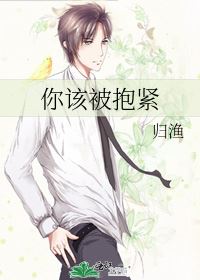
You Should Be Held Tight
+Add to Custom List
Sort
Add review
... Read More
There's this recurring motif of sweets and candy that I can't stop thinking about. Ruan Zhizhi relies on sweets because of her weak constitution — macarons, fruit candy, mille-feuille. It's her comfort, her survival mechanism. And then Shi Yan, this cold brooding man who looks like he hasn't smiled in years, is carrying a pink-ribboned box of macarons. The man who ate the last box. The man who offers her a single piece of fruit candy when she's paling from low blood sugar. The candy scene is SO much deeper than it appears on the surface. He notices her condition before she even speaks. He has candy on him. He offers it without being asked. This man who everyone says is cold and impossible to handle — he's quietly taking care of someone without making a scene about it. The contrast between his reputation and his actions is the whole theme right there. Then there's the prologue's murdered mother, the seven-year-old boy who witnessed it all, and how that case is clearly connected to the present. The businessman who planned the murder "so seamlessly, so flawlessly" — perfection as a mask for something rotten. And Ruan Zhizhi, the reporter, digging into old cases, trying to find meaning in tragedy. She's also someone who's been quietly enduring her own kind of emotional violence — five years of loving someone who used her devotion as a safety net. The winter setting, the cold, the yellowed newspapers, the pink ribbons — everything is coded with meaning. This story is about people who look broken but aren't, and people who look perfect but are rotting inside.
... Read More
Let's talk about how the author handles the transition from the trip to the aftermath, because this is masterful pacing. Chapter 8 ends with the flight — the emotional climax of the entire trip. Everything builds: the cat moment, the shield moment, the WeChat Moments discovery, and then the flight where they discuss the book and he drops the "she will marry me" bomb. And then — cut to black. No dramatic goodbye scene. No tearful confession. Just "That day will come" and we're done with the trip. Then Chapter 9 opens with this line: "Time is like sand in the palm of one's hand—whether you open your hand or clench it, it will slip away grain by grain until nothing remains." And suddenly we're a week later. Life has continued. She's back in her empty apartment. The memories are fading. And the author lets us sit in that quiet, aching space where the high of the trip has ended and reality sets in. No rushing. No filler. Just the slow, painful process of coming back down. The flight scene itself is perfectly paced — it starts with mundane details (biscuits, videos, seat numbers), gradually builds through the book discussion, and then explodes emotionally with the confession. The author doesn't rush any of it. Every beat earns its place. The moment when she asks "do you have someone you like?" feels like it's been building since the very first chapter, and the answer — "She doesn't know. But one day she will." — lands with the weight of the entire story behind it. And then the ending of Chapter 9, with Gu Nian's storyline, is a brilliant structural choice. While Ruan Zhizhi is quietly drowning in her feelings for Shi Yan, her friend is dealing with relationship drama on a completely different wavelength. It creates this beautiful emotional contrast — one woman's quiet, internal heartbreak alongside another's loud, external one. The pacing never drags because the author keeps shifting perspectives and emotional registers, but it never feels rushed because each scene breathes. The only thing I'd change? I'd want more of the post-trip period. That empty apartment scene where she looks at the old photograph and wonders about "the boy" — I need more of that energy.
... Read More
"Zebra, zebra, do you remember me? I'm a fool who only knows how to sing." This line from the bar scene haunts me because it's the first time we see Shi Yan as someone who feels deeply, who has suffered. And then immediately after, he's the guy who buys her oxygen bottles, wraps his scarf around her neck, and lights a flame for her frozen hands. The contrast is everything. Chen Jiayan is the safe option—the one who asks if she has a boyfriend, who offers himself with that ridiculous 'I have a car and a house' pitch, who notices her expressions shift when Li Sicheng's name comes up. But it's Shi Yan who shows up when she's stranded without a wallet in a crowded street at night, who buys her dinner without being asked, who notices she hasn't eaten. The dynamic between these three is so layered. Chen Jiayan represents the life she could have—stable, kind, predictable. Shi Yan represents the life she's afraid to want—dangerous, unreadable, intoxicating. And Ruan Zhizhi? She's caught between gratitude and something far more terrifying. Every time she thanks him, it feels like she's building a wall. But walls can be climbed.
... Read More
I have to talk about how this section restructures the entire emotional architecture of the story. Up until the bar scene, everything between Ruan Zhizhi and Shi Yan was this slow-burn tension—glances, accidental kindnesses, the paper rose in her pocket. But then the author drops them on Jade Dragon Snow Mountain and suddenly the plot isn't just building anymore, it's accelerating. Every obstacle on that mountain becomes a metaphor for what's keeping them apart: the altitude, the cold, her physical weakness, his quiet competence. And the break scene? Chef's kiss. He says 'I'm tired' when clearly he isn't, just to create space for her. That's not just plot movement—that's character-driven plotting at its finest. The guide's oxygen bottle scam is a nice touch too, giving Chen Jiayan a moment to be the voice of reason while Shi Yan proves that sometimes being practical matters more than being clever. The whole sequence from the cable car decision to the lighter moment to the confession of having someone she likes—it's a perfect three-act structure compressed into two chapters. And that last line about the lights stretching... where is this going? I need to know what happens next.
... Read More
The author does something incredible with the Lijiang night scene. It starts almost accidentally—Ruan Zhizhi can't sleep, feels this wave of loneliness, and just... walks out. In her pajamas. No makeup. Just her. And the old town receives her like it's been waiting. The cobblestones glimmering under night lights, the Ming and Qing architecture, the neon creating this dreamlike atmosphere—it's not just setting, it's emotional weather. She's wandering through a city that feels ancient and timeless while she's grappling with feelings that are brand new and terrifying. And then the shop scene! The lotus-leaf shawl in pink and blue, the shop owner with long narrow eyes full of warmth, the 100-yuan note appearing like a deus ex machina. The whole sequence feels cinematic—like a Wong Kar-wai film where every frame is soaked in longing. The Jade Dragon Snow Mountain scenes work the same way. That moment when Shi Yan stands in his white down jacket against the backdrop of the snow-capped peak and she thinks 'the breathtaking scenery now seemed like nothing more than a backdrop to him'—that's not just description, that's the entire theme of this relationship crystallized in one sentence.
... Read More
I need to talk about the Lu Ji Noodle House scene because it is SO cinematic and I have not stopped thinking about it. Let me paint this for you: morning light, a bustling local noodle shop, steam rising from two bowls of beef noodles, and this impossibly cold man who somehow knows exactly how to handle her bowl because he's watched her eat before. The sensory details are what make it work. "The aroma wafting from inside made her exhale in relief." The steam, the heat burning her fingers, the cilantro being methodically removed. Shi Yan's gesture of picking out the cilantro isn't just sweet—it's devastating because it shows he's been paying attention to her for years and she has no idea. "Ruan Zhizhi, I know many of your habits." Say no more. And then the visual contrast of Shi Yan leaning against the black Land Rover at her building at 7:15 AM, wearing a black trench coat, looking like "a brooding statue, isolated from the world, yet as enticing as a poppy." The author keeps using these dark, almost dangerous metaphors for him. Poppy. Beast. Calamity. These aren't accidental word choices. The wedding dress boutique scene is also wonderfully rendered—the high-end mall, the underground garage, the princess-line and mermaid gowns, the pre-ordered dress that can't be touched. It's a completely different atmosphere from the noodle shop: bright, expensive, filled with other people's happiness, which makes Ruan Zhizhi's loneliness cut even deeper. The author knows how to shift tones between scenes and it never feels jarring.
... Read More
There are so many symbols stacked in these chapters that I want to unpack. Let's start with the lighter. Shi Yan plays with it constantly — on the bus, at the restaurant, everywhere. It's a small object but it's become this visual shorthand for his restlessness, his contained energy, the way he's always one flick away from something igniting. Then there's the dream itself — darkness, locked doors, a silent man beside her. The author explicitly connects it to the lab incident where students were trapped for three hours. But why now? Why this trip? The dream is clearly about feeling trapped, about helplessness, about the people who can't or won't help you. And that silent man in the dream — is it Li Sichen? Is it Shi Yan? Is it both? The Ashima legend is another layer: a story about love that turns to stone, about longing that can't be fulfilled. Ruan Zhizhi is literally standing in front of Ashima Rock while carrying her own unresolved love. And then there's the locked door metaphor the author uses directly — 'Everything hidden. Nothing revealed. A locked door no one could open.' Shi Yan is described as a locked door, but so is Ruan Zhizhi's heart. Both characters are closed off, both are carrying something they won't name. The oden at the end — warm food offered in silence, a small gesture that says more than words — that's the author's way of showing that connection doesn't always need grand declarations. Sometimes it's just someone remembering what you like.
... Read More
The pacing here is actually insane when you think about it. We start in the prologue with a newspaper article about a murder, a seven-year-old witness, Ruan Zhizhi researching at a café, then BAM — she bumps into a mysterious man who has the exact same energy as the boy in the photo. That's like three major plot threads established in the first few pages. Then Chapter 1 immediately pivots to her getting dragged onto a bus trip to Yunnan, meeting Chen Jiayan (the sunny best friend energy), and then Shi Yan revealing himself as this untouchable professor type. The transition from the café's quiet introspection to the bus's confined space creates this nice shift in energy — we go from solitary reflection to forced proximity, which is basically the entire romance genre in a nutshell. The cliffhanger is perfect though. She's dizzy, reaching for candy that isn't there, and then HIS hand appears. "Want it?" End of chapter. I am not okay. The author knows exactly how to hook you. If I had one tiny critique, the Li Sichen backstory dump comes right after the café scene and it slows the momentum just slightly — but honestly, it's necessary setup for the emotional stakes. Without understanding why Ruan Zhizhi is the way she is, the rest doesn't land as hard. Still breathing though. NEED MORE.
... Read More
Okay so can we just talk about the absolute CHAOS of calling Shi Yan a friend? Ruan Zhizhi texts him 'friend' and then spends the whole chapter trying to reinforce that boundary, and Shi Yan is just… sitting there letting her dig her own grave. The moment that wrecked me was when she hands him the umbrella and Banlangen and goes full gratitude mode: 'I'm really lucky to have a friend like you.' And Shi Yan just murmurs 'A friend?' like the word physically pains him. Not even angry, just… hollow. And then he drops the mic: 'Do you know what's even more foolish than a one-sided desire? To know it's foolish, yet be unable to stop.' Ruan Zhizhi literally just stood him up and then runs into him at a Japanese restaurant and her coworker is like 'that guy is looking at YOU' and I cannot breathe. Also Chen Jiayan is there?? Of course he is. These two clearly have history and Shi Yan clearly doesn't trust him, but the way Ruan Zhizhi keeps bringing him up and Shi Yan's reaction? The Yunnan trip is clearly a massive plot point we haven't fully unpacked yet. And Li Sicheng—seven years of one-sided love, the vodka incident, the birthday party she can't even remember properly. She's running from one type of pain toward another. Classic Ruan Zhizhi.
... Read More
Okay so let me just say this out loud — the author really thinks she can drop a scene like that and I won't lose my absolute mind? Shi Yan, this man who has not said a single warm word to anyone all trip, who looked at three girls practically throwing themselves at him with the emotional engagement of a brick wall... and he's leaning against a stone lion outside a restaurant holding a STEAMMING CUP OF ODEN? Like. Of ALL the things. Oden is literally one of those foods you only get when you're in a good mood or someone cares about you. And Ruan Zhizhi's internal monologue at that point — 'Should she... ask him where he bought it?' — is the most relatable 'I'm trying so hard to play it cool while my brain is doing backflips' energy I have ever read. The fact that she's still carrying trauma from Li Sichen (seven years, SEVEN, and she's still not over it — 'she was the one who couldn't let go') while simultaneously having these tiny involuntary reactions to a man who has given her exactly zero reason to care... that's not just good writing, that's psychological torture in the best way. And Chen Jiayan being the loud, sunny foil to Shi Yan's silence? Chef's kiss. He literally warns her 'you mustn't be like these girls and fall for him' like he's some kind of romantic guardian angel who doesn't realize he's the one being politely ignored. I need to know what happens next with that oden. What does she do? Does she say something? Does he remember she likes oden? I'm not ready for this trip to end.
... Read More
Okay, let me just say this out loud: Shi Yan is the most dangerously layered character I have ever encountered in a romance novel, and I need a minute. First, the cat scene. When he says "Cats are very particular about their partners. They're always independent, so they're always lonely," and then drops the bombshell "I meant… like you" — Ruan Zhizhi's entire world tilts. But here's what gets me: is he being sincere, or is this just another calculated move? Because honestly, both could be true at the same time. This man operates on a frequency most people can't even detect. Then comes the shield moment at Pudacuo. Yan Rui is clearly jealous, making faces, gesturing wildly, and Shi Yan — cool as ice — pulls Ruan Zhizhi close and whispers "Stand here quietly. Don't move. Don't run away." He uses her. Absolutely. But the way he does it… there's something almost tender in how he tucks her hair behind her ear, and when she calls him out, he laughs. Not a mocking laugh. A genuine, clear, melodious laugh. And he says "Shh, you know, I know." As if they share a secret. As if she's not just a tool to him. And then on the plane, when he says "But one day she will. And one day… she will marry me" — about Ruan Zhizhi — I literally dropped my phone. This man has been building this entire architecture of intention around her, and she's only just beginning to notice the foundation. The relationship between them isn't a simple push-and-pull. It's more like two people speaking different languages but somehow understanding each other perfectly. Every interaction reveals another layer. He's manipulative but not cruel. Distant but not indifferent. And she's cautious but increasingly willing to reach out. That moment when she asks him "do you have someone you like?" — that's her stepping out of her comfort zone for the first time. She's not just observing him anymore. She's trying to connect. What I love most is how the author never lets us fully trust either character's interpretation of the other. Is Shi Yan sincere or performing? Is Ruan Zhizhi falling or just fascinated? The beauty is in the ambiguity. And that final line — "That day will come" — when she thanks him and promises to take him to dinner someday? Chills. Absolute chills.
... Read More
I've been sitting with the symbolism in these chapters and honestly it's overflowing. Let me just dump my thoughts here. The paper rose in her pocket—that's been there since before this trip, right? A token from some earlier moment, now pressed against her thigh every time she touches it. It's dead flowers, preserved, beautiful but lifeless. Just like her relationship with Li Sicheng. Then there's the scarf. Shi Yan's scarf around her neck carries his warmth, his scent, his presence even when he's gone. It's an intimate gift that she accepts while telling herself she doesn't owe him anything. The lighter is even more loaded—he uses it to warm her hands, yes, but lighters are also about fire, destruction, temptation. 'Don't get too close, careful not to burn yourself.' Isn't that the whole story? And the song—Zebra, Zebra. A zebra that can't sleep alone at night, a singer who only knows how to sing, carrying a guitar and leaving the north. It's about exile, about belonging nowhere, about performing your pain for an audience that may or may not be watching. Ruan Zhizhi hears it and for the first time sees 'a trace of humanity' in this inscrutable man. The mountain itself is symbolic—5,596 meters of thin air where everything feels more intense, more raw, more real. Altitude sickness as emotional honesty. You can't breathe normally up there, and maybe that's the point—these characters can't breathe normally around each other either.

Leave a comment

You must be logged in to leave comments. or