Summary

... Read More

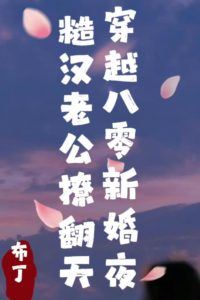
Lin Zhiyan is a fourth-year high school student from District 16, the most crime-ridden area in the Ringstar Empire. An orphan and a model student, her life unravels when her fugitive boyfriend crashes a police car into her workplace. Because of his criminal record, she faces immediate social stigma and threatens her future college applications. With the application deadline for the prestigious United Military and Political Academy passing, she discovers a missing recommendation letter blocks her entry. Desperate, she fabricates a traumatic hostage narrative, impersonating psychological instability to coerce the school administration into issuing the letter. Her ruse succeeds, and she secures admission. To resolve her tainted record, she negotiates a confidential agreement with the police, emerging as a media darling while maintaining a spotless official history.

Upon arriving in the Central District, Lin Zhiyan encounters extreme wealth disparity and political tension. She is quickly targeted by a fraudster but outsmarts him, stealing his funds before being apprehended. The case is seized by Jiang Yi, a powerful student from the Military-Political Department and son of a high-ranking general. Jiang Yi interrogates Lin Zhiyan, suspecting she staged the incident. Despite his pressure, she refuses to confess, knowing it would jeopardize her scholarship. During a search, she hides her stolen self-defense device, but Jiang Yi suspects she concealed it. He later confronts her privately, demanding she demonstrate how she evaded detection. In a tense exchange, Lin Zhiyan reveals her cunning, admitting she used misdirection. Jiang Yi eventually finds the device and allows her to go free, though he remains suspicious of her motives.

At the academy, Lin Zhiyan is assigned to the Cultural Studies Department, the least prestigious division, while Jiang Yi leads the elite Military-Political honor guard. Their rivalry intensifies during the opening ceremony, where Lin Zhiyan performs a magic trick using a valuable deck of cards Jiang Yi had earlier offered as compensation for her ruined clothing. She steals one card from him publicly, further humiliating him. Meanwhile, Lin Zhiyan is approached by Ze Fei, a wealthy senior from the Wealth Management Department, and his cousin Li Siheng. Ze Fei pressures Lin Zhiyan to act as a ghostwriter for Li Siheng, who lost his position as freshman representative to her. Lin Zhiyan refuses the exploitative arrangement.

The story follows Lin Zhiyan as she navigates a hostile academic environment filled with aristocratic elites. She struggles with financial constraints and a heavy course load, eventually enrolling in a high-credit elective on District 16 customs taught by Professor Toya Audran. This decision sets her on a collision course with the political factions vying for control. Jiang Yi continues to monitor her, viewing her as a puzzle to solve. Lin Zhiyan’s goal is survival and upward mobility through civil service, but her connection to District 16 and her defiance of the elite make her a target. The narrative establishes a conflict between her pragmatic, street-smart resilience and the rigid, oppressive hierarchy of the military academy.

As the semester progresses, Lin Zhiyan balances part-time work with her studies, facing discrimination from wealthy peers. She forms a tentative alliance with Ai Wen, a fellow freshman who offers friendship despite class differences. The plot thickens with the introduction of Ze Fei’s political ambitions, who seeks to use Lin Zhiyan’s background for his own ends. Jiang Yi’s investigation into Lin Zhiyan’s past reveals layers of deception, forcing him to reconsider his initial assumptions about her character. The central tension revolves around Lin Zhiyan’s determination to protect her future against a system designed to crush those from lower districts. Her interactions with Jiang Yi evolve from adversarial interrogation to a complex dynamic of mutual suspicion and reluctant respect. The story highlights the stark contrast between the utopian appearance of the Central District and the gritty reality of District 16, setting the stage for a struggle for power and identity within the academy.

Latest Release
DateGroupRelease
2026-09-26akknovel c11
2026-09-26akknovel c10
2026-09-26akknovel c9
2026-09-26akknovel c8
2026-09-26akknovel c7
2026-09-26akknovel c6
2026-09-26akknovel c5
2026-09-26akknovel c4
2026-09-26akknovel c3
2026-09-26akknovel c2
2026-09-26akknovel c1

Community Reviews

Rating(0 / 5.0, 35votes)
5 stars
0(0%)
4 stars
0(0%)
3 stars
0(0%)
2 stars
0(0%)
1 stars
0(0%)

Popular reviews

... Read More
Okay so this whole interrogation scene is basically a chess match and Jiang Yi is playing at master level. Let me break down why this plot thread is so satisfying. First, the surveillance footage setup. On surface level it looks like Lin Zhiyan has a solid alibi — she was seen at the alley, struggling over a bag with someone, then running off. Classic misdirection. But then Jiang Yi drops the forensic detail about the tear marks and suddenly everything flips. "When two forces pull in opposite directions, the woven fibers should spread outward from both points of tension. But here, there's only one force applied." That line hit me like a punch. One force means either the other person didn't pull at all, or they never existed. She staged the whole thing. Alone. But here's what makes the plot even tighter — Lin Zhiyan doesn't just fall apart. She pivots immediately: "The bag strap could have snagged on the decorative edge of the wall." It's a plausible alternative explanation. And Jiang Yi has to account for it. The back-and-forth has this beautiful rhythm where every time one character thinks they've won, the other finds a crack in the armor. Then Jiang Yi reveals the medical report angle — the electrocution possibility, the pseudo-defense tools from before the regulations. He's building multiple lines of evidence simultaneously, not just relying on the forensic analysis. That's competent plotting. The author isn't giving us a single big reveal; it's a layered accumulation that makes the interrogation feel real. The coolest part though? Lin Zhiyan carrying the weapon on her anyway. Jiang Yi predicted that. "Your movements, locations, and residence have already been searched." That tells us he's not just smart — he has institutional power behind him. The plot isn't just about who did what; it's about how much of the world is stacked against her from the start.
... Read More
The pacing here is doing something really specific and I can't quite name it except it's like the author is controlling your heart rate through chapter structure. You start with the viral story recap, which is light, almost comedic, the DM exchange, the "Hmph. Such trivialities. Whatever." You're in a breezy mood. Then the airport scene, and the weightlessness of the airship, and suddenly you're floating, the prose slows down, the descriptions get cinematic. "Red lights cast a glow over the crooked buildings, making them look like freshly gutted organs." That's not a normal travel description. That's a body metaphor and it signals the world is alive and hostile and you're inside it. Then the Central District gets this almost reverent, golden-hour treatment, skyscrapers, rivers, greenery, "no different from the utopian cityscapes in old textbooks." And you think, okay, we're in the safe zone, the pretty zone, things are going to be smooth. And then the three airships ruin it. The pacing shifts from the slow descent to this agonizing wait. "For an agonizing wait, the three ships touched down." The word "agonizing" is doing the work. You're not just watching, you're trapped with her, you're waiting for the hatches to open, and when they do, it's not the protagonist who gets priority. It's the cape kid. And the whole scene just... compresses. The airport that was vast and opulent suddenly becomes a stage for one person's entrance. The pacing snaps into a shorter, harder register. Sentences get punchier. "Ah, school! Ah, capitalism! Ah!" Three exclamations, done. She's deflated and we move on. Then the suburb. And this is where the rhythm changes again. It's not fast, it's not slow, it's... empty. "The lack of people made the place feel eerily desolate." The pacing is deliberately flat, quiet, a bit boring in the way that isolated places are boring. You're transferring three times, two times, once, riding a shared bike. It's tedious and it's accurate and I actually liked it because it matched her exhaustion. And then the factory worker appears and the pacing picks up, just slightly, a new energy, a new direction. "Just follow me." And the streets narrow. And then the alley. And the sentence just dies. "Blinding pain exploded in hi—" No period. No ellipsis even. Just a cut. And I was left staring at my screen going what the actual hell is happening. That's a deliberate structural choice. The author knew you were getting comfortable in the suburb, got you bonded with the nice guy, and then just... yanked the rug. The cliffhanger isn't a question, it's a severing. You don't get to process what just happened. You just get the pain and the dark and then the chapter ends. I re-read that last paragraph four times. Four. And I still don't know if he's going to kill her, sell her, rape her, or just steal her luggage and she'll wake up bruised and humiliated. I think that ambiguity is intentional. I need chapter 8 more than I need sleep.
... Read More
There's a whole ecosystem of class hierarchy hiding beneath this interrogation scene, and the author peppers it in so casually you might miss it on first read. The most devastating passage for me was this exchange about the academy's social structure: On the StarNet, rumors claimed the United Military and Political Academy was divided into two: the Military-Political Department and everyone else. Resources and power skewed entirely toward the former—like "the elites and their five dogs," where even the Wealth Management heirs were just pedigreed mutts. Lin Zhiyan had once wondered, Then what does that make Cultural Studies, with all its obscure majors? Now she knew: the village mutt tied outside, surviving on scraps—or worse. Let that sink in. She's not just a suspect in a crime. She's a Cultural Studies student from District Sixteen — the worst possible combination of marginalization in this world. District Sixteen has "abysmal" security. She's outside the power structure entirely. And Jiang Yi knows it. When he says "Getting into the academy from District Sixteen proves you're clever. So, as a Cultural Studies student, comply" — he's not just issuing a legal demand. He's reminding her of her place. The weapon she carries is also symbolic. Those "pseudo-defense tools" from before the regulations — palm-sized, no traceable coating — they exist specifically in District Sixteen, where the system fails its people. She carries a tool made for a world that the academy doesn't recognize. It's an act of defiance in itself. And the surveillance footage itself — the technology that's supposed to prove her innocence actually becomes the tool of her potential conviction. The eye of the state is always watching, but it only sees what it chooses to interpret. "Only one force applied" — the evidence is objective, but the reading of it is entirely subjective. This story isn't really about one crime. It's about who gets to define truth, who has access to the institutions that enforce it, and what happens to people like Lin Zhiyan who exist outside those structures.
... Read More
I re-read the last third of the interrogation scene four times. I couldn't stop myself. 'Her sharp wit glinted in her eyes, her cold features lit with a smirk that wasn't bitter but fragile, like embers fighting to stay alive.' That one line undid me. The whole chapter she's been playing the strong card. Sitting in his chair. Refusing to confess. Listing her identities like a manifesto. The 'bandit logic' speech where she lays out the asymmetry of self-defense with cold clarity. And then right at the end, when she says 'Why bother with the parting shot? Feels like haggling—' and the author drops that simile. Embers. Fighting to stay alive. She's not bitter. That's the key. She's not angry at him. She's not angry at the system. She's just... tired in a way that doesn't come across as defeat, it comes across as a fire that's been burning too long with too little oxygen. And then she walks into the search room and the bravado just... thins. 'Before we start… can you tell me what happens next?' She asks SOFTLY. After all that fire. She wants to know the rules. She wants to know if it's community service or expulsion. 'The privileged get a slap on the wrist; the rest get the gallows.' She says it almost calmly. Like she's already done the math. And 'Should've eaten more' at the very end of the section. Just... that. If lunch might be her last meal, the most human thought isn't fear or anger. It's that she didn't eat enough sandwich. I think that's what makes her feel real to me. The emotional line here isn't a romance, it isn't a friendship, it's something quieter. It's the feeling of being alone in a way that isn't dramatic. No one warned her. No one's going to come in and say 'hey, you'll be fine.' The officers just do their jobs. The drone hovers. She spreads her arms. And the last line is about lunch. That's the emotional core of this character for me right now. Not the defiance. Not the smarts. The tiny, unglamorous sadness underneath all of it. And I don't think she'll let anyone see it. Not Jiang Yi. Not anyone. Which means when it DOES break through later, it's going to land like a train. I'm so annoyed at the author for making me care about a character who's literally being escorted to a search room while quipping about Judas.
... Read More
"Since you managed to escape, I won't pursue the matter further, nor will I make things difficult for you. But you'll have to demonstrate it again—show me how you moved it right under my nose." Jiang Yi delivering this like it's some grand favor. Like he's doing HER a favor by imprisoning her in his breakroom. The arrogance is so naturally woven into his speech that you don't even need narration to tell you he's the type to play emperor everywhere he goes. Then Lin Zhiyan's comebacks are absolutely lethal: "If humiliating me satisfies you, fine. But at least pay for my shirt. This is the second one." She goes from being physically restrained to negotiating compensation like a union rep. And when he offers playing cards instead of money? Her internal monologue: "Seriously, less showing off, more spending, please." I laughed out loud. But the dialogue that absolutely killed me was this exchange: "While I'd prefer not to skip it, it's not that important to me." — about her own speech, said completely deadpan. "You said you wanted to see a demonstration... But the truth is, you felt mocked, your pride wounded, so you dragged me here and forced me into this humiliating position to make me submit, isn't that right?" She doesn't just deflect. She DIAGNOSES him. And his response? "Correct." Just one word. No defensiveness. That's a character who's used to being right and hates being wrong, which makes his admission all the more significant. The banter has this razor-sharp quality where every line is both conversation and combat. They're not just talking—they're measuring each other.
... Read More
Jiang Yi. Oh, Jiang Yi is doing something so specific here and I can't stop thinking about it. He's the interrogator. He's in control. He presses the button, the officers come in, he hands down orders like it's nothing. And then Lin Zhiyan sits in his chair and says 'it's definitely comfier than the suspect's side' and his brow TWITCHES. He almost retorts. The text literally says 'Jiang Yi nearly retorted but caught himself. This wasn't an interrogation; it was a squabble.' And THAT is the whole relationship in one sentence. He's so used to being the one in charge that being talked TO, being made to feel like the one losing, breaks something in his composure. But he catches it. He always catches it. That's his character. The haughty elegance, the controlled stride, the 'strolling through yesterday's corridor' exit. He will never show that he was rattled. And then Luwixi shows up and it's like watching oil and water decide to fight. 'His crude words clashed starkly with his godlike, sculpted features.' I laughed so hard. This guy is dripping with aristocratic energy—platinum hair, gray-blue eyes, sword at his waist, diamond brow piercing—and then he says 'My father will still be the one giving orders to honor students like you' and before that he threatened to 'settle this sooner or later.' He's not subtle. He's not a schemer. He's a fist. And Jiang Yi is... whatever's opposite a fist. A scalpel maybe. They fight physically but they talk past each other constantly, which is so much more interesting than them actually having a productive argument. What got me though was the way the text describes Jiang Yi's smile in this chapter. 'His smile carried a haughty elegance, more cutting than his frown.' He smiles MORE often than he frowns, and the smile is the weapon. That tells me about his relationship with Lin Zhiyan specifically—he doesn't get angry at her. He gets... amused in a cruel way. Like she's a well-constructed puzzle and he enjoys the solution. And she knows it. She leans forward and says 'Yes' when he asks if she's trying to convince him to let her go. She's not hiding her strategy. She's letting him watch it work or fail. I keep going back to that one line where she spreads her arms in the search room, 'like a Jesus figurine missing its cross.' And then 'Judas made it into the alumni too.' She's the one being betrayed but she's the one standing with arms open. The relationship dynamic between her and whoever the 'Judas' is (that ex-criminal boyfriend?) is buried in here under all the snark, and I think that's going to hit HARD later when it comes out properly. For now it's just a little crack in the armor and I'm not ready for it. Also does anyone else notice that Luwixi is the only one who fights Jiang Yi on equal physical terms? No one else. He absorbs the punch, counters with a knee, flips him, sweeps his legs. He's the mirror. And Jiang Yi's response is always 'better to use my brain than my fists like some brute.' Which is... true, but also a deflection. You can tell he'd rather not be the guy who gets his arm stabbed by the son of the Minister of Defense. It's a small moment but it shows where his actual fear lives.
See all reviews

Custom lists

See all custom Lists