Summary

... Read More

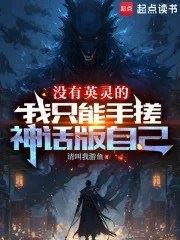
Chu Mo, a college student and top cultivation talent in a world where ancient heroic spirits grant power to humans, is transmiated into a parallel version of himself just as black mist invades his classroom. The mist accelerates time, turning his classmates into skeletons and revealing that the entity targeting them is an Illusionary Dream Demon. At the brink of death, Chu Mo awakens a cheat ability known as the Gates of Time. This artifact allows him to project his consciousness into the past, effectively reincarnating into historical figures to accumulate lifespan and martial arts proficiency, which he can then allocate instantly in his current timeline. His first journey sends him to the Demon Qing era, where he inhabits an eight-year-old boy from the Zhao family fortress during a demonic attack.

Trapped in a besieged fortress, Chu Mo uses his remaining lifespan to cultivate the Taizu Long Fist. By compressing decades of practice into moments, he achieves a peak breakthrough known as Fist Intent, allowing him to kill a towering tiger demon that threatens his life. Upon returning to his main body in the modern era, he discovers that his experiences in the past translate directly into physical power. He learns that the Demon Qing era lacks comprehensive Qi cultivation methods, forcing cultivators to rely on crude blood refinement techniques. However, the original Taizu Long Fist he possesses serves as a perfect Blood Refinement Method, enabling him to absorb demonic seeds without mutation.

Driven by the need to grow stronger and uncover the truth behind the demonic threat, Chu Mo travels back to the Demon Qing era again. This time, he systematically hunts demons across the region, extracting their lifespans to fuel his cultivation. He defeats multiple Innate Realm demon generals, including a crocodile-shaped Military Advisor and a bird-like elder, amassing centuries of lifespan. He also acquires incomplete Grandmaster-level techniques, such as the Change Face Method and various fist arts, which he refines to the maximum. Through these efforts, he transcends the Innate Realm, creating his own Dao named Taiyi Fist and achieving the status of a Grandmaster.

As Chu Mo solidifies his power, he encounters the World Society, a rebel organization dedicated to overthrowing the Demon Dynasty. The leader of the local branch recognizes Chu Mo’s overwhelming strength and offers him a position of honor within the group. Chu Mo accepts, using the organization’s intelligence network to locate and eliminate thousands of demons in the northern provinces. His rampage destabilizes the local demon administration, forcing the Demon Emperor to mobilize seven Grandmasters to hunt him down. Despite the threat, Chu Mo remains unconcerned due to his substantial lifespan reserves and combat prowess.

Having reached the Peak Grandmaster realm in the main timeline, Chu Mo prepares to meet the supreme leader of the World Society in Jiangning. He carries over a thousand years of accumulated demonic lifespan, which continues to expand his potential. The narrative establishes a clear trajectory where Chu Mo intends to condense a Heroic Spirit based on his feats as a demon slayer. His ultimate goal appears to be surpassing the current pinnacle of human cultivation, using his unique ability to traverse history and gather power from different eras to challenge the Demon Emperor and reshape the balance between humanity and demons.

Latest Release
DateGroupRelease
2026-10-01lightnovelasia c291
2026-10-01lightnovelasia c290
2026-10-01lightnovelasia c289
2026-10-01lightnovelasia c288
2026-10-01lightnovelasia c287
2026-10-01lightnovelasia c286
2026-10-01lightnovelasia c285
2026-10-01lightnovelasia c284
2026-10-01lightnovelasia c283
2026-10-01lightnovelasia c282
2026-10-01lightnovelasia c281
2026-10-01lightnovelasia c280

Community Reviews

Rating(3.9 / 5.0, 33votes)
5 stars
11(33%)
4 stars
9(27%)
3 stars
13(39%)
2 stars
0(0%)
1 stars
0(0%)

Popular reviews

... Read More
"The road is cut off... There is no possibility. Fist intent... Hahahaha, only by breaking free from the shackles of this world is there a chance... But how can one break free from this world except through death?" This quote from the ancestor's record on the last page of the Taizu Long Fist manual is the thematic key to everything in this chapter, and honestly maybe the whole novel. Let me explain why. The Taizu Long Fist itself is a symbol—it was castrated, stripped of its body nourishing and life nourishing techniques, stripped of its Qi refining method. Whatever version reached the Zhao family was deliberately incomplete. And Chu Mo suspects the imperial court did it. This immediately raises the question: who benefits from keeping martial arts traditions weakened? Who benefits from a population that can't reach its full potential? Then you layer on the Blood Food Tax, where noble families restrain common people and raise livestock as food for demons. The humans are literally being farmed. The Pact of No Eating was supposed to prevent demons from eating humans, but now it's being torn apart and the tax has doubled. The oppression is systematic, generational, and mathematically inescapable for ordinary people. The ancestor's conclusion—that the only way to break free is through death—echoes through Chu Mo's own situation. His character in this life dies at eighty-nine, and he's left with only one year in this world. But here's the thing: Chu Mo isn't accepting that fate. He's thinking about hunting demon seeds, extending his lifespan, becoming stronger. He's trying to find a way to break the shackles without dying. The castrated manual, the broken pact, the exploitation of common people as Blood Food—it's all the same system. And Chu Mo's journey from a crippled technique to Fist Intent, from a dying child to someone planning to eradicate entire Demon Camp families, feels like the story's argument that breaking cycles requires understanding them first.
... Read More
There's something incredibly lonely about reading Chu Mo's journey. Four hundred years of solitary cultivation, hundreds of chapters of grinding alone in his room, compressing techniques, refining demon cores, standing in silence while his body heals and his understanding deepens. And then when he finally breaks through, when he achieves Grandmaster and stands in that special domain and comprehends the second fist intent, the narration is so matter-of-fact about it. No celebration. No one to share it with. Just "Chu Mo felt some joy in his heart"—a single line for what should be the pinnacle of a lifetime of effort. Even the relationships around him feel transactional in a way that tugs at something. Song Yuchen is feeding him information because he's terrified, not because he believes in the cause. Zhao Ruchen is following him because he's found a new master, not because they share some deep bond. The World Society offers him power and status but even Chen Baisheng's enthusiasm feels like it might be performance. "I wonder, Great One, would you be willing to join our World Society and work together for a great cause!" Great cause. Whatever that means. By the time we reach the end of this passage and Chu Mo is walking through Jiangning's misty rain with Zhao Ruchen, holding his hand like some kind of mentor-apprentice pairing, there's still this hollow echo of isolation. He's surrounded by people but truly alone at the top. And maybe that's the emotional truth the author is building toward—that power without connection is just a different kind of prison.
... Read More
There's a scene in here that gave me actual chills—the one where Chu Mo allocates points to learn skills, and the system notifications flood in describing years of cultivation compressed into seconds. But what really struck me was the worldbuilding revelation that comes threaded through it. This world apparently doesn't have Qi cultivation methods at all. Every demonic Qing heroic spirit uses blood refinement—devouring demon cores to strengthen physique, no internal energy techniques, no martial ancestors creating cultivation methods for mass production. When Chu Mo realizes this, the implications explode outward. He starts connecting the dots: his own Fist Intent works by combining blood energy with spirit, the demons are physically stronger but humans rely on technique, and somehow his system allows him to simulate decades of cultivation instantaneously. The scene where he stands up after learning the skills, his body changing, Song Yuchen feeling like he's facing a "monstrous tsunami"—that's the exact moment the power scaling of this world becomes clear. Song Yuchen's internal reaction is perfect: he first considers the possibility that Chu Mo is just an Innate expert who got lucky with intent, then completely erases that theory because the presence radiating from Chu Mo is literally described as "the might of heaven and earth." The word choice here matters—Celestial Being isn't just a title, it's a description of scale. This isn't a person who's strong for their realm. This is a person whose realm doesn't fit in the normal hierarchy.
... Read More
I'm still shook by how Chu Mo handled the Demon Emperor. One minute he's sitting on that dragon throne spouting about the will of the people, next minute he's being dragged like a dead dog through the streets. And Fu Kang'an! That guy threw himself at Chu Mo out of pure loyalty, and Chu Mo just yanked his braid until he was unconscious. Brutal. But what got me was the power shift—the way Chu Mo turned the tables and made Fu Long'an, the son-in-law, betray his own father-in-law. That line when Chu Mo asked "Would you run away?" and Fu Long'an nearly pissed himself? Perfect. It shows how fear trumps loyalty every time. And then Ji Xiaolan reporting all these rebel kings like it's a business update while Chu Mo is feeding raw meat to a tiger. The relationships here are all transactional, right? Everyone's playing for survival. But I wonder if Chu Mo will ever let anyone truly close to him, or if he's just using them all until they're useless... the way he treats the former Emperor like a pet says everything.
... Read More
I need to talk about Zhao Ruchen because this kid is absolutely hilarious and I can't stop thinking about him. Here's this young guy whose family was clearly destroyed—he mentions his father and elder brother with visible pain, dug up their hidden things as a kid and got beaten for it—and yet he's still out here casually punching through brick walls to find secret boxes and apparently having absurd luck with discovery. The contrast between his nostalgic sadness and his practical skilliness is what makes him such a compelling companion. And his dynamic with Chu Mo! He's constantly giving unsolicited advice like "Prefect Song must have cultivation techniques too" while also being shamelessly opportunistic about looting gold bars and jade Buddhas. The moment where he picks up that torn silk cloth and it turns out to be the missing piece of the Change Face Method—that's either the author being incredibly generous with luck distribution or I'm convinced Zhao Ruchen has some hidden stat that makes him accidentally important. But seriously, there's something touching about how he remembers his family with such genuine warmth even while participating in this whole rebellion mess. When Chu Mo just silently accepts things from him without much comment, it shows a specific kind of trust—Chu Mo doesn't need to explain himself to Zhao Ruchen. They're building something. Not quite friendship yet, but close.
... Read More
I need to talk about Ji Xiaolan's voice because it is genuinely one of the most fun characterizations in this passage. Here's this guy — Governor-General of Jiangnan, twelve Human Grandmasters loyal to the Emperor, deepest confidant of the Demon Emperor himself — and his entire personality operates on this nervous polite energy. He pours tea. He cups his hands toward the north. He smiles and says things like 'I'm convinced, I'm completely convinced!' after being literally pressed into the ground by someone's Domain. His internal monologue is a whole separate character from his outward composure. The narrative voice doing his thoughts is almost comedic: "No matter how he looked at it, it seemed like the other party didn't care at all... Heaven knows, three months ago, when he received the news from Chen Baisheng that another Grandmaster had joined, he had already thought of dozens of ways to give this person a hard time!" Dozens of ways. Dozens. And then three months later he's just... handing Chu Mo the keys to the kingdom and saying 'I understand.' The gap between his internal scheming and external submission is where the humor lives. And then there's the曹 Cao comparison the narrator slips in — Ji Xiaolan himself recognizes he's become the minister who controls the emperor to command the nobles, and the text lets us feel his bruised pride through a single line: 'But when he thought that he was the emperor, Ji Xiaolan really couldn't hold back.' That's such a sharp character beat. He's not just losing; he's realizing the role he was assigned has flipped entirely on its head.
See all reviews

Custom lists

See all custom Lists