With Only Three Months Left to Live, I Rushed to Find My Children’s Father - Reviews

With Only Three Months Left to Live, I Rushed to Find My Children’s Father
+Add to Custom List
Sort
Add review
... Read More
"I hadn't told them she had only a little over three months left to live. She didn't want them to live in worry, hoping only that their remaining time together would be joyful." I need a moment. That single paragraph just absolutely destroyed me. Yunxi has faced death repeatedly across multiple lifetimes and she's calm about it. She's not afraid of dying. But the idea of her children worrying? That's what she can't handle. She's choosing to protect their happiness even as she's slowly dying, and she won't even tell them why she might not be around forever. This is the emotional core of the entire story and I am HERE for it. The scene with Momo and Mianmian clinging to her legs, calling her "Mother" with those flushed little faces—Yunxi feels something stir in her chest. For the first time in all her lifetimes, she has something to live for. The Ziwei Star isn't just about extending her lifespan, it's about extending the time she gets to spend with these two kids who look at her like she's the whole world. And then there's the ghost in red. The way Yunxi softens for her—"Your case, I'll take it. I'll help you achieve Reincarnation"—it shows that Yunxi isn't cold. She's not heartless. She cares deeply, she just learned to channel that care into specific people. Her children. The grandmother. And now, strangely, a vengeful ghost who tried to kill her earlier. The romance with Zhan Beiyuan is still simmering in the background. He asks if she has other motives and she just... stares at him. The tension is there. The unwillingness to admit feelings is there. But the real emotional weight? That's with the kids. That's always been with the kids.
... Read More
This woman's dialogue is EVERYTHING. Let me just collect myself. "Although she is short-lived, she won't die now, so there's no need for you to worry." Said while looking at a woman whose daughter just attempted suicide. The casualness of it. The absolute zero hesitation. And then: "On my very first day back, she attempts suicide. Anyone unaware would think I drove her to it. This is an attempt to disgrace me." She doesn't raise her voice. She doesn't need to. The words land like blades. And the best part? Jiang Chenyu plays the victim and Jiang Yunxi just... dismantles her. "You knew perfectly well that I was returning to the manor today. Everyone else came, but you didn't. Don't tell me you were too unwell to come—you managed to make it to the ancestral hall now, didn't you?" Chenyu collapses right after that. I'm convinced it's intentional. The dialogue between Jiang Yunxi and Madam Mu is also peak. Madam Mu tries the guilt trip—"You're being petty and suspicious!" and Jiang Yunxi hits her with: "I am the daughter you carried for ten months... But you shouldn't harbor ill will toward me. This is not how a mother should behave." She says it with such cool authority that even Madam Mu is momentarily intimidated. The Retired Emperor's dialogue is lighter, more comedic—"It was destined! I think you should quickly choose an auspicious day to marry. How about today?" But Jiang Yunxi's response? "I've calculated it: Prince Han cannot marry for the next three years." She doesn't even break stride. The author's voice is sharp, witty, and Jiang Yunxi's character voice is so distinct that I can tell when she's speaking without seeing her name.
... Read More
I need to talk about Zhan Beiyuan because THIS MAN is trying his absolute hardest and it is the most adorable thing. Here's a prince who has never interacted with children in his life. He's stiff, awkward, searching for topics like "Have you had breakfast?" and "What do you like to do?" And the kids? They're just… melting. Momo likes reading. Mianmian likes martial arts. His childhood was the exact same things. Suddenly he's sitting there telling them stories about himself, getting more natural with every sentence. "Perhaps it was the wonder of blood ties"—the narrator even acknowledges it. But what I love is that the author doesn't make this instant bonding feel cheap. Zhan Beiyuan is genuinely at a loss. He has responsibility but not instinct. And Jiang Yunxi, of all people, is the one coaching HIM: "Use any spare time you have to spend more time with Momo and Mianmian. They are your children after all; you should learn how to be a father." Meanwhile, Jiang Chenyu is doing that thing where she curtsies and calls him "Your Highness" with watery eyes, and he looks at her like she's an inconvenience. The line where he calls her out—"shouldn't you, this fake daughter, leave Yingguo Gongfu?"—that wasn't just shade. That was a declaration of war wrapped in politeness. Madam Mu and Jiang Chenyu both just... shut down. Perfect. And Jiang Yunxi? She's cold, calculated, and completely unimpressed by his status. When he says he won't marry her, she smiles and says she has no intention of marrying him either. The power dynamic here is SO satisfying. She's not chasing him. She's not performing. She's just... existing, and that's somehow the most threatening thing to him.
... Read More
There's a reason this chapter feels like it's about more than just plot progression. The author is building a whole symbolic architecture and I'm here for it. The Dry Well. Of course Lu Ze'an's evil is centered around a dry well—a place where secrets go to die, where souls are trapped and silenced. Xie Sirou's family spirits are imprisoned there, and Jiang Yunxi is coming to break them free. But the well is also a metaphor for the entire story: Yingguo Gongfu itself is a dry well. Jiang Yunxi was thrown into it (metaphorically, then literally at the temple), and now she's coming back with the power to drain it dry and expose everything. The statue at the Marquis Wenxin estate entrance—placed directly opposite the main gate to ward off evil spirits. But here's the irony: the real evil is INSIDE the house, in the person of the master himself. The statue is a symbol of misplaced fear. Lu Ze'an is building defenses against supernatural threats while he IS the supernatural threat. That's not just clever; it's thematically precise. Then there's the imperial decree itself—a piece of paper that transforms two children from illegitimate to royal. The paper has power. Words have power. Jiang Yunxi's fortune-telling stall, the temple, the rituals—all of these are about making the invisible visible. The theme throughout is TRUTH REVEALING. The fake daughter exposed. The hidden children acknowledged. The murdered wife remembered. The suppressed spirits freed. "As long as you're happy"—the grandmother's line to Jiang Yunxi. Simple. But in a story about hidden identities and forced roles, that simple acknowledgment of someone's autonomy is almost radical. The grandmother sees Jiang Yunxi not as a tool or a pawn but as a person who deserves happiness. That's the emotional core the whole book is building toward.
... Read More
I need to talk about the stakes here because this is where it HURTS. Jiang Yunxi knows she has a little over three months to live. THREE MONTHS. And she's walking into a wolf den with two kids, confronting a manipulative mother, a fake-sick rival sister, and a prince she barely trusts. What is she even fighting for anymore? The answer is: not for herself. She says it herself—"As the descendant of a family of loyal martyrs, she would naturally protect them. It was just a pity her own lifespan was only a little over three months left." That line broke me. She's not playing for her future. She's playing for YINGGUO GONGFU. For her father and eldest brother still at war. For Momo and Mianmian. The stakes are enormous because we KNOW she's running on borrowed time and every conflict she walks into is one she might not survive. And yet she walks in anyway. The confrontation with Madam Mu? That's not just about who gets to be the legitimate daughter. That's about establishing authority before the family eats her alive. The twenty lashes for Qingzhi? That's her drawing a line in the sand on DAY ONE. She's not asking for acceptance, she's demanding respect. And the tragedy is she's doing all of this while counting down her days.
... Read More
Can we just take a moment to appreciate how GOOD the dialogue is in this chapter? Like, genuinely. The author has given every character a distinct voice and they never blur together. Zhan Beiyuan's dialogue is clipped, formal, almost painfully restrained. "This prince will just stand for a while." "This prince will not marry." "This prince will spend more time with them." The repetition of "this prince" isn't just a title—it's a verbal armor. He uses it to keep distance, to maintain control. But watch how it cracks when he's talking to the kids. He still says "this prince," but the words come out softer, less weaponized. Jiang Yunxi is the perfect counterweight. Her dialogue is light, almost playful, but razor-sharp underneath. "Oh, I have no intention of marrying you either"—said with an innocent smile. She's matching his formality and flipping it into a weapon. And then: "Attend to your official duties first. Use any spare time you have to spend more time with Momo and Mianmian." She's directing HIM. The dominant partner in the conversation, and she doesn't even seem to notice she's doing it. The Lu Ze'an scene is a masterclass in tension through dialogue. Jiang Yunxi walks in and immediately cuts to the chase: "You know very well how your first wife died ten years ago." No pleasantries. No warm-up. And Lu Ze'an's response—"The Jingzhao Yin Office has records... Lady Xie accidentally fell into the water and drowned"—the calm, bureaucratic delivery while she's essentially accusing him of murder? Chilling. Perfectly chilling. And Jiang Chenyu's dialogue throughout is that sickly-sweet performance art. "Congratulations, Your Highness Prince Han. Do you plan to marry Sister Yunxi?" The word "sister" dripping with something that isn't sisterly at all.
... Read More
There's this one scene that stuck with me. The ancestral hall of Yingguo Gongfu. Jiang Yunxi walks in and the text says she felt "a pure and righteous aura that refreshed her spirit." That's it. That's the whole description. But it works so well because it tells us everything about this family. Generations of loyal martyrs. Even their memorial tablets carry that righteous energy. It's a small detail but it paints the entire world of this story. The Jiang family isn't just powerful—they're morally grounded. And that makes the internal conflicts within the family so much more interesting because the rot isn't in the foundation, it's in the people. The palace scene earlier was also striking—the Retired Emperor bedridden, Eunuch Qin kneeling in fear, the black mist from the talisman rising. That visual of the talisman burning into something wrong, something unnatural, set the tone immediately. And then the transition to Yingguo Gongfu with the gatekeeper being hostile, the grandmother beaming with joy, the sudden interruption about the suicide attempt—it's like the author is constantly shifting the atmosphere from warm to cold in a single paragraph. The Bloodlight Disaster foreshadowing with Jiang Yunxi trying to sell Zhan Beiyuan a protective talisman for one hundred taels of silver after discount? That's such a specific, grounded detail that makes the world feel alive. She's a cultivator in a political world and she treats fortune-telling like a side hustle. The contrast between the sacred ancestral hall and the petty family scheming is what makes this setting sing.
... Read More
I'm not crying, you're crying. Okay hear me out—this whole chapter is built on one emotional foundation: FAMILY. Not the fancy, polished version, but the messy, complicated, blood-and-choosing kind. The scene where Momo and Mianmian see Zhan Beiyuan and immediately run to hug his legs? That's the moment everything clicks. They have no sense of unfamiliarity. Five years apart and they just... know him. Meanwhile he's standing there like a deer in headlights, heart being "gently scratched by two small hands." The author writes this with such tenderness—it's not overwrought, it's quiet, and that's what makes it hit. But then there's the other side of this emotional coin. Jiang Yunxi watching this scene from afar and feeling "relieved." That single word carries so much weight. She spent five years at a temple with these kids, raising them alone, and now she sees the father figure they've been missing just... opening up to them. Her decision was correct. She made the right call bringing them here. And Jiang Chenyu's emotional state? Conflicted. She doesn't want Jiang Yunxi back at Yingguo Gongfu, but she also doesn't want her at Hanwang Residence. She's trapped between jealousy and self-preservation, and you can practically hear her thoughts grinding. The grandmother sensing this and pulling Jiang Chenyu aside—"The path ahead would be for her to choose"—that's the author hinting that Chenyu isn't beyond redemption, but she's at a crossroads. The romance thread is simmering underneath all of this. Zhan Beiyuan noticing Jiang Yunxi's fingers on his sleeve, the way he lingers on that image. He claims he won't marry her, she claims she won't marry him, but the text keeps showing us they're both lying to themselves. The tension is delicious.
... Read More
Okay so let me just say—this chapter is a MASTERCLASS in pacing. The author drops two massive reveals in the same morning and I was literally sitting there like *what*. First: the heirless Prince Han has FIVE-YEAR-OLD twins. Five. Years. That means the encounter at Niulan Village six years ago actually happened, and he just… forgot? The amnesia angle is doing a lot of heavy lifting here. But honestly, it works because the author doesn't just dump it on us—we get little breadcrumbs. The hidden ailment, the fragmented memory, the way Zhan Beiyuan feels something stir when the kids hug his legs. It's not a cheap twist; it's earned. Second: Jiang Yunxi is the TRUE eldest daughter. The fake one (Jiang Chenyu) has been living as the legitimate heiress for twenty-two years. And the way this unfolds? Chef's kiss. Jiang Chenyu's reaction—trying to play the caring sister while secretly fuming, asking about marriage plans like she's trying to secure her own position—that's not subtle, but it's REALISTIC. People like her don't announce their villainy; they smile while they plot. The plot also threads in the supernatural element smoothly. Jiang Yunxi going to Marquis Wenxin's estate to rescue Xie Sirou's family spirits, the Dry Well reference, the ritual objects everywhere—it's a parallel storyline that doesn't feel tacked on. The author is weaving three narrative threads (romance, family drama, supernatural revenge) and they're all taut. My only question: when is the Retired Emperor going to stop being this mysteriously well-informed and actually DO something? The man woke up refreshed after acupuncture and immediately sends an imperial decree. Suspicious. But I'm here for it.
... Read More
The opening scene is absolutely cinematic. Let me paint it for you: lanterns, colorful banners, the whole manor decorated for a wedding. Every dignitary and noble in the capital is present, and then BAM—Steward Bai bursts in with news that shatters the entire atmosphere. The contrast between the festive decorations and the icy tension that follows is so well done. I love how the author describes Jiang Yunxi's entrance. She's wearing a simple white Daoist robe, no makeup, and her natural beauty is compared to 'the bright moon in the sky' and 'a newly bloomed, prized peony.' Meanwhile Zhan Beiyuan is in his bright red wedding robes, described like a 'descended god' with features 'meticulously carved by the Creator.' The color contrast—white versus red, simplicity versus opulence—is visually striking and thematically loaded. The children are described with such specific, vivid detail too. Momo's 'dark eyes were particularly sharp' with a 'cool, unapproachable vibe,' and Mianmian has 'chubby, round face and a pair of large, watery eyes' with dimples that 'could melt anyone's heart.' Both wearing Daoist robes with large bundles on their backs—'looking rather comical, yet somewhat adorable.' I literally pictured this and couldn't stop smiling. Then there's the palace scene at Defu Palace. The Retired Emperor's voice booming from his deathbed, Eunuch Qin hurrying in, the whole imperial grandeur. When the children see him and he sits up 'like a carp leaping from water'—that's the kind of vivid, unexpected simile that makes a scene stick in your memory. "Your father lives here. He is His Highness Prince Han of the Tenglong Kingdom, Zhan Beiyuan" — the way this single line recontextualizes everything about the setting and the stakes is brilliant. The manor goes from being just a wedding venue to the center of a political and personal earthquake.
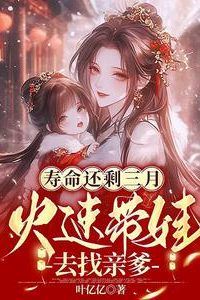
... Read More
The stakes in this story are layered in the best way possible, and the author never lets you forget what everyone stands to lose. On the surface, there's the wedding-day confrontation: Jiang Yunxi shows up and if Zhan Beiyuan doesn't acknowledge the children, he'll be known as a scumbag across the capital. But she's also playing a dangerous game with HIM specifically. If he remembers that night six years ago, he might realize she took advantage of him while he was unconscious. She literally says: 'If he remembered that night six years ago, he would definitely deal with her!' The threat is real and immediate. Then there's the political stakes. The Retired Emperor is gravely ill, and Jiang Yunxi detects that someone is actively trying to harm him—pasting a Fu talisman in the southeast direction to poison his health. This isn't just family drama anymore; it's court intrigue with life-and-death consequences. The children are now in the center of a power struggle they didn't ask for. And underneath everything is Jiang Yunxi's personal countdown. She has 'a little over three months left to live.' Every interaction she has, every alliance she builds, is happening against this ticking clock. She's securing her children's future while her own time runs out. That's a stake no one can take away from her—her mortality. Zhan Beiyuan's conflict is equally compelling. He doesn't remember that night. He's suspicious of Jiang Yunxi's motives. He's being pressured by his father to marry and produce an heir. And now he has children he needs to investigate, a wedding he didn't want, and possibly a conspirator in his father's illness. The man is surrounded by threats from every direction. "I will take responsibility for the children, but I will not marry her" — this line from Zhan Beiyuan shows how he's trying to maintain control in a situation that's spiraling beyond his grasp. But can he really keep them separate? The children and the mother are now inextricably linked in his life. "Retired Emperor, someone is trying to harm you" — and just like that, the personal becomes political, the family drama becomes a matter of life and death for the entire kingdom. The stakes just escalated and I am NOT READY.
... Read More
There's this recurring idea in these chapters that fate is both mysterious and inescapable, and I think the author is really playing with that theme on multiple levels. Jiang Yunxi literally reads fortunes. She divines that Zhan Beiyuan wouldn't be able to marry for three years, and she knew that even if she hadn't come to his wedding that day, something else would have disrupted it. 'Sometimes, fate is just that mysterious.' But then there's the question of agency—did she choose to come? Did she choose that night on the back mountain? Or was it all predetermined? The text leaves this beautifully ambiguous. The jade pendant is such a rich symbol. It's the physical token that connects six years of separation, the proof of their encounter, the thing that could either bind them together or expose her as a fraud. It represents memory itself—what Zhan Beiyuan remembers and what he doesn't. The pendant exists, but his memory doesn't. That dissonance is the whole engine of the plot. Then there's the theme of family and legacy. The Retired Emperor is dying and his greatest regret is not seeing his son married with heirs. When he meets the grandchildren, his desire to live is reignited. The children become the symbol of continuity, of life persisting despite illness and death. And Jiang Yunxi—dying herself—is securing that continuity for her children. She's trading her remaining months for their future. The hidden ailment is also symbolic in a way. Zhan Beiyuan's body is broken in a way that makes him seem powerless, but he's literally the God of War. The contradiction between his reputation and his reality mirrors Jiang Yunxi's own hidden strengths—she appears to be just a poor Daoist nun, but she's actually a diviner of extraordinary ability. "Sometimes, fate is just that mysterious" — this line keeps echoing in my head. The whole story seems to be asking: how much of what happens is destiny, and how much is choice? And maybe the answer is that they're not separate at all.

Leave a comment

You must be logged in to leave comments. or
