Summary

... Read More

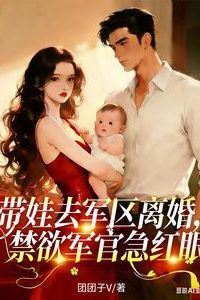
Song Tan, a former Triple Crown Best Actress who vanished from the entertainment industry five years ago, returns to China with her four-year-old daughter, Song Chuqing. Born in London, Chuqing suffers from social anxiety and Asperger-like tendencies due to a sheltered upbringing and limited social interaction. Song Tan decides to leave her life in the UK behind to provide a better environment for her daughter and to address her own financial struggles. Upon their arrival at the airport, paparazzi photos of the mother and daughter leak, instantly making Song Tan the center of public speculation regarding the identity of the child’s father.

Song Tan had a brief, drunken encounter with Ji Fuxi, the cold and powerful president of Yuanhe Group, five years prior. She left before dawn, and he remained unaware of her identity or the resulting pregnancy. Now, Song Tan needs child support to raise Chuqing, but she is hesitant to approach Ji Fuxi directly, fearing he is married or that he might fight for custody. She begins rebuilding her career, aiming to become a director, but realizes she first needs to re-enter the public eye as an actress to secure funding and stability. She reconnects with her former agent, Zhao Geyun, and secures an audition for the female lead in "Great Dream," a major production funded by Yuanhe Group.

The audition process places Song Tan in direct conflict with Xue Wanwan, a rising actress and Song Tan’s half-sister, who is determined to win the role. During a pre-audition banquet, Xue Wanwan publicly mocks Song Tan’s status as a single mother and hints that her child’s father is irrelevant. Ji Fuxi, who is present at the banquet as the primary investor, overhears this. Later, when Song Tan is harassed by reporters and feels physically ill in the restroom, Ji Fuxi encounters her again. He questions her about the role and her financial situation, noting her resemblance to a man he vaguely remembers from the past. Unbeknownst to both, Ji Fuxi’s nephew, Yao Peiqiu, attends the same kindergarten as Song Chuqing, and the two children begin to form a friendship.

Song Tan successfully wins the role of the female lead in "Great Dream." However, her return to the spotlight brings renewed danger. Leaked photos of Song Chuqing leaving their residential compound appear online, exposing their home location. Stalkers begin loitering outside their apartment, causing Song Tan severe distress and fear for her daughter’s safety. The incident triggers a panic attack for Song Tan, who collapses from stress. Ji Fuxi, who is attending the same industry event, finds her in a critical state and helps her into a private lounge, offering her water and a handkerchief. His intervention marks a shift in their dynamic, as he begins to suspect a deeper connection between them, while Song Tan remains unaware that the man she seeks for child support is the same powerful figure now entering her life.

As filming commences, Song Tan balances her demanding schedule with her role as a single mother. She moves into a new home and continues to navigate the cutthroat entertainment industry, where Xue Wanwan’s family, connected to Song Tan’s estranged mother, continues to oppose her. Meanwhile, Ji Fuxi’s family pressures him to marry and produce an heir, a demand he firmly rejects. The narrative sets the stage for the eventual revelation of their past encounter and the legal and emotional complexities that will arise when Ji Fuxi discovers he is the father of Song Chuqing, forcing both characters to confront their pasts and redefine their futures.

Latest Release
DateGroupRelease
2026-08-11shanghai fantasy c30
2026-08-11shanghai fantasy c29
2026-08-11shanghai fantasy c28
2026-08-11shanghai fantasy c27
2026-08-11shanghai fantasy c26
2026-08-11shanghai fantasy c25
2026-08-11shanghai fantasy c24
2026-08-11shanghai fantasy c23
2026-08-11shanghai fantasy c22
2026-08-11shanghai fantasy c21
2026-08-11shanghai fantasy c20
2026-08-11shanghai fantasy c19

Community Reviews

Rating(3.9 / 5.0, 10votes)
5 stars
3(30%)
4 stars
3(30%)
3 stars
4(40%)
2 stars
0(0%)
1 stars
0(0%)

Popular reviews

... Read More
Let me just be honest with you—the One Night flashback hit me harder than I expected. Not because it's dramatic or shocking, but because of how quietly it's told and how much emotional weight it carries. The way the author describes that night is almost matter-of-fact: "She had a bit too much to drink and was not fully conscious. Song Tan entered the wrong room and somehow everything happened." There's no melodrama, no romanticized encounter. Just a mistake, a moment of vulnerability, and then the aftermath. And yet, that one moment became the axis upon which Song Tan's entire life has turned. What gets me is Song Tan's internal journey. Waking up and wanting to "strangle herself"—that's not regret about the act itself, that's panic about the consequences. She slips away while he's still asleep, and she leaves the country. Five years of silence. And then the pregnancy test. "Her vision went dark." Two red lines that changed everything. But the most emotionally complex part is her decision to keep the baby. "One moment of softheartedness, and she began a completely different life." That phrase—"one moment of softheartedness"—it's so self-deprecating, like she's minimizing the most significant decision of her life. She doesn't see it as an act of love or courage. She sees it as a momentary weakness. And yet, here she is, bringing her daughter home to China, rebuilding her life around this child. The ending line of Chapter 2 is devastating in its simplicity: "This mother has brought her baby home." After everything—the secret, the shame, the five years apart, the financial struggles—she's just a mother who came home. There's no grand declaration, no triumphant music. Just a woman and her child, standing in a hotel room, looking out at a city that has moved on without her. I'm already emotionally invested in this story and we're only seven chapters in.
... Read More
The dialogue in this section is deceptively simple. On the surface it's very direct, almost blunt, but every line is doing double or triple duty. Take the mother-daughter phone call: "Tan Tan, Wanwan said you have a daughter. Is that true?" On its face it's just a question, but it's really an attack. And Song Tan's response—"It's true."—is so understated it almost hurts. She doesn't defend herself, doesn't explain, just states it and moves on. That's her voice: economical, sharp, never wasteful. Ji Fuxi's dialogue is even more interesting because of what he doesn't say. When he asks "Is your family struggling financially?" it's not really a question about money. He's testing her, probing, trying to understand why she's suddenly back in the industry after five years. And when she lies to him about being a struggling single mom, his reaction is almost comical—his expression darkens instantly. The author writes: "Song Tan added with a smile, 'President Ji, perhaps you don't know — raising a daughter is very expensive.'" And then immediately follows with: "Ji Fuxi easily recognized the traces of performance on her face." He knows she's lying, but he plays along. Their entire conversation is a dance of people who see right through each other. But then the kids' dialogue hits you with genuine warmth. Yao Peiqiu offering his Transformers and saying "Xiao Chu, will you be my friend?" and Li Keke shoving him aside because she wants to play with dolls instead—it's so natural and unforced. And Song Chuqing's line about her mom being a director, and the other kids' completely innocent misunderstanding of what that means, is honestly one of the funniest and sweetest moments in the whole text. The author has this incredible ability to switch registers between cold, calculated adult dialogue and genuine, unguarded child speech, and it never feels jarring.
... Read More
I need to talk about Song Chuqing because this child character is absolutely phenomenal. Let me just say this: I have never wanted to adopt a fictional character more than I want to adopt Chuqing right now. The author gave her this incredibly specific personality—Asperger's tendencies, social anxiety, but also this profound sweetness that just melts your heart. The scene where she shares her panda keychain with Anthony is one of the most beautiful character moments I've read in a long time. She hesitates for three or four seconds, grips her mother's hand tightly, but then she *does it*. She hands over something precious to her. And when she finally whispers "You are welcome" in English, I was wrecked. But what's really impressive is how the author uses Chuqing to reveal Song Tan's character without ever having Song Tan say "I'm a good mother." You see it in the way Song Tan notices her daughter's body stiffening when the noisy foreign family walks in. You see it in how she doesn't force Chuqing to interact, but instead models the behavior by talking to Anthony herself. You see it in the decision to return to China—not for fame, not for revenge, but because she couldn't let her daughter's symptoms worsen unattended. And then there's the Song Tan-Chuqing dynamic that's just so tender. When Chuqing asks if the airplane will get tired and offers it a piece of chocolate, and Song Tan plays along—this is a mother who meets her child where she is. When Chuqing says "Mommy is the most beautiful in the whole world" to deflect from the ad on the building, Song Tan's quiet "Hmph" says everything. The Ji Fuxi connection is just beginning to be set up, but I'm already invested in how these three people's lives are going to intersect. The father who doesn't know his daughter exists, the mother who's been raising her alone, and now the return to China that forces everything to the surface.
... Read More
There are some scenes in this stretch that just stuck with me visually. The bathroom moment where Song Tan is gagging and Ji Fuxi appears behind her—pure white handkerchief, embroidered F, marble counter, water running from the faucet. It's such a cold, sterile environment that perfectly mirrors their relationship. He offers her something clean and refined; she ignores it and uses tap water instead. The contrast between his world (handkerchiefs with monograms, picky gourmet meals flown in from Kobe) and hers (drinking cheap liquor, screaming into autumn wind, pulling out hairpins after a long day) is painted so clearly without the author having to explain it. Then there's the kindergarten scene, which is such a tonal shift. Song Chuqing standing at the entrance, holding the teacher's hand, not looking back because "if she turned her head, Mommy would feel sad." That one line. Just one line and I was already soft. The breakfast scene with the sweet potatoes, the Transformers toy being offered, the two little kids shoving each other over who gets to be Song Chuqing's friend—it's all so vivid and warm. The contrast between the cold corporate world Song Tan navigates and this tiny, gentle world her daughter inhabits is really striking. And that ending scene in the car—late autumn, cold wind blowing through the open window, Song Tan screaming into the night with no cameras, no fake smiles. The author described it as "chilly wind blew away the heat on her face, and it felt so good she wanted to scream." That's such a specific, embodied sensation. You can feel it. These scenes don't need elaborate description; they just land because they're grounded in physical detail.
... Read More
Okay so this whole arc with Song Tan's family is just... wow. Her mother calls out of nowhere pretending to be nice, wants to use Song Tan to get Wanwan into the industry, and then immediately pivots to shaming her for having a child out of wedlock? The audacity. And Song Tan's response—"Thank you for giving birth to me"—was absolutely chef's kiss. She didn't even raise her voice, just served it up with a smile and ended the call. But then the physical toll of that stress, gagging dryly in the bathroom, that's the part that got me. The plot keeps showing us that Song Tan is constantly under pressure from every direction and she just absorbs it and keeps moving. Then Ji Fuxi walks in like he owns the place—offering a handkerchief with his initial embroidered on it, of course—and immediately starts probing about the Great Dream role. The dynamic between them is so layered. She lies to his face about being a struggling single mom, and he sees right through it but doesn't call her out. He just goes cold and professional. Meanwhile he's also picking up on these tiny details about her—her cleanliness habits, whether she's picky about food—which feels like the plot is slowly, subtly building toward something bigger. I have a feeling Ji Fuxi's curiosity about Song Tan isn't just professional interest. And the audition subplot itself is satisfying because it's not handed to her. She prepares for days, creates character profiles, rehearses with Zhao Geyun, and still bombs the scene because her partner can't keep up. That's realistic. The industry isn't fair, but talent still matters. When she ends up dining with Director Fang's group until 10pm and then screams into the night air afterward—that's the payoff. She earned it, but it cost her something too.
... Read More
I need to talk about the pacing of this opening because it's really well calibrated. The author knows exactly when to slow down and when to sprint, and it keeps you engaged without ever feeling rushed or draggy. Chapter 1 moves at a brisk pace—it's basically a travel narrative with embedded character revelation. We get the airport scene, the flight, the landing, the photos leaking, the phone call with Zhao Geyun, and the decision to find the father. All of this happens in what feels like a single sitting, and I didn't want to put it down. The author uses the airplane journey as a perfect container for exposition—we learn about Chuqing's condition, about Song Tan's past fame, about the Ji family connection, all through natural conversation and observation rather than info-dumps. But then Chapter 2 slows down significantly, and that's intentional. The hotel room scene, the unpacking, the Weibo post, the Ji Fuxi research—these are quieter moments that let the emotional weight settle. The pacing shift works because it gives us breathing room after the Chapter 1 whirlwind. The structural choice to end Chapter 1 with the Ji Fuxi reveal and then have Chapter 2 begin with the flashback of that night is really effective. It creates a circular narrative structure that reinforces the cause-and-effect relationship. We see the effect first (the child, the return, the crisis), then we see the cause (the one night), and then we're back in the present wondering what happens next. The cliffhanger at the end of Chapter 2—where we're just starting to learn about the Ji family's immense wealth and power—is perfect. It raises the stakes dramatically and makes me want to keep reading immediately. The author is building tension through information revelation rather than action sequences, and it's working really well.
See all reviews

Characters

See all characters

Custom lists

See all custom Lists