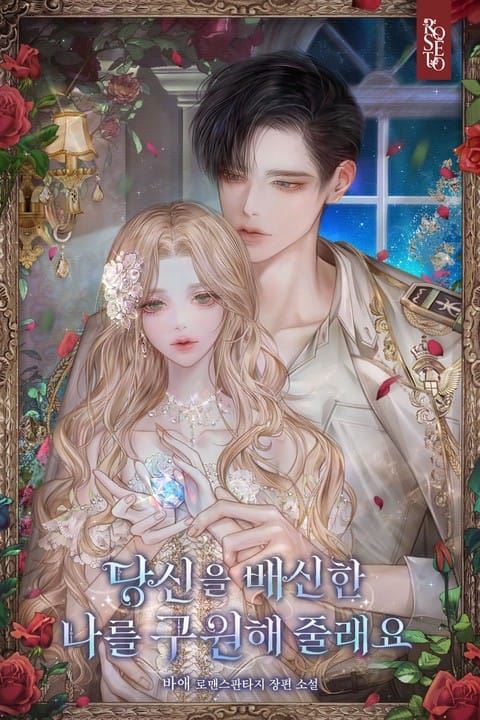
Will You Save The Woman Who Has Betrayed You?
+Add to Custom List
Novel Info
  • Author:
  • Status:Ongoing

Summary

... Read More
Vaniel Drenarpin lives a suffocating existence as the daughter of Count Humphrey and Helena, the ruthless mistress of the Drenarpin household. Hidden from the world is the truth that Vaniel is half-Nurua, a member of an oppressed tribe despised by the Larter Empire, while her mother Helena is full-blooded Nurua who harbors deep self-loathing and projects it onto her children. Helena poisoned Vaniel’s father five years ago and holds his life hostage to ensure Vaniel’s absolute obedience. To secure political and financial power, Helena orchestrated Vaniel’s engagement to Lias Istua, the Grand Duke of Istua, a man celebrated as the Empire’s greatest hero and the most desirable bachelor in the capital. Vaniel, however, harbors a secret past: as a child, she spent a year at a monastery in the Grand Duchy where she befriended a boy who turned out to be Lias. She has waited years to see him again, unaware that he does not remember their shared childhood.

Three years after the engagement was arranged, Lias returns to the imperial capital. Their first meeting in three years takes place at a luxury restaurant overlooking the palace. Lias is cold, detached, and visibly bored, treating the engagement as a mere administrative duty. He announces that they will marry in two weeks and immediately return to the Grand Duchy, showing no interest in a courtship. Despite his indifference, Vaniel feels a surge of emotion when he unexpectedly kisses her on the terrace, revealing a dark, possessive side beneath his noble exterior. Lias seems fascinated by the cracks in Vaniel’s perfect, mask-like composure, finding pleasure in flustering the composed young woman. He admits to himself that while he intended to treat her as a convenient political tool, her genuine reactions and hidden emotions pique a sadistic curiosity he has not felt before.

Back at the Drenarpin mansion, Vaniel faces daily abuse from Helena. During a tense family dinner, Helena reveals that she knows Vaniel’s Nurua heritage and uses this secret, along with the hostage situation involving Count Humphrey, to maintain control. Helena is planning a risky business venture that requires the Grand Duke’s political protection, and she views Vaniel solely as a means to secure this alliance. When Vaniel lashes out during a banquet hosted by the Pitt family, Helena publicly threatens her and physically beats her, reminding her that marriage will not grant her escape. However, Lias unexpectedly arrives at the banquet, drawn by curiosity about the woman he is to marry. He rescues Vaniel from the humiliating situation and escorts her to the terrace, where their interaction becomes increasingly intimate and charged. Lias reveals he has been testing her, enjoying her visible agitation and loss of control over her noble facade.

As the wedding approaches, Vaniel visits the Grand Duke’s residence under the pretense of delivering her luggage. There, she encounters Joseph, a playful knight of the Istua Order who climbs over the garden fence to meet her. Lias discovers them and, despite his jealousy, engages with Vaniel in the garden. The emotional tension culminates in another passionate encounter between Vaniel and Lias, marking a shift in their dynamic from cold political arrangement to a complex, obsessive entanglement. Vaniel realizes that her feelings for Lias are awakening, conflicting with her fear of him and her duty to her family. Meanwhile, Lias begins to recognize that his interest in Vaniel extends beyond mere amusement, though he remains wary of emotional attachment. The story concludes with the wedding imminent, leaving Vaniel trapped between her desire for freedom, her complicated feelings for the Grand Duke, and the relentless grip of her mother’s tyranny.

Latest Release
DateGroupRelease
2026-10-03dusk blossoms c6
2026-10-03dusk blossoms c5
2026-10-03dusk blossoms c4
2026-10-03dusk blossoms c3
2026-10-03dusk blossoms c2
2026-10-03dusk blossoms c1

Community Reviews

Rating(0 / 5.0, 31votes)
5 stars
0(0%)
4 stars
0(0%)
3 stars
0(0%)
2 stars
0(0%)
1 stars
0(0%)

Popular reviews

... Read More
I need to talk about how this scene in the Acalenta Mountain Range just completely swept me away. The way the author describes Vaniel entering the forest—"the sky was dimmed by the trees"—that single line does so much work. It's not just "it got dark because of trees," it's that the canopy itself is a presence, a living ceiling that changes the quality of light and sound. And then the sensory details pile up: "the rich scent of soil and the fresh smell of grass." Vaniel touching the plants, crouching down, her hands getting dirty. This isn't worldbuilding that informs you about the setting; it's worldbuilding you feel through your character's body. I could smell that forest. I could feel the dirt under her nails. The Loroni tree scene is where it really goes cinematic. "Its leaves were as large as the tree itself, and when she approached, the sky was completely blocked out." A tree so massive it erases the sky. And then the blue seed pods—those tiny details that make the whole world feel like it has its own logic and systems. Dragonfly grass, Loroni, Giran, the herb pouch with its special treatment, the mana affecting the plant color. This is a world that runs on ecological rules, not magic hand-waving. The contrast between that golden foraging happiness and the sudden darkness when she trips is masterful. One moment she's jumping up and down like a kid, the next the sun has set and the world has turned against her. The environment itself becomes a character that shifts from welcoming to hostile. That's the kind of atmosphere that stays with you long after you finish the chapter.
... Read More
The opening description of the Drenarpin mansion is absolutely exquisite and deeply unsettling at the same time. Every detail screams money and control: the pure white marble, the expensive artworks, the table made from wood that only grows in one specific city, the garden where apparently every rare flower in the world has been purchased and displayed. It's lavish beyond comprehension—but it reads less like a home and more like a museum where Vaniel is the centerpiece exhibit. The most powerful image in this entire chapter is probably the garden itself. "Through the window, she could see the lavish garden created with poured money." Created with Poured money. That phrase alone tells you everything about this family—they don't just have wealth, they weaponize it. Helena's taste demands perfection in every flower, every stone, every blade of grass. And Vaniel is expected to match that impossible standard. The contrast between the warm spring breeze outside Vaniel's window and the suffocating interior is brilliant. She escapes to her room, locks the door, and for one fragile moment lets herself breathe—only for Lin to pound on the door and shatter it. The text says "Peace is a luxury for me" and I felt that in my bones. Even solitude isn't safe for her. And the reception hall! The violin music, the flowers, the art—Marchioness Pitt's domain, obviously, since she "boasts of her nobility by sponsoring artists." Everything in this world is performative. Every gathering is a transaction. Every smile hides a calculation. The setting itself reinforces the central theme: in this society, appearance is everything and reality is irrelevant.
... Read More
Let me just say this plainly: the plot in this chapter is doing SO MUCH work and I am here for it. On the surface, it's a straightforward arranged marriage story with an abusive mother. But the layers beneath are fascinating. Helena isn't just cruel—she's desperate. She's invested all available family cash, people are getting suspicious, and the Grand Duke's recent behavior is threatening the entire scheme. The marriage isn't just about status; it's about survival. The Drenarpin family's golden age depends on this union holding together. Vaniel's plan is elegant in its simplicity: endure seven more days of hell, marry the Grand Duke, and leave. But then Helena drops that bomb about the monastery in the Grand Duchy and suddenly the plan falls apart. Vaniel can't escape—she never could. The entire geography of her world has been designed to keep her trapped. And then Lias shows up. Not because he cares, not because he was moved by her letters—but because he was bored. "I was bored." Three words that recontextualize everything. He didn't ignore her because he didn't want to help. He ignored her because entertaining himself was more important. And now he's here, not out of duty or compassion, but because watching her squirm became interesting. The plot threads are converging fast: Helena's financial desperation, Vaniel's fragile hope of escape, Lias's unpredictable involvement, and the investors who are about to find out whether their faith was misplaced. The wedding is one week away and everything feels like it's hurtling toward a collision I cannot wait to see happen.
... Read More
Okay so I just finished these first chapters and I'm already hooked, honestly. The way the plot opens is genius—starting not with action or drama but with Vaniel sitting ALONE in a restaurant on the 33rd floor, drinking her THIRD cup of tea while waiting for a man who shows up an hour late. No fanfare, no dramatic entrance description right away, just this quiet agonizing tension that makes you lean in immediately. What I love is how the author builds the mystery around Lias without giving us anything. Three years of engagement, zero meetings. The Emperor himself had to intervene. And when he finally appears, his first words are literally 'Forgive me for being late'—not 'I missed you' or 'I'm so sorry I disappeared,' just a casual apology like they're meeting for coffee. The engagement plot is fascinating because it's clearly NOT a normal romance setup. Something is hiding here. The pacing is deliberate—almost suffocating in its slowness, which is exactly what makes it work. Every tiny beat matters: the way she notices he hasn't changed, the way he notices HER noticing. The bathroom escape scene, the terrace moment, the kiss—that's all in ONE meal. One encounter. And yet so much shifts between them. I also love the subplot hint about the Wall, the monster attacks, his military command. That's clearly going to matter a lot later. I'm dying to know why he avoided her for three years. And what's with that monastery detail she drops almost casually?
... Read More
Can we talk about Lias for a second? This man is a whole mood. He lets Vaniel come visit him, asks if she's alone, watches her blush when he touches her arm, and then—right when you think he's going to be sweet—he internally monologues about how she'll eventually leave him broken like all the others. And THEN he kisses her anyway. Like, what kind of person does that? Someone who wants connection but has convinced himself he's not allowed to want it. The fact that he notices her eyes first—"sparkling turquoise eyes"—and then deliberately looks away because it's dangerous? That's not cold. That's terrified. And Vaniel? She's playing this delicate game where she pretends to be the good political bride while secretly desperate for real moments with him. When she asks to walk in the garden, her voice is trembling. She's either going to get her heart broken or learn to stop caring, and she doesn't know which one she's hoping for. Joseph is the perfect foil here. He's the only person who treats Vaniel like a human instead of a wife or a pawn. His whole motivation for sneaking into the garden is genuine curiosity. And Lias's jealousy—though he'd never admit it—is almost funny. A guy who can command armies and manage a duchy gets unnerved by a knight with glasses climbing over a fence. The family dynamic with Helena controlling Humphrey to control Vaniel is the real villain of this chapter. Every relationship in this story exists under her shadow.
... Read More
The dialogue in this section is doing work on at least three levels simultaneously and I'm not sure the author even realizes how good she is at this. First, the knights' conversation is perfect because it's boring. These men aren't villains delivering monologues—they're guys killing time, making crude jokes, talking about women they'll never meet. The casual cruelty of "she'd better have a pretty face at least, otherwise how could she become the Grand Duchess?" lands harder because it's delivered like weather commentary. That's how real sexism operates—not as dramatic evil but as atmospheric assumption. Then there's Lias's voice, which is so distinctly flat and impatient: "With those legs? How long would that take? Stop making trouble and stay still." Every sentence is a command or a complaint, but the subtext is care. He's angry because he's worried, he's brusque because tenderness isn't in his vocabulary. The gap between what he says and what he does IS his character. Vaniel's internal monologue has its own voice too—lyrical and botanical when she's in the forest, anxious and self-lacerating when she's with people. "I suppose I should have been born an herbalist" is such a perfectly rendered moment of quiet disappointment. She's not saying she wants to be a herbalist; she's saying this is the only place she feels like herself. And the ending exchange where Lias catches her and says "My wife has an interesting hobby. Did you trip over a root while playing in the dirt yesterday too?"—that is either the beginning of him figuring things out or the most passive-aggressive man in all of literature. I can't decide which terrifies me more.
See all reviews

Custom lists

See all custom Lists