Summary

... Read More
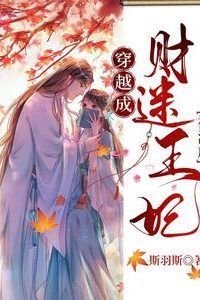
Yun Wan is a young widow living in the Lu family estate with her four-year-old son, Sui. Five years prior, her frail husband, Lu Fenglan, died, leaving her to raise their son alone. She endures the cold hostility of her mother-in-law, Old Madam Lu, who blames Yun Wan for her son's death and believes she is cursed. Yun Wan manages their modest household while secretly running a profitable incense shop, Yunxiang Shop, which she revitalized through her knowledge of fragrance blending inherited from her deceased mother.The central conflict arises when Old Madam Lu and the family patriarch, Lu Yuanduo, decide to enroll Sui in the prestigious Hongwen Institute as a study companion to the Third Prince. Despite Yun Wan’s initial fears regarding the dangerous political entanglements of the imperial court, she reluctantly agrees. During a visit to the palace to meet Consort Shu, the Third Prince’s adoptive mother, Yun Wan encounters Emperor Jingxuan. The Emperor, who has been haunted by a recurring dream and a mysterious handkerchief left by an unknown woman five years ago, is struck by Yun Wan’s presence and the unique scent of a sachet she wears. He mistakenly suspects her connection to the mystery but ultimately dismisses the thought after an investigation yields no results, though he keeps her sachet as a curiosity.Meanwhile, Sui’s first day at the palace coincides with an accidental incident where he strikes the Emperor with a rattan ball while playing. Terrified, Sui breaks down in tears, expressing only his desire to see his mother before dying. This display of filial devotion and his resemblance to the Emperor—particularly his phoenix-like eyes—stirs unexpected emotions in Jingxuan. Instead of punishing the boy, the Emperor gives Sui a jade bead and observes him with growing interest. Later, the Emperor visits Consort Shu’s palace and criticizes the incense burning there, noting it is inferior to the one Yun Wan created. This interaction reinforces his suspicion that Yun Wan might be the woman from his dream.The narrative follows the delicate balance Yun Wan maintains between her grief-stricken past and her son’s uncertain future. She navigates the treacherous dynamics of the Lu family, where she is viewed with suspicion and disdain, while raising a son who is unusually perceptive and mature beyond his years. Sui, aware of his mother’s suffering, acts with strategic intelligence to protect her, often deceiving his grandmother to secure his education. As Sui begins his studies at the Hongwen Institute, he becomes a pivotal figure connecting the Lu family to the imperial family. The Emperor’s continued observations of both Yun Wan and Sui suggest that their lives are inextricably linked to the royal court, setting the stage for future political and personal confrontations.
Latest Release
DateGroupRelease
2026-09-26akknovel c186
2026-09-26akknovel c185
2026-09-26akknovel c184
2026-09-26akknovel c183
2026-09-26akknovel c182
2026-09-26akknovel c181
2026-09-26akknovel c180
2026-09-26akknovel c179
2026-09-26akknovel c178
2026-09-26akknovel c177
2026-09-26akknovel c176
2026-09-26akknovel c175

Community Reviews

Rating(0 / 5.0, 44votes)
5 stars
0(0%)
4 stars
0(0%)
3 stars
0(0%)
2 stars
0(0%)
1 stars
0(0%)

Popular reviews

... Read More
Okay so I need to talk about the moment Jiang Fusheng mentally slaps himself because Sui's face looks like Emperor Jingxuan. That line hit me so hard I actually stopped scrolling and stared at the ceiling for a while. And it's not even presented as a big deal in the text, it's just this one thrown-in thought, 'Strange. Why did the boy bear an uncunny resemblance to His Majesty?' Wait no. 'Uncanny.' Right. Uncanny. And then immediately he goes, 'It must be exhaustion,' which is such a pathetic excuse for a grown man that I just laughed out loud. But underneath that flinch, the whole dynamic between Sui and the Emperor is doing so much work. Sui will say 'Your Majesty, please calm your anger' and just kneel down and stick out his palm like he's in first grade getting punished by the teacher. And the Third Prince does the exact same thing. Side by side. One taller, one shorter. The text literally says they made 'a pleasing sight' and I think the author dropped the biggest breadcrumb in the entire chapter without even trying to wink at us. Then the Emperor just... hands them jade beads and walks away. No explanation. No 'you were naughty so here's a trinket.' He just looks at Sui's pouch, remembers the sachet he took the day before, and says 'Hold out your hands.' That's it. That's the whole interaction. And somehow it's more intimate than anything else in the book so far. The Third Prince cries. Sui just stands there confused. I love that Sui doesn't perform gratitude. He's four, he doesn't get why the scary man is giving him a rock, and that's so much more real than if he'd curtsied or whatever. Also Consort Shu. Oh God, Consort Shu. She does this whole 'Oh Your Majesty what a surprise, let me check my hairpin, use the fancy tea' performance and then the second his back turns she's dragging servants in for beatings. The whiplash is incredible. She's not evil exactly, she's just so... thin. Every emotion is a two-millimeter veneer over something ugly. And she beats servants for letting a seven-year-old play hide-and-seek. I'm fuming on the Third Prince's behalf honestly.
... Read More
Okay so I was NOT expecting the Lu Yuanduo scene to hit this hard. Like, the whole buildup has this quiet domesticity, right? Sui ruffling his mom's hair, the little exchange about Grandmother being unkind, Yun Wan massaging her temples. You're in this soft, post-rain morning vibe. And then the servant shows up. And you think, cool, just a little family meeting about school. But no. Lu Yuanduo walked in, poured the tea, and dropped the bomb: 'I intend for Sui to attend the Hongwen Institute as the Third Prince's study companion.' And before Yun Wan can even process it, he adds that he already got the Emperor's approval that morning. That morning. The whole 'consultation' was theater. He was performing the role of the reasonable uncle while actually just informing her of a fait accompli. And I kept thinking about how the plot structure here is basically... a slow encroachment. You see it creeping in over multiple chapters. First it's the grandmother pressuring for school enrollment, which is manageable, within the household. Then the uncle steps in with imperial-level stakes, and suddenly Sui's future isn't his own, isn't his mother's to decide, it's been handed to a man in a palace who probably hasn't even looked at the kid. The way the author structures this escalation—household level, then family head level, then imperial level—feels very deliberate. Each step up strips Yun Wan of agency a little more. And the brilliant part? Sui is sitting RIGHT THERE eating pastries while his parents' power struggle plays out over tea. His little 'Very much!' about going to school is so innocent against what's actually happening. Also the subplot of Sui's illness being mentioned offhand ('I took my medicine and I'm all better now') while the REAL crisis is structural and political—that contrast is doing so much work. I want to know when this Hongwen Institute thing actually kicks in. How long does Sui get to be a kid? Because being a prince's companion at this age is basically signing your life away to state politics, and I don't think Yun Wan realizes how permanently that decision reshapes everything. The 'No!' burst out before she could stop herself is such a good beat. One syllable of pure maternal panic before the training kicks in and she composes herself into measured objection. I'm invested now in whether she can actually push back or if this is just the first domino.
... Read More
Random thought dump, no structure, just going wherever the dialogue takes me. Starting with the line that broke me: Old Madam Lu slams the table, goes "What kind of attitude is this?!" and Yun Wan, completely flat, deadpan, replies "A widow's attitude." Two words. No justification. No explanation. Just... identity as a weapon. And it's PERFECT. She's not saying "I'm a widow so you can't be nicer to me" or "I'm a widow so spare me." She's saying: this is who I am in this house, and that role contains its own set of rules, and you just broke one of MY rules by getting above your station with me. The power dynamic flips in four syllables. I reread that exchange eleven times. Eleven. Counted. Then Sui. A four-year-old saying "Your grandson greets you, Grandmother. May you enjoy fortune, longevity, and good health" in perfect ceremonial register while wearing a little topknot and looking like a stuffed animal. Is that realistic? Absolutely not. Do I care? NO. Because it's so on-brand for this kind of story that a precocious child is ALSO a walking courtesy manual, and it reinforces that in this household, even a kid's language is a performance. The formality is the point. He's been trained. The innocence is the subtext underneath the formality. "If you must scold someone, scold me instead" is the only line he says that isn't ceremonial, and it's the most devastating one precisely because it's the only raw, unpolished thing coming out of him. The contrast sells it. Old Madam Lu's dialogue is a whole other animal. She goes from "spare me the excuses" to "Come here, my dear grandson" in like four lines, and the whiplash is the character itself. She doesn't even acknowledge the shift. There's no "I'm sorry I was harsh" beat. She just... switches. And it's terrifying in a domestic-violence-adjacent way. You never know which frequency the old woman is on. One minute she's the imperious matriarch, next minute she's the doting grandmother, and nobody else in the room is allowed to point out that she just gaslit everyone. The maids look down. Yun Wan looks down. Only Sui looks up. Only Sui gets to make her switch back to the soft version, because he's the one she can't be mean to without guilt. So his dialogue functions as a remote control for her character. Clever, honestly. And Yun Wan's outburst where she cuts off the old woman—"Mother, it was you who brought misfortune upon my husband!"—the dialogue suddenly gets sharp, accusatory, and the tears come out right after. Not before. The accusation lands clean, THEN the grief follows. It's structured like a legal brief: argument first, emotional appeal second. Even her breakdown is choreographed. I don't know if that makes me love her or worry about her. Probably both.

... Read More
You know what I keep coming back to? The preparation sequence. Like, most authors would just say 'Yun Wan dressed for the palace visit' and move on. But this one lets me watch her sip bird's nest soup, put on the cloud-mother-colored silk gown with the floral patterns, layer the misty gauze overdress, and then Yue Jian asks about the hairstyle and she says 'no excessive ornaments, just the pear blossom hairpin.' And THEN we learn the hairpin was carved by the late Third Master from jade he personally selected. It became 'a symbol of their deep affection.' Do you understand how much story is compressed into that one accessory? He's dead. She wore his carving on special occasions for five years. The pear blossom specifically—soft, pale, a little sad looking. And she pairs it with two 'delicate, understated silk flowers' so nobody thinks she's being flashy but also nobody misses the jade pin. She's performing grief and presence simultaneously. In the palace, you can't be too plain (disrespectful) or too ornate (provocative). This woman has choreographed her entire body into a political statement before she's even walked through the Western Glory Gate. And the carriage ride! 'Wheels leaving faint tracks on the stone-paved road.' One sentence and I'm there. An hour of bustling streets from the Lu Estate to the gate, then the abrupt switch to 'no carriages beyond this point.' You feel the threshold. The city ends, the imperial city begins, and they have to step out on foot into the open. Sui's little indigo-blue robe with carnation embroidery, the pouch his mother sewed hanging at his waist—I can picture him bouncing in that oversized kid's garment, the little silk flowers catching light. Then Chun Tang greeting them and immediately fixing on Yun Wan's face with admiration. 'Hardly resembling a widowed mother.' Five years of widowhood and she still looks like she belongs in a beauty scroll. The worldbuilding here isn't about maps or magic systems; it's about fabric, food, hair, the specific geometry of a courtyard where the main gate is where you wait. It's the texture of a life lived inside etiquette. I love that Sui's pouch was sewn by Yun Wan herself. Small handmade thing on a formal court garment. Nobody else would see it, but it's there. Her secret signature.
... Read More
Okay I'm going to be mean for a second: the adult dialogue in this section is a little stiff. Lu Yuanduo talks in complete declarative sentences. 'I intend for Sui to attend the Hongwen Institute as the Third Prince's study companion.' 'There's no need to worry about that. I've already sought His Majesty's approval this morning, and he has granted permission.' He's reading a memo. Yun Wan's comeback—'If that's the case, why bother pretending to consult me, an ignorant woman?'—is sharp and effective but it's clearly the WIFE talking, not the five-year-old's mother who just got emotionally blindsided. You can tell the author is writing for the reader to feel her power even though the situation says otherwise. Boring. I could write better. BUT. Sui's dialogue? Sui's dialogue is the whole reason I keep reading this book. 'Uncle!' Bright, short, zero ceremony. Then he clasps his hands properly, does the bow, 'Good afternoon, Uncle!' Because he's four or five and his brain went 'oh right, manners' and he executed them with full tiny-body commitment. And Lu Yuanduo scoops him up and bounces him and the kid says 'Don't worry, Uncle. I took my medicine and I'm all better now.' That line. The specificity of 'I took my medicine.' Not 'I'm fine.' Not 'I'm healthy.' He REMEMBERED to say he took the medicine because that's what adults want to hear and he learned to perform reassurance at this age because no one else in his house is safe to be fragile with. And then the puzzle-fiddling while his parents negotiate his future. A little kid with a wooden puzzle block while his mother is having a political standoff across a tea table. The contrast in voice between 'Very much!' (answering the school question) and the quiet interior where he's calculating how to protect his mom is just... Chef's kiss. Also 'This child understands. A gentleman should conceal his emotions.' Said by a boy in twin topknots who is probably not even six. The formality is so out of proportion to his physical size that it's funny AND sad. I keep going back to Yun Wan's 'Such a little pedant.' She's teasing. He's flush. He's already choosing a face to show the world. The author gives Sui a voice that's simultaneously childlike, learned, and strategic in the same paragraph, and I cannot figure out if that's brilliant characterization or just the author being too cool for their own clothes. Still... I'm re-reading that 'good afternoon, uncle' bow line four times and I'm not ashamed.
... Read More
'Sui slipped his hand under the pillow and pulled out a small, palm-sized cloth doll of a cat.' I was not prepared for this. I was mid-scroll through the business dialogue thinking 'okay cool incense pricing update' and then WHAM, small child in a foreign palace, first night away from home, and he reaches for this thing his mother made BEFORE he was born. Before he was even a possibility and she was already stitching him a sleep companion. And he pinches the tip of its ear and whispers to it and falls asleep with his chin resting on it. I just—I stopped. My thumb hovered over the screen for like ten seconds. And the detail that Sister Yue'e told him the origin of the doll. So it's not just a toy, it's a story. A story his mother started telling before his eyes were open. And now he's eight (maybe nine?) and he's in Changchun Palace and the only familiar thing in the entire room is this crumpled little cat made of cloth and his mother's hands. Which makes Consort Shu's next scene so much more complex. She's fastening the jade-inlaid golden belt on Hui'er's waist, bending down, adjusting his collar. It's a very physical, very intimate gesture for a mother. And then she snaps at him: 'You must speak with confidence! If your father sees you like this, he won't be pleased!' And the kid goes red and mumbles 'Mother, I'm sorry…' and she cuts him off. 'I don't need apologies.' And then the knife twist: 'In the end, it all came down to the fact that he wasn't truly her own child.' That last line just... sits there. Doesn't resolve. Doesn't get a sigh, a shrug, anything. Just stated. Like a wound that's been bandaged so many times the scar tissue is permanent. And I keep thinking about Sui in that same palace, clutching his mother-made doll, and Hui'er in the next room wearing his adopted mother's belt. Both boys navigating the 'my mother might not mean it' territory in completely different ways. One holds a cat. The other holds a very small, very quiet 'this son understands.' The Emperor-Yun Wan thread is still simmering too. 'Yun Wan's back had been drenched in cold sweat at the time.' She survived a conversation with the emperor. That's all it was, 'a simple inquiry.' And her body kept the record of how close she came to falling apart. That's not romance, that's survival. But it's the raw material for what comes next, and I can feel it building without the author spelling it out. The candlelit room, her tidying up Sui's scattered books, the cold sweat fading. Domestic. Quiet. The opposite of the throne room. I think that contrast is doing more emotional work than I initially gave it credit for.
See all reviews

Custom lists

See all custom Lists