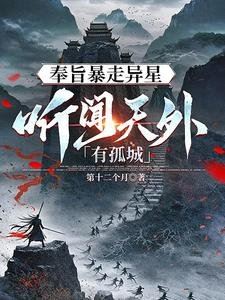
Whispers of a Lonely City Beyond the Heavens
Novel Info

Summary

... Read More
Long Yang stands at the edge of Dragon Cascade Peak, pursued by two assassins—a Soul Shifter named Lin Yangming and an unidentified companion. A Sky Howling Falcon hovers above, signaling pursuit, but does not cry out. Long Yang guards a terrifying secret: he discovered that upright apes from Double Moon Star underwent demonic transformation over three centuries ago, exterminating the Heavenly Beings, and have now infiltrated this world through an abandoned teleportation array. He was returning to report this to the Emperor when captured.

Under hypnosis, Long Yang resists mental probing, burying his memories deep. The Soul Shifter warns that doing so risks permanent amnesia. Long Yang instinctively speaks phrases in the alien language—"I'm not afraid to die"—revealing only fragments. The assassins learn that his companion Eric has been killed by the ancient queen Juno. As they argue over what to do, a third pursuer appears: an age-divided man from the Tian Family wielding a Jade Ring Snake. He disables the sturdy assassin, Zhu Yan, and demands Long Yang reveal the secret of the War God, believing the Long Family has uncovered ancient cultivation techniques to recreate the War God's power.

Zhu Yan sacrifices himself, throwing Long Yang to safety as they both fall from the cliff. Long Yang survives, landing in a cave before losing consciousness. Three years pass. He awakens by Shadowless Pool with complete amnesia, rescued by Aunt Mei and her son Lin Yuan. Now working as a porter in Zifu Mountain City, he carries water daily for Long Fu at the Long Family Mansion, hiding a scar at the corner of his mouth that periodically bleeds.

Zhang Tianxun, a cultivator nursing severe internal injuries from a past battle, observes Long Yang with growing interest. He notes Long Yang's extraordinary physical strength despite having no cultivated energy, and recognizes the poison wound matches one inflicted years ago in Kyoto by a Tian Family swordsman wearing Moon Shadow Silk. Zhang Tianxun also discovers Long Yang possesses an exceptional fire crystal energy storage stone—a treasure beyond ordinary understanding.

At the Cuihua Treasure and Antique Shop, Long Yang is drawn to a Moon Shadow Silk handkerchief, entering a trance that mirrors his recurring dream of a beautiful girl using such a cloth. Zhang Tianxun, knowing the handkerchief's significance, orchestrates a trade: he takes the fire crystal stone and exchanges it for the handkerchief through his sworn brother Sun Jiacheng, planning to use it to trigger Long Yang's memories.

Zhang Tianxun confronts Long Yang, revealing his theories about the War God—a legendary figure who fought the Four Great Families alone and supposedly came from Double Moon Star beyond the Heavenly Gate. He suggests Long Yang may be the War God's disciple, having inherited only physical cultivation before his master's death. The handkerchief, he argues, could unlock buried memories—but so could identify him to enemies.

Long Yang learns his poison wound was inflicted by a Tian Family member, confirming he has powerful foes. He recalls finding a skeleton near Shadowless Valley bearing the same poison wound and a psychic treasure sword, suggesting assassins had reached him even before his fall. Despite Zhang Tianxun's warnings against traveling to Kyoto, Long Yang accepts the handkerchief, hoping it will reveal his identity and the truth behind the Dream—the girl, the danger, and the secret he was carrying when everything shattered.

The story establishes a world where cultivators draw power from Double Moon Star, where the Four Great Families hold supreme authority, and where an ancient alien threat stirs beneath the surface. Long Yang, stripped of memory but carrying treasures and enemies from his past, must navigate a world far more dangerous than his humble porter life suggests.

Latest Release
DateGroupRelease
2026-10-01lightnovelasia c126
2026-10-01lightnovelasia c125
2026-10-01lightnovelasia c124
2026-10-01lightnovelasia c123
2026-10-01lightnovelasia c122
2026-10-01lightnovelasia c121
2026-10-01lightnovelasia c120
2026-10-01lightnovelasia c119
2026-10-01lightnovelasia c118
2026-10-01lightnovelasia c117
2026-10-01lightnovelasia c116
2026-10-01lightnovelasia c115

Community Reviews

Rating(3.8 / 5.0, 34votes)
5 stars
8(24%)
4 stars
11(32%)
3 stars
15(44%)
2 stars
0(0%)
1 stars
0(0%)

Popular reviews

... Read More
'Your Majesty, this dispute between the Long and Tian Families—I, your humble servant, dare not intervene. Please tell me what to do!' Prefect Xu's voice is a masterpiece of survivalist speech. Everything he says is designed to shift weight away from himself. The kneeling, the crying, the 'Yes, yes…'—it's a man whose entire personality is built around not being wrong. And yet his dialogue isn't cartoonish. There's genuine fear underneath the groveling. When he sweats and stammers and suddenly produces five words from the Emperor that solve everything? That's a bureaucrat who has spent his whole life learning exactly which lever to pull. Long Fu's dialogue is in a completely different register. Short. Declarative. Almost archival. 'I want to see the edict document. I won't just take your word for it.' 'To remove the plaque, you'll have to kill me first.' He doesn't negotiate. He doesn't perform. His sentences are like stones dropped in water—each one creates ripples but the stone itself doesn't move. Tian Weihu's voice is the loudest but also the most fragile. 'This is utterly unreasonable!' 'Ignore this man. Replace the plaque. If anything happens, I'll take responsibility.' The repetition of commands, the escalating volume, the way he performs authority even when he clearly doesn't have it—it's the dialogue of a man who's terrified of being seen as weak. The narrative voice itself is remarkably restrained. It doesn't editorialize. It reports actions and dialogue with surgical precision, letting the subtext do the heavy lifting. 'Tian Weihu's already cold expression darkened further'—that's it. No commentary needed. I keep coming back to Long Fu's final lines to Prefect Xu: 'Please ensure they're protected and not troubled by petty men.' In three sentences, the author gives us a character who has just lost a monumental dispute but is still worrying about ordinary people. That's not dialogue. That's character revelation through omission.
... Read More
The stakes in this section are layered in a way that keeps escalating and I need to unpack the complexity. On the surface level, you have the Tian Family trying to take over the Long Family's mountain territory. That's a territorial dispute, pretty straightforward. But then you layer on: Zhang Tianxun is poisoned and dying, the War God Temple confrontation is a suicide mission, the imperial court is allegedly involved (or at least being used as a cover by the Tian Family), and Long Yang is caught in the middle having just discovered his own extraordinary talent. What makes this work so well is that the author never lets you settle into one level of conflict. Just when you're processing the cultivation training, boom — Tian Family cavalry appears. Just when you think it's a simple clan war, boom — Prefect Xu shows up with official court backing. Just when Tian Weihu seems like he might lose the confrontation, he reveals he's willing to use imperial authority to override everything. And Long Yang's personal stake? He needs to protect Wei Wei. He needs Zhang Tianxun to survive. He needs to understand what the Heavenly Gate is. Three goals, all of them threatened by the same forces converging on Zifu City. The suspense isn't just 'will they win or lose' — it's 'what happens to everyone when all these threads snap at once?'
... Read More
'Since the founding of this dynasty over three hundred years ago, no one has ever taken down the Long Family's plaque.' This line is the thesis statement of the entire passage, and it's wrapped up in something as mundane as a piece of wood. The plaque is the ultimate symbol of inherited weight—literally hanging above a doorway, it represents centuries of obligation, memory, and identity. It predates the current dynasty. It outlived every family that once stood in this house. And now it must be removed not because it's irrelevant, but because the political winds have shifted and power has moved on. The plaque isn't being destroyed. It's being relocated. Which is somehow worse—it survives, but it's no longer at home. Long Fu carrying the orchid—'unbloomed, just a pot of orchid grass, standing tall with a color like icy jade'—echoes the same theme. It's something beautiful that hasn't fulfilled its purpose yet. Something that will continue to exist but not necessarily thrive. Is Long Fu the orchid? Is he still unbloomed after decades of service? The imperial edict itself is another layer—a five-word command that overrides centuries of tradition. Power, in this world, isn't about history. It's about who holds the yellow silk. The dynasty may be three hundred years old, but it answers to the Emperor, and the Emperor answers to no one here. And then there's the crowd. Hundreds of ordinary people summoned to witness the removal of a plaque they have no connection to. Their presence turns a private family matter into public theater. The theme here seems to be: legacy is never just about the people involved. It's about everyone who watches, records, and interprets what happens to it. Long Yang watching from the crowd, Long Yang who once carried water for Long Fu and now just stands there powerless—that's the ordinary person's relationship to history. You witness it. You don't control it. You might even get hurt in the crossfire. The chapter ends with the plaque still on the wall, the dog bleeding on the ground, and Long Fu standing untouched. Three hundred years of history, suspended in a single moment of violence.
... Read More
The pacing in this batch is honestly masterful and I want to dissect why it works so well. You start with an intensely personal, almost meditative scene — Zhang Tianxun teaching internal cultivation, Long Yang entering deep states of consciousness where his breathing becomes imperceptible. It's slow, deliberate, almost quiet. Then — and this is key — the author doesn't just cut to the next plot beat. He has Long Yang step outside, join children playing, and sing a nursery rhyme. 'Mountains beyond mountains, towers atop towers...' This is the calm before the storm, and it's doing heavy lifting. The rhyme itself plants the seed about the Heavenly Gate that connects two realms, which ties back to Zhang Tianxun's obsession. Then IMMEDIATELY after that poetic moment, thundering hooves. Thirteen riders. Black cloaks. A white bird on a leather strap. The shift from childhood innocence to political threat is so abrupt it makes your stomach drop. And then the confrontation at the Long Family mansion — Long Fu vs. Tian Weihu vs. Prefect Xu — it escalates faster than you can process. By the time Long Fu thunders 'Let's see who dares!' and sends two riders crashing to the ground, the chapter has gone from meditation to battle readiness in what feels like minutes. The structure is: quiet intimacy → philosophical wandering → sudden violence → political standoff. It's a masterclass in rhythm.
... Read More
Can we appreciate how distinct every character's voice is? Because I just re-read the Zhang Tianxun and Sun Jiacheng exchange and I could tell who was speaking without looking at the names. Zhang Tianxun: sharp, deliberate, always pushing forward. "I won't be modest about this. I believe the owner of that fire crystal stone has martial prowess far beyond the Four Great Families." That's not speculation—that's declaration. He speaks like a man who's already decided the answer and is just getting everyone else to catch up. Sun Jiacheng: cautious, measured, the voice of reason. "This… I still find it hard to believe. Big Brother, you can't say two people with great strength must share a master-disciple lineage." Notice the ellipsis? The hesitation? He's not disagreeing out of stubbornness—he's genuinely processing. His dialogue always has this layer of someone choosing their words carefully because the consequences are real. Then switch to Long Yang and Lin Yuan and the register COMPLETELY shifts. Lin Yuan's lines are fast, punchy, full of swagger: "He's skin and bones, looks like a sickly consumptive. I could knock him flat with one finger." Classic overconfident best friend energy. And Long Yang's responses are quieter, more measured: "I'm pretty sure you've got it backwards. Even if we both went at him together, we couldn't handle one of his fingers." But the real showcase is Long Yang with the tavern boss. He's performing—playing the role of a casual investor asking about wine supply—while actually conducting a surveillance operation. Every question is deliberate, every non-answer from the boss is mined for information. The dialogue feels natural because Long Yang is literally improvising in real time. And Zhang Tianxun's entrance at the end? One line. Perfect. Not a monologue, not an explanation. Just a dry, self-aware quip that tells us everything about his personality: he knows he's suspected, he's not worried, and he enjoys playing with his food.
... Read More
Okay, let's talk about the oath scene because this is where the whole chapter pivots. Long Yang doesn't just casually agree to help Zhang Tianxun—he actually swears on his soul. And not just any oath, he does it this weird formal gesture thing, hand over chest, 'may my soul be consumed by fierce flames and never find peace for eternity.' Then Zhang Tianxun and Lin Yuan both point out it looks like some foreign West Land Country custom. Which, of course, immediately makes you wonder: does Long Yang have connections to the West Land that he hasn't even remembered yet? The author is basically planting this bomb and pretending it's a passing comment. And then there's the whole Long Fu conversation. Long Yang decides to trust him and tell him everything—which honestly feels like a character growth moment, he was SO suspicious of Zhang Tianxun earlier and now he's already opening up to someone new. Long Fu shuts down the possibility of him being from the Long Family pretty coldly, but here's the thing: he says if a Long Family member went missing, they'd mobilize the ENTIRE NATION to find them. So either Long Yang genuinely isn't one of them... or someone is actively preventing the Long Family from searching. Which interpretation do you think the book is pushing?
See all reviews

Custom lists

See all custom Lists