Where’d my delicate little wife go? - Reviews

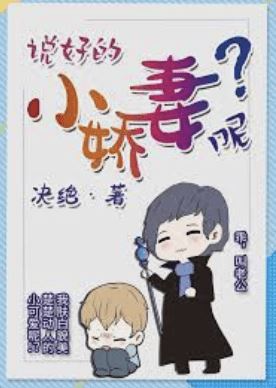
Where’d my delicate little wife go?
+Add to Custom List
Sort
Add review
... Read More
"I like his looks and strength." "I don't like weak fakes." These lines from Lu Jingchen are so perfectly icy. The woman doesn't even bother pretending to care about Zhou Yiqing's feelings. She looks at him once and already knows he's a fraud — literally and figuratively. Her dialogue has this sharp, economical quality where every sentence cuts. She says what she means and means what she says. Then Liao Muye's internal monologue is a totally different flavor. He's doing that thing where he's calculating and scheming but also genuinely confused, like: "This woman is too scummy!" The shift from formal outside politeness to internally seething is so relatable. And his pivot to planning around Elder Bai shows how his mind works — he's always three steps ahead, always adapting. Even after getting physically slapped and emotionally dismantled, he's already mapping his next move. The Elder Bai scene is funny too. The old man says "Little master..." with tears in his eyes and DCQ just goes "I don't remember the past." The contrast between the emotional weight of that greeting and DCQ's flat, helpless response is comedy gold. It's like showing up to your reunion and everyone knows you but you forgot the password.
... Read More
I need to talk about Wen Che's internal monologue because it made me laugh out loud. "No wonder the 'Ghost King', an old cow, wants to eat tender grass!" AND then "whether it's Xie Qing or Lu Xiaoran, they can't beat Duan Changqing, so there's no need to be afraid!" Wen Che is out here doing mental calculations like a wingman operating at maximum capacity while everyone else is too busy being dramatic. But the real moment— the ACTUAL moment— is Duan Changqing watching Xie Yunnan give that speech. "Duan Changqing liked seeing Xie Yunnan like this very much, and watched the other party with a smile." Just that. Three sentences. No grand confession, no dramatic gesture, just a man watching the person he loves stand in front of a crowd and lead with his whole heart. That's the kind of quiet intimacy that hits harder than any love scene. And then Shao Qilin shows up with his pear flowers and falling rain tears, and Duan Changqing doesn't even hesitate—he physically blocks him. "You can talk, but don't move your feet." He's not being rude, he's being protective. He sees right through Shao Qilin's act and he's not having any of it. Meanwhile Xie Yunnan, bless his gentle heart, is just offering tissues like, "Peng Qisheng, give him a tissue"—he knows what's happening but he's too polite to be harsh about it. The contrast between Duan Changqing's sharpness and Xie Yunnan's kindness in this scene is everything.
... Read More
Okay so let me just say this—chapter 1-4 already threw me the fuck off and I am HERE for it. We meet Xie Yunnan living his quiet life, fixing cars, talking to his fox-puppy, buying breakfast from Grandma Wang and Grandpa Zhou. Everything feels cozy and mundane, right? Then BAM—a guy on a motorcycle shows up calling himself Liao Muye's fiancé and attacks Xie Yunnan over... absolutely nothing that happened on screen. Who is Liao Muye? Where is she? Why does this random hot dangerous guy think she's some prize to defend? This is such a fun setup. The narrative is basically dangling us over a cliff from page one and I love it. Also, the fact that the translator even noted "it'll be a fun read with pets and mistaken identities"—yeah, the mistaken identity thing is already bubbling under the surface. What did I miss? What happened before chapter 1? And more importantly, when do we actually MEET Liao Muye because my curiosity is SCREAMING.
... Read More
The stakes just MULTIPLIED in this chapter and I am not okay. We went from "Xie Yunnan is a beloved local hero" to "there are defectors from Holy City AND a Ghost King subordinate among them" in the span of a few pages. That is a escalation that would make lesser authors sweat, but the author handles it with this calm, matter-of-fact delivery that somehow makes it even MORE alarming. Because here's the thing—the defectors claim to be loyal. They say they escaped Holy City and want to join Hongye City. But Duan Changqing, thank God for Duan Changqing's razor-sharp instincts, immediately notices the proportion of handsome guys is suspiciously high. This isn't just jealousy or possessiveness—this is a strategic mind recognizing that something about this scenario doesn't add up. Why would Holy City send defectors? And why are they ALL attractive young men? The Ghost King subordinate being among them is another layer of nightmare fuel. The Ghost King is clearly a major power figure, and having one of HIS subordinates injured and seeking refuge with Xie Yunnan means the underworld is now entangled in this political situation. These characters are walking into a web of competing loyalties and hidden agendas. And underneath all of this is the personal conflict—Shao Qilin's apparent attempt to seduce Xie Yunnan, Xie Yunnan's moral commitment to helping people even when he's suspicious, Duan Changqing's protective fury. Three conflicts converging on one scene, each with their own stakes, and none of them resolved. The chapter ends on Duan Changqing's suspicion and the narrator's trailing thought. Perfect cliffhanger. Who sent Shao Qilin, and what is he actually planning?
... Read More
Let me just drop some of these lines on you and you'll understand what I mean: "You actually learned from us!" "Little brother, the High Priest is actually about the same age as you, did you know that? He wasn't even famous at all when he was a kid... How did he become your idol when you were a kid?" Bro is roasting Lu Xiaoran in front of everyone and it's GENIUS. The casual disbelief at the absurdity of having the same-age-dead-man as your childhood idol? That's the kind of dialogue that makes you laugh out loud because it's so genuinely confused. And then: "These people don't seem to be difficult to get along with. They shouldn't care about us?" That line from the Holy City guys while eating barbecue—complete tonal whiplash from 'we're all like-minded people!' to 'hey these oppressors seem chill, should we be worried?' The self-awareness is funny AND sad at the same time. Lu Xiaoran's "Don't do bad things, no one cares about you!" while eating a chicken leg with a blank face? Perfect deadpan delivery. He's dispensing life wisdom between bites. That's a character voice I want to follow everywhere. "Even if the sky falls, there are people above us. What should we worry about?!" This line is philosophically hilarious. It's either deep wisdom or supreme cowardice depending on how you read it. The ambiguity is the point. And the wounded warrior's transformation is told through dialogue shifts—from pain grimace to comfortable snore to bright-faced kowtowing. The physical comedy of him going from 'dying man' to 'eternally grateful devotee' in two seconds is perfectly observed. The Ghost King's voice is minimal but heavy. "Go and eat!" — two words that carry the weight of political mercy. "There is such a practice in the Holy City, but we don't need it here." — rejecting hierarchy while accepting gratitude. Each line is calibrated. Xie Yunnan's "I just woke up, and I have very little power in my body, I'm afraid I can't cure him..." — then immediately saves the guy anyway. That's not dialogue, that's Character Revelation Through Contradiction. The dialogue here does triple duty: it's funny, it's emotionally revealing, and it's advancing the political plot simultaneously. That's craft.
... Read More
Can we appreciate how much character lives in "I told you to stop! The ground under your feet has just been planted, don't step on it!" The Ghost King is literally yelling at people to stop trampling his crops while standing on a tree above them, and somehow that line is both ridiculous and perfectly in character. This is a man who just fought off an ambush and his first concern is the vegetation. That's either deeply funny or deeply unhinged, and I'm here for it. The dialogue throughout this batch has this great texture where everything characters say has a second layer. When Duan Changqing tells the newcomers "Since you are here, please help clean up the venue," he sounds authoritative but we know he's improvising. When he introduces Xie Yunnan as his student, he sounds casual but every word is calculated. The ghost (literally and figuratively) of the real Ghost King's voice hangs over every line Duan Changqing speaks. And the crowd's reactions are pitch-perfect. "Bro, you actually accepted a priest as a student?" "Little Priest, can you help treat me?" These aren't polished lines — they're how real people talk when they're intrigued, skeptical, or opportunistic. The author doesn't waste words making everyone sound literary. They sound like a mob of tired, hungry warriors trying to figure out who's in charge. My favorite tiny moment though is probably the unspoken dialogue between the Ghost King and his subordinates when they realize their boss is talking to them directly. The "..." moments. The swallowed questions. That silence says more than any exposition could.
... Read More
The dialogue in this batch is sharp enough to draw blood and I love it. Let me highlight a few lines that stuck with me. 'He is better than you' — such a cold, dismissive reply from the Ghost King and yet it carries so much weight. It's not just an insult to Liao Muye, it's a declaration of where his loyalty sits. And Liao Muye's response 'If you don't help him, he's just an ordinary person' is vicious because it's technically true — without the Ghost King's investment, Xie Yunnan has no cultivation path. The Ghost King's counter 'I'll help him and get a talented apprentice, though?' is almost casual but devastating — he's reframing everything as transactional to hide how much he actually cares. Then there's Liao Muye's fake-out offer to meet up: 'When and where shall we meet?' and the Ghost King plays along while his heart is racing. The dialogue here is all subtext and barely-concealed hostility. Even the narration has this dry humor — Duan Changqing's running internal monologue of '...' whenever things get weird is becoming a signature. The author knows exactly how much to say and how much to leave hanging.
... Read More
The companion beast genetics explanation is doing so much heavy lifting here. Ghost King (fox) + Xie Yunnan's mother's line (wolf ancestor) = a dog. A DOG. Not a majestic hybrid, not a predicted outcome—a complete mutation into an ancestral form. This feels like the author is saying something about unexpected lineage and how bloodlines don't follow the rules people expect. Xie Yunnan is described as 'ordinary in all aspects' by the subordinates, but his companion beast being a mutated ancestral form suggests he carries hidden complexity. The dog looking like a fox (as the narration notes) is visual symbolism for someone who appears plain but contains something unusual underneath. Then there's the fox—the Ghost King himself—who's been 'peeping' on them. The predator watching the domestic scene. And Duan Changqing, whose true nature (also fox-related) is invisible to everyone except the one person who should notice. The theme seems to be about perception versus reality: ordinary-looking people carrying extraordinary blood, powerful figures reduced to awkward fathers, spies who are actually family.
... Read More
I keep coming back to the sensory details in this chapter. The world feels lived-in because the author keeps placing characters in specific, tactile environments. We start at the plantation—a place of cheap goods and sugar cane, grounded in the economy of the fringe. Then we're on a motorcycle, the 'cry for help' cutting through the ambient noise of the road. The flashlight beam is crucial here. It's not just a tool; it's a narrative device that literally illuminates the Ghost King's scarred face, making him look 'hideous' yet his eyes 'particularly bright.' That contrast between the damaged exterior and the sharp consciousness is visual storytelling at its best. Then there's the bush. The Ghost King is physically stuck, which forces Xie Yunnan to engage. 'He couldn't take him back, the man couldn't move, and his motorcycle was loaded with a lot of sugar cane.' Every detail constraints the action. The sugar cane bundles aren't just props; they're logistical obstacles that prevent Xie Yunnan from just driving off. They anchor the scene in reality. And the motorcycle itself—his mode of transport, his pride, his vulnerability. The scene where Xia Qing arrives is pure cinematic framing. Car headlights cut through the dark, Xie Yunnan stands apart, the injured boss on the ground. Then Xia Qing, a capable warrior, has to physically pick up her superior. The visual of her bending down, lifting the fake-unconscious man, while Xie Yunnan 'retracted his hand' wanting to help but holding back—this is all shown, not told. It's a full tableau of power, performance, and polite distance. Finally, the return home. The 'shutter door half open' is such a specific, domestic image. It signals anticipation, safety, waiting. Duan Changqing sitting at the door isn't a monumental pose; it's a quiet one. The lighting has shifted from the harsh flashlight and car beams to the softer, uncertain glow of home. The world of this story is built from these precise environmental notes—the price of sugar cane, the protective clothing, the broken bush, the half-open door. They create a fabric of reality that makes the emotional beats land with such weight.
... Read More
Okay, can we just talk about Xie Yunnan for a sec? The guy is SO soft for Duan Changqing it actually hurts. Like, he makes noodles for him. He holds his hand downstairs because 'there are a lot of things on the stairs.' He waits OUTSIDE the bathroom because he's worried Duan Changqing might fall. This man is operating on a whole different frequency of care and he doesn't even seem to realize howObviously he does, though — he just expresses it through actions, not words. And Duan Changqing?? The internal monologue is EVERY. 'Is this person's filter for him too thick?!' I literally screamed reading that. He's over there trying to look ugly and Xie Yunnan is like 'you're still beautiful bro.' The contrast between Duan's chaotic energy and Xie's calm competence is chef's kiss. But the real moment that got me was the chipmunk scene. Duan Changqing leaves part of his consciousness in his main body (the chipmunk) while he showers, and Xie Yunnan catches and pets it. Duan Changqing's entire vibe in that moment: 'He really…' That's it. That's the tweet. The fact that this tiny creature trusted Xie Yunnan immediately — and Xie Yunnan notices and interprets it as Duan Changqing trusting him — is such a beautiful piece of character writing. It shows Xie Yunnan's emotional intelligence without him saying a single word about it.
... Read More
I need to appreciate the comedic timing in this text because it's genuinely funny and the voices are distinct enough that I can tell who's speaking without name tags. Xie Yunnan's dialogue is short, warm, and occasionally painfully sincere: 'You recovered very quickly.' 'Yes, you will definitely be strong in the future.' This man coaxes Duan Changqing like he's made of glass and I am HERE for it. His line about getting married 'not a girlfriend, a boyfriend' — delivered so casually to a neighbor — tells me everything I need to know about his character. He's straightforward, unpretentious, and comfortable enough in his world to just... say it. Duan Changqing's internal voice is where the comedy gold lives. After Xie Yunnan calls him beautiful post-makeup: 'Duan Changqing: "…" Is this person's filter for him too thick?!' And then later when he flexes and his loose clothes slip off to reveal 'skin and bone arms' — the narrator just says 'Duan Changqing: "…"' again. The double silence is doing SO much work. It's the literary equivalent of a deadpan stare into the camera. The neighbor's reaction is also perfect — 'So you like this…' trailing off while taking in the 'thin young man, not too old, but with heavy makeup.' The unfinished thought is funnier than any punchline could be.
... Read More
The pacing in these chapters is genuinely masterful and I need to break down why. We start in what the text itself basically treats as a COMEDY beat — Lu Jingchen enthusiastically trying clothes on Duan Changqing, feeling a 'great sense of accomplishment.' It's light, almost domestic. Then within the span of a few paragraphs, the tone pivots HARD. Ninth-level warriors appear, pressure drops, ordinary people are being crushed, and suddenly we're in full survival mode. The author uses a classic escalation pattern here: normalcy → threat introduced → protagonist realizes she's outmatched → deus ex machina (sort of) → resolution that opens bigger questions. But what makes it work is that the deus ex machina isn't random — it's Duan Changqing, whose hidden depth we've been subtly foreshadowing throughout the story. Every time I re-read this, I catch hints I missed: the way he checked outside before trying on clothes, his calm observation of approaching enemies, the fact that he never once seemed worried during the shopping trip. Then there's the exposition dump about Holy City's motivations that comes right after the fight — the High Priest's death, the treasure, Elder Bai's alliance with Xie Yunnan, the plan to use Duan Changqing as leverage. It's a lot of information to absorb, but it lands because we just finished an action scene and our brains are hungry for context. The author knows when to feed us lore and when to keep us moving. The chapter ends on this suspended note — the shop owner and bystanders are in a trance, Lu Jingchen is processing everything, and we're left wondering about Xie Yunnan's safety. Perfect cliffhanger energy. I immediately opened the next chapter.

Leave a comment

You must be logged in to leave comments. or
