Summary

... Read More

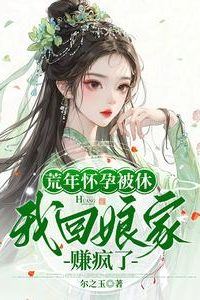
Chunxi served as a maid in the Wei household for three years, devoting herself to caring for Wei Lingze, the young master who had been paralyzed and bedridden following a severe injury. When Wei Lingze recovered and attended a banquet celebrating his return to health, a guest suggested rewarding Chunxi with a proper status due to her loyalty. Wei Lingze coldly dismissed her, stating that if any guest desired her, they could have her, revealing his indifference and prioritizing his upcoming marriage to Xiao Qinghe, a noblewoman from a powerful family. Following this humiliation, Chunxi approached Madam Yun, Wei Lingze’s mother, and requested her freedom contract along with a modest sum of silver and goods, choosing to leave the household rather than remain as a concubine or servant.

Upon returning home, Chunxi faced pressure from her mother, Madam Wang, who was greedy and manipulative. Madam Wang had spent Chunxi’s earnings over the years and now sought to marry Chunxi off to a wealthy older man or force her back into a subservient role within the Wei family. Chunxi resisted these schemes, asserting her independence and demanding that her mother arrange a marriage to a decent partner rather than exploiting her. Meanwhile, Wei Lingze grew increasingly agitated by Chunxi’s departure, misinterpreting her desire for freedom as a manipulative game to gain his attention. He attempted to reclaim her, dragging her to the Capital Office and accusing her of conspiring with others to force him into a marriage he did not want.

During this period, Chunxi encountered Shen Qingyuan, a upright official from the Jingzhao Office who had previously helped her when she was lost and frightened. Shen Qingyuan protected Chunxi from Wei Lingze’s aggression and the harassment of Ye Er, a nobleman with a grudge against Wei Lingze. Chunxi recognized Shen Qingyuan’s integrity and sought to build a rapport with him, viewing him as a potential ally against the powerful Wei family. She prepared food for him and maintained a respectful but strategic friendship, while Shen Qingyuan remained stoic but occasionally showed signs of concern for her well-being.

The conflict escalated when Chunxi’s younger brother, Cao Wen, was bullied at school. Wei Lingze intervened on behalf of the bully, using his influence to pressure Chunxi into submission. Chunxi refused to yield, withdrawing her brother from the academy and standing up to the corrupt teacher, Zhou Qin, who had sided with the wealthy family. Wei Lingze, frustrated by her defiance, attempted to force her back into his service by offering to enroll Cao Wen in a prestigious clan school, but Chunxi remained unmoved. Her mother, seeing an opportunity, had already accepted betrothal gifts from a scholar named Zhou Qin, intending to marry Chunxi off quickly to secure financial stability.

Wei Lingze discovered the betrothal gifts and confronted Chunxi, his anger and jealousy evident. He realized that Chunxi was genuinely leaving him for another man, which shattered his assumption that she would always wait for him. The Zhou family, intimidated by Wei Lingze’s presence and rumors of Chunxi’s past connection to him, withdrew their proposal. Chunxi was left in a precarious position, with her mother’s schemes failing and her future uncertain. Shen Qingyuan appeared at her doorstep, offering assistance and support, marking a shift in her circumstances as she began to rely on his protection rather than the whims of the Wei family.

As the story progresses, Chunxi navigates the complex social hierarchy of the capital, balancing her desire for a peaceful life with the relentless interference of her family and the obsessive pursuit of Wei Lingze. She establishes a small business selling food, using her earnings to gain independence, while maintaining a cautious relationship with Shen Qingyuan. Wei Lingze, unable to accept her rejection, continues to disrupt her life, leading to further confrontations that test Chunxi’s resolve. The narrative explores themes of class disparity, female agency, and the consequences of emotional manipulation, as Chunxi fights to carve out a life of her own choosing amidst the pressures of noble politics and familial obligation.

Latest Release
DateGroupRelease
2026-08-11shanghai fantasy c8
2026-08-11shanghai fantasy c7
2026-08-11shanghai fantasy c6
2026-08-11shanghai fantasy c5
2026-08-11shanghai fantasy c4
2026-08-11shanghai fantasy c3
2026-08-11shanghai fantasy c2
2026-08-11shanghai fantasy c1

Community Reviews

Rating(4.3 / 5.0, 6votes)
5 stars
3(50%)
4 stars
2(33%)
3 stars
1(17%)
2 stars
0(0%)
1 stars
0(0%)

Popular reviews

... Read More
The betrothal scene is SO good. Let me paint it for you: Chunxi's courtyard, festive but humble. Two glossy roosters, rice, oil, flour, bolts of cloth. A thin gold bracelet on a tray. Sunflower seed shells scattered everywhere from the neighbors' snacking. Madam Wang chatting with the Zhou parents, everyone smiling, the whole neighborhood gathered like it's some kind of village celebration. It feels warm and alive and real. Then Wei Lingze's carriage arrives and the entire atmosphere just SHATTERS. "The cheerful atmosphere froze the moment Wei Lingze appeared." I love how the author uses that transition. One second it's a cozy, slightly chaotic domestic scene and the next it's ice cold. Wei Lingze radiates such murderous energy that Matchmaker Zhang literally bolts. She'd never even seen this noble young master before and she's already sweating through her skin. The contrast between the Zhou family's modest gifts and Wei Lingze's double carriage with soft cushions, incense, tea, and snacks—this is worldbuilding through visual comparison, not exposition. You immediately understand the wealth gap without a single line explaining it. The Zhou parents thought their son was a catch. Then they see Wei Lingze and realize their son "paled in comparison." Oof. And the alley detail! The double carriage can't even fit into Chunxi's narrow alley. That's such a small thing but it tells you everything about her world—modest, cramped, far from the grand estates where Wei Lingze operates. She literally steps out of his world and back into her own at that moment. The seed shells! I keep coming back to that detail. Sunflower seed shells scattered everywhere after the crowd disperses. It's such a mundane, domestic image that makes the whole scene feel lived-in. This isn't some palace drama with marble floors and silk drapes—this is a real courtyard with real people eating snacks and gossiping. Also, Shen Qingyuan appearing at the end with Qing Shu, delivering a food box like it's no big deal but obviously it is? The fact that Chunxi immediately starts sweeping up seed shells and brewing tea for him shows how she reads people. She knows he came for a reason, she just plays along politely. The whole scene is layered with unspoken tension.
... Read More
The stakes in this section are INSANE and I need to process. Let's start with Cao Wen. This poor kid is being bullied for being fatherless, for not having answers during tests, for existing in a space where he doesn't belong. Zhou Qin won't listen to his side. The academy threatens thirty strikes and expulsion. Zhao Dabao demands kowtows. Cao Wen is pale and shaking and his only option is to submit or lose everything. The stakes here are immediate and physical—his body, his education, his future. Then Chunxi's stakes compound on top of it. If Cao Wen is blacklisted from all academies, their future is destroyed. The Zhou family's marriage proposal was supposed to be a solution—security, a husband, a family. But now Wei Lingze is interfering, and the betrothal scene becomes a battlefield. Wei Lingze's conflict is internal but it explodes outward. He's confused, angry, humiliated. He thought he had time. He thought Chunxi would wait. He offered the Yun clan school as a favor, and she rejected it. Every offer he makes is a test, and every rejection chips away at his certainty. The conflict isn't just about Chunxi leaving—it's about his entire identity as someone who controls outcomes being shattered. The Zhou family's conflict is more subtle but real. They see Wei Lingze and suddenly their son doesn't measure up. Their plans are disrupted. They leave in a hurry, suspicious and uneasy. Chunxi just lost her proposed marriage AND her brother's academy placement in the same afternoon. And then Shen Qingyuan appears. Lord Shen, the top scholar at seventeen, the man Zhou Qin just spent twenty minutes badmouthing, shows up at Chunxi's door offering help. The irony is almost too much. He asks about Cao Wen's situation with genuine concern. While Wei Lingze is using his power to control, Shen Qingyuan is using his to protect. The stakes just shifted again. What makes all this work is that the author never lets any conflict resolve cleanly. The academy problem is solved but creates a bigger personal conflict. The betrothal is threatened but not officially broken. Chunxi is free but suddenly facing a new complication with Shen Qingyuan. Every resolution plants the seed of the next conflict. The tension never drops below boiling.
... Read More
There's something really powerful about the symbolism in this section that I want to unpack. The freedom papers. Chunxi takes her reward and her freedom papers and leaves the Wei household. These papers represent everything—her autonomy, her choice to leave, her refusal to be owned. And Wei Lingze's response? He can't process it. He thinks she's playing hard to get. He thinks the freedom papers are a bargaining chip she'll eventually trade back for security. He literally cannot imagine a world where she chooses herself over him. Then there's the gold bracelet. The Zhou family brings a thin gold bracelet as part of the betrothal gifts. It's described as modest, and Madam Wang and the neighbors praise Chunxi's good fortune. But Wei Lingze once gave his servants gold nuggets worth more than that entire tray. The bracelet is a symbol of what Chunxi's "match" can offer—honest, modest, genuine. It's not about wealth, it's about intention. The Zhou parents are happy, they're not trying to impress anyone, they just want their son to marry well. The sunflower seed shells are another symbol I can't shake. They're scattered everywhere in the courtyard—evidence of community, of neighbors gathering, of ordinary life continuing despite the drama. When Chunxi starts sweeping them up when Shen Qingyuan arrives, it's almost like she's trying to restore order to a space that's been disrupted. The shells represent the normalcy she's fighting for, the simple life she wants for herself and her brother. And the narrow alley! The double carriage literally cannot fit. This is such a perfect metaphor for Wei Lingze trying to force his world into Chunxi's space. He can bring all his wealth and power, but there's a physical limit to how far he can go. The alley is her territory, and his carriage has to stop at the edge. The food box Shen Qingyuan delivers is interesting too. It's a small, personal gesture—not wealth or power, just care. He comes in person when he could have sent Qing Shu. The dried meat that isn't ready yet, the tea that's too hot to drink—these are all symbols of things that aren't quite ready, that need time. Chunxi is in a transition period, and the whole section is about the tension between what is and what could be. The repeated imagery of doors and thresholds is everywhere—Chunxi stepping out of the carriage, Matchmaker Zhang fleeing through the gate, Shen Qingyuan appearing at the door. Every threshold represents a choice, a crossing from one state of being to another.
... Read More
I need to talk about Zhou Qin's dialogue because this man has the most recognizable voice in the entire book and I am here for it. "Maybe he was never meant to be top scholar. Otherwise, he wouldn't have exhausted his fortune and ended up cursed—losing wives and having no heirs." This man is out here speculating about someone's personal life with zero shame and maximum confidence. The way he says it—"as if simply having a son made him superior to Shen Qingyuan"—his dialogue isn't just words, it's pure personality. You can hear the smugness in every syllable. He's the kind of teacher who thinks he's doing everyone a favor by being cruel. And Chunxi's response? Perfect. "As a teacher, you should mind your words and show some decency." Short, sharp, no nonsense. She doesn't yell, she doesn't elaborate. She just drops the mic and moves on. Then there's Wei Lingze's dialogue, which is almost the opposite. He barely says anything and when he does, it's loaded. "You really plan to marry someone else?" That's it. No title, no honorific, just raw accusation in six words. The man who normally speaks in commands and offers suddenly sounds almost... vulnerable? No, he wouldn't admit that. But there's something there. His line at the academy—"If they want to withdraw, then refund the tuition"—so casual, so effortless. He doesn't even look at Chunxi when he says it. He's using his power like it's nothing, like he's just making a minor adjustment to the weather. The contrast between how he treats his own people (Cao Wen gets a pastry, Cao Wen gets a school placement) and how he treats Chunxi (demands, ultimatums, carriages blocking paths) is fascinating. Zhao Dabao's dialogue is delightfully slimy. "You cracked my head open. You must kneel and kowtow to me three times to apologize." The boy is twelve and already sounds like a miniature version of every corrupt official in the book. I love hate him. And Chunxi's exchange with Wei Lingze about the betrothal—"I've always been serious. I never lied to you." So much said in so few words. She's not angry, she's not crying, she's just stating facts. That's more devastating than any monologue could be. The author's narrative voice is also worth mentioning. It's observant, slightly wry, never over-explaining. Like when it says Chunxi's calmness was "like a slap to his face." That's the narrator having fun with us.
... Read More
Okay, can we just talk about how absolutely unhinged Wei Lingze is here? The man shows up at Chunxi's betrothal like he owns the place, glare-first, no greeting, just straight-up demanding to know if she's really marrying someone else. And the worst part? He genuinely cannot comprehend why she'd choose anyone over him. Three years of caretaking, he thinks that automatically equals love. Like, bro, that's not how any of this works. The scene at the academy is where it all really clicks into place. Chunxi stands there, chin up, telling him flat out she never lied to him and she's always been serious about leaving. And Wei Lingze just... freezes. His entire worldview cracks. He's spent so long assuming she'd never leave, assuming his status and his favors (the Yun clan school offer, the gold nuggets, whatever) would keep her tethered. But she walked away with her reward money and freedom papers and didn't look back. "I never lied to you." That line hits different. It's so calm, so final. Meanwhile he's over here arranging for her brother to be enrolled in a prestigious school like that's some kind of bargaining chip. He doesn't get it at all. He really doesn't. And then there's Zhou Qin—what a piece of work. The guy gossips about Shen Qingyuan behind his back, calling him cursed, saying he lost his wives because he was never truly talented. Chunxi has to literally tell him to mind his words. The boy Cao Wen is caught in the middle of all this, and honestly, it breaks my heart. He's just a kid trying to survive a system that's rigged against him from the start. But the real relationship dynamics here are between Chunxi and her brother. She's been away for years and still knows exactly how to protect him. When she crouches down to wipe his tears and asks him to tell her the truth so she can help him seek justice—chill. Absolute chill. She's not just his sister, she's his advocate in a world that won't listen to him. So what do we do with Wei Lingze now? Because he just got rejected in the most public, humiliating way possible and I need to know if he's going to double down or actually grow a spine and admit he was wrong.
... Read More
This whole academy sequence is perfectly paced. Let me break it down because I literally could not stop turning pages. It starts with Zhou Qin gossiping about Shen Qingyuan—low stakes, character establishment. Then Chunxi calls him out. Okay, minor conflict. Then Cao Wen confesses he was bullied, not the aggressor. Now we have a real problem. Then Elder Zeng shows up with the punishment demands. Stakes rising. Then Zhao Dabao appears with bandages, smug and backed by Wei Lingze. The bully gets a face and an ally. Then Zhou Qin threatens to blacklist Cao Wen from all academies. Maximum pressure. Chunxi is about to lose everything. And then—Wei Lingze speaks. "If they want to withdraw, then refund the tuition." One line. That's it. The tension just... deflates. Like someone popped a balloon. What I love is how the author uses Wei Lingze's silence as a pacing tool. He's been there the whole time, sipping tea, not looking at Chunxi, and the reader is wondering what he's going to do. Is he going to help? Is he going to make things worse? Every time Chunxi seems cornered, he says nothing, and the tension keeps building. Then BAM, one calm line and the whole situation flips. But then the author doesn't let us breathe. Immediately after the academy resolution, they're outside and Wei Lingze's carriage is there. Xing Zhou blocks their path. Now we're in a completely different kind of tension—the personal, emotional kind. The structural tension of the academy conflict transitions seamlessly into the relational tension of Wei Lingze demanding she come with him. And then the betrothal scene hits like a truck. Matchmaker Zhang announcing the gifts while Wei Lingze's carriage curtain flies open. The timing is almost comedic in how perfectly cruel it is. He thought he had time. He didn't. The chapter ends with Shen Qingyuan appearing at the door. Another pivot, another shift in the power dynamics. The author never lets the reader settle into one emotional state for too long. It's exhausting and brilliant.
See all reviews

Characters

See all characters

Custom lists

See all custom Lists