When the Villainess Tames a Prisoner
+Add to Custom List
Genres:
Novel Info
  • Author:
  • Status:Ongoing

Summary

... Read More

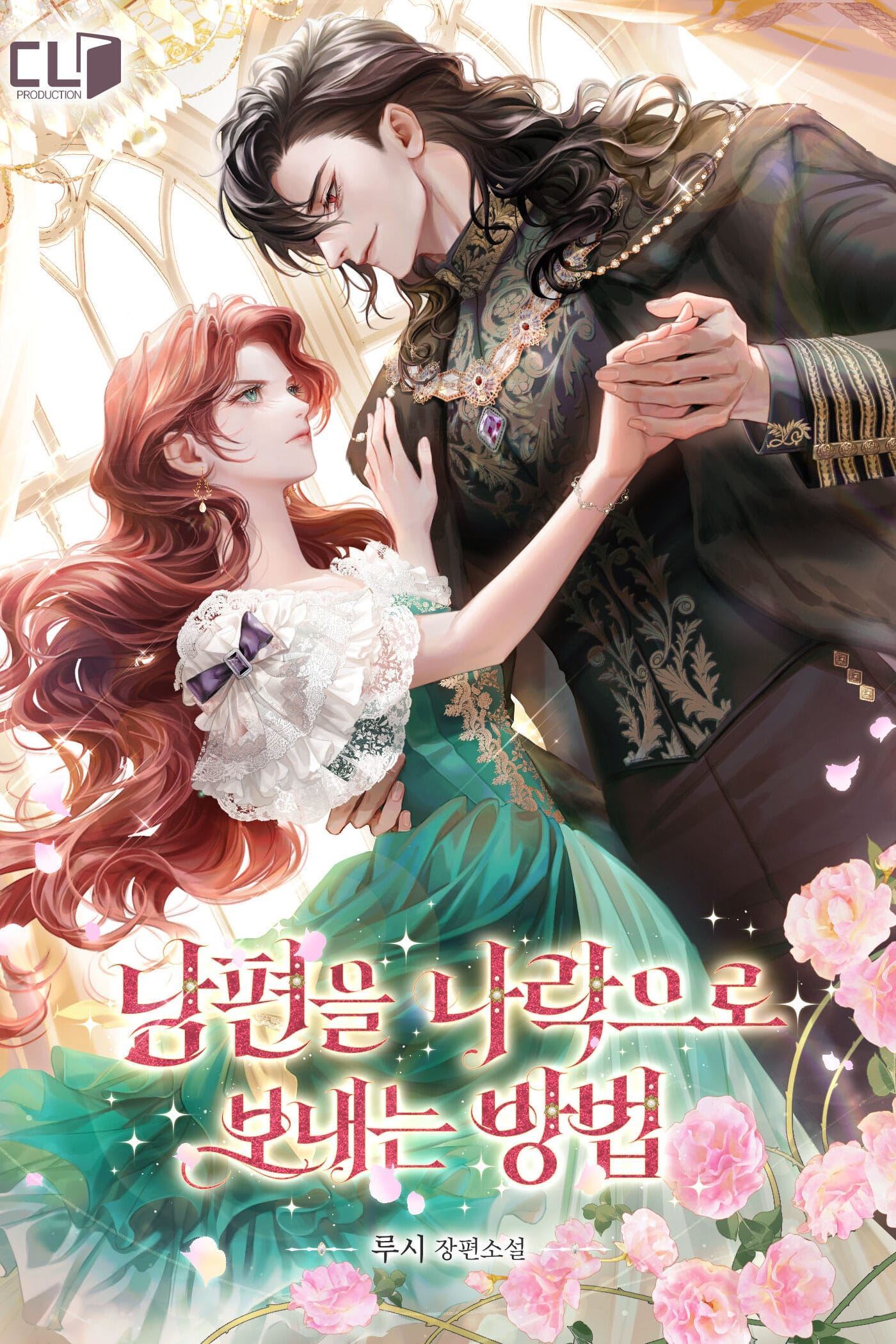
Ella, the reincarnated soul of a fallen witch, inhabits the body of Mariella Tinsley, the common-born Saintess of the Becarto Empire and betrothed to Crown Prince Zikhart. In her previous life, Mariella was abused by the imperial family and the temple, ultimately executed after being framed for witchcraft. Driven by grief over her sister Marian's suffering and death, Ella resolves to dismantle the Becarto Empire and avenge Marian by becoming the very villainess the nobles fear. Her first move is to tame Haven Montefeltro, the fifth prince of the Kar Kingdom, whom she discovers wounded in the Hooly Forest. Haven, a fugitive who escaped the border prison camp, is revealed to be the descendant of the wolf clan. Ella nurses him back to health through medical treatment rather than holy healing, gradually earning his trust and sparking an intense, jealous desire within him. Unbeknownst to Ella, Haven requires intimacy to fully awaken his bloodline, and the nights they share deepen his obsession. Meanwhile, Ella attends a banquet at the Orpen duchy, hosted by Crown Prince Zikhart and his consort Dienne. She deliberately uses a revealing dress gifted by Dienne to humiliate her rival, captivating the nobles and drawing Zikhart's predatory attention, thereby sowing discord between the crown prince and his consort. Ella also begins building a network of allies, recruiting the novice priest Molly as a secret agent and gathering information about mana stone guilds to secure economic power before the empire can claim the valuable veins she knows exist. As she accelerates her plans to enter the palace, she faces the imminent return of High Priest Capuasia, who suspects irregularities in her waning holy power. Ella orchestrates a scheme using forbidden herbs to mask her condition while advancing her revenge against the church and nobility.

Latest Release
DateGroupRelease
2026-10-03dusk blossoms c26
2026-10-03dusk blossoms c25
2026-10-03dusk blossoms c24
2026-10-03dusk blossoms c23
2026-10-03dusk blossoms c22
2026-10-03dusk blossoms c21
2026-10-03dusk blossoms c20
2026-10-03dusk blossoms c19
2026-10-03dusk blossoms c18
2026-10-03dusk blossoms c17
2026-10-03dusk blossoms c16
2026-10-03dusk blossoms c15

Community Reviews

Rating(0 / 5.0, 33votes)
5 stars
0(0%)
4 stars
0(0%)
3 stars
0(0%)
2 stars
0(0%)
1 stars
0(0%)

Popular reviews

... Read More
Okay, let's talk about the plot here, because this section is doing some serious heavy lifting. On the surface, it's a classic ‘enemies-to-lovers' setup, but oh my god, the mechanics are so much darker and more interesting than a simple romance trope. Ella isn't just ‘taking care of' the injured hero; she is systematically dismantling his autonomy while pretending it's mercy. That's the core twist that makes this bingeable. She's a prisoner of her own situation—trying to avenge her sister Marian, navigating a corrupt temple hierarchy—and Haven is just the most dangerous, convenient pawn she can lay her hands on. The plot isn't moving toward ‘will they/won't they,' it's moving toward ‘how long can she manipulate this before he figures it out?' The pacing of the reveal is brilliant. We start with the intimate, almost domestic scene of dressing him. It feels soft. Safe, even. Then she drops the bomb: ‘I know you're a prisoner who escaped from the camp.' In one line, the genre shifts from cozy healing to high-stakes thriller. She's not a benevolent healer; she's a warden. And the scariest part? He lets her get away with it. Or rather, he has no choice. The plot logic is tight—if he's a fugitive and she's the only source of food, medicine, and safety, his only rational move is to play along until he's strong enough to leave. But she knows that. That's why she cuts his medicine. That's why she says, ‘Everything he received or consumed needed to pass through her hands.' She's turning his survival into a chain. And then just when you think the scene is settling into a quiet, tense truce, BAM. Back to the temple world. The introduction of Doris and the dress isn't just filler; it's a ticking time bomb. The plot threads are weaving together—the personal (Ella/Haven) and the political (the temple, the Crown Prince, Dienne). The dress is a weapon. It's a public humiliation device designed to break Marian's memory and assert dominance over Ella. But Ella isn't just a victim waiting for the next act; she's already planning her counter-move. She sees Molly's ‘unusually clear eyes' and thinks about recruiting an ally. She's building a network even as she's trapping a war demon in a cave. This isn't a passive plot; it's a chessboard, and the author is making every single move feel like a betrayal or a salvation. It's coherent, yes, but it's also deeply unsettling in the best way. How far will Ella go to keep him? And what happens when Haven realizes he's not the hunter, he's the prey?
... Read More
I have to talk about the dialogue because it is doing SO MUCH work here. The genius of this entire encounter is that on the surface, it's completely normal. A saintess bumps into a priest, asks him why he's there, tells him to go do his duties. Any observer would think nothing of it. But the subtext is absolutely SCREAMING. "Your sacred promise." What promise? We don't know exactly, and that's the point. It's THEIR promise. Private. Secret. Something that binds them beyond words anyone else could understand. "The chief god will be waiting for your return. Go now." Translation: come back to me. Don't die. Find your way back. But saying it that way means if anyone is listening, it's just religious duty. Perfect. And "Solea Leoni." She says it like a benediction. He repeats it like he's memorizing something precious. It's a closing ritual between them—a prayer, a goodbye, a vow, all folded into three syllables. The other dialogue is equally sharp. Zikhart's letter—"he was sorry" but also dripping with affection. Ella's response: a quiet contemptuous laugh. She doesn't even dignify it with words. And then there's the exchange with Tailian, where every courtesy is a weapon. "Please let me offer you a cup of tea sometime." Said while holding Zikhart's hand. Said while looking directly at Tailian. It's elegant, it's vicious, it's completely in character. The narrative voice itself is worth noting too—Ella's internal monologue is razor-sharp, dry, self-aware. She knows exactly what she's doing. The contrast between her calm exterior and her racing thoughts is what makes her such a compelling narrator.
... Read More
The worldbuilding in these chapters is INSANE and I love it. Let me start with Meivia's workshop — this concealment spell on a gray stone wall that dissolves like smoke when Haven touches it. The rough texture just... melts away. And inside, pink potion liquid spilling across the floor with pale white smoke curling upward, and Haven grimacing at the foul smell. You can literally SMELL that room. Then Meivia's examination scene — her magic light shifting from violet to gold as it absorbs into Haven's neck. That color change matters so much. Violet = repelled by whatever this is. Gold = accepted, absorbed, ancient. And then the book she pulls out: Beast Clan Mythology and Their Power, with an illustration showing wolves and bears and eagles alongside naked humans. The Haizen Kingdom, where animal deities are sacred and tribes take predator names — Leopard Clan, Wolf Clan — and some people can actually transform into their sacred beasts. This isn't just flavor text, this is the key to everything. Oh and the toho leaves detail! These toxic plants cause coughing blood and fever in small doses but continuous use brings narcolepsy and slow death. Ella knows all of this and uses it to fake her saintess suffering. The world is so intricately connected.
... Read More
So. Zikhart. Let's talk about him, because this man is a walking contradiction and I am HERE for it. On one hand, he's the crown prince who took a national marriage with a saintess to unite the temple and imperial family. On the other, his eyes keep drifting across the banquet table like a moon pulling the tide. The text literally says: "The more often Zikhart's gaze lingered, the deeper Ella's smile grew." And then: "Even as he walked away with Dienne in his arms, Zikhart's attention remained entirely on them." This is the kind of detail that makes me scream. He's physically carrying his consort out of the room and his visual attention is still anchored across the dining hall. That's not just attraction—that's obsession in its earliest, most dangerous stage. And Ella? She's fully aware of it. She's CALIBRATING. She notices his lingering gaze and deliberately lets her smile deepen. She's weaponizing his attention while playing the innocent saintess role. The double-faced nature of her interaction with Dienne—"A quiet laugh escaped her, which she hid behind the napkin"—tells us everything. She sees through Dienne's performative fragility and finds it amusing. "I heard you also asked His Highness to escort me. If I had come here alone, I would have been terribly out of place……" / "His Highness made it much less daunting." Ella's dialogue with Dienne is a masterclass in passive aggression wrapped in gratitude. Every word is a needle. Then there's Dienne, who chose to stay as consort despite knowing about the national marriage. The text reveals her backstory in these heartbreaking lines: she was raised from childhood to be crown princess, gave her heart to Zikhart, and still accepted a secondary position. "How dare he, with me right here." She knows he's easily swayed by temptation. She's been waiting. And yet—she can't let go. The triangle is so deliciously messy. Zikhart is torn between duty and desire, Dienne is clinging to a promise that's being actively broken, and Ella is playing both of them like instruments while hiding her true identity. I genuinely cannot wait to see what happens when these three collide again.
... Read More
This section is a masterclass in controlled pacing. The author knows exactly when to slow down to a crawl and when to accelerate into a frantic sprint, and they use that rhythm to manipulate your heart rate. Let's break it down, because the structure here is doing heavy emotional work. It starts slow. Deliberate. Intimate. The dressing scene, the feeding scene—it's all stretched out. We linger on Haven's silence, on the red curve of his ear, on the empty basket. The prose slows down to match Ella's calculated patience. She's taming a wild animal, after all. ‘Four more days after that, the Haven she had seen in Marian's memories began to emerge.' Time passes in a blur of small gestures. This is the ‘calm before the storm' phase, and it's essential because it makes the bond feel earned, even if it's built on manipulation. You sit with them. You breathe with them. Then, abruptly, the pace snaps. ‘Because her conversation with Haven had run long, she was leaving later than usual.' The chapter structure shifts from the cave to the temple, and the sentences shorten. The pacing becomes urgent. ‘She needed to wash first.' ‘Knock knock.' ‘Before she could even wipe down her sweat-soaked body.' The intrusion of Doris breaks the sanctuary. The story accelerates from a quiet romance to a political thriller in the span of a page turn. The transition is seamless but jarring, and that's the point. Just as you settle into the fragile peace of the cave, the real world crashes in. The announcement of the Crown Prince's arrival acts as a cliffhanger within the scene. ‘That piece of trash is coming here?' The stakes just skyrocket. We go from ‘will he eat the soup?' to ‘will she be publicly humiliated and destroyed?' What's brilliant is how the pacing mirrors Ella's mental state. In the cave, she's patient, strategic, almost serene. In the temple, she's ‘drenched in sweat,' her ‘eyes sharpened,' her anger ‘knotting inside her.' The external pace forces her internal chaos to the surface. The author doesn't let you rest. Even when Ella tries to compose herself—wiping her face, changing her clothes—the door opens, and the pressure mounts instantly. The structure ends on a note of suspended dread. The dress is presented. The humiliation is promised. The gathering is set. There's no resolution, only the tightening of the screw. And that's what keeps you flipping pages. The pacing isn't just about speed; it's about the oscillation between safety and danger, intimacy and exposure. You never know which world Ella will slip into next, and that unpredictability is pure narrative gold.
... Read More
Can we just appreciate how sharp Ella's dialogue is? She walks into a cave, gets a sword pointed at her throat, and her first response is basically to offer medical help while bleeding from her own chin because his blade nicked her. And then she says: 'Isn't that a bit much to do to the person who's going to save your life?' She's talking about the fact that he cut HER while she was trying to save HIM. The audacity. The absolute gall. And he just... lowers the sword. Later when he asks why she's using medicine instead of healing magic, she gives the most casual lie of her life: 'I'm still a novice priest in training. I don't have enough holy power.' No hesitation. No 'um.' Just straight into the fabrication like she was born lying. And her internal voice? 'Like trying to breathe heat into a massive rock.' That line made me laugh out loud. It's so vivid and so true to how she's experiencing this situation — cold, heavy, resistant. The narrative voice throughout is exactly the kind of sharp, slightly wry inner monologue that makes you want to keep turning pages. Every thought Ella has feels deliberate and layered, and that's what makes her such a compelling narrator even when she's being completely manipulative.
See all reviews

Custom lists

See all custom Lists