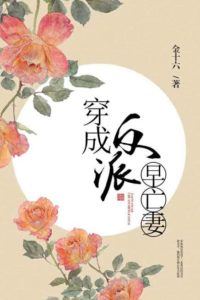
When the Villain is Bound to the Female Lead System
+Add to Custom List
Genres:
Novel Info
  • Author:
  • Status:Ongoing

Summary

... Read More

Yu Yi, a modern woman who transmigrated into the body of a tragic female protagonist in a novel titled Tidal Wave, initially found herself in a world of immortal cultivation. Aware that the original plot involved seventy thousand chapters of physical and emotional torment at the hands of the male lead, Pei Jingchao, she refused to follow the script. At the story's inciting moment, instead of rescuing the injured Pei Jingchao, she buried him alive and fled to a remote county. There, she became the disciple of a dying rogue cultivator, inheriting his cave dwelling, a red-crowned crane companion, and a wealth of talismanic and sword cultivation techniques. For five years, Yu Yi lived in seclusion, occasionally venturing out to sell talismans and gather news, hoping to avoid the main plot entirely. Her quiet existence was disrupted when she learned that Pei Jingchao was marrying another woman, Yuxiu Fairy, which signaled the end of her tragic storyline and the shattering of the female lead's halo.

Emboldened by this news, Yu Yi prepared to explore the wider world. However, while searching for her crane companion on Cloud Mountain, she encountered a brutal scene where a group of Mount Li disciples were massacred by a Bone Demon. The sole survivor revealed that Xue Chenjing, a prominent villain in the original novel and the second male lead, had betrayed his sect and colluded with demons. Yu Yi witnessed Xue Chenjing killing the survivor and crushing the demon's skull, revealing his cruel and monstrous nature. As she attempted to escape using a teleportation talisman, she was intercepted by Xue Chenjing. At that moment, a system manifested, revealing that Yu Yi was actually the protagonist of a different book, After Transmigrating into a Book, I Got a Happy Ending with the Villain. The system, mistakenly bound to Xue Chenjing due to a technical error, tasked him with romancing Yu Yi and achieving a happy ending to stabilize the world.

Xue Chenjing, driven by the system's demands and his own desire to understand this new variable, pursued Yu Yi relentlessly. He manipulated the mountain's fog barrier, trapping Yu Yi and repeatedly attempting to capture her attention. His methods ranged from disguising himself as a frail old herb gatherer to using his demonic powers to bind and mentally dominate her. Despite his efforts, Yu Yi remained resolute, rejecting his advances and escaping his clutches through wit and combat. She severed his mental connection and fled deeper into the mist, leaving Xue Chenjing frustrated but determined. The system, anxious about the failing romance plot, urged its host to proceed more gently, but Xue Chenjing's demonic instincts often led to more aggressive and terrifying encounters.

As the story progresses, other cultivators, including disciples from the Ten Thousand Joys Sect and Pei Jingchao's group from the Twelve Great Immortal Sects, also become trapped in the Cloud Mountain barrier. They are all hunting for the Sword-Sealing Stone, a divine artifact stolen during the chaos of Pei Jingchao's wedding. Xue Chenjing uses the confusion to further his pursuit of Yu Yi, assembling a broken mountain god statue while plotting his next move. The narrative highlights the stark contrast between Yu Yi's desire for independence and the systemic forces pushing her toward a romantic fate with a villain. Xue Chenjing's inability to comprehend genuine affection leads to comical yet disturbing misunderstandings, while Yu Yi's fierce resistance challenges the very premise of the system's mission. The presence of multiple factions in the misty mountain creates a volatile environment where alliances shift and survival depends on navigating both external threats and the increasingly complicated dynamic between the fugitive protagonist and her pursuer.

The core conflict remains centered on Yu Yi's struggle to maintain her autonomy against the deterministic forces of the plot and the obsessive pursuit of Xue Chenjing. While Pei Jingchao's wedding suggests a resolution to her past trauma, the emergence of the villain and the system introduces a new, unpredictable variable. Xue Chenjing's willingness to break laws and harm others to achieve his goal contrasts with Yu Yi's pragmatic and defensive stance. As the mist barrier continues to trap various cultivators, the search for the Sword-Sealing Stone intertwines with the romantic pursuit, creating a web of danger and intrigue. Yu Yi must navigate these threats while trying to understand the true nature of her transmigration and the system's ultimate purpose, all while avoiding the fate of a traditional romance novel heroine.

Latest Release
DateGroupRelease
2026-09-26akknovel c57
2026-09-26akknovel c56
2026-09-26akknovel c55
2026-09-26akknovel c54
2026-09-26akknovel c53
2026-09-26akknovel c52
2026-09-26akknovel c51
2026-09-26akknovel c50
2026-09-26akknovel c49
2026-09-26akknovel c48
2026-09-26akknovel c47
2026-09-26akknovel c46

Community Reviews

Rating(4 / 5.0, 41votes)
5 stars
13(32%)
4 stars
16(39%)
3 stars
11(27%)
2 stars
1(2%)
1 stars
0(0%)

Popular reviews

... Read More
There's a reason this entire sequence revolves around reconstruction and brokenness, and I think it's not accidental. The mountain god statue—once weathered and blurred but vividly colored—is shattered. Xue Chenjing reassembles it, but it comes out wrong. The head has a massive chunk missing, then the belly gapes open. He sorts by color blocks like a puzzle, but the result is a grotesque parody of the original deity. "There were no more painted stone pieces left on the ground"—meaning he used everything, filled every gap, but it still doesn't look right. This feels like a metaphor for his entire situation: trying to reconstruct something from broken pieces, forcing things to fit together, creating something that appears whole on the surface but is fundamentally corrupted underneath. The system points this out almost accidentally: "Master, I don't think you've assembled it correctly." And Xue Chenjing just keeps trying, disassembling and reassembling until it looks 'a bit more human-like.' But no deity statue would have a gaping hole in its belly. The obsession with making things look normal—human-normal, acceptable-normal—while ignoring what's fundamentally missing or wrong. That's him. That's his entire relationship with Yu Yi. He keeps trying to reassemble her, to make her fit the role he wants, but the result will always be distorted. And Yu Yi herself—plunging her hand into tentacle flesh, tearing through his face with a sword crane—she's literally breaking the things that bind her. Her escape is violent, physical, total. She doesn't negotiate; she destroys the mechanism of control. Even the bone demon, obsessively inhaling the torn sleeve that touched his master's tears—it's drawn to the vulnerability it can't understand. The world this story creates treats brokenness as both tragedy and transformation. The temple collapses and rebuilds. The statue shatters and reforms incorrectly. Characters are wounded, heal, and carry the marks. The recurring imagery of fluids—saliva, blood, the rosy-tipped tentacle, the viscous filaments binding stone—suggests that everything in this world is permeable, that boundaries between self and other, between human and monster, are constantly being negotiated and renegotiated.
... Read More
'You dare argue?' As he spoke, the young man pressed down harder with his foot, crushing half of its skull into the gravel of the shallow waters. I read that line five times. Five. Because on the surface it's just a villain stepping on a defeated demon, right? But then I realized—why would a high-level cultivator need to physically crush a weakened Bone Demon's skull? His cultivation is described as barely Foundation Establishment. And yet this demon, which literally tore apart dozens of Golden Core disciples, is reduced to a docile dog at his feet. What does that tell us about Xue Chenjing? The name alone hit me like a truck. 'Xue Chenjing'—the gentle second male lead who almost stole the female lead away from the protagonist, who later became the cold-blooded mastermind behind everything. But this scene shows us the man before the legend, before the epic fall. He's seventeen, maybe eighteen, wearing a fleece-lined uniform while everyone else is in standard robes. He's the merchant's son who bribed his way in, the one everyone looked down on. And now he's standing in a blood-red stream, having just murdered his own sect brothers. There's this one moment where his fingers extract the golden core and they 'bizarrely softened, resembling the tentacles of some soft-bodied creature.' His humanity is literally slipping away in real time. But here's what broke me—he's also the one who, in the original story, 'almost lured the female lead away from Pei Jingchao.' There was genuine warmth there once. Something tender. And now? Now he's grinning as he crushes bone. The relationship between who he was and who he is right now is the most devastating thing in this entire chapter.
... Read More
Okay so I need to talk about this scene because it genuinely made me freeze mid-read. The setup is almost cruel in its simplicity—Mount Li disciples, top sect status, elite cultivators, and they get absolutely obliterated by a Bone Demon. But the real gut-punch isn't the action, it's the moment the older cultivator pushes Xue Chenjing behind him and says 'I'll hold it off, you go tell Senior Brother Pei.' He trusts him. He literally gives his life so a junior brother can survive. And then—boom. Sword through the heart from behind. The way the author just lets that hang there, the older man's expression going blank before his eyes widen in disbelief, no dramatic flourish, just... betrayal. Pure, unfiltered, chilling. And then the worst part? Xue Chenjing doesn't even seem to feel anything about it. He just stares coldly, stabs him multiple more times, and extracts the golden core with these tentacle-like fingers. The description of those fingers softening and growing suction cups is something I will never unsee. It's like the author deliberately makes us look away from the emotional moment and forces us to stare at something monstrous instead. Genius, honestly. The plot doesn't just tell us he's evil—it makes us experience the horror alongside Yu Yi in that bush, helplessly watching. That structural choice is everything.
... Read More
I'm not okay. I am genuinely not okay after reading this section and I need to process it through words. So Xue Chenjing, this whole time we've been watching this incredibly powerful, terrifying demon who seems to operate on pure instinct and rage, and suddenly we get this raw glimpse of what's actually driving him. It's not conquest. It's not even dominance in the traditional sense. It's loneliness so acute it manifested as this compulsive need to MAKE someone love him. The voices in her head — 'Don't run, you want to stay by my side, you don't want to go anywhere else, just stay by my side and love me' — repeated over and over like a broken record. That's not a villain monologue, that's a wounded creature screaming into the void. And Yu Yi's response? She spits in his face and says she'll NEVER love a monster. Even when he's pressing closer, even when the tentacles are coiling around her, even when his cold hands are cupping her face — she refuses. Not because she doesn't understand the pain behind it, but because she understands it TOO well and still draws a line. There's something so raw and uncomfortable about this scene that I can't stop thinking about it. It's not a sweet romance moment. It's not even a traditionally romantic moment at all. It's violent and suffocating and deeply messed up. But underneath all that horror is this ache — this demon who has power over mountains and mist and spiritual barriers, who can transform his appearance at will and commands bone creatures, and yet he has NO IDEA how to make someone stay. He thinks if he just shouts loud enough inside her mind, she'll eventually comply. He doesn't understand that love can't be forced, can't be injected through tendrils, can't be brainwashed into existence. And the most painful part? He doesn't even know he's failing. When she spits in his face and he just blinks with those vertical silvery-white pupils, looking almost confused — almost human — that's when it hit me. This isn't a romance. This is a tragedy disguised as one. And I am HERE FOR IT. I'm screaming into the void right now.
... Read More
The stakes in this opening are established through a single number: 700,000. That's how many characters of the original novel describe the female lead being tormented physically and emotionally. Yu Yi knows this number because she read the book before transmigrating, and now she has to live through a story she's already seen. The horror isn't in the unknown - it's in the certainty of what's coming. Her initial conflict is brutally simple: save the male lead and endure the novel, or bury him and flee. She literally considers using a hatchet on his neck. Not metaphorically - she 'spent quite some time wavering over whether to use it on his neck.' That's not a protagonist considering extreme measures, that's a protagonist who has read the ending and knows exactly what the alternative looks like. The stakes escalate subtly through the reveal that Pei Jingchao survived. Of course he survived - he's the male lead, his plot armor is impenetrable. But this creates a new problem: Yu Yi can't un-bury him, and she can't pretend she didn't try. Every time she hears news about him, every market day she attends to gather information, she's operating under the assumption that the story is still happening without her. The question is whether it will find her anyway. There's also the personal stake of her current peace. Five years of quiet life, caring for a crane, selling talismans, buying meat buns at the market. This is a life she's built deliberately, and whatever is coming threatens to destroy it. The conflict isn't just external - it's also internal, because Yu Yi has spent so long preparing for disaster that she may have forgotten how to exist without it. The tension in these opening chapters comes from the gap between surface calm and underlying threat. Yu Yi is smiling at market vendors while internally calculating escape routes. That's not paranoia - that's a trauma response, and it makes every peaceful moment feel fragile.
... Read More
The symbolism in this chapter is layered in ways that make me want to reread it immediately. Let's start with the most obvious: the red dress. Yu Yi is hiding in pitch-black bushes wearing a ''pomegranate-red skirt''—a color that visually matches the blood on Xue Chenjing's robe. The system calls this a ''matching outfit'' and frames it as romantic destiny. But the text itself undercuts this reading completely. The red isn't romantic; it's violent. It's the color of life and death intertwined. She's literally dressed like a sacrifice hiding from the executioner. Then there's the book itself—''After Transmigrating into a Book, I Got a Happy Ending with the Villain''—floating in a hazy glow, being patted by a ball of light shaped like a paw. This image of a system ''patting'' its book like it's a pet or a beloved possession speaks to the theme of authorship and control. The system believes it owns the story. It believes it can direct the plot toward a ''Happy Ending'' through mechanical means—favorability percentages, mission timers, quest chains. But the characters it's manipulating keep resisting. Yu Yi doesn't want the romance. Xue Chenjing doesn't want the plot. They're autonomous beings trapped in someone else's narrative architecture. The blood-washing scene is another potent symbol. Xue Chenjing crouches by the water's edge, washing blood from his hair, his ''calm expression'' never breaking. Water as purification? Or water as erasure? He's literally trying to remove the evidence of his violence while the system demands he become a romantic hero. The impossibility of these two commands—to be pure and to be bloody—captures the fundamental contradiction of his existence in this story. And finally, the recursive structure itself: a transmigration novel within a transmigration novel. Yu Yi thought she escaped her real world to enter a book, but she was always already inside a book. The theme of nested realities asks: what makes something ''real''? Her five years of relationships with ''fictional'' characters felt real to her. The merchants, the passersby, Crane Senior Brother—they existed in her emotional landscape as fully as any person in any world. The story seems to be arguing that reality isn't determined by origin but by experience. And the system, for all its divine authority, doesn't understand this at all. It sees percentages and quests. It doesn't see the human being crouched in bushes, wondering if her talisman will work before the demon prince notices her.
See all reviews

Custom lists

See all custom Lists