Summary

... Read More

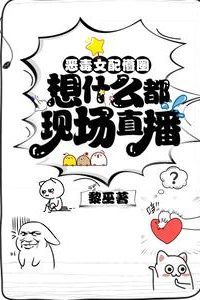
Jiang Ling awakens in 1983 China, having transmigrated into the body of a young woman who just registered a marriage with Song Guanshu. She quickly realizes she has inhabited the role of a villainess from a novel she previously read. In that story, the original Jiang Ling was a manipulative antagonist who sought to sabotage the male lead, Xie Lang, by dating his unrequited love interest. The original character’s life ended in tragedy: Song Guanshu was executed, and Jiang Ling was left half-paralyzed after a violent encounter. Determined to avoid this cursed fate, Jiang Ling decides to treat the marriage as a transactional arrangement rather than an emotional bond. Song Guanshu, a handsome college graduate from a family with a problematic political background, is equally detached. He married Jiang Ling not out of affection, but to provoke Xie Lang and interfere with the male lead’s romantic prospects.

The couple’s dynamic is defined by mutual performance. Song Guanshu maintains a facade of a devoted husband, going so far as to buy roasted sweet potatoes and offer gentle concern, but his actions are calculated displays rather than genuine care. Jiang Ling sees through his act and responds with pragmatic indifference. Their first outing ends in a bicycle accident, during which Song Guanshu serves as a human cushion, an act that Jiang Ling interprets as further evidence of his performative nature. Upon returning to the Jiang family compound, they face immediate hostility. The Jiang family is large, cramped, and deeply patriarchal. Jiang Ling’s father, Jiang Zhifu, is a violent man who controls his wife and children through intimidation. Her mother, Sun Yilan, favors her sons, particularly the eldest, Jiang Liwen, who has just married Zhao Hongyun. The family’s resentment toward Jiang Ling stems from her refusal to sacrifice her comfort for them, specifically her demand to move out of the living room to allow her brother to study.

Tensions escalate when Jiang Ling reveals her marriage to her family. Her father is furious, not only because she married without his approval but because Song Guanshu’s poor family background disqualifies him as a suitable son-in-law. Jiang Zhifu had hoped Jiang Ling would marry into a powerful family to elevate the household’s status. The confrontation turns violent when Jiang Zhifu attempts to strike Jiang Ling’s eldest sister, Jiang Lian, for defending her. Jiang Ling threatens to expose her father’s domestic abuse to the factory authorities, forcing him to back down. In retaliation, Jiang Zhifu orders everyone out of the house. Jiang Ling, prepared for this outcome, moves into the factory staff dormitory with Song Guanshu, severing her dependence on the family.

At work, Jiang Ling faces harassment from Deputy Section Chief Wei Ming, a relative of the factory director who uses his position to sexually harass female subordinates. He attempts to grope her under the guise of reviewing her work, but Jiang Ling deflects his advances by threatening to report his discriminatory hiring practices to the Women’s Federation. This incident highlights the precarious position of women in the workplace during this era, where professional advancement is often tied to personal subservience. Meanwhile, Xie Lang, the male lead of the original novel, remains unaware of the depth of Jiang Ling’s transmigration. He continues to harbor feelings for her, viewing Song Guanshu as a rival. Song Guanshu, aware of Xie Lang’s affection, uses his marriage to Jiang Ling as a tool to torment the male lead, creating a complex triangular tension that drives the narrative forward.

Jiang Ling’s primary goal is survival and autonomy. She navigates the hostile environment of her natal home and the predatory workplace with calculated detachment. She secures her housing through the factory logistics department, ensuring she has a place to live independent of her family’s control. Her relationship with Song Guanshu remains a cold partnership; they cooperate to maintain appearances in public while avoiding genuine emotional entanglement. However, Song Guanshu’s true intentions remain opaque. While he acts as a villain in the context of the novel’s plot, his interactions with Jiang Ling suggest a complexity that goes beyond simple malice. He protects her from her father’s violence and supports her move to the dormitory, actions that hint at a potential shift in their dynamic. Jiang Ling must remain vigilant, balancing her desire for a quiet life against the forces of fate and the manipulative schemes of those around her.

The story explores themes of gender inequality, familial duty, and social mobility in 1980s China. Jiang Ling’s transmigration allows her to critique the oppressive structures she inherits, from the patriarchal family unit to the corrupt workplace hierarchy. Her resistance is not overt rebellion but strategic navigation. By refusing to play the role of the submissive daughter or the tragic villainess, she carves out a space for herself. The narrative tension arises from the uncertainty of whether she can maintain this independence in a society that offers few options for women who defy convention. As she settles into her new life in the dormitory, Jiang Ling prepares to face the challenges ahead, knowing that her past as a transmigrator gives her knowledge but not immunity from the dangers of her new reality.

Latest Release
DateGroupRelease
2026-08-11shanghai fantasy c174
2026-08-11shanghai fantasy c173
2026-08-11shanghai fantasy c172
2026-08-11shanghai fantasy c171
2026-08-11shanghai fantasy c170
2026-08-11shanghai fantasy c169
2026-08-11shanghai fantasy c168
2026-08-11shanghai fantasy c167
2026-08-11shanghai fantasy c166
2026-08-11shanghai fantasy c165
2026-08-11shanghai fantasy c164
2026-08-11shanghai fantasy c163

Community Reviews

Rating(4.2 / 5.0, 18votes)
5 stars
7(39%)
4 stars
7(39%)
3 stars
4(22%)
2 stars
0(0%)
1 stars
0(0%)

Popular reviews

... Read More
Can we just appreciate how sharp Jiang Ling's dialogue is throughout this entire passage? She doesn't raise her voice once, but every line lands like a punch. When she tells Jiang Liwen to move into the living room, she does it with this fake sweetness: 'I'm doing this for the sake of the child. What if the two of you, young and full of energy, did something that affected the baby in her belly?' She says it so casually, like it's the most normal thing in the world, and then watches everyone else squirm. And her internal monologue is even better—'Talking about sex before marriage is shameless? But you and Zhao Hongyun already made a child before tying the knot.' The woman is silently screaming this while keeping a perfectly straight face. Even Jiang Liwu has a distinct voice. His scratchy, voice-changing teenage energy comes through in lines like 'Third Sister, you're acting a little strange today' and his pragmatic calculation about whether to fight for his dad's job or aim for college. The dialogue here isn't just functional—it reveals power dynamics, hidden resentments, and the unspoken rules of this family. Every character speaks differently, and you can tell who's performing and who's being real just by how they talk.
... Read More
Let me just say this about Wei Ming: the man is a walking red flag with a title. He's been circling Jiang Ling for two years, using his position to manipulate her living situation, dropping hints about housing allocation to keep her single and dependent, and then has the audacity to be confused when she doesn't fall for it. "Why is her heart made of iron?" he wonders. Bro, she's not a vending machine. But here's where it gets genuinely tense—Jiang Ling knows exactly what she's dealing with. She's read this story before. She knows Song Guanshu's true nature. She knows Wei Ming's intentions. And she's playing a dangerous game where one wrong move could cost her everything. The stakes aren't just romantic rejection; they're about survival in a system designed to crush women like her. When she forces Wei Ming to go to Logistics with her, she's not being greedy—she's using his connections because she knows the system won't help her on her own. The housing subplot isn't filler; it's the entire economic reality these characters live in. Three generations in one room. Ration coupons. Mother-in-law wars. Every conflict in this book is layered—surface level it's about romance and office politics, but underneath it's about who controls resources and who gets crushed when they don't. And Song Guanshu? His willingness to play along is both a shield and a threat. He could expose her scheme or protect her. The ambiguity is what keeps you up at night.
... Read More
I've been thinking about the spatial politics in this text, and it's actually incredibly rich. Let's start with the family home. It's described as having terrible atmosphere, with Jiang Liwu "not even daring to breathe too loudly" after Jiang Ling leaves. The home—a place that should provide safety—is where the most dangerous dynamics play out. The father's rage is implicit, unshown, but its effects are everywhere. Jiang Ling's slap mark is the physical evidence of this violence, and Jiang Lian's need to hide it from her in-laws shows how family reputation is policed. Then there's the dormitory. Eight people per room, tight space, unfamiliar faces. But here's the interesting part: "Staying in the dorm wasn't as free as being at home, and yet, strangely, sleeping in a room with five unfamiliar female workers made her feel a kind of privacy." This is such a powerful observation. The family home, despite being private space, offers no emotional privacy—you're constantly performing, constantly managing everyone's feelings. The dormitory, despite being shared physical space, offers emotional distance. You can be yourself when nobody knows your history. The Accounting Section office is mapped with the precision of a power grid. The radiators near the windows belong to the section chiefs. Jiang Ling sits by the door where "cold drafts constantly blew in." Her hand is red from the chill. This isn't accidental description—it's the physical manifestation of her position in the hierarchy. She's at the margins, both literally and figuratively. The file cabinet key, which should belong to the deputy section chief, ends up in her drawer because she's the only one who uses it. Responsibility without authority. Labor without recognition. The radio Wei Ming brings in is another symbol. He claims it's to "enrich the Accounting Section's leisure time," and everyone enjoys it except Jiang Ling, who can only toil away. It's a symbol of false benevolence—the thing that appears to benefit everyone actually reinforces the hierarchy, because those in power get to enjoy leisure while others work. And the gifts— the oranges and malted milk powder that are returned. Gifts are supposed to create bonds, obligations, reciprocity. By returning them exactly as given, Jiang Ling refuses to enter into that economy. She's saying: I don't owe you, and you don't owe me. We are not connected through transactional kindness. The text is really about who gets to occupy space, who gets warmth, who gets to sleep peacefully, and who has to perform happiness while shivering by the door.
... Read More
I keep coming back to the housing subplot and how it's not just background detail—it's the entire metaphor for the novel. In this world, your living situation determines your social standing, your marriage prospects, your freedom. Wei Ming dangles the promise of a bigger apartment to keep Jiang Ling dependent. He literally ties her marital timeline to square footage. And the factory director's brother-in-law status gives him the power to announce plans that haven't even been approved yet, creating hope that becomes a weapon. But the real symbolism hits harder with the malted milk. This expensive treat, bought specifically for family visits, hoarded in the office because no one would buy it for themselves—food as currency, as gesture, as something withheld and then offered conditionally. Song Guanshu keeping a full can at home that he hasn't given up on? That's not just romance. That's persistence dressed as generosity. Even the mother-in-law subplot with Yu Jiafeng reinforces this—three people in one room, generational conflict born from scarcity, the old matriarch demanding service because she has no other power. Every relationship in this novel is mediated by space and resources. You don't just love or hate someone; you love or hate them within the constraints of who controls the keys to the apartment. The factory isn't just a workplace—it's a microcosm of the entire society, and housing allocation is the mechanism of control.
... Read More
Let me just say this upfront: the dialogue in this text is genuinely excellent, and Jiang Ling's voice is the standout. Take this exchange with Wei Ming. He tries the classic manipulator script: "How could I not [trust you]? When we were hiring, you actually didn't quite meet the Accounting Section's requirements... I thought you were a promising girl. I took a lot of pressure to bring you in." This is supposed to create obligation. This is supposed to make her feel grateful, indebted, soft. And what does she do? She scrunched her nose and said, "The factory leadership discriminates against women? I'm going to report them to the Women's Federation. Deputy Section Chief Wei, please help testify for me. Let's go together to the Women's Federation. You're an upright and honorable person, so be sure to tell the ladies there the truth. Tell them exactly which leader discriminated against us female comrades!" I literally laughed out loud. This is comedy gold. She takes his exact words, isolates the one piece of information that could get him in trouble, and weaponizes it with such earnest enthusiasm that he can't even respond. He's left raising his hand to his forehead in exasperation because he never expected the one thing she'd latch onto was the discrimination claim. Jiang Lian's voice is completely different. She's the peacekeeper, the mediator, the one who says things like "Listen to your big sister, go back and yield a little to him, and everything will be fine." Her dialogue is full of hedging, of softening, of trying to make everyone comfortable. Even when she's threatening Song Guanshu, she immediately covers it with "My big sister's just joking with you." The narrative voice itself is interesting too. It's third-person limited, mostly following Jiang Ling's perspective, but it occasionally dips into other characters' thoughts—like when we get Song Guanshu's experience of having his gifts returned, or Jiang Lian's reflection on Jiang Ling's ability to sleep through chaos. This selective omniscience gives us emotional depth without losing intimacy. There's also the workplace dialogue—the radio-playing, the sweater-knitting, the casual sexism disguised as camaraderie. Wei Ming's public praise of Jiang Ling that immediately makes everyone else hostile toward her is a perfect example of how dialogue can do double duty: it sounds friendly on the surface but creates conflict underneath. And the humor! The author doesn't take themselves too seriously. Lines like "Jiang Ling looked up at the sky in speechless exasperation" and "This man's intuition was frighteningly sharp" show a narrative voice that's aware of the absurdity of the situations it's describing.
... Read More
I laughed out loud at this line: "In the new society, the people are the masters of their own country. There are no slaves. Everyone is an independent individual. No one belongs to anyone else. If you really want to say something, then I'm the successor to socialism!" Wei Ming tries to sound bold and imposing, and Jiang Ling completely derails him by turning his own words into a political minefield. This author has such a sharp ear for how people actually speak in this setting—the bureaucratic language that doubles as social manipulation, the way compliments are really tests, the way silence can be more threatening than any argument. Wei Ming's dialogue is always performative. He's never just talking; he's positioning himself, testing boundaries, seeing how much he can get away with. "I'll go talk to your parents' supervisors" sounds helpful but it's control. "It would be better to wait a couple of years before considering marriage" sounds caring but it's ownership. And then there's Song Guanshu, who speaks in this deceptively gentle register that makes every word feel calculated. His offer to help Jiang Ling with any trouble in the Accounting Section sounds warm but the narration tells us his true nature is the opposite. The dialogue does such incredible double duty here—surface meaning and hidden meaning running simultaneously. Even the casual office gossip about Yu Jiafeng and her mother-in-law feels like it's building a world where everyone is performing some version of themselves just to survive.
See all reviews

Characters

See all characters

Custom lists

See all custom Lists