Summary

... Read More

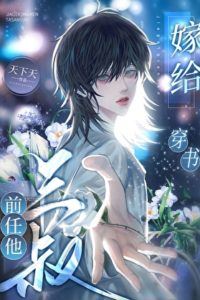
Lin Ji, once a ruthless villain in the cultivation world, dies and finds his soul trapped in a dark void for decades. There, he reads the text of his own life story, an online novel titled "Little White Cultivator," until he comprehends its entirety and awakens. A literary spirit reveals that his world is a fictional narrative and that he is destined to be a tragic supporting character who obstructs the protagonist, Lu Xiaobai, only to meet a gruesome end. Granted a second chance, Lin Ji is reborn into his younger body at the beginning of the story's timeline, retaining his memories and knowledge of future events. He possesses the North Sea Jiao Pearl, a treasure that caused his family's destruction in his previous life when a righteous sect leader murdered them to seize it.

Determined to alter his fate, Lin Ji does not seek to join a major sect immediately. Instead, he travels to the remote Qi Ling Sect, the humble precursor to the powerful Lingyun Sect, where the man who killed his family currently resides. Disguising his intent, he infiltrates a gathering of the sect leader and his disciples. Rather than engaging in a direct confrontation, which he would likely lose due to his weakened state, Lin Ji uses arsenic and rat poison to incapacitate the cultivators. He then executes the sect leader, using the Jiao Pearl's demonic energy to torment him before delivering the final blow. After destroying the pearl to prevent it from falling into the hands of the protagonist or others, Lin Ji feels a sense of liberation but also emptiness, as his primary motivation for revenge has been fulfilled.

Seeking a quiet life away from the cultivation world's conflicts, Lin Ji attempts to live as a mortal, traveling and enjoying leisure. However, his path crosses with Lu Xiaobai, the story's protagonist, who is currently a weak and naive youth with a mixed spiritual root. Unaware of Lu Xiaobai's true identity, Lin Ji helps him fend off bullies and later encounters him again at a casino where Lin Ji dispels a rat demon. Their paths cross once more when Lin Ji is recruited by the Peifeng Sect. To his dismay, he discovers that Lu Xiaobai is also admitted and has already become the personal disciple of Meng Wanqiu, the Lingyun Zunzhe who was destined to be Lin Ji's master in his previous life.

Lin Ji decides to remain within the Peifeng Sect to undermine the protagonist. He reveals his top-grade heavenly spiritual root during the assessment, shocking the elders and drawing the attention of Meng Wanqiu. Despite Lu Xiaobai's protests and feigned jealousy, Meng Wanqiu chooses Lin Ji as his new disciple, fulfilling a promise from Lin Ji's past life. Lin Ji moves into Luoxia Peak, living alongside Lu Xiaobai. He observes the protagonist's daily life with confusion and resentment, noting that Lu Xiaobai lacks talent and effort yet receives generous gifts and care from their master. Lin Ji resolves to seize Lu Xiaobai's opportunities and ultimately defeat him, even contemplating the possibility of killing the protagonist to break the narrative's control. The story ends with Lin Ji plotting his next move while maintaining a facade of a junior brother, setting the stage for a conflict between the reborn villain and the destined hero.

Latest Release
DateGroupRelease
2026-08-11shanghai fantasy c26
2026-08-11shanghai fantasy c25
2026-08-11shanghai fantasy c24
2026-08-11shanghai fantasy c23
2026-08-11shanghai fantasy c22
2026-08-11shanghai fantasy c21
2026-08-11shanghai fantasy c20
2026-08-11shanghai fantasy c19
2026-08-11shanghai fantasy c18
2026-08-11shanghai fantasy c17
2026-08-11shanghai fantasy c16
2026-08-11shanghai fantasy c15

Community Reviews

Rating(4.3 / 5.0, 28votes)
5 stars
13(46%)
4 stars
10(36%)
3 stars
5(18%)
2 stars
0(0%)
1 stars
0(0%)

Popular reviews

... Read More
The dialogue in this section is genuinely funny and I wasn't expecting that. Lu Xiaobai's voice is so distinct — he's got this easy, almost childlike warmth that somehow coexists with the fact that he's a cultivation genius who swept an entire peak by himself as mental training. The scene where he leans in and asks about the cooking, gets pushed away, then later comes back with the three-bowls joke — that's such a specific kind of humor. It's not slapstick, it's the humor of someone who genuinely doesn't understand social boundaries because he's either too pure or too calculating (and honestly I can't tell which at this point). Lin Ji's responses are perfectly deadpan. "We're not that close, so there's no need to be so familiar." "Average." The man is trying so hard to maintain this cold transmigrator persona and Lu Xiaobai just keeps dismantling it with sunshine and questions about his eating habits. The narrative voice also deserves praise — it slips into Lin Ji's internal monologue seamlessly, especially the bitter self-awareness when he thinks about how all the artifacts and opportunities in this world seem designed for the protagonist. That line about the world being 'constructed from stories' had me laughing and cringing at the same time.
... Read More
There's this one image that keeps coming back to me. Lin Ji watching Lu Xiaobai try to light a fire, failing, getting covered in soot, and then Lin Ji himself — with a flick of his fingers — ignites the stove effortlessly. But he doesn't help. He just watches. He lets the protagonist struggle. "Lin Ji looked at him speechlessly, feeling a bit disillusioned with the Dragon Ao Tian." Disillusioned. That's the key word. This isn't just about cultivation talent. This is about the entire philosophy of hard work versus destiny. Lin Ji spent his first life working hard, following the rules, believing that effort equals reward. He reincarnated with knowledge, with experience, with every advantage — and he's still losing to someone who can't even light a fire without help. The smoke from the kitchen is a perfect symbol here. It's everywhere, choking, obscuring. Lin Ji is breathing it in, and it's slowly poisoning his worldview. By the end of these chapters, he's not just jealous — he's philosophically unhinged. If the world is this unfair, if the protagonist succeeds through luck and generosity rather than effort, then what was the point of his first life? What's the point of any of it? "Even if the protagonist died and the world collapsed, he would still gain." This is nihilism wearing the mask of strategy. Lin Ji isn't killing Lu Xiaobai because he's evil — he's killing him because he can no longer believe in any other system of meaning.
... Read More
The inner sect competition scenes in this chapter are genuinely cinematic. Let me paint you a picture: On one side, you have Lin Ji — blank expression, cold gaze, opponents feeling uneasy before the fight even begins. The text says it perfectly: "Did I offend him?" That's the kind of atmospheric detail that makes you feel the tension in the arena. He's a force of nature wrapped in silence. On the other side, you have Lu Xiaobai getting knocked off the stage repeatedly. "His low spiritual power made it impossible for him to form a protective shield, and he was beaten as if he had undergone a full-body massage." The author's choice to describe it almost comically while simultaneously making you feel the tragedy of his situation — this is masterful scene work. And then there's Meng Wanqiu watching both of them, his smile freezing when he sees Lu Xiaobai get beaten. The visual contrast between the two disciples playing out in real time is something I wish more novels did. You can literally SEE the master's internal struggle. The setting itself — the draw-based ranking competition versus the challenge matches, the elders observing from above, the outer sect disciples clamoring for guidance — all of it creates this living, breathing world where cultivation sects operate almost like schools with their own politics, economy, and social hierarchies. Lu Xiaobai's little table set up outside his cave with gold and silver ingots being passed around? That's worldbuilding through character action, not exposition dumps. The fact that he's trading knowledge for worldly currency in a world where that's supposedly rare? That tells you everything about the Peifeng Sect's culture.
... Read More
Okay, I need to talk about the moment Lin Ji just… tosses the North Sea Jiao Pearl off the mountain. Like, casually. After everything. His whole motivation in the previous life was that pearl, that treasure his family died for, and he just… lets it go. No dramatic speech, no lingering look back. Just *hurl*. "I had indeed done many regrettable things, but some grudges, even if given a hundred chances, he would still seek revenge!" That line absolutely wrecked me. It's not about the pearl anymore. It was never about the pearl. It was about justice. It was about the white-clad immortal who looked at him like he was nothing and called him an ant. And now Lin Ji is standing there, at the foot of the mountain that will become the Lingyun Sect, ready to rewrite every single wrong. What got me though was the quietness of it all. His mother gave him that pearl in her final moments, saying it was the last thing his father left, that he must not lose it. And now he's throwing it away like it's nothing. Not because it's nothing — because carrying it was carrying the weight of his old life, the life where he was powerless, where he ran for a day and a night and still got caught. This is him saying: I don't need this anymore. I am not that powerless child. And then the way he speaks to the literary spirit — that smirk, that cold curiosity when he asks if killing it would end everything — there's this loneliness underneath all of it. Decades trapped in a dark void, reading the same story over and over until the words meant nothing. He's seen his own life laid out like text on a page, and instead of breaking down, he just… laughs. That laugh when he's standing on the eaves, looking down at the sect leader who destroyed his family and trying to sell him a story — the satisfaction on his face, the blood moon overhead, the sword in his hand. He's not a good person. He literally says so. But God, was it cathartic.
... Read More
Let's be real for a second — Lin Ji just killed a sect leader with HEAVENLY LIGHTNING. He crushed a world-class treasure. He settled his revenge. He should be celebrating. He should be triumphant. Instead, he's sitting under a tree, sighing, wondering what to do with the rest of his life. That's the conflict the author is playing with here, and it's brilliant. The external conflict is OVER. The Qi Ling Sect leader is dead. The Mermaid Pearl is destroyed. The Lin family's debt has been collected. But the INTERNAL conflict — the one about purpose, meaning, identity — is just beginning. And honestly? That's way more interesting. In his previous life, Lin Ji's conflict was clear: survive, cultivate, surpass the protagonist, don't let him take everything. It was a life-and-death struggle with a visible enemy. But now? Now the enemy doesn't exist anymore. Or rather, the enemy was never a person — it was a narrative. It was the idea that his life had to follow a certain path, that he had to compete, that he had to win. The stakes have shifted from 'will he survive' to 'will he find something worth living for.' And that's a much harder question to answer. Because you can't just punch your way out of existential dread. You can't summon a spiritual sword and defeat the meaninglessness of existence. What's terrifying about Lin Ji's situation is that he's aware of it. He KNOWS he's in a story. He KNOWS about the protagonist, the aura of destiny, the predetermined plot. Wen Ling told him he could break free and choose his own life. But choosing is harder than following. Following has rules. Choosing doesn't. And yet — and this is the part that keeps me up at night — he's trying. He's riding west. He's selling properties. He's tasting food. He's watching gamblers. He's living. Maybe that's the real conflict: not whether he can escape his destiny, but whether he can find joy in a life that isn't defined by struggle. Can a man who spent his entire existence fighting learn to just... be?
... Read More
The blood moon. Three days. It hangs over the entire story like a threat, and I think it's doing so much more than just setting the mood. In Lin Ji's first life, the blood moon was the night his family died. His mother pressed the North Sea Jiao Pearl into his hands as the sky turned red, and he ran until his lungs burned. The moon was a witness to his powerlessness — an ant crawling away from immortals who could crush him without noticing. In this life, he deliberately times everything for the last night of the blood moon. He brings the Qi Ling Sect leader and his disciples to the edge of celebration — moonlight, tea, dried fruits, stories of travel — and then he drops in like a ghost from their worst nightmare. The blood moon becomes something else entirely. It's no longer just a marker of tragedy. It's a backdrop for reckoning. "It was said that the blood moon would last for three days; he had deliberately timed it for the last night, bringing them an extra surprise at the moment when everyone was the happiest." There's something almost poetic about that. The moon that once symbolized his suffering now symbolizes his agency. He's not running anymore. He's the one setting the terms. And the pearl itself — the North Sea Jiao Pearl, containing the cultivation of the Jiao people, coveted by sects and emperors alike — it's this object that destroys families and corrupts cultivators. It represents everything the cultivation world claims to stand above: greed, obsession, the belief that power justifies murder. Lin Ji throwing it away is him rejecting the entire system that consumed his family. He doesn't need it. He never did. The real power was always in his own hands. The literary spirit calling him the "tragic male supporting role" also feels symbolic. It's the voice of the narrative itself, the system that tried to contain him. And he breaks free from it. The whole setup — a world that's actually a story, a character who becomes aware of his own fiction — is a meditation on free will versus determinism. Is he truly choosing his path, or is he just following a different plot? Lin Ji's answer, I think, is: it doesn't matter. What matters is that he's awake.
See all reviews

Characters

See all characters

Custom lists

See all custom Lists