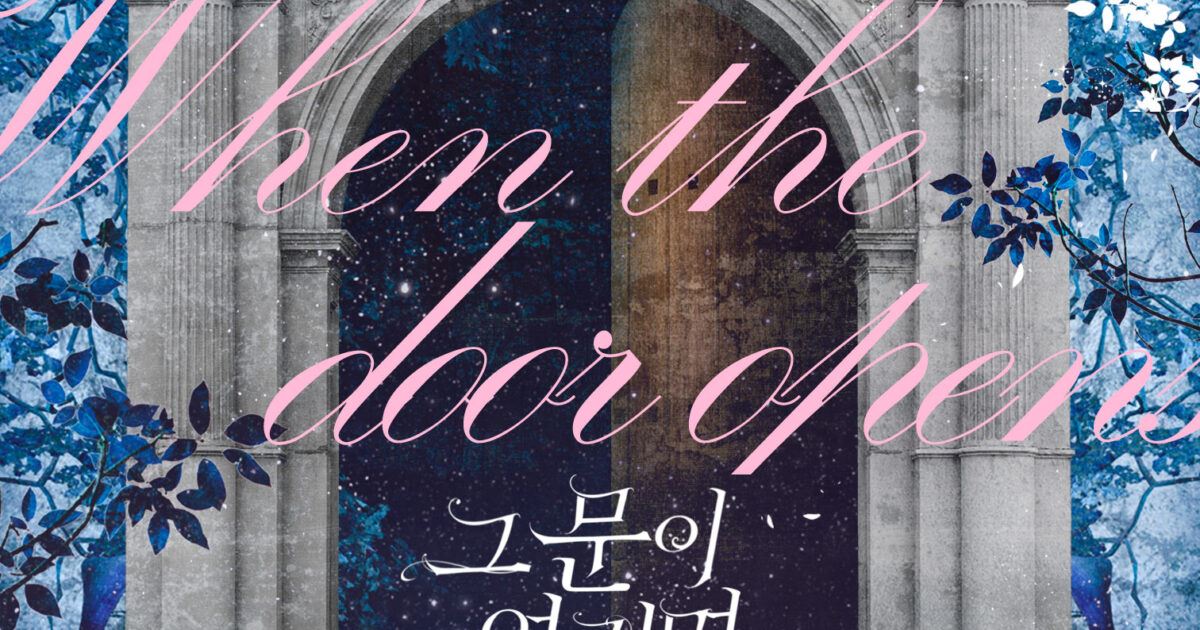
When That Door Opens
+Add to Custom List
Novel Info

Summary

... Read More

Yvonne is the daughter of a bar hostess and a merchant who abandoned them, growing up with the persistent warning from her dying mother never to live like her. Haunted by her mother's tragic love story, Yvonne dedicates herself to her trade as a seamstress, opening a modest clothing shop in the imperial city. She keeps her head down, rejecting the ambitions of nobility to avoid the pain of unrequited or class-stratified love. Her routine is shattered when Jerome, a mysterious and devastatingly handsome man with golden hair and blue eyes, enters her shop during a rainstorm, bleeding from a deep wound on his back. Despite his aloof demeanor, he captivates Yvonne, who tend to his injury with trembling hands. This encounter marks the beginning of a secret, illicit affair that persists for over a year.

Jerome visits Yvonne exclusively at night, always leaving before dawn under the pretense of demanding work obligations. He never reveals his surname, occupation, or family, leaving Yvonne in a state of blissful ignorance about his true identity. During the day, she lives a quiet life, occasionally receiving commissions from noble families but declining them due to fear of failure and social awkwardness. Jerome encourages her to take a commission from the prestigious Count Alpen family, unaware that this opportunity will unravel the secrets he has kept. Yvonne accepts the request and travels to the Count's mansion, where she meets the cheerful Young Countess Alpen. While there, Yvonne witnesses Jerome arriving at the noble residence, treated with immense respect by the household staff. The Countess casually reveals that Jerome is Jerome Edwin Lance, one of the three Dukes of the empire and a close friend of her brother.

The revelation devastates Yvonne. She realizes she has been intimate with a Duke while hiding his status, knowing nothing of his real life. Upon Jerome's return that night, she confronts him, binding his wrists with a lace ribbon in a fit of anger and betrayal. She strips away his illusions, taking dominance in their physical relationship to punish his deceit. However, Jerome's gentle apology and beautiful smile dismantle her rage, leading her to accept the hollow nature of their relationship once more. Shortly after, Jerome informs her he cannot visit for a while due to work. Yvonne later discovers the truth: Jerome is betrothed to Princess Amelia, the Emperor's only daughter. She overhears this while delivering the dress for the Countess, learning that the "significant event" was the upcoming royal wedding. The realization that she is merely a secret mistress to a man destined to become Imperial Consort shatters her.

Resolved to protect Jerome's reputation and avoid being a scandal, Yvonne decides to leave the capital permanently. She sells her belongings and prepares to move to a small town. On the night before her departure, Jerome visits her one last time, unaware of her decision. Yvonne gives him a white silk shirt she crafted, featuring a hidden embroidered dreamcatcher feather, a final gesture of her love and sacrifice. She bids him a silent goodbye, promising to wait even though she knows he will not return to her. The following day, the imperial capital erupts in chaos as news breaks that the Crown Prince has been dethroned due to illegitimacy, and Princess Amelia is declared the sole heir to the throne. Jerome stands faithfully by her side during the crisis. Yvonne reads the newspaper in the crowd, watching the parade that celebrates his elevation to Imperial Consort, knowing she has lost him forever. She folds the paper, clutching it to her chest, and walks away from the city she once called home, carrying only her memories and the bittersweet acceptance of her fate.

Latest Release
DateGroupRelease
2026-09-27citrus aurora c58
2026-09-27citrus aurora c57
2026-09-27citrus aurora c56
2026-09-27citrus aurora c55
2026-09-27citrus aurora c54
2026-09-27citrus aurora c53
2026-09-27citrus aurora c52
2026-09-27citrus aurora c51
2026-09-27citrus aurora c50
2026-09-27citrus aurora c49
2026-09-27citrus aurora c48
2026-09-27citrus aurora c47

Community Reviews

Rating(4 / 5.0, 44votes)
5 stars
16(36%)
4 stars
14(32%)
3 stars
13(30%)
2 stars
1(2%)
1 stars
0(0%)

Popular reviews

... Read More
Let me be absolutely clear about what's at stake here because people might miss it on a first read. On the surface, this is a romance between a noblewoman and a slave. Cute, right? Wrong. Terrifying is more accurate. She is marrying a man twenty years her senior who has killed or maimed over ten wives. That is not background detail—that is the looming threat that makes every sweet moment between her and Lakian feel like stolen time in a burning house. She knows this. The reader knows this. But the story makes you FORGET, and that's the genius of it. The warmth, the tenderness, the way he massages her arm and covers her with blankets—you get comfortable. And then WHAM. The Council scene arrives and reminds you that comfort is a luxury she cannot afford. Her internal conflict is almost unbearable to read because it's so simple and so impossible at the same time. She loves him. She wants to stay. But if she stays, she loses herself completely—not just socially, but emotionally. She becomes the woman who sneaks into a slave's room every night, living a double life that could destroy everything. And worse, if she's caught, the punishment wouldn't just be hers. Roman would kill Lakian. He already has, almost—the final scene shows him bloody and barely alive on the floor. The external conflict is the arranged marriage, the political pressure, Roman's return. But the REAL conflict is internal: she is fighting herself. Every day she visits him, she's choosing between her survival and her happiness. And the tragedy is that she thinks she can't have both. "I'm satisfied with my life as Astel. I want to keep living this way for a long time." She tells him this lie. But the reader understands—the real conflict isn't between her and Roman. It's between who she is and who she needs to be to survive. And Lakian? He's the only person who's ever seen the real her. Which is exactly why he has to leave.
... Read More
I need to talk about that pale-skinned slave because honestly he stole the scene. Like, Roman gets all the dramatic moments but this guy walks in, takes a brutal beating from the sculptor, doesn't even groan, and just keeps his head bowed like it's Tuesday. And then later he shows up at Astel's door with a bright expression to return her handkerchief? That contrast is everything. He's clearly experienced severe abuse — the scars, the conditioned response to violence, the way he doesn't flinch when struck — but he's also capable of warmth. Of gratitude. Of approaching someone who just yelled at him and instead of cowering, smiling and saying thank you. And Astel's reaction to him is so complicated. She sees her younger self in that slave and it breaks something open in her. She yells at the sculptor not just because she's angry — she yells because she's terrified. Terrified that watching this slave get punished is going to drag her back to being that powerless kid who couldn't protect anyone. So she destroys the sculpture. She kicks the pieces. She fires the man. It's impulsive and reckless and absolutely human. But then she can't stop thinking about him. She throws him a handkerchief like it's charity when really it's something else. She curses her own softness but can't help herself. And when he appears at her door at night, she's irritated — genuinely irritated — like his presence is an inconvenience. But she doesn't send him away. The dynamic between them is just raw potential. He survived Roman's world and kept his humanity. She's trapped in Roman's world and is slowly losing hers. There's this quiet recognition between them that hasn't been spoken out loud yet, and I am HERE for it. The way his blue eyes wavered when she threw him that handkerchief? Developer, what have you done to me?
... Read More
This book is RICH with symbolism and I'm still processing everything I caught on the first read. The dreamcatcher is the central symbol and it does SO MUCH work. Jerome gives it to Yvonne because of her nightmares — it's supposed to catch bad dreams and let good ones pass through. But functionally, it's become a replacement for Jerome himself. She looks at it every night and sees his blue eyes. It's a token of his presence in a bed he never fully occupies. The fact that the feathers are "the color of dawn" is ironically cruel — dawn is when he LEAVES, yet the object meant to protect her sleep is colored after the time of his departure. Then there's the flower metaphor — Yvonne comparing herself to a wilting flower while waiting for Jerome. This connects to the broader theme of women in restrictive circumstances, slowly losing their vitality while serving someone who can come and go as he pleases. The sheets she clutches "resembled withering petals" — she's literally grasping at something that's dying, and she doesn't even realize she's the one dying. The dress commission is another loaded symbol. Dressmaking is Yvonne's skill, her art, her potential independence. But it's also bound to the nobility — the very world that looks down on her. Accepting Count Alpen's commission means stepping into a space where she doesn't belong, where materials cost twenty times what she can afford, where one mistake is catastrophic. The dress becomes a metaphor for the life she's trying to sew for herself — beautiful, fragile, and one thread away from unraveling. And Jerome's words "I'd like to see you take the leap" — the leap toward what? Freedom? Success? Or away from him?
... Read More
Okay I need to sit down. The emotional tension between Yvonne and Jerome is absolutely suffocating in the best way. Let me start with Yvonne's relationship to her own desires—her mother's voice is basically the antagonist of her emotional life. 'Chasing empty dreams will only hurt you' was whispered into a child's ear, and now grown-woman Yvonne has walled off every part of herself that might want something dangerous. But Jerome sees through that wall instantly. The scene where he catches her looking at him in the mirror—she tries to escape her gaze, and he smiles anyway, a 'blue smile' as the text calls it, and she describes it as 'not just her, but anyone' would be mesmerized. That line hit me like a physical blow because it's the narrator admitting: this woman is in trouble, she knows it, and the reader knows it too. And then there's the flashback—the rain, the blood, the way she found him injured and couldn't walk away. 'Because it looked painful.' That's not just kindness, that's her heart speaking before her brain could stop it. She has spent her whole life following rules, and he is the one person who made her break them without even trying. The chemistry isn't in grand gestures—it's in the space between 'I told you this was unnecessary' and 'But I still made you wait.' Each line is a trap closing shut, and they both know it. God, I love this so much, and also I'm physically anxious for her.
... Read More
I have been emotionally compromised by this book and I need everyone to understand what Yvonne is going through. The scene where she's alone after Jerome leaves — just sitting there, touching the dreamcatcher, watching the predawn darkness — and she compares herself to a flower slowly wilting? I actually had to put the book down. That metaphor is DEVASTATING. "Realizing her fingers clutching the sheets tightly resembled withering petals, she forced herself to speak in a bright voice." SHE FORCES herself to sound cheerful when she tells him about the commission. She's hurting, she's lonely, and she's performing happiness so he won't feel guilty. That is not a healthy dynamic and I love her for it but also PLEASE someone take care of her. But here's what gets me — the sex scene isn't just hot (though it IS hot), it's emotionally loaded. Jerome is recreating their first night, saying the same things he said then. He's being tender AND possessive. He says "You're so beautiful" and then immediately follows it with marking her knee like he's claiming her. This man is ALL over the place emotionally and Yvonne is drinking it up because he's the only warmth she has. Then Jerome leaves, and she's lying there thinking "I'd like to see you take the leap" — his words echo in her head and her chest burns. She wants to leap too. She wants to grow. But every time she tries, she's also wondering when he'll come back to hold her. The emotional whiplash of this book is REAL. One moment I'm swooning over the romance, the next I'm crying for this woman who's slowly losing herself waiting for a man who can't commit to staying.
... Read More
Let me tell you about the pacing in these chapters because the author really knows how to control the rhythm. We start IN media res — literally in the middle of an intimate scene. No warm-up, no buildup, just Yvonne and Jerome in bed and we're IMMERSed. That's a bold opening choice and it works because the heat draws you in immediately. You're not wondering what's happening, you're just experiencing it. Then — and this is where it gets clever — the scene transitions from the bedroom to the predawn departure. The mood shifts from intense passion to quiet loneliness almost seamlessly. The sex ends, the breathing slows, and suddenly it's just Yvonne watching him dress. That contrast is BRILLIANT. The author doesn't need a chapter break to signal the shift; the emotion does the work. After Jerome leaves, we get this brief moment of Yvonne alone with her thoughts, then — bam — we cut to her on a carriage, accepting a commission. The time jump is clean. No unnecessary exposition. We learn about the Montmark Barony commission she turned down and the new Count Alpen letter through her internal monologue while riding. Efficient storytelling. The carriage scene builds tension slowly. First we see the grand mansion, then the butler's cold indifference, then she's left alone in a drawing room she doesn't belong in. Each beat raises the stakes: Can she handle this world? Will she embarrass herself? What does she stand to lose? By the end of the section, she's standing in a noble's mansion, terrified and awed, and the chapter essentially ends on a cliffhanger of sorts — she's about to meet the Count's family and we NEED to know what happens. The pacing from passion to vulnerability to anticipation is masterful. I stayed up way too late reading this batch.
See all reviews

Custom lists

See all custom Lists