When Regret Strangles Your Throat
+Add to Custom List
Novel Info
  • Author:
  • Status:Ongoing

Summary

... Read More

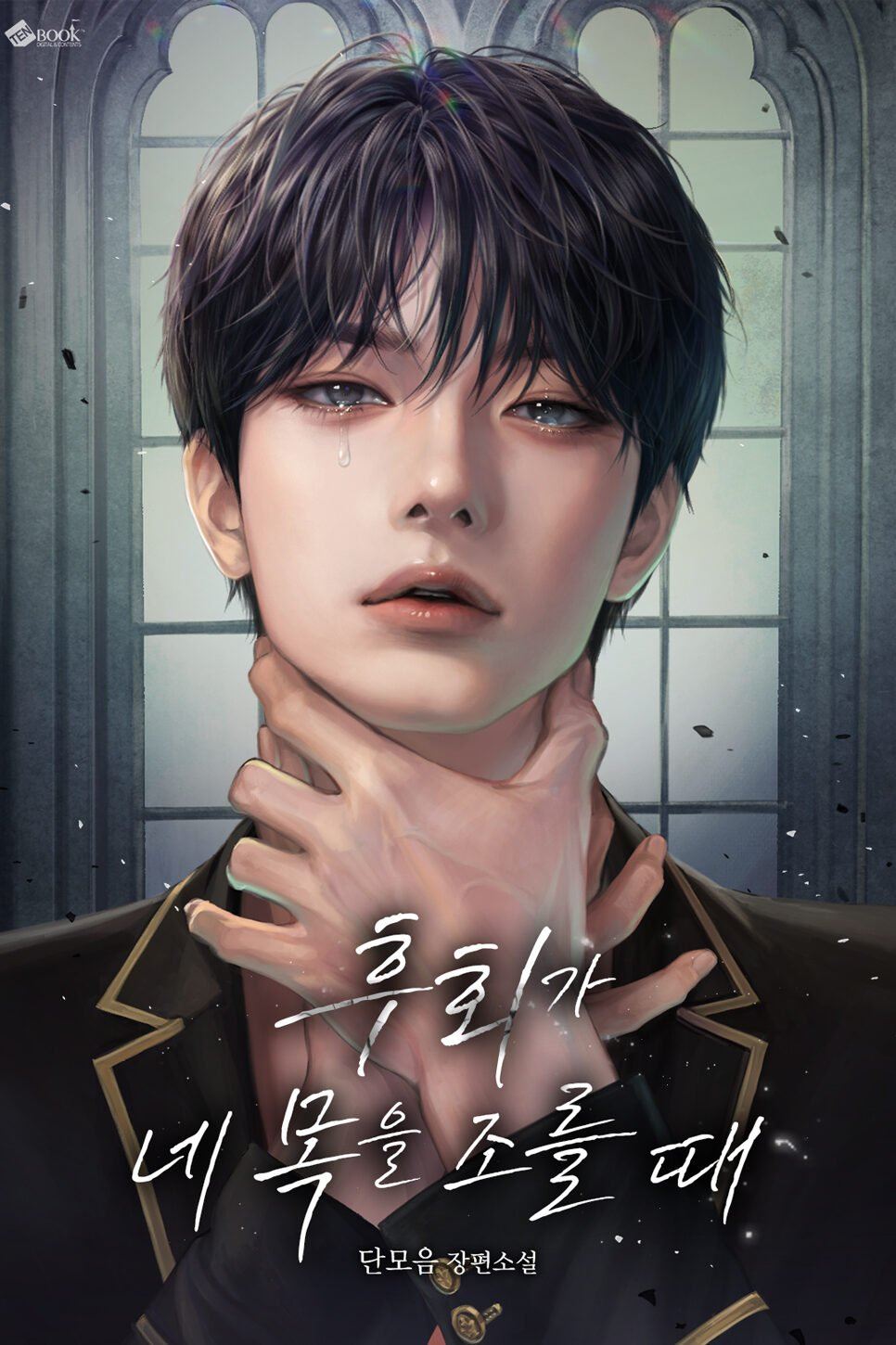
Jaina Ariel was a Saintess blessed with immense divine power, yet her life was defined by exploitation. Born from an affair between a priest and a saintess, she was secretly registered as the daughter of Patrick Ariel, a greedy merchant who viewed her power as a commodity. Her family forced her to hunt monsters and heal the sick, stripping her of all earnings and treating her with cold neglect. Seeking escape, she married Cadel de Edgar, the Grand Duke of the North, whose house possessed a unique black mana lineage. The marriage was intended to bind her divine power to his mana, protecting both from dark magic, but Cadel cared little for her affection. He spent rainy nights with Violet, the daughter of his late nurse, a arrangement Jaina had accepted to leave her abusive family. However, as her feelings deepened into love, her jealousy became unbearable. When Violet wore a ring set with a black gemstone that Cadel had commissioned in Jaina’s likeness, Jaina’s composure shattered. She struck Violet, leading to a confrontation where Cadel coldly blamed Jaina for ruining Violet’s reputation. Heartbroken and believing herself an obstacle to their happiness, Jaina retreated to the Grand Temple and exhausted her divine power into the Elim Tree, choosing death to end her suffering.

Upon opening her eyes, Jaina found herself back in her childhood, trapped in the same storage room and facing the same relentless cycle of abuse. Having retained her memories of her tragic death, she realized that endurance had only led to pain. Instead of submitting, she made the decisive choice to abandon her family. She fled into the Forest of Monsters, a place forbidden to humans, and sought out the legendary Village of the Spirits. There, she encountered Elysion, the Spirit of Light, who initially despised humanity but softened upon learning of her plight. Jaina began a new life in the village, farming the spirit-infused land and baking food that allowed the spirits to taste human cuisine. Through these acts, she earned the blessings of twelve spirits, gaining immense power and forming genuine bonds in a place free from the greed that had defined her previous existence.

Cadel, however, had also returned to the past with his memories intact. Tormented by the guilt of driving Jaina to suicide, he had sacrificed his own lifespan, accepting a divine curse, to rewind time and save her. He discovered the truth about Jaina’s false parentage and eliminated the priest who had stolen her, securing her freedom from her family before she even ran away. Upon learning that Jaina had disappeared, he tracked her down through the treacherous Forest of Monsters, emerging wounded but determined. When he found her in the Village of the Spirits, he confessed that he too had traveled back in time and vowed never to let her die again. He revealed that the Empire was in chaos: the Elim Tree was withering, all other Saintesses had lost their powers, and dark mages were ravaging the land. Jaina was the last Saintess capable of wielding divine power, making her return essential to restoring the protective barriers of the Empire.

Jaina faced a conflict between her desire for a peaceful life away from Cadel and her duty to protect the world. Elysion advised her that to preserve her divine power against the rising dark magic, she needed to marry a man of northern blood to activate the Symbol of Binding. Reluctantly accepting this fate, she agreed to return to the Grand Duchy with Cadel. As they traveled back, unresolved tensions resurfaced. Upon arriving at the castle, they were greeted by Violet, who continued her subtle dominance and hostility toward Jaina. Violet’s insistence on renovating the marital bedroom and her casual familiarity with Cadel reignited Jaina’s old jealousies and insecurities. Yet, unlike her past self, Jaina did not retreat into silence. She recognized Violet’s malice and asserted her status as the rightful bride, signaling a shift in their dynamic. Cadel, aware of Jaina’s internal struggle, attempted to protect her dignity while navigating the dangerous political landscape ahead. The story concludes with Jaina entering the castle, no longer the passive victim of her past life but a woman determined to survive and redefine her relationship with Cadel amidst the crumbling empire.

Latest Release
DateGroupRelease
2026-10-03dusk blossoms c72
2026-10-03dusk blossoms c71
2026-10-03dusk blossoms c70
2026-10-03dusk blossoms c69
2026-10-03dusk blossoms c68
2026-10-03dusk blossoms c67
2026-10-03dusk blossoms c66
2026-10-03dusk blossoms c65
2026-10-03dusk blossoms c64
2026-10-03dusk blossoms c63
2026-10-03dusk blossoms c62
2026-10-03dusk blossoms c61

Community Reviews

Rating(0 / 5.0, 51votes)
5 stars
0(0%)
4 stars
0(0%)
3 stars
0(0%)
2 stars
0(0%)
1 stars
0(0%)

Popular reviews

... Read More
I need to talk about Cadel walking into Jaina's bedchamber like HE has the right to question her about how she treated Violet. THE AUDACITY. This scene absolutely made my blood boil. She had every right to reprimand a servant who overstepped, and he shows up acting like SHE's the problem? His justification—"She has called me that for years. We grew up together—like siblings"—is so patronizing on multiple levels. First, Violet is FOUR YEARS OLDER than him, so calling her a child is absurd. Second, he's basically saying Jaina has no standing because she's common-born and only became Grand Duchess through divine power. OUCH. But what I love is how Jaina handles it. She doesn't break. She doesn't cry. She goes COLD. "If what displeases you is that I reprimand Violet, then simply remove her from my sight. It's a simple solution." And the line where she says she'll LEAVE for the Empire if he keeps treating her this way? She means it. The stakes here are huge—not just about Violet, but about whether this marriage has any real foundation. She's drawing a line and he's finally seeing it.
... Read More
What's fascinating here is how the narrative splits Jaina's present with Elysion almost entirely from Cadel's past-trauma-driven quest, then lets them press against each other like tectonic plates. On one side, we get this cozy, quiet arc of a girl learning to farm on spirit land, dealing with nosy spirits who apparently gossip about human food. On the other, Cadel is charging through rain and bureaucracy, extracting confessions from a corrupt father, his hands shaking because the weather triggers some dark PTSD. The tension between these two threads is what makes the chapter structure work so well—it's not a single rising action but a dual rhythm, one slow and warm, the other cold and urgent. The reveal that Jaina fled on her own volition changes everything about how we read her arc; she wasn't just rescued or saved, she made a choice. And the hint that she might have memories of a previous life too? That's the kind of twist that recontextualizes every interaction we've seen. The pacing in Cadel's section especially keeps you turning pages—he starts with confidence, demanding signatures, then cracks when the rain hits and we're reminded that beneath the duke's authority is someone barely holding it together.
... Read More
Okay, I need to talk about Jaina standing up to Violet for once because it felt SO satisfying. Remember how Violet spent all those chapters slowly eroding Cadel's affection toward Jaina? Lying about colors, manipulating situations, making Jaina feel like she didn't belong? And Jaina just took it? Well, chapter 60 flips the script HARD. Jaina looks at Violet and literally thinks ‘sometimes a person only understands the weight of their actions when they find themselves in the same position.' That's not just a line, that's the entire thesis of this whole arc. She deliberately excludes Violet from the greenhouse, strips away every advantage Violet thought she had, and walks away without raising her voice. The mirror moment was *chef's kiss*. But here's what really got me — Violet's reaction. She doesn't just get mad, she immediately starts plotting the rainy season trap. She knows Jaina won't confront Cadel directly because there's no love between them to give her courage. That calculation is terrifying and it sets up such a ticking clock. The plot just shifted from ‘passive jealousy' to ‘active sabotage with an expiration date.' I'm obsessed with where this is going. Also, the detail about the Elim Tree withering and saintesses losing their holy power in the supposedly “safe” Grand Temple — that's not just worldbuilding flavor, right? That's a plot bomb someone is about to step on.
... Read More
There's this one detail that's been sitting with me since I finished reading: Jaina wearing the crimson dress and Cadel saying "It suits you." In the previous life, Violet probably used this moment to plant seeds of doubt—telling Jaina that Cadel actually disliked red, making her feel ugly and unworthy. But he literally complimented her. So all that anxiety was manufactured by someone who wanted her small. I keep thinking about how color functions throughout this text as a kind of silent weapon. Violet weaponized fashion advice, weaponized jealousy, weaponized the idea that Jaina wasn't enough. And now Jaina is wearing red—a color of power, of defiance—and neither of them are playing by those old rules anymore. The rain-turned-to-snow thing is also symbolic on another level: something meant to be destructive (rain summoning the curse) being transformed by the spirits into something beautiful but equally cold. Nothing in this world is just what it seems. And Jaina's growing awareness of that—her dawning realization that she was being manipulated, that her suffering was engineered—that's the real thematic heartbeat of this section. She thought she was failing. She was actually being played.
... Read More
The dialogue in this excerpt is where the writing really earns its keep. Every conversation between Jaina and Elysion runs three levels deep. On the surface they're discussing farming schedules and whether corn was planted properly. Underneath, they're negotiating boundaries, proximity, trust. When Jaina points out that she doesn't know his name and he should stop calling her just 'human,' that's not small talk—that's her claiming reciprocity in a relationship where he holds all the power. His response, 'you seem worthy enough,' sounds arrogant but it's actually him carefully lowering a gate he's kept locked for centuries. Cadel's dialogue is a study in controlled devastation. 'Choose.' Two words that carry the weight of a courtroom verdict, a threat, and a plea all at once. He never raises his voice. He never loses his composure explicitly. But reading between the lines—and the text is generous with its subtext—you feel the man barely containing himself. Even his aide's frustration, muttered under his breath, gives us permission to feel what Cadel cannot express outright. The narrative voice itself is worth noting. It shifts register depending on whose perspective we're in. Jaina's sections feel softer, more observational, with sentences that breathe. Cadel's sections are tighter, more punctuated, almost clipped—mirroring his need for control in a situation spiraling beyond him. When the narration describes the rain triggering his tremors, it doesn't editorialize; it just states the physical fact and lets us sit with what that means. And the brief interior monologue about the curse—that's the most honest dialogue in the whole piece, even though it's unspoken. 'Living in a world without Jaina—that was the true curse.' Three sentences. Perfect.
... Read More
The symbolism in this text is running DEEP and I need to unpack it. First - the rain. The curse only strikes on rainy nights, and Cadel has to sleep with Violet during storms. Rain has always been symbolic of cleansing, rebirth, transformation. But here it's twisted into something destructive - it's the one thing that pulls Cadel away from his wife, that reinforces his connection to Violet while breaking his marriage. The rain isn't a natural occurrence; it's a weapon used against his relationship with Jaina. And Jaina? She's learning to walk through storms without needing anyone to hold her umbrella. Then there's the color red. Jaina chooses to wear crimson to breakfast the next day. A bold, defiant choice. In many cultures red symbolizes passion, danger, revolution. But here? It's also what Cadel associates with trauma from his past. By wearing red, Jaina is essentially saying 'I see your pain, but I refuse to let it control me anymore.' She's reclaiming the color that was meant to hurt him. That's such a powerful statement about agency and independence. The Elim Tree keeps coming up too. Jaina gave up her divine power to restore it in her past life, and it cost her everything. The tree represents sacrifice, yes, but also the cycle of giving until there's nothing left. Now she's choosing herself instead. The restoration of the tree mirrors her own restoration - both require her to stop pouring herself into something that will never love her back. And the separate chambers! Physical space representing emotional distance. But unlike typical romance where characters gradually close that gap, here the distance is exactly what Jaina wants. She's not trying to bridge the gap; she's building a wall. The architecture of the castle becomes a metaphor for the architecture of her new life. Violet's obsession with being 'Cadel's special woman' despite having no title? That's the theme of inherited worth versus earned worth. She clings to her status as nurse's daughter because it's the only currency she has. Jaina has no such crutches - she earned her position through sacrifice, and now she's choosing to walk away from it.
See all reviews

Custom lists

See all custom Lists