Summary

... Read More

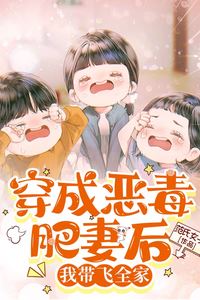
Ling Mo, a woman from Earth, transmigrates into the body of an eighteen-year-old orphan who inherited a vast fortune but suffered from severe autism and deep loneliness after her parents died in a plane crash. Upon reviewing the original owner's memories, Ling Mo resolves to live the girl's life well, treating it as a fresh start. Her initial hope for a carefree existence is shattered when she discovers a black jade bracelet that grants her a spatial dimension. Shortly after, she realizes the world is facing an impending apocalypse characterized by extreme heat, rendering her wealth nearly useless unless converted into survival supplies.

Recognizing the severity of the situation, Ling Mo liquidates her assets and spends two months abroad, purchasing weapons, gold, and essential goods to avoid suspicion. She returns to her home country, sells her secluded mountain villa, and buys a new residence in a secure, wealthy neighborhood. Utilizing her spatial ability, she stockpiles massive quantities of food, water, clothing, electronics, and transportation vehicles, including a motorhome and a helicopter. She also acquires various pets, including dogs for protection and cats for companionship, ensuring she is not alone in the coming disaster.

As temperatures soar past fifty degrees Celsius, a mechanical voice announces the start of a global survival game. Ling Mo is transported to the first dungeon, Liangchen Ranch on an interstellar planet. Her task is to work as a temporary employee for three days, completing chores such as cleaning cow dung, milking cows, and shearing sheep. While other players struggle with the physical labor, Ling Mo focuses on scavenging discarded items from the ranch's waste processing plants. She collects expired dairy products, wool, hides, bones, and broken machinery, storing them in her space. Her efficiency and unique behavior earn her the title of Outstanding Employee and a reward: an interstellar language learning device and three silver coins.

Upon returning to the real world, only five minutes have passed. Ling Mo soon experiences a high fever, which she recognizes as the sign of talent awakening. After enduring intense pain, she successfully awakens the Mental Power talent, which possesses a rare spatial attribute. This mutation allows her to expand her space with additional warehouses and control objects remotely. As the first player to awaken, she receives a special reward: a beginner-level shop and a Mental Comfort Elixir. She names her shop and begins listing interstellar items, including broken agricultural machines, for sale to other awakened players.

The world descends into chaos as more players awaken talents, leading to social unrest and government intervention. Ling Mo maintains a low profile, avoiding registration with authorities to preserve her independence. She continues to prepare for the next disaster, studying interstellar language and exercising her spiritual power to expand its range. The narrative establishes a dual timeline where Ling Mo balances survival preparation on her disaster-stricken Earth with participation in interstellar games that offer technological advancements and resources. Her goal is to survive the natural disasters and eventually help humanity connect with the broader interstellar civilization, using her hoarded resources and awakened abilities to secure a future for herself and her family.

Novel Items

More
Arcane Treasure
A high-quality jade bracelet won at an auction by the girl's father. When Ling Mo pricked her finger and blood dripped onto it, it activated a spatial ability. The bracelet disappeared, leaving only a faint mark on her wrist.
Arcane Treasure
Ye Wuyou's special spatial ability discovered after her powers awakened in the apocalypse. It contains supplies and a space beast named Youyou.
Materials
An Ruoyan used all her savings to buy gold in her previous life because it is hard currency. She planned to sell it when needed, even if she did not successfully transmigrate.
Item
Several hundred large water barrels, about ten liters each, purchased for water storage as backup despite having water in her space.
Materials
Includes biscuits, compressed biscuits, instant noodles, chocolate, canned food, and vitamin milk powder, stockpiled for the apocalypse transition period.
Materials
Common medications, medical masks, protective suits, goggles, cooling ointments, and aromatic digestive fluids purchased for health and safety during disasters.
Latest Release
DateGroupRelease
2026-08-11shanghai fantasy c104
2026-08-11shanghai fantasy c103
2026-08-11shanghai fantasy c102
2026-08-11shanghai fantasy c101
2026-08-11shanghai fantasy c100
2026-08-11shanghai fantasy c99
2026-08-11shanghai fantasy c98
2026-08-11shanghai fantasy c97
2026-08-11shanghai fantasy c96
2026-08-11shanghai fantasy c95
2026-08-11shanghai fantasy c94
2026-08-11shanghai fantasy c93

Community Reviews

Rating(3.7 / 5.0, 15votes)
5 stars
3(20%)
4 stars
5(33%)
3 stars
7(47%)
2 stars
0(0%)
1 stars
0(0%)

Popular reviews

... Read More
I need to talk about this one scene because it wrecked me. Ling Mo is going through the original girl's memories and she finds this deep, suffocating despair — the girl had contemplated ending her life before Ling Mo even arrived. And then she stands in front of the mirror and says: "I hope you can reunite with your parents over there." And she FEELS the reflection smile back. I literally paused reading and stared at my phone. That's the kind of moment that stays with you. It's not dramatic or overwrought — it's quiet, almost understated, which makes it hit harder. And then she follows up with "Since I'm using your body, I'll live it well for you." That's not just a plot device, that's genuine respect for the person whose life she's taken over. Most transmigrator protagonists just overwrite the original character like they never existed. But Ling Mo acknowledges her. She honors her. And honestly? That makes me care about this character in a way I didn't expect. She's not just a cold calculator with a space cheat — she has depth. She's processing grief, adapting to a new reality, and still finding the humanity to be kind to someone who's literally dead. The relationship between Ling Mo and the original body is the emotional backbone of this story and it's already stronger than most romance plots I've read.
... Read More
I cannot stop thinking about the waste processing plant. Like, most novels would describe a fancy ranch with green pastures and sparkling barns, but this one? This one sends you straight to the garbage dump on day one and honestly? It's more interesting. The description of the plant is so vivid I could smell it. The lanolin hitting your nose when you walk in. The fresh cow and sheep bones still carrying marrow. Those massive iron vats full of blood and hides and organ scraps. And the milk—bottles and jars stacked like treasure, smelling richer than anything on Blue Star, but obviously expired or near-expired because why would a ranch throw away good milk? There's this one moment where Ling Mo finds cheese shaped like a giant tire with a bright red stamp on it. She can't read the interstellar text but she GUESSES the red mark means failed quality control. And that guess tells you everything about this world. This is a place where food standards are so strict that substandard cheese gets thrown in the trash like it's nothing. A single cowhide is larger than five or six Blue Star cows combined. The sheep have wool so good you'd want to sleep on the animal itself. The contrast between the automated plant and the living ranch is also striking. Everything in the waste plant is mechanical—arms lifting wheelbarrows, machines burning wool, vats processing by-products. But outside, there are these enormous pregnant cows and horses of such fine breed quality that even a horse-naive person like Ling Mo can tell they're premium. The ranch is a world where technology and nature coexist in this weird interstellar version of agriculture. And the gray birds. Just appearing, landing on cows, communicating through gestures. No one explains where they came from or what they are. They just exist in this world like they always have, and that absence of explanation makes the world feel infinitely more real.
... Read More
The pacing here is deceptively simple. Three days. That's it. Three days at Liangchen Ranch, and the author manages to give each day a completely different rhythm and energy. Day one is pure exploration. Ling Mo arrives, gets assigned to collect cow dung, and discovers the waste processing plant by accident. The chapter moves at a curious, wandering pace—she's figuring out the rules, testing her space, learning what exists in this world. The gray bird appears, gives instructions, and disappears. Everything feels new and slightly disorienting, which is exactly how the reader should feel. Day two shifts into something more urgent. She's already found the plant, already knows the rules, and now she's on a mission. The milk, the cheese, the expired products—she's harvesting like a pro. The all-nighter sequence is where the pacing really picks up. She's caffeinated, exhausted, and running on fumes, stuffing things into her space with this manic energy. The robot appearing behind her adds a spike of tension right when she's most vulnerable. And then the blue drink arrives, she wakes up, and the day resets. Day three is where everything converges. She's milking cows with confidence now, watching other players fail, calculating her next moves. The robot takes her to the nursery and hands her an entire menagerie of sickly animals. The chapter ends not with a cliffhanger but with a quiet moment of satisfaction—five baby cows, twelve baby sheep, five foals, all disappearing into her space. What I love is how the author controls the reader's hunger through Ling Mo's hunger. She's always slightly tired, always slightly hungry, always one more discovery away from being fully satisfied. And the reader rides that wave, wanting just a little bit more from each day.
... Read More
I need to talk about this moment where Ling Mo eats a milk candy from the waste plant and the entire chapter just stops to savor it. She picks it up, unwraps it, pops it in her mouth, and the text just says: Two words: delicious! Three words: super delicious! That's it. That's the emotional peak of three days of dungeon survival. Not a dramatic confrontation, not a revelation about the game's true nature, but a girl eating expired candy and feeling pure, uncomplicated joy. And honestly? That's more powerful than any action scene could be. Because underneath all the strategy and resource management and near-death experiences with interstellar cows, this story is really about a girl who found something she loves doing. She didn't ask to be in this game. She didn't choose the ranch. But somewhere between the first wheelbarrow of dung and the last sickly foal disappearing into her space, she started enjoying it. The text says it explicitly: 'Gradually, she even found a bit of enjoyment in it. In fact, it was much more fun than picking up cow dung yesterday.' There's also this tender undercurrent whenever she looks at the animals. The pregnant cows, the grazing sheep, the horses of such fine quality. She wants them all. She wants to raise them, to keep them, to have her own flock. Every time she resists putting an animal in her space—'She had to resist'—it hurts a little. She's not just a player completing tasks. She's someone who genuinely loves animals and has to keep reminding herself not to take everything. The blue drink moment hits differently too. She's exhausted, she's been up all night, and this robot just... hands her something that makes her feel human again. 'Instantly, she felt completely refreshed, as if she had woken naturally from a deep sleep.' For three days she's been surviving on sour candy and iced Americano. That bottle of blue liquid is the closest thing to kindness she's received in this strange world.
... Read More
There's a reason this chapter opens with 60°C temperatures and closes with Ling Mo meditating in her space, and I think the author is building something deeper than just a survival story here. The heat is the most obvious symbol—it's not just a setting detail, it's the external manifestation of everything falling apart. The air conditioning fails, people riot, the government can't keep order, and the temperature keeps climbing. But Ling Mo's space? It's cool. It has running water, growing crops, friendly animals, and hatching eggs from another world. The space isn't just a plot device for storage—it's a literal Eden, a pocket of normalcy in a world that's losing its mind. And the mosquitoes! Think about how many times they're mentioned. "Because of the poisonous mosquitoes, Ling Mo insisted on wearing long sleeves and long pants even at home." Outside her space, the environment itself has become hostile—every breath of air could kill you, every puddle could breed death. But inside? The crops don't need pesticides. The animals are healthy. The eggs are hatching. The space is a microcosm of what the world *could* be if things weren't falling apart. Then there's the Blessed Gem—"Can nurture, hide, and protect spiritual power; a treasure for spiritual talent users." This item is basically a metaphor for Ling Mo's entire situation. She's hiding her power, protecting it, nurturing it in secret while the world burns outside. The gem is what she wishes she could be—safe, prepared, ready. The interstellar machines are another layer. They represent knowledge from another world entering this one. Ling Mo isn't just surviving—she's bridging two realities, bringing technology and wisdom from the game into a world that doesn't know it needs them yet. The fact that she's selling them under a fake name while the government scrambles to understand what's happening says everything about where true power lies in this new world: not in institutions, but in individuals who see coming. And the saplings—the Xisui Fruit and Yaoyao Fruit trees that have started to bloom. Bloom means fruit. Fruit means survival. It's the quietest symbol in the chapter, but also the most hopeful. While everyone else is looting malls and arguing on forums, Ling Mo's trees are just… growing. Patiently. Invisibly. The way real change happens.
... Read More
I have to talk about the dialogue in this section because holy shit, the author knows how to write chat conversations that feel REAL. Let's start with the Drunk Soy Sauce vs. 123 Wooden Man exchange. This is peak internet negotiation energy: [123 Wooden Man: Hello, we want to purchase more interstellar machines. The price is negotiable.] [Drunk Soy Sauce: No bargaining.] That's it. That's the whole vibe. Two words and you immediately know this is someone who's done this before and has zero patience. And then the Palace Jade Wine test—this is the funniest sequence in the entire chapter. Ling Mo throws out a price, 123 Wooden Man matches it instantly, then she does a math problem and he solves it in his head while his coworker has to pull out a phone. The coworker's reaction is everything: "Unlike before, when he spoke offhand, the other person paused for a moment, then quietly pulled out his phone, did the calculation, and got the answer: 460." I literally laughed. This is how real people talk online. No flowery prose, no dramatic narration—just numbers and prices and the quiet pride of someone who knows their math. The system's voice is also doing something really interesting. It's mostly emotionless—【Yes.】【No interest.】【I can authorize a 99% discount】—but that one moment where it says 【Wait.】 and the text specifically notes "Compared to its usual emotionless tone, it sounded noticeably anxious this time"—that's the author using the system's dialogue to show emotional shift without breaking character. Brilliant. And Ling Mo's internal monologue? "She wiped the nonexistent drool from the corner of her mouth." That's such a casual, funny beat in an otherwise serious chapter. It shows her personality—she's not a stoic protagonist, she's a person who still has human reactions even while trying to stay composed. The narrative voice itself is also worth noting. It's third-person limited, staying close to Ling Mo's perspective, but it doesn't get bogged down in description. Sentences like "Ling Mo sneered. Whoever wrote this banner must have an extreme case of delusions—they weren't ruling the world; more like leaving it" are sharp, witty, and completely in character. The author trusts the reader to pick up on tone without spelling everything out.
See all reviews

Characters

See all characters

Custom lists

See all custom Lists