Summary

... Read More

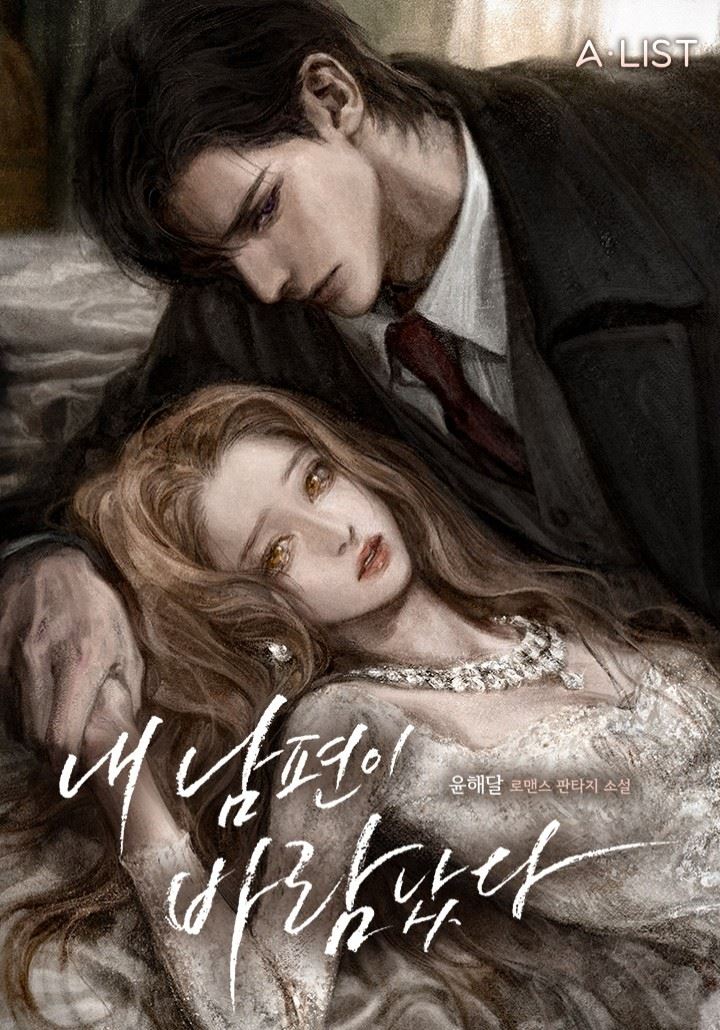
Winter Olivier marries Hayden Wolfhaze, a gentle and devoted CEO of a major department store, ascending to the title of Marchioness. Despite her husband's affectionate demeanor and his willingness to support her financially troubled family, Winter struggles with deep-seated insecurities rooted in her childhood. Raised in a chaotic household where she was often ignored and mistreated by her materialistic mother and unreliable brother, Winter craves validation and fears abandonment. Her marriage, initially perceived as a fairy tale by those around her, becomes a source of torment as she battles feelings of inadequacy and paranoia. The narrative introduces Eugene Felterwins, a childhood acquaintance from the mountains who has returned as the wealthy and enigmatic second son of the Duke of Felterwins. Eugene possesses a predatory nature that contrasts sharply with Hayden’s gentle disposition, yet he is the only one who recognizes Winter’s suffering and offers her raw, unfiltered honesty.

The core conflict emerges when Winter begins to suspect Hayden of infidelity. The suspicion is sparked not by concrete evidence but by subtle details: a misbuttoned shirt on a morning when he claimed to be busy, idle rumors spread by servants, and the presence of rare Delapo pearl earrings worn by Chloe Bennett, Winter’s closest friend and Hayden’s confidante. Chloe, a commoner turned successful actress, shares a history with both Winter and Hayden, creating a triangular dynamic that Winter finds increasingly suffocating. Despite her doubts, Winter attempts to suppress them, convincing herself that Hayden’s kindness is genuine and that her anxieties are merely products of her own insecurity. She relies on an anonymous note-exchange with a stranger through their cat, Mister Meow, to vent her confusion and loneliness, highlighting her isolation within her own home.

A pivotal turning point occurs at the final ball of the season, where Winter is reunited with Eugene. The encounter reawakens past memories and disrupts Winter’s fragile sense of stability. During the event, Chloe receives a threatening gift containing a dead mouse head, which is thrown at Winter, causing a public scandal. Hayden immediately prioritizes comforting the traumatized Chloe over attending to Winter, who is left shocked and emotionally distressed. Hayden takes Chloe home for the night, leaving Winter alone at the palace. Eugene steps in to care for Winter, helping her home and criticizing Hayden’s negligence. This incident shatters Winter’s illusion of her perfect marriage, forcing her to confront the reality that she is being treated as secondary to her husband’s old friend.

The aftermath of the ball leads to a direct confrontation between Winter and Hayden. Winter demands accountability for his emotional absence, pointing out that Hayden noticed her distress more readily than she did. She reveals that Eugene understood her pain better than her own husband. Hayden, defensive and confused, struggles to comprehend Winter’s accusations, viewing her jealousy as irrational given Chloe’s vulnerable state. However, the cracks in their relationship are now undeniable. Winter realizes that her husband’s gentleness may be a form of neglect, allowing her to exist in name only while his emotional and physical energy is directed elsewhere. The story moves toward a critical juncture where Winter must decide whether to continue enduring the role of a powerless marchioness bound by a restrictive premarital contract or to reclaim her agency, even if it means dismantling the life she has built.

As the narrative progresses, the tension between Winter’s loyalty to her husband and her growing dependency on Eugene intensifies. Eugene’s presence serves as a catalyst, challenging Winter’s passive acceptance of her circumstances. His acknowledgment of her worth contrasts with Hayden’s inability to see her pain, pushing Winter toward a potential divorce or separation. However, the binding premarital contract, orchestrated by Winter’s father, prevents her from leaving based on Hayden’s faults. This legal trap forces Winter to consider alternative, perhaps morally ambiguous, paths to freedom. The story ends with Winter standing at the precipice of a major decision, her trust in Hayden irrevocably broken, and her future uncertain as she navigates the dangerous intersection of her past with Eugene and her unhappy present with Hayden.

Latest Release
DateGroupRelease
2026-09-27citrus aurora c21
2026-09-27citrus aurora c20
2026-09-27citrus aurora c19
2026-09-27citrus aurora c18
2026-09-27citrus aurora c17
2026-09-27citrus aurora c16
2026-09-27citrus aurora c15
2026-09-27citrus aurora c14
2026-09-27citrus aurora c13
2026-09-27citrus aurora c12
2026-09-27citrus aurora c11
2026-09-27citrus aurora c10

Community Reviews

Rating(0 / 5.0, 21votes)
5 stars
0(0%)
4 stars
0(0%)
3 stars
0(0%)
2 stars
0(0%)
1 stars
0(0%)

Popular reviews

... Read More
There are SO many vivid scenes in this chapter I need to unpack. The opening image of Hayden and Chloe dancing is cinematic gold — "spinning and spinning, their circular steps scattered across the stage like falling petals." I literally saw this in my head like a slow-motion shot. The contrast between their radiant smiles and Winter standing alone with bitter champagne is devastating visual storytelling. Then the banquet hall itself transforms after the mouse incident. What a horrifying set piece: "On the fine marble floor of the palace, the scattered rose petals and the mouse's head looked like some grotesque ornament." The juxtaposition of something beautiful (rose petals) with something dead and disturbing (the mouse head) creates this unholy image that I can't unsee. The author uses the setting — the palace, the marble, the livery-clad attendants — to make the threat feel institutional, like the entire noble system is complicit in intimidating her. The private room afterward is chilling in its emptiness. "The atmosphere became strangely cold." She traces the remaining warmth on the sofa where Hayden and Chloe sat together. She sees herself in the mirror — "lips drained of color, cheeks ashen, hair disheveled" — and lets out a weak laugh at her own wretchedness. The mirror scene is one of those moments that stays with you. And Eugene finding her in the doorway, silhouetted, described almost like a mirage through her tears — "maybe because of my tears, the figure seemed almost like a mirage" — that visual is so haunting. By the time the tears stop, "the image became clear." The worldbuilding here isn't about castles and magic systems. It's about how physical spaces mirror emotional states. The ballroom of performative happiness, the marble floor of public exposure, the private room of isolation — every setting earns its place.
... Read More
Okay so the prologue is basically an explosion. Within the first few pages we get: wife betrayal, pregnancy reveal, forced contract, and sexual manipulation all rolled into one. That's insane density for an opening. Most novels spend chapters establishing the status quo before dropping bombs, but this one just throws you into the fire immediately. Then chapters 1 through 7 do something really interesting—they deliberately slow down. The servant gossip scene plays out almost like a thriller where the “reveal” is that Winter is convincing herself nothing is wrong. The dinner scene with Hayden feels almost too normal, which creates this eerie tension because we know everything that just happened in the prologue. Every gentle touch from Hayden becomes suspicious after what we've seen. The pacing of Winter discovering that misplaced button is masterful. It's not some dramatic confrontation—it's her folding his shirt and her hand trembling over one wrong button. That's where the real horror lives. And then Eugene shows up and the whole thing spirals again. The rhythm of the manuscript feels like breath holding and releasing, holding and releasing. It never lets you settle, and that's exactly what keeps you turning pages at 2 AM.
... Read More
I've been thinking about this chapter nonstop since I finished it and the central metaphor keeps coming back to me: birthdays. Specifically, Winter's childhood birthday and the fact that nobody remembered it mattered to her. The cookie tin with the rabbit on it—that's such a specific, heartbreaking detail. It wasn't valuable. It wasn't even particularly special. It was just something a little girl wanted, and the fact that she had to steal it in secret, hide under a statue, and eat it alone while crying is the most compressed tragedy I've read in a long time. The rabbit on the tin—rabbits are prey animals, aren't they? Small, skittish, always looking for somewhere to hide. That's Winter. That's been Winter since she was six years old. And now as an adult, the pattern repeats but dressed up as something respectable. She's not stealing cookies under a statue—she's stealing moments of her husband's attention in her own marital home. She's not being scolded by her mother for making noise—she's being told by her husband's behavior that her needs are secondary to everyone else's comfort. The symbolism is almost too on-the-nose, but it works because the parallel is so precise. There's also the recurring motif of feet and walking. Winter's swollen heel from the new shoes, Eugene massaging it and wrapping it, her limping home, her falling and hurting her ankle in the kitchen. She's always walking somewhere alone, always in pain that nobody notices, always being told to be quiet about it. The physical journey through these chapters mirrors her emotional one—she's carrying weight that nobody else can see. And then there's the handkerchief itself. Eugene's personal item, pressed into service to tend to her wound, left behind when she goes home. It's a token of care from someone who isn't supposed to care, a symbol of the tenderness she should be receiving from her husband but isn't. When she folds it neatly and places it on her nightstand, she's preserving something precious that almost embarrasses her to accept. The deeper question the book is asking—and I think this is what keeps me coming back—is whether a woman who spent her whole life learning to be invisible can ever unlearn that habit when the people around her benefit from her silence.
... Read More
The way this author writes domestic spaces is something else entirely. There's this one scene where Winter leans against a wall coated with lime plaster, feeling the coolness seep into her skin, and you can literally feel how isolated she is. The servants whispering beyond that wall—it's such a perfect metaphor. She's physically separated from the gossip but emotionally consumed by it. And the manor itself! The laundry room scenes, the dining room with its quiet clinking of tableware, Hayden's bedroom with those perfectly fastened buttons—every space tells you something about Winter's psychological state. Her world is immaculate on the surface and completely suffocating underneath. That button-her-neck-up-to-her-chin detail when she interrogates the servants? Genius. It's not just description, it's embodiment of how constrained she feels. I also need to talk about Eugene's introduction. “The face of a black panther before its prey”—I still get chills from that line. His violet eyes versus Hayden's olive eyes create this visual dichotomy that runs through the whole narrative: cold predatory beauty versus warm steady comfort. The whole atmosphere of aristocratic nobility, with its rigid expectations and the weight of family names pressing on Winter, feels so vividly realized. This isn't just backdrop—it's a character in itself.
... Read More
Can we just appreciate how well-written Eugene's dialogue is? Because this man speaks in barbed wire and I am HERE for it. His very first line to Winter after she thought he'd forgotten him: "Did you forget me?" said with such casual arrogance it's almost funny. And then "Do you need your husband's permission first?" — this isn't just teasing, it's a challenge. He's provoking her, and she bites. "That's not it" — she glares and places her hand over his. Perfect. She doesn't back down. But then the tone shifts. "You've gotten pretty. Cockily so." The word choice is deliberate. He's not just saying she's attractive — he's commenting on her attitude, the way she carries herself now versus the sunburnt-nosed girl from childhood. "It seems like just yesterday your nose was sunburnt and dark." These lines feel like he's collecting memories the way some people collect stamps. Hayden's dialogue is a different beast entirely — polished, diplomatic, always smiling even when his eyebrow twitches. "As the rumors say, you're quite a serious man" — he's performing courtesy while internally cataloging threats. And Eugene's response of "It's nothing special" with "shameless composure" is such a fun character beat. The narrator's voice is also incredible — Winter's internal monologue is so self-aware and self-critical. "I hated myself for letting these pointless suspicions continue." "I desperately tried to understand them." She narrates her own emotional failures with such honest awkwardness. It's not dramatic prose, it's the voice of a real person trying to survive feelings she doesn't know what to do with.
... Read More
Okay so the atmosphere in these chapters is absolutely filthy and I mean that as the highest compliment. Let me walk you through the sensory details because the author is building mood like a filmmaker would build a score. First there's the banquet aftermath—we don't see the banquet itself but we feel its residue in Winter's shivering body, her swollen heel, the way Eugene's jacket still smells like him when he drapes it over her shoulders. That single detail, that warm fabric on cold skin, tells us everything about what she's missing from her actual husband. Then the house at midnight. Vidkun with ink-stained fingertips, the clock pointing almost to twelve, the way Winter forces a smile and lies about why she's home alone. The silence of the house is almost a character itself—so heavy and expectant that even Mister Meow the cat seems to sense the tension. The cat scene is perfect because cats are so attuned to mood shifts, and even Mister Meow is giving Winter this look like, really? You're okay with this? But the scene that lives rent-free in my head is the kitchen at dawn. Winter slipping in, avoiding people's eyes, climbing onto a stool, the crash, the white-hot pain. The servant's alarm, her mother's exhaustion and sharpness, the way Winter hides what she grabbed behind her back like it's shameful to want something on your own birthday. This is such a vivid, cinematic sequence—I could see every frame. The dim kitchen light, the clatter of tins hitting the floor, the mother's shadowed eyes, Winter shrinking away. And then the garden statue, hiding under it like a wounded animal, eating those crumbly cookies while tears mix with flour and sugar. That image is haunting. It's a grown woman in a grand estate hiding under a garden ornament eating stolen cookies because nobody noticed she existed on her birthday, and somehow that's more tragic than any dramatic confrontation could be. The world feels alive because every setting mirrors Winter's internal state. Cold houses, dark kitchens, silent staircases, aching feet. The environment is always reflecting what she can't say out loud.
See all reviews

Custom lists

See all custom Lists