Summary

... Read More

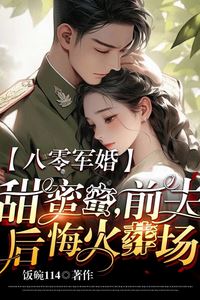
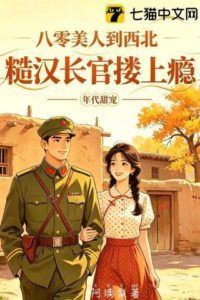
Yang Muyu, a hardworking office worker from the 21st century, dies after a tragic accident during a company team-building event. Instead of passing on, she transmigrates into the body of an eighteen-year-old girl with the same name in May 1974, in a small courtyard near a machinery factory in Sichuan Province. Upon waking, she discovers she has inherited not only the girl’s identity but also the fragmented memories of a victim of a vicious conspiracy. The original owner was an orphan whose father, an engineer, had recently died. Her uncle, stepmother, stepsister, and fiancé had revealed their true greedy natures, plotting to seize her inheritance, her job, and her home. Their latest scheme involved drugging her with a potent substance in a bowl of water and hiring a thug to rape her, intending to catch her in the act and force her to break her engagement so the stepsister could marry the fiancé.

Yang Muyu, retaining her modern sensibilities and martial arts skills from her previous life as a gym instructor, refuses to be a victim. She ambushes the thug, beats him severely, and then captures her fiancé and stepsister who were eavesdropping outside. She forces the three conspirators to ingest the drugged water themselves, creating a chaotic scene that she documents with a camera she acquires through a mysterious blue stone embedded in her wrist. This stone serves as her golden finger, granting her access to a spatial dimension containing a vending machine that exchanges her bank savings for resources, including food, tools, and high-tech items like a film developing kit and wind-fire wheel shoes.

The conflict escalates when the stepmother and the thug’s mother arrive, expecting to find Yang Muyu disgraced. Instead, they walk into a trap. Yang Muyu uses the evidence she has gathered to blackmail them into transferring their properties and jobs to her. When they attempt to recruit more accomplices, including her uncle and other relatives, to assault her, she defeats them all with her enhanced strength and the retractable rolling pin she drew from her space. She forces them to sign IOUs and confessions, then publicly exposes their adultery and drug use by screaming for help, drawing neighbors and police to the scene. The scandal spreads rapidly through the factory and the community, ruining the reputations of her enemies.

Despite the public exposure, Yang Muyu secretly retains the original photographic evidence, having swapped the incriminating film with blank rolls during the exchange. She uses her space to develop hundreds of photos, creating a massive archive of her enemies’ crimes. She then distributes these photos anonymously across the city and submits a detailed report to the police, ensuring that the legal system takes over. The villains, believing they have escaped consequences after paying her off and burning the fake evidence, are unaware that they are now facing severe criminal charges. Yang Muyu secures her financial independence, claiming the inheritance left by her father and the assets of her relatives, and sets the stage for their eventual downfall through the law.

As the story progresses, Yang Muyu navigates the complexities of 1970s Chinese society while leveraging her spatial abilities to improve her life. She deals with the aftermath of the scandal, managing the gossip and social fallout with calculated indifference. Her enemies, stripped of their wealth and facing imprisonment, are left to suffer the consequences of their greed. Yang Muyu’s journey transforms her from a vulnerable orphan into a powerful figure who controls her own destiny, using her modern knowledge and supernatural advantage to outsmart those who sought to destroy her.

Latest Release
DateGroupRelease
2026-08-11shanghai fantasy c29
2026-08-11shanghai fantasy c28
2026-08-11shanghai fantasy c27
2026-08-11shanghai fantasy c26
2026-08-11shanghai fantasy c25
2026-08-11shanghai fantasy c24
2026-08-11shanghai fantasy c23
2026-08-11shanghai fantasy c22
2026-08-11shanghai fantasy c21
2026-08-11shanghai fantasy c20
2026-08-11shanghai fantasy c19
2026-08-11shanghai fantasy c18

Community Reviews

Rating(4.5 / 5.0, 6votes)
5 stars
4(67%)
4 stars
1(17%)
3 stars
1(17%)
2 stars
0(0%)
1 stars
0(0%)

Popular reviews

... Read More
I need a minute. I need a actual minute because the Zhaodi scene destroyed me. Let's talk about what Zhaodi confesses. She says it so casually, like it's nothing: 'I even secretly prayed they would succeed, because if they had money, they wouldn't bother me.' That line. That ONE line. It's not just sad—it's devastating. This girl has been so thoroughly broken by her family that she internalized her own worthlessness to the point where she hoped the people trying to kill her cousin would succeed, just so she'd be left alone. And then the realisation hits her: 'No matter what, they would sell me, regardless of money, time, or my value. I was just a tool they could use and discard.' She was sold for 100 yuan. ONE HUNDRED YUAN. As a bride for someone's son. She is a person, not merchandise, and her own father treated her like livestock. But here's what got me—the scene where Mumu is crying and pounding her chest, pretending to be furious at Zhaodi for being related to her enemies. Is it acting? Absolutely. But I swear, reading it, I couldn't tell where the performance ended and the real emotion began. Both girls are performing grief, both are using tears as weapons, and yet there's this raw, honest connection underneath it all. Zhaodi slapping herself, crying 'I'm sorry, I'm sorry, I'm sorry, Mumu'—she means it. She genuinely wants to atone. And Mumu? Mumu lets her. She lets Zhaodi believe she has a chance to make things right. Is that kindness? Or is it the most efficient way to ensure Zhaodi stays loyal? I don't know. And that uncertainty is what makes this relationship so compelling.
... Read More
Okay, I need to talk about this plot because it is ABSOLUTELY MIND-BLOWING. Yang Mumu is not just smart—she is a TACTICAL GENIUS. Let me walk through this because the layers are insane. First, she finds the drug in Yang Qianqian's room. Instead of hiding it, she puts a tiny bit in her space, waits, and then uses it on the very people who were plotting against her. She sprinkles it on their lips—on their food, their tea, their water—and watches them implode. The scene where the police burst in and find all five people tangled up together? That is chef's kiss. She didn't even have to lift a finger. She just let karma do the work. But then the REAL plot twist hits: she saves Yang Zhaodi. On the surface, it's a heroic rescue—breaking into a house, climbing walls, the whole dramatic thing. But Mumu is playing 4D chess here. She knows Zhaodi is compromised, knows Zhaodi's father is part of the conspiracy, and yet she saves her anyway. Why? Because Zhaodi is the perfect firewood. As the text says: 'Yang Zhaodi is that very promising fire.' And it works. Zhaodi, devastated and guilt-ridden, becomes Mumu's unwitting weapon. She registers her own mother and brother for exile to the far Northwest. She reports the entire conspiracy to the police. She even gives Mumu the surveillance feed of herself through that spinning wheel device. The plot is so tight, so well-constructed, that I literally gasped when I realized Zhaodi was being manipulated the entire time. The only question now: is Mumu too controlling? She has a surveillance device ON her own ally. That's... a lot. I'm invested but also slightly terrified for Zhaodi's autonomy.
... Read More
There are so many layers to unpack in these chapters, and I want to focus on three recurring symbols that keep appearing. First: the spinning wheel. It's described as a 'big turntable' and also as a device with a surveillance screen. It appears at the beginning when Mumu watches the surveillance playback, and it appears at the end when she's watching Zhaodi in real time. The wheel is a symbol of fate—everything spins, everything circles back. The conspirators thought they were controlling Mumu's fate, but they were just spinning in place. And now Mumu is watching Zhaodi spin, wondering if she'll end up where she started or somewhere entirely new. Second: the photos. These are the catalyst for everything. They expose the conspirators' shame, they spread through the neighborhood like a virus, they become evidence. But they're also a kind of violence—these people were caught in their most private, most degrading moments, and their images are now public property. The photos represent truth, but also exploitation. Mumu used them as a weapon, and they worked. But at what cost to the people in them? Third: the drug. It's described almost casually—'the same ingredient as the bowl of water Zhao Yitian provided before.' A drug meant to incapacitate and humiliate, turned against its creators. This is the story's central metaphor: the tools of oppression becoming the tools of liberation. The water meant to control becomes the water that frees. The house meant to steal becomes the house that protects. The family meant to support becomes the family that betrays—and the cousin meant to be an enemy becomes an ally. The deepest theme here, I think, is about performance itself. Everyone is performing: the conspirators performing morality while plotting murder, Mumu performing grief while calculating revenge, Zhaodi performing contrition while seeking power. The question the text keeps asking is: when everyone is acting, who is real? And does it even matter?
... Read More
The pacing in these chapters is absolutely relentless and I have mixed feelings about it. On one hand: incredible. The chapter opens with the gossip spreading through the neighborhood like wildfire, then cuts to the police raid, then to Mumu rescuing Zhaodi, then to Zhaodi's confession, then to her reporting the entire conspiracy—all in one sitting. There is no dead air. No filler. Every scene pushes the plot forward. The structure is basically a series of escalating reveals. First, we learn the conspirators were caught. Then, we learn Mumu orchestrated it. Then, we learn she saved Zhaodi. Then, we learn Zhaodi was complicit. Then, we learn Zhaodi is now her revenge weapon. Each reveal raises the stakes and deepens the intrigue. But here's my concern: it's almost TOO fast. Zhaodi goes from despairing prisoner to reporting eight people to the police in what feels like one afternoon. Her transformation from passive victim to active avenger happens so quickly that I wanted more breathing room to sit with her emotional journey. The confession scene is powerful, but I wish we'd had more time to process it before she immediately runs off to take action. That said, the chapter ending is a perfect hook. Mumu watching Zhaodi through the spinning wheel, calm and smiling, while Zhaodi is in full revenge mode—that's a cliffhanger that demands you read the next chapter immediately. The author knows exactly how to keep readers engaged, even if the pacing occasionally sacrifices emotional depth for momentum.
... Read More
The stakes in this story are incredibly high, and the author does a brilliant job of making you feel the danger. Let's start with the external conflict: Yang Zhong and his conspirators wanted to kill Yang Mumu, steal her house, take her money, and force her into exile. They prepared a drug to incapacitate her. They had backup plans, accomplices, and a network of people ready to betray her. This isn't just family drama—this is a murder plot. And Mumu knows it. Every scene she plays, every tear she sheds, is informed by the knowledge that these people would have killed her without hesitation. But the internal conflict is what really gets under your skin. Zhaodi's struggle is agonizing. She loves her family—no, she doesn't love them, she's conditioned to obey them. She's been told her whole life that she's worthless, that she's disposable, that her only value is as a bargaining chip. When she discovers they would sell her too, it shatters something fundamental. Her decision to report them isn't just revenge—it's an act of self-preservation and self-definition. She's choosing herself for the first time. The stakes are personal and immediate. If Zhaodi fails, she goes to a family that bought her for 100 yuan. If Mumu fails, she loses her house, her job, and possibly her life. Both girls have everything to lose and nothing to gain from silence. What makes the tension so gripping is that Mumu is always three steps ahead—but she's also always watching. The surveillance device on Zhaodi, the calm smile after the emotional performance, the way she 'breathed a sigh of relief' when she learned Zhaodi chose a location near her own. Mumu is playing a long game, and the reader is left wondering: when does the alliance end and the control begin? Is Zhaodi a partner or a pawn? The ambiguity keeps you hooked because you can't predict where this will go.
... Read More
The dialogue in this text is sharp, layered, and occasionally devastating. Let me highlight a few moments that stuck with me. Zhaodi's confession is where the writing truly shines. She doesn't monologue—she stammers, she pauses, she contradicts herself. 'One, I didn't dare. Two, I was selfish.' The simplicity of that structure makes it hit harder than any elaborate speech could. It's the voice of someone who has spent her whole life unable to speak up, now finding her voice at the worst possible moment. Mumu's dialogue is equally interesting because it operates on two levels. When she tells Zhaodi 'Your life will be much easier than before; you should be happy,' she's performing kindness. But the subtext is clear: she's positioning herself as the benevolent savior, making Zhaodi feel even more indebted. The dialogue is warm on the surface, calculating underneath. And then there's the public scene, where Mumu shifts into full performance mode. 'And me? What did I do wrong? My parents are dead, and my relatives got me sent to the countryside.' She's crying, she's pounding her chest, she's delivering a monologue that's equal parts genuine anguish and strategic manipulation. The text says she 'switched from poking to pounding'—that physical detail tells us everything about how calculated her emotions are. The neighbors' dialogue is also worth noting. Their gossip is lively, judgmental, and slightly comical. 'Hey, that girl looks familiar?' 'Wait... doesn't this girl know her uncle is after her life?' They're insightful in their own way, seeing through Mumu and Zhaodi's performance even as they're caught up in the drama. The author's voice throughout is darkly humorous. There's a running joke—almost a motif—about acting and performance that ties everything together. 'Life's a stage, and acting is everything. She almost wanted to give herself an award.' This self-aware narration adds a layer of irony that makes every dialogue exchange feel double-coded.
See all reviews

Characters

See all characters

Custom lists

See all custom Lists