Summary

... Read More
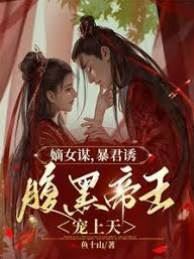
Ning Fei, a retired actress who returned to fame and then retired again, prepares with her daughter Ning Yuxuan for the preview filming of a reality show called Dearest Mom. Their relationship has been strained for years, particularly after Ning Yuxuan became obsessed with her boyfriend Gu Yunhao. When Gu Yunhao calls to break up with Ning Yuxuan, she reacts with unusual calmness, agreeing immediately and demanding the return of expensive gifts from her mother and brother. After the call, she reveals to her shocked mother that she plans to join the hotel business rather than pursue acting, specifically requesting the purchase of a struggling hotel chain in Tongxing District before Gu Yunhao can acquire it.

Ning Yuxuan explains that she has awakened to the reality that her world is a fictional novel where she plays the villainess destined for tragedy: online harassment leads to a suicidal rooftop scene where her mother dies trying to save her, and her brother dies of depression. Determined to change this fate, she seeks to disrupt the plot by securing key assets early. She contacts Xie Zhiyan, a powerful business magnate and former antagonist in the novel, proposing a business partnership for the hotel investment. Xie Zhiyan agrees to fund the entire acquisition but adds a condition: she must marry him. Ning Yuxuan considers this proposal seriously, recognizing that Xie Zhiyan’s support would be crucial in standing against the Gu family should conflicts arise.

Meanwhile, Gu Yunhao, who had planned to paint Ning Yuxuan as the unstable ex-girlfriend, is bewildered by her indifference. His new love interest, Cen Meng, manipulates him into calling Ning Yuxuan during the live broadcast, hoping to capture her emotional breakdown. Instead, Ning Yuxuan coolly refers to Gu Yunhao as someone who owes her money, turning public opinion against him. The livestream audience praises Ning Yuxuan’s composure and sharp wit, generating positive trending topics for the show. Cen Meng’s attempts to sabotage Ning Yuxuan’s reputation backfire, as netizens defend the daughter of the beloved actress Ning Fei.

At Old Master Gu’s eightieth birthday banquet, Gu Yunhao plans to publicly introduce Cen Meng as his girlfriend. However, Old Master Gu, aware that Ning Yuxuan was excluded from the invitation despite sending a gift, summons Gu Yunhao and reprimands him. The old man expresses his desire to see Ning Yuxuan at the event, revealing his longstanding fondness for her. Ning Yuxuan, initially reluctant to attend due to her breakup with Gu Yunhao, receives a polite invitation from Steward He on behalf of Old Master Gu. Faced with the old man’s genuine kindness, she must decide whether to attend the banquet alone, further distancing herself from Gu Yunhao and the plot that once controlled her life.

Latest Release
DateGroupRelease
2026-09-26akknovel c104
2026-09-26akknovel c103
2026-09-26akknovel c102
2026-09-26akknovel c101
2026-09-26akknovel c100
2026-09-26akknovel c99
2026-09-26akknovel c98
2026-09-26akknovel c97
2026-09-26akknovel c96
2026-09-26akknovel c95
2026-09-26akknovel c94
2026-09-26akknovel c93

Community Reviews

Rating(0 / 5.0, 43votes)
5 stars
0(0%)
4 stars
0(0%)
3 stars
0(0%)
2 stars
0(0%)
1 stars
0(0%)

Popular reviews

... Read More
'Calling it full-time daughter sounds nice, but let's be real—it's just being a parasite. Since when did netizens start glorifying this?' And then: 'Wow, look at Miss Morality over here. Mommy didn't love you enough, huh?' 'Not even worth arguing with. Enjoy your loveless existence.' 'If her mom's happy and she's happy, why's a random hater pressed? Get a life.' I read those replies three times and I'm still not over how *aggressively specific* the internet is here. The 'clown emoji' reply. The 'Enjoy your loveless existence' thing. The author wrote these as block quotes and it's like a whole comedy sketch tucked inside the villain's POV. I laughed out loud at 'Get a life.' One sentence. Zero context needed. Maximum damage. And the family banter. Ning Yuxuan: 'Sure, but the veteran actress playing his mom probably carried him. She's a pro.' Delivered with a shrug. Not even looking at her brother. Just *shrug*. Then Ning Shiyue: 'Couldn't you just praise me for once?' With an eye twitch. And then Ning Yuxuan blinks innocently and goes 'That's on you. Look at our dear Ning Fei—every single one of her performances is flawless.' Which is a *non-sequitur* that somehow escalates the argument. She's not defending herself. She's just... adding another person to the pile. 'I didn't do it, YOUR MOM is perfect, so the problem is you for having low standards.' I love that logic. Ning Fei: 'Alright, enough. You two can argue later.' The most efficient de-escalation line I've ever read. No explanation. No 'I understand you're both passionate.' Just 'enough' and a deadline. 'Later.' Two words. The relationship is so established that she doesn't even need to threaten. 'You can argue later' means 'I will know if you don't stop now and I will make your night miserable.' The register shifts in this batch are wild. We go from Cen Meng's internal monologue ('resentment flaring,' 'vision darkened') which is written in this stiff, almost literary way, to the Weibo comments which are pure slang and emoji energy, to the set scene where the young actress is doing rapid-fire fan-chatter ('There's a fan edit that's absolutely amazing!'), to the living room where everyone's trading zingers. Four completely different verbal ecosystems and the author just... cuts between them. No transitions. One page it's 'her vision darkened, and she nearly choked on her breath' and the next it's 'LOL, daughter might be off the table, but granddaughter? There's still hope [dog emoji].' I like that the author doesn't smooth it out. The jump is jarring in a good way. It mirrors how we actually scroll through our phones. One minute you're in a dramatic internal state, next minute you're reading a stranger's comment about someone's face genetics. 'This face would dominate any era.' I'm not even sure if that's meant to be a compliment. It's so detached and analytical it's almost clinical. Like a genealogist assessing a specimen. And Ning Shiyue's '...' He literally just says '...' in response to Ning Yuxuan's comment about his performance. Three dots. Full stop on his dignity. I need more of that.
... Read More
'This whole chapter is one long staircase and I can't find where to sit down.' That's my immediate reaction. It starts with the crew leaving (quick, two paragraphs, done). Then Ning Shiyue bouncing. Then the mom-daughter talk about acting. Then the hotel idea. Then twenty minutes of negotiation that gets compressed into basically three lines of 'she couldn't convince her.' Then the phone call. Then 'Marry me.' And that's where the chapter basically ends. So the pacing is this rapid-fire series of raises in stakes, each one landing before you've processed the last. The mom-daughter discussion, which SHOULD be the emotional core of the chapter, gets told to us in summary: 'After nearly twenty minutes of discussion, Ning Fei still hadn't budged.' Twenty minutes! Compressed into one sentence. I would have wanted to sit in those twenty minutes. Watch Ning Fei's face. Hear the specific arguments. Did she say 'you're being silly'? Did she say 'where's the due diligence'? Did Yuxuan start crying? We don't know. It just... happens off-screen and then we're already at the Xie Zhiyan call. And that call goes from text to 'ten minutes later, he called' to the marriage condition in like six lines. The author is moving FAST. Like, maybe too fast for a chapter that's supposed to land a 'marry me' bomb. I felt like I needed three more paragraphs of Xie Zhiyan just... existing on the phone before he dropped that. A longer silence. A 'So.' A 'I have a condition' with a full beat of discomfort before the actual word. Instead it's almost snappy. 'Having me invest isn't impossible. But there's a condition.' 'What condition?' 'Marry me.' And I'm not saying the quickness is bad. It matches Xie Zhiyan's character. But for PACE, I wanted the reader to feel the floor drop out from under them. And instead it's like a very efficient handoff. The cliffhanger works, I'll give the author that. I will NOT close the app. But the journey to get to the cliffhanger felt like it was on a fast-forward button the whole time. No breathing room. No 'wait, hold on, let me process this' moments. Just... next thing, next thing, next thing, and BAM, marriage.
... Read More
On the surface, this is a breakup story. But read closer and the stakes multiply like fractals. Ning Yuxuan isn't just defending her heart—she's defending her narrative. Cen Meng's entire scheme depends on controlling how Ning Yuxuan appears: first as the scorned woman who can't handle rejection, then as the vengeful ex who lashes out at family. The reputation destruction is calculated, systematic. If Ning Yuxuan breaks down crying, she becomes the unstable one. If she stays silent and sullen, she's the bitter one. Either path leads to social death, which for someone in the public eye means professional death too. But the real conflict isn't interpersonal—it's ontological. Who gets to define reality? Gu Yunhao believes he knows Ning Yuxuan's psychology well enough to predict her breakdown. Cen Meng believes she can engineer the circumstances that force that breakdown. The production crew believes they can manufacture drama through contingency planning. All of them operate from a position of assumed knowledge about how Ning Yuxuan should behave. Her rebellion isn't just emotional; it's epistemological. She refuses to perform according to their script precisely because performance is what they've weaponized against her. The stakes escalate through misdirection. Gu Yunhao thinks he's calling to offer comfort—that he's the benevolent ex checking in. He genuinely believes Cen Meng's assessment that Ning Yuxuan is "putting on a brave face." The tragedy here is that his belief is so sincere it becomes cruel. He's not malicious; he's arrogant. He assumes his reading of the situation is correct because it's convenient. When Ning Yuxuan calls him a debtor, she's not just rejecting his romantic framing—she's rejecting his authority to interpret her reality. What makes this conflict truly gripping is that Ning Yuxuan has everything to lose and nothing to prove. She's already chosen. She's already moved. The call isn't about reconciliation; it's about boundaries. Every second she spends on that phone is a risk—she could break character, she could reveal vulnerability, she could give them the ammunition they crave. Instead, she weaponizes indifference. The stakes aren't about winning him back; they're about refusing to play the game at all. And in doing so, she changes the rules for everyone watching.
... Read More
The young actress on set. Okay. Not the main point but I need to talk about her for a sec because she's the lens we see Ning Shiyue through and the author used her so well. She's twenty, first role, naturally chatty, shows up with her phone held up like a sacred text. 'Your mom and sister are trending!' And Ning Shiyue—usually the guy who gives you a polite nod and walks away—*leans in*. That's it. That's the whole beat. He leans in. And then he's just... staring. Expression softer than she's ever seen him outside acting. 'The faintest hint of a smile touching his lips.' And she thinks: *those two people on the screen must be the most cherished in his life.* But that's not even the best part. The best part is that he hands his phone to his assistant during shoots. Always. To stay focused. So the fact that his assistant wandered off to get something from the trailer and NOW is the only window where he can see what's happening? It's such a small logistical detail but it makes the moment feel *earned*. He wasn't waiting for this. His life wasn't structured around family content on his phone. He just happened to be looking at that one clip when the young actress caught his eye. Then later, 'home.' Ding Yan asks if he's heading back to his place. Normal answer. Everyone expects it. And Ning Shiyue says no, he's going home. Just that. And when Ding Yan looks at him confused, he glances down at the phone, the video still open, and repeats it with 'a trace of warmth.' Home. Not my apartment. Not the villa. *Home.* As if the word itself changed meaning somewhere between the set and the villa gate. As if three people squeezed on a sofa watching his cringe-worthy old drama makes a place 'home' in a way his empty apartment never did. And Ning Yuxuan's 'the veteran actress playing his mom probably carried him' is just... perfect sibling cruelty delivered with a shrug. He doesn't even look at her when he says it. Just shrugs. And Ning Shiyue's eyelid *twitches*. 'Couldn't you just praise me for once?' The eye twitch! I've been re-reading that line four times this week. They haven't been like this before. Ning Fei notices. 'For a long time, Ning Yuxuan and Ning Shiyue had barely acknowledged each other's presence.' So what changed? Is it the trending topic? Is it Ning Fei forcing a family dinner? Is it just the rare overlap of schedules? I think the author is showing us that the thaw is fragile. It happens in the smallest spaces—a shared sofa, a forced conversation about a bad drama—and it might not hold. Or it might. And that uncertainty is what makes the sibling dynamic so much more interesting than if they were just 'nice to each other all the time.'
... Read More
'Miss Yuxuan, you've previously acted in TV dramas, and now you're joining this show with Ning Fei. May we ask about your future plans?' I was mid-bite of my own snack when I hit this paragraph and my brain went, oh NO, not the staff question. Because in this book the staff questions are basically the author's way of saying 'okay here's what the reader needs to know right now, packaged in a Q&A so it doesn't feel like info-dump.' And it WORKS. Every single time. The pacing in this section is structured almost like a broadcast rundown. Cooking segment → first interview question (Ning Fei, about the other guests) → second interview question (Ning Yuxuan, about her career) → third interview question (Ning Shiyue, the serious one he fumbles). Each segment has its own tempo. The cooking part is fast, snappy, lots of short sentences, jokes landing every two lines. The Ning Fei interview slows way down because she's articulate and measured and the author lets her talk. The Ning Yuxuan interview is where the plot bomb drops so the pacing hits a hard stop—everyone freezes—and then the chat reactions pick up the speed again. The Ning Shiyue part is short and deliberately dry to contrast with the chaos. What I love is that the production team's 'prepared questions' are revealed to be partially subverted. Ning Yuxuan was supposed to lay groundwork for her acting career. Instead she pulls a 'full-time daughter.' The author uses the gap between 'what was planned' and 'what happened on camera' to create tension without raising the stakes externally. It's all internal. All about what these characters let the world see vs. what's actually going on in their heads. The one thing that slightly bugged me: the transition from the cooking to the interview felt a little mechanical. 'The production team had prepared a few questions for the guests during mealtime.' Just... appears. Like a new scene heading. I wanted one more beat of them actually sitting down, maybe a glass of water, maybe Ning Shiyue stealing a piece of fish from Ning Fei's plate. Something to ground us in the physical space before the interrogations start. But I get it—the show format demands the questions come fast. I just would've liked five more seconds of domesticity. Oh wait, the ending cuts off mid-sentence: 'As dinner wrapped up, the filming of the preview' and that's it. I'm literally at the edge of my seat for what happens next. The preview clip they're about to film is probably where the real confrontation with Qin Man happens. The author is banking on us rushing to the next chapter. I'm not complaining. I will read the next chapter immediately.
... Read More
I was going to write about the mother-daughter theme because that's the obvious one, but I can't stop thinking about the fish. 'Or my braised fish might turn into steamed fish!' It's a joke. It's a sibling tease. She says it with an eyebrow raise and the kitchen goes back to lighthearted. But I keep replaying it because braising and steaming are fundamentally different processes. Braise is slow, rich, dark, wine-soaked, hours-long. Steamed is clean, quick, pale, bare. You can't braise a fish that's already been steamed. You can't undo the method. And Ning Yuxuan just said, offhandedly, that her brother's negligence would ruin the specific technique she chose. She'd decided. This is how my fish is going to be made. And if you mess with it, the whole dish changes category. Is that not exactly what's happening between her and her mother? Ning Yuxuan decided: I'm going to be in the entertainment industry. I'm going to act. I'm going to compete with Cen Meng for Gu Yunhao. That's the braise. Slow, complex, the method she chose. But then she jumps between jobs. One month. Two months. Failed venture. And now she's 'completely obsessed with Gu Yunhao' and 'drifted apart from her old friends.' The steaming is happening. The clean, bare, nothing-special version. And her mother is watching it happen and saying, on camera, 'I'd love to be my daughter's lifelong support.' Even if the dish comes out wrong. Even if it's steamed when you wanted braised. Even if the whole process is a mess and she's not even in the kitchen anymore. The 'full-time daughter' line is the fish she didn't intend to cook. She walked in to do the acting-interview-bait speech and walked out with a statement about dependency and safety. 'I'm going to be my mom's full-time daughter.' In a world where every other relationship is transactional—Gu Yunhao's love is performance, Cen Meng's success is a threat, the job market is random—her mother is the one place where the method doesn't matter. Where braised or steamed or even burnt, the plate still gets eaten. The love is in the serving, not the technique. I don't know if the author meant the fish as a symbol. Probably not. Probably it's just a joke that keeps getting recycled in the chat because it's funny. But I'm going to hold onto it. Because this whole book is about methods of love. Who steams and who braises. And Ning Fei has been braising for twenty years while her daughter was out there getting steamed by everyone else.
See all reviews

Custom lists

See all custom Lists