What to Do with a Pair of Kittens - Reviews

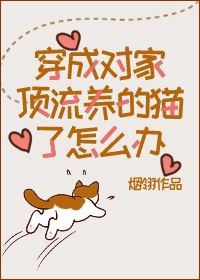
What to Do with a Pair of Kittens
+Add to Custom List
Sort
Add review
... Read More
This entire chapter is about finding connection, and cats are the medium. But read closer and it's about how we search for belonging in ways that sometimes reveal our own invisibility. Yiyi, the stray, wants a mate—not just any cat, but one who prefers other males. He's searching for someone who sees him the way he wants to be seen. Meanwhile, Song Yu is searching for something he won't name: why does he need Yiyi to be happy while simultaneously running from the happiness Fu Yuqian is offering? The lock on the bedroom door—'you have to guard against fire, theft, and Fu Yuqian'—that's the thesis statement. Song Yu treats his own home like a fortress. And Fu Yuqian's argument about public figures and photographs? 'If we get photographed, I'd be happy to be tied to you, but what about you?' That line. That's not just plot logistics; that's Fu Yuqian accidentally telling the truth about Song Yu's entire emotional architecture. The cat who is judged as 'a bumpkin' by other cats—who is ordinary, an orange tabby, not a prized breed—still has someone driving an hour across the suburbs to find him a friend. The shelter at 'Wen Ning Pet Adoption Center'—the name itself carries meaning. Wen Ning. Warm peace. Safety. Song Yu is standing at the door of that place about to knock, and Fu Yuqian is somewhere in the city sneezing because connection transcends distance. What does it mean that the cats reject Yiyi but Song Yu never would?
... Read More
That rose conservatory scene at the end—it's so deliberately placed that I'm convinced it's not accidental. Everything about how it's described feels like a spatial representation of where their relationship is heading. Buds that have started to form, flowers that will bloom in days. Growth is happening but not yet visible. Fu Yuqian bringing in a red guitar, wearing a white hoodie, playing among roses... this is cinematic, almost staged, and that's exactly what I love about it. The contrast between the digital world (Weibo notifications, fan comments flying in, screenshots being taken) and the physical world (digging holes, soil on hands, rose scent in the air) keeps pulling back and forth. Neither world gets priority. They're existing simultaneously, and Song Yu is caught between them—the cat who wants to hide in quiet greenhouses and the celebrity partner whose life has become an endless content factory. What really got me though was the sensory detail of Song Yu's mom kicking him out. Not because it's dramatic, but because it's so specific and mundane. She mentions being old, feeling cold, spending most days in her yard or room. This tiny domestic portrait makes the whole world feel lived-in. The author could have skipped this entirely and just had Song Yu stay at Fu Yuqian's place by default, but instead we get this elderly woman's quiet loneliness that becomes the reason our protagonist returns. It's the kind of detail that transforms a setting from backdrop into emotional infrastructure.
... Read More
I need to talk about the script-within-a-script because Fu Yuqian reading Leng Yunlin's character breakdown had me absolutely losing it. Leng Yunlin is a prince raised in the Cold Palace — insecure, sensitive, quick to anger, vengeful. But his core desire? He loves animals, adores children, and wishes for everyone in the world to have enough to eat and live well. Unfortunately, he has noble ideals but no ability to realize them because nobody ever taught him how. When the court opposed him, his instinct was to kill. When faced with official documents, he wanted to... And the chapter ENDS there. I am SCREAMING. The author left us on THAT cliffhanger and I will never recover. But let's appreciate the mirror Fu Yuqian is holding up to himself through this role. A cold palace prince — raised without proper guidance, surrounded by people who oppose him, lashing out because he doesn't know any other language? Fu Yuqian relates to this on a spiritual level. He's been in the entertainment industry, surrounded by people who see him as traffic rather than talent, and he's learned to restrain himself rather than lash out. Leng Yunlin hasn't learned that yet. That's the tragedy of the character, and that's probably why Fu Yuqian finds himself drawn to this role beyond just the Yiyi factor. The Huacan studio scene is also worth noting for worldbuilding. The budget constraints forcing a subplot cut, the sudden twenty million injection when Fu Yuqian joins, the producers hugging each other like it's a dream — this feels like a realistically depicted indie drama production world. These people are scraping by, making do, and then a top-tier idol appears and suddenly everything changes. The power dynamics of the entertainment industry laid bare: one famous face can transform a struggling project into something viable overnight. And then there's the domestic warmth of Fu Yuqian coming home to Song Yu, the New Year decorations outside, the mundane ritual of negotiating cat photos. The contrast between the high-stakes entertainment industry world and the quiet intimacy of their apartment — this is where the story really lives for me. The grand gestures (taking a BL web drama role) and the small ones (bargaining for a nose boop in exchange for content) are equally charged. Both are acts of devotion, just expressed differently. I'm also obsessed with the visual of Song Yu performing for cameras — winking, seductively licking his paws, making heart shapes — while internally calculating which pose will satisfy the fans most efficiently. The cinematic quality of these scenes is remarkable. Every image is composed, every gesture deliberate. This author clearly understands visual storytelling.
... Read More
I keep coming back to the teddy bear. Ying Qi's childhood ritual of hugging it while his mother worked New Year's Eve is such a specific, aching image — a grown man, a successful surgeon, still carrying the emotional architecture of that small boy who couldn't face an empty apartment. The teddy bear isn't just nostalgia; it's a symbol of the comfort he learned to outsource because his family's devotion to medicine left gaps no child should fill alone. But there's a parallel thread in Song Yu's storyline: the idea of being seen. His mother doesn't just notice Fu Yuqian's feelings — she understands the mechanism behind them. She sees the pattern of devotion, the way someone who cares quietly accumulates evidence of their care until it becomes visible. “Your gaze towards him is very affectionate—I've noticed it.” That's not surveillance; that's maternal intuition sharpened by survival. She spent years gathering evidence of a criminal husband's crimes. She knows how to read someone's hidden motivations because she's had to, and she applies that same instinct to her son's happiness. The cat form itself is symbolic too — Song Yu is literally unable to speak his truth while in this body. He can't confess, can't explain, can't even properly receive comfort (“There's no need for you to plead on behalf of your dad”). The transformation isn't just a plot device; it's a metaphor for the vulnerability of wanting someone and not being able to say it. Until he returns to his own body, he's stuck in limbo — and that limbo IS the theme.
... Read More
Okay so this section literally recontextualizes the ENTIRE setup. Up until now we've been watching Song Yu struggle with cat life and his nemesis Fu Yuqian, but then BOOM—TV news reveals Song Yu's human body is in a coma and fans are keeping vigil outside the hospital. My jaw hit the floor. This isn't just a funny fish-out-of-water comedy anymore; it's got genuine stakes now. What I love about how the plot is structured is that Song Yu's realization is completely silent—he can't tell his fans he's fine. That dramatic irony is *chef's kiss*. Meanwhile, Fu Yuqian pieces together the mystery through three separate behavioral clues: the strange actions after the car accident, the desperation to see his own body, and the visible sadness at the TV news. This is excellent detective work from the author—no info dumps, just organic deduction. But here's what got me: Fu Yuqian's reaction. Instead of being horrified or suspicious in a negative way, he goes straight to "Could there be any stronger bond of fate?" Bro really skipped from "my rival might be my cat" to "this is destiny" in zero seconds flat. And then he calls Liu Le to find a "master"—implying he's going to try to restore Song Yu back to human form. This sets up the central quest for the rest of the story, doesn't it? The question is no longer just "will Song Yu survive being a cat" but "will Fu Yuqian succeed in turning him back" and what happens when they do.
... Read More
The dialogue in these chapters isn't what you'd call conventionally talky. Most of the communication happens THROUGH silence, through meows, through the narrative voice itself stepping into characters' heads. And honestly? That's where the magic lives. Song Yu's internal voice is sharp, sarcastic, and deeply self-aware. When he bolts from the collar incident, his thoughts read like someone recovering from a panic attack — logical, self-justifying, but clearly still shaken. The dream poisoned his instinct. And then when he decides to apologize? The angel-devil battle, the inability to swallow pride, the eventual妥协 of a soft meow: *"There, I apologized. If you don't understand me, that's not my problem."* This is the voice of someone who has spent years performing gratitude while actually being deeply guarded. Fu Yuqian's voice operates on a completely different frequency. When he says "Yiyi, come here. I made a collar for you," his voice is described as slightly hoarse, carrying a hint of sorrow. The narration tells us what he's feeling, but the dialogue itself is carefully restrained. He never says "I love you." He says "I made this for you." And in this universe, that's the equivalent of a marriage proposal. But the real standout is the NARRATIVE VOICE — that omniscient, slightly winking, emotionally intelligent presence that comments on everything. Phrases like "pay-to-win devotion" and the cinematic framing of scenes give the prose a distinctive personality. It's not invisible narration. It has opinions. It laughs at you occasionally. And it never lets you forget that this is a story about a man who fell for a cat — but also about the mechanisms of fame, fandom, and emotional survival in an industry that consumes people. The author's voice shapes every sentence. Even when describing a cat tag being ordered, there's narrative weight behind the transaction: the 500,000 yuan transfer, Liu Le's professional response, the shamelessly obsequious reply. Every exchange of dialogue — spoken or written — reveals power dynamics, emotional states, and character relationships without ever needing a monologue.
... Read More
Can’t wait for updates ......…y’all go read this book..don’t sleep on it ...
... Read More
I'm loving this! ?
simply wonderful!!!

Leave a comment

You must be logged in to leave comments. or
