Summary

... Read More

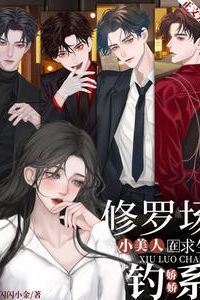
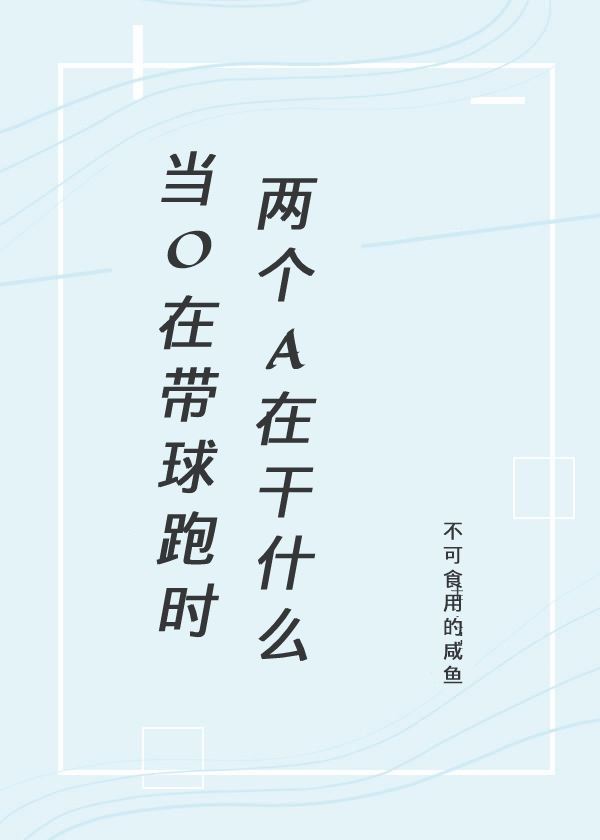
Duan Wenlun is an alpha from a wealthy family who maintains a refined and cold exterior, while Luo Hanchi is a street-smart alpha with a rough demeanor. Both men were childhood companions and romantic rivals of Ran Anjia, a gentle omega. For years, they competed for Ran Anjia’s affection, only to watch him marry Zhao Feidan, an alpha with whom he shared a ninety-nine percent compatibility rate. The wedding left both Duan Wenlun and Luo Hanchi heartbroken, leading them to bond over their shared rejection in a KTV room. There, they drank wine laced with an aphrodisiac called Yearning of Time, which triggered their heat cycles simultaneously. The resulting one-night stand established a complicated physical relationship between the two rivals, defined by power struggles and mutual disdain masking deeper attraction.

Following the incident, the two men continued their contentious rivalry while navigating the fallout of Ran Anjia’s marriage. Zhao Feidan, Ran Anjia’s husband, revealed a darker side by imprisoning Ran Anjia, who was pregnant with his child. Ran Anjia escaped and sought help from Duan Wenlun and Luo Hanchi. The two alphas worked together to rescue Ran Anjia, arranging for surgery and sending him abroad to Italy for safety. During this crisis, Zhao Feidan launched corporate retaliation against their businesses, causing significant strain, particularly on Duan Wenlun’s company. Despite the turmoil, Duan Wenlun and Luo Hanchi grew closer, transitioning from casual encounters to a regular sexual arrangement that blurred the lines between friendship and romance.

As their physical relationship intensified, underlying tensions emerged. Luo Hanchi often sought dominance, while Duan Wenlun resisted being treated as inferior. A misunderstanding occurred when Duan Wenlun overheard Luo Hanchi making secretive phone calls, leading him to believe Luo Hanchi was seeing someone else. This fear culminated in Duan Wenlun smashing open a study door, only to discover a realistic sex doll intended as a prank for a friend, revealing his own insecurities about their undefined relationship. Meanwhile, Ran Anjia’s dramatic return and reconciliation with Zhao Feidan left Duan Wenlun and Luo Hanchi to confront their own feelings, with Luo Hanchi teasingly suggesting they adopt a child to inherit Duan Wenlun’s wealth.

The story took a drastic turn when Luo Hanchi suffered a car accident while picking up a child named Nannan, resulting in amnesia. He woke up in the hospital with no memory of his past three years, including his relationship with Duan Wenlun. Duan Wenlun initially feigned indifference but secretly felt relief that Luo Hanchi could no longer neglect responsibilities. As Duan Wenlun helped Luo Hanchi recover by visiting familiar places and reconnecting with old friends, Luo Hanchi began to pick up on cues about their close bond. Friends referred to Duan Wenlun as Sister-in-law, and Luo Hanchi’s body retained muscle memory, such as cooking mild meals for Duan Wenlun’s stomach issues.

The narrative shifts to an alternate scenario where Luo Hanchi has amnesia and believes he is married to Ran Anjia, with Nannan as their daughter. Duan Wenlun plays the role of a supportive friend while harboring deep resentment over Luo Hanchi’s lack of memory regarding their intimate history. In this fractured reality, Luo Hanchi gradually regains fragments of his past through sensory triggers and emotional connections with Duan Wenlun. The story explores the complexity of their bond, moving from hostile rivals to reluctant allies and finally to partners who must navigate the boundaries of love, lust, and memory. The conclusion leaves their future uncertain, with Luo Hanchi beginning to remember the depth of his connection to Duan Wenlun despite the gaps in his mind.

Latest Release
DateGroupRelease
2026-09-26knoxt c5
2026-09-26knoxt c4
2026-09-26knoxt c3
2026-09-26knoxt c2
2026-09-26knoxt c1

Community Reviews

Rating(4.1 / 5.0, 49votes)
5 stars
17(35%)
4 stars
18(37%)
3 stars
14(29%)
2 stars
0(0%)
1 stars
0(0%)

Popular reviews

... Read More
'Let's order takeout then. If we time it right, it'll arrive just when we're heading home.' This line alone deserves an award for atmospheric writing. Most novels would dump us in a penthouse or a boardroom when discussing corporate intrigue. Instead, we're in a bedroom with the glow of streetlights probably filtering through blinds, waiting for cheap noodles. That simplicity makes the world feel lived-in. The author builds setting through behavior rather than description—we know these characters are close because they share food at midnight, not because we're told they're best friends. Even the political world feels tangible: Zhao became CEO a year ago, 'still finding his footing,' while 'old fogeys in the Ruiyun Group are all jumpy and suspicious.' You can feel the tension without scenes of hostile meetings. Later, when Duan Wenlun smokes on the bed after they finish, the cigarette smoke probably mingles with the lingering smell of sex and noodles—that's sensory worldbuilding at its finest. The Italy subplot operates similarly; we never visit Italy, but we understand its emotional geography through Zhao Feidan's desperation to find Ran Anjia. Settings serve relationship, not spectacle.
... Read More
'Honestly, you should try being on the bottom sometime. My skills are…' That sentence changed everything for me. Before that line, I saw Luo Hanchi as the tough exterior, the guy who could chatter on about business and revenge plots. But right there, offering himself vulnerably to Duan Wenlun, he revealed a completely different facet. This relationship is built on trust so deep that they can joke about sex positions without ego. And then Duan Wenlun silences him with a kiss—literally shutting down his words with action. The power exchange here isn't about dominance or submission; it's about knowing exactly when your partner needs silence versus conversation. Later, when they're discussing adopting a child, Luo Hanchi transforms into this meticulous planner, laying out the entire nine-year compulsory education system. Duan Wenlun can only watch, amused, because he knows this chatty side belongs to him alone. Their dynamic mirrors the larger story: Zhao Feidan pursuing Ran Anjia shows romantic persistence, but Duan Wenlun and Luo Hanchi demonstrate something rarer—intimacy without performance. When Ran Anjia finally returns to Zhao Feidan's chest and says 'Thank you, everyone, we're together again,' it works because we've witnessed enough vulnerable moments between all four characters to believe in their bonds. That's how you build relationships on the page.
... Read More
So the entire arc of this story was built around this one mechanism — Luo Hanchi can only physically respond when he remembers who Duan Wenlun is. Not just remembering his name, but genuinely recalling their life together. That's honestly such a clever plot device because it means the intimacy itself becomes a test of memory and identity. Every time they got close, the tension wasn't just sexual — it was existential. Did Luo Hanchi remember enough? Would the recollection unlock what was locked inside him? And the moment he finally remembered, switching from passive to主动, pressing Duan Wenlun down and claiming the scene — that was the emotional payoff the entire story had been building toward. He even mentioned changing diapers and taking care of brats. Like, the author really wanted us to know these two had a whole shared life that got stolen from Luo Hanchi. The heat cycle arriving at exactly the right moment felt almost cruelly timed, like fate or biology finally deciding to cooperate after all that frustration. The meta commentary at the end was a bit much for some people maybe — the author straight up telling us 'it's not overly spicy but still packed with feels' — but honestly, I appreciated the honesty. It's like knowing you're about to finish something short and sweet instead of being dragged into a 500-chapter mess. WTADWORACB delivered exactly what it promised and then some.
... Read More
There is something deeply cinematic about how this author writes intimate scenes. Not in a gratuitous way, but in a way where every sensory detail is placed with the precision of a camera lens adjusting focus. Take the scene where Duan Wenlun is alone in the bedroom after Luo Hanchi leaves him with the vibrating egg. The description of his physical state is almost clinical: 'his legs were weak, and even getting off the bed seemed like a challenge, let alone chasing after Luo Hanchi.' Then the camera moves closer — his trembling fingers, the cool silicone against warm skin, the wet slickness. The author writes this with such anatomical honesty that it stops being erotica and becomes something more vulnerable. This is a proud omega, someone who has always been in control, rendered utterly powerless by his own body's response to pleasure. The electric shock moment is written like a horror scene almost. 'Electric currents numbed both body and mind. Duan Wenlun didn't even realize when he climaxed until Luo Hanchi lifted his body.' The shock isn't just physical — it's the shock of losing consciousness of your own boundaries, of discovering your body can react in ways your mind hasn't consented to. The aftermath where Luo Hanchi tastes his essence and says simply 'You came' — that's devastating in its casual ownership. And then the setting shifts to the family dinner and the author gives us this entire room of judgmental relatives in just a few lines. The contrast between the intensely private, almost claustrophobic bedroom scenes and this large public family gathering creates this oscillation between intimacy and exposure that defines the novel's atmosphere. Every scene — whether two people in a bedroom or thirty people around a dinner table — feels like a pressure cooker. The world of this novel is one where nothing is private and nothing is safe, and that's what makes it feel so achingly real.
... Read More
'Don't you know how to tie a tie?' — and then immediately after: 'Not so tight, hey, hey, hey, I can't breathe!' This is the most unhinged transition in modern literature and I am here for it. The author has this incredible ability to pivot from devastating tension to domestic comedy in a single paragraph, and it works because every character has such a distinct voice. Luo Hanchi's dialogue is all sharp edges and false nonchalance. 'I met a kinky person who likes to kiss and nibble all over me' — said with a smirk, completely shamelessly, while simultaneously provoking both Ruan Anjia and Duan Wenlun in the same breath. This man cannot stop picking fights, even (especially?) when he's post-coital and should probably be resting. Duan Wenlun's voice is colder, more measured. His lines like 'Opposites repel?' delivered with a cold stare, or the way he slowly sips his cocktail before dropping exposition about the Ran family — that's someone who controls every word he speaks. You can feel him calculating. And Ruan Anjia? His dialogue is deceptively light. 'Brother Chi, the corners of your mouth are also red. Just like Brother Wenlun, are you also feeling hot?' Sounds innocent, sounds playful — but it's absolutely venomous disguised as a greeting. The author is playing 4D chess with these conversations and I'm just sitting here taking notes like wow cool.
... Read More
I want to talk about how the author handles pacing across these chapters because it's actually really sharp. The first section — Duan Wenlun noticing the suspicious behavior, the balcony call, the decision to leave, the return, the hammer — it all unfolds in what feels like a single tense afternoon. There's no filler. Every beat pushes him closer to the confrontation. The balcony phone call is a perfect example of efficient storytelling. In three lines of dialogue, we get: (1) Luo Hanchi is hiding something, (2) it's meant for someone else, not Duan Wenlun, (3) it's supposed to be a surprise. The reader and Duan Wenlun both draw the wrong conclusion, which makes the payoff infinitely more satisfying. Then the amnesia chapter hits and the pacing shifts dramatically. Instead of forward momentum, we get disorientation. Short, fragmented exchanges. Luo Hanchi being passed between strangers, trying to make sense of a life he doesn't remember. The scene with the delicate omega and the alpha — they appear, say one line each, and get pulled away. No exposition dump. Just enough to create mystery. The hospital scene also uses contrast brilliantly. Duan Wenlun arrives with that rich rose scent and immediately takes charge, scolding everyone while subtly protecting Luo Hanchi from having to face his responsibilities. The humor lands because it's earned — we've seen how serious Duan Wenlun gets, so seeing him casually flip the script and tell Luo Hanchi to enjoy his amnesia is genuinely funny. The ending trails off mid-sentence with that cut-off dialogue, which is a textbook web novel technique. It creates just enough unresolved tension to make you click to the next chapter without feeling manipulated. Well done.
See all reviews

Custom lists

See all custom Lists