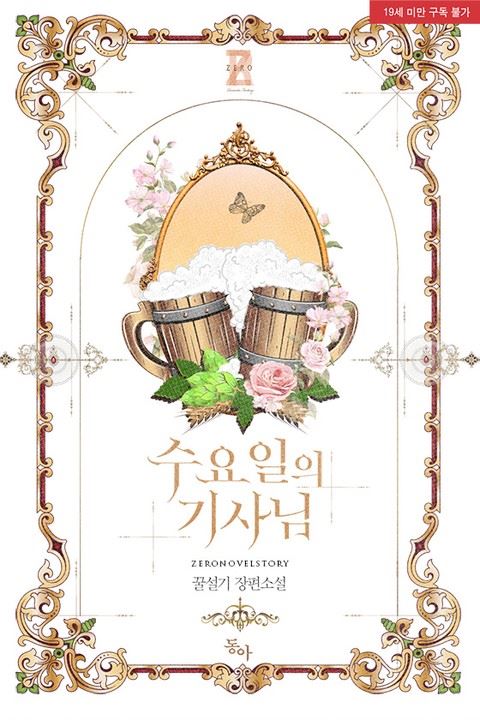
Wednesday's Knight
+Add to Custom List
Novel Info
  • Author:
  • Status:Ongoing

Summary

... Read More

Lara White is a twenty-six-year-old accountant working in Department 3 of the Imperial Knight Order, a division responsible for managing the finances and records of lower-ranking knights. Despite her stable employment, Lara endures an unglamorous and exhausting routine, compounded by a long-term romantic relationship with Max Kylen, a man from a wealthy merchant family. Their relationship spans fifteen years, during which Lara has accepted her secondary status, often feeling overshadowed by Max’s prosperity. The narrative begins on a day that shatters her fragile equilibrium. While celebrating a colleague’s birthday at an upscale restaurant, Lara encounters Max with Jeruna Bloom, a young noblewoman from a powerful ducal house. Max coldly admits to the affair, justifying it as a business necessity due to Jeruna’s family influence, yet asserts that he will still marry Lara eventually. Devastated and humiliated, Lara flees the restaurant into a rainstorm, seeking solace at a tavern called Wednesday’s Knight.

At the tavern, Lara drinks heavily to numb her pain. In a moment of misfortune, bird droppings land on her head, an incident witnessed by a mysterious, strikingly handsome man named Jack. Instead of mocking her, Jack kindly alerts her to the mess and offers her a handkerchief. This small act of kindness breaks through Lara’s anger, leading to a conversation where she confesses her broken heart and insecurities. The interaction escalates when Lara, fueled by alcohol and rebellion against her cheating lover, boldly propositions Jack. They leave together, and despite Lara’s drunken and disgraceful behavior, including vomiting on Jack, he cares for her thoroughly, washing her hair and clothes before they spend the night together. Lara wakes the next morning in a luxurious hotel room beside this stranger, initially horrified but later realizing she had a pleasurable experience. She attempts to dismiss the encounter as a one-time mistake and flees, leaving money for the room, while Jack reveals he has no intention of letting her go.

The central conflict emerges when Lara returns to work and reviews personnel files for new recruits. She discovers that the new lower-ranking knight named Jack, who scored exceptionally high in spearmanship and formerly worked as a mercenary, is the same man she spent the night with. When she visits the training grounds to confirm his identity, Jack greets her warmly, revealing he has been following her and frequently crossing paths with her since their encounter. He persistently asks her out for meals, adopting a demeanor that Lara describes as similar to a loyal dog, which contrasts sharply with the cold, professional warrior she observes during his training.

Lara struggles to navigate this new dynamic. She is torn between her lingering attachment to Max, who has not contacted her, and the confusing attraction she feels toward Jack. Jack’s relentless pursuit forces Lara to confront her self-worth and the superficial nature of her relationship with Max. While Jack claims he fell in love at first sight and wishes to take responsibility for their intimacy, Lara remains guarded, suspecting ulterior motives or viewing him as a rebound option. However, her colleagues and superiors, including Standard-Bearer Shady, begin to notice the shift in Lara’s demeanor. As the story progresses, Lara must decide whether to continue waiting for Max or explore a genuine connection with Jack, who offers her attention and affection in ways Max never has. The narrative sets the stage for Lara’s transformation from a passive victim of circumstance to an active participant in her own romantic future, with Jack serving as the catalyst for this change.

Latest Release
DateGroupRelease
2026-10-03dusk blossoms c1

Community Reviews

Rating(0 / 5.0, 26votes)
5 stars
0(0%)
4 stars
0(0%)
3 stars
0(0%)
2 stars
0(0%)
1 stars
0(0%)

Popular reviews

... Read More
What I love about the conflict here is that it's operating on two completely different frequencies simultaneously, and the author never lets them interfere with each other—they amplify each other instead. On the surface level, there's Lara's suspicion that Jack has ulterior motives. Max is still lurking in the background, uncontacted and unresolved, and Lara is clearly projecting that trauma onto this new situation. Her internal spiral is impressive: insurance money, strange religions, sacrificial plots. The woman has committed fully to the conspiracy theory because the alternative—that someone genuinely attractive might want her company—requires her to lower her defenses, and she simply cannot afford that right now. But the real stakes are underneath. The actual conflict isn't whether Jack is dangerous. The actual conflict is whether Lara will allow herself to be vulnerable again. Every time she catches herself wanting to walk with him, wanting him to ask her to eat, wanting him to wait—she's fighting a battle against her own capacity for trust. And that's infinitely more compelling than any external threat could be. The physical setting reinforces this perfectly. The fortress corridors are vast, open spaces with multiple entrances and exits, yet Lara keeps running into Jack. She literally cannot avoid him. The architecture itself is conspiring against her defenses. And that final image—Jack asking shamelessly if she wants him to wait—puts the entire conflict in sharp relief. She says no, but the reader knows she's already lost.
... Read More
I have to talk about the setting choices here because the author really knows how to frame scenes. The bar 'Wednesday's Knight' is mentioned in passing but it already feels like a lived-in place — there's something about the atmosphere that suggests it's a regular spot for people who need to escape, get drunk, and talk to strangers. But the real showstopper is the hotel room. 'A splendid lobby that was very clean, very nice, and surely filthy expensive, and entered a room hung with soft white curtains.' That description of the white curtains immediately sets a tone — it's romantic, it's soft, it's slightly sterile at the same time, which perfectly mirrors what's about to happen. The contrast between the public warmth of the bar and the private intimacy of the hotel room is everything. And then there's that moment where Jack washes Lara, and the whole scene transforms from something potentially gross into this oddly tender domestic moment. The lighting, the textures, the sound of water, the feel of the robe against skin — all of these sensory details make the scene impossible to look away from. The author doesn't just tell you what happens, they make you feel like you're standing in that room watching it unfold. 'Looking down at Jack lying still on the soft bed' — that image is seared into my brain. So cinematic.
... Read More
The narrator's voice in this book is so distinctively Lara and I cannot stop appreciating it. From the very first internal monologue - 'What's the point of new curtains when they block the sun worse than curtains that were three years old' - we immediately know this is a character who notices the mundane injustices of life and has strong opinions about them. The comedic timing in her internal thoughts is genuinely excellent. Then there's the dialogue between Lara and the knight man, which is where the author really shows their skill. Look at how natural this exchange feels: 'I think it's even nicer seeing you in daylight. Or is that just me?' He's being charming and slightly teasing, and Lara's response isn't to swoon or panic - she's actively trying to piece together who this person is while also dealing with the fact that she has no memory of the previous night. Her dialogue voice stays consistent even under extreme stress, which is hard to write and the author nails it. But honestly what elevates the dialogue throughout these chapters is the contrast between how people speak to each other based on power dynamics. Max's conversation with Lara shifts from fake warmth to condescending dismissal so smoothly it's almost painful to read. Meanwhile, the dialogue in the restaurant between Max and Jeruna is layered with unspoken tension - he's performing politeness while she's performing innocence, and the reader can see both performances failing. The author also uses dialogue to reveal character in ways that don't feel forced. When Max says 'Are you worried that I'll date only you, whom I've been with for nearly ten years, and then in the end do something trashy like throwing you away after you've missed your marriageable age?' - the casual cruelty packed into that question tells us everything we need to know about him without the narrative having to pause and explain his personality.
... Read More
The pacing in these chapters is masterful in its deceptiveness. On the surface, nothing monumental happens. A woman walks down a hallway. Two people talk. She goes upstairs. That's it. But the tension is simmering so constantly that you forget to breathe. Chapter 10 alone operates on three levels simultaneously. We open with Lara's practical mission—delivering documents. Then immediately we're inside her head, thinking about avoiding Jack. The author never lets us settle. Just when you think the scene is about paperwork, it becomes about a tall man leaning against a pillar. Just when you think it's about avoidance, it becomes about Lara's body language—she bends her body, walks like a pill bug, tries to make herself invisible. The physical comedy of it is brilliant, but it's serving something deeper: a woman who is desperately trying to control her environment and failing at every turn. The transition from Chapter 10's avoidance to Chapter 11's acceptance of walking together is perfectly calibrated. There's no dramatic turning point, no grand confession. Just five minutes of silence where Jack hums to himself and Lara discovers she doesn't hate it. That's how the author builds engagement—not through plot twists but through tiny accumulations of moments that add up to something irreversible. The chapter ends on Lara's half-smile at Shady, which is such a perfect narrative button. It's the first crack in her armor, and the author doesn't dwell on it. Just drops it and lets you sit with the implication. That's confident storytelling.
... Read More
I need to just say it straight up: Jack is the most unexpectedly wholesome character in a situation that could've gone so many darker directions. Think about it — this woman vomits on him, drags him into a hotel room, and asks to sleep with him, and what does he do? He doesn't judge her. He literally washes her up, brushes her teeth, dries her hair, changes her clothes. All while maintaining this gentle, patient energy that is honestly almost unsettling in how perfect it is. The author writes: 'His face was gentle, the man whose eyes alone burned hot merely looked up at Lara in silence.' That line right there tells you everything about Jack. He's not just some random hookup guy — he has depth, he has restraint, and he's clearly not used to this kind of vulnerability from someone. Meanwhile, Lara is this wreck of a character, bouncing between anger, desire, shame, and this weird sense of triumph because apparently catching a handsome stranger's interest is revenge enough against her cheating ex. Their dynamic is fascinating because on the surface it looks like a classic hookup scenario, but there's this undercurrent of genuine tenderness from Jack that makes you wonder what his deal actually is. Why is someone this kind existing in a world where Max apparently cheats?
... Read More
Let me just say this about Jack — he is absolutely terrible at hiding his feelings, and honestly? That's what makes him so compelling. This guy goes from giving the coldest side-eye at the tavern to literally following Lara like a golden retriever who just found its person. And the best part? He doesn't even try to be subtle about it. The walking scene is where everything clicked for me. Lara tells him not to ask her to eat with him, and they just... walk. In comfortable silence. Jack even hums to himself because something good happened to him. He's just present. Entirely present. And when they reach Shady's office, he drops the bomb: "I lied. Because I wanted to walk with you, Accountant." No performance. No manipulation. Just a man admitting he crossed the fortress three times on false pretenses because five minutes of walking with someone felt worth it. And then—the cutest lie. Jack literally asks if a cute lie is okay. He's a grown knight who fights with spears and yet here he is negotiating with Lara using the word cute. It's either the most confident power move I've ever seen or the most genuine thing this character has done, and I still can't tell which. Meanwhile Lara is running mental marathons trying to figure out his angle. Insurance money? Strange religion? The woman truly cannot process a man who might just... like her. Her internal monologue about Jack being dangerous and suspicious versus him actually being the softest guy in the room is comedy gold and also heartbreaking because she's clearly not used to receiving genuine kindness.
See all reviews

Custom lists

See all custom Lists