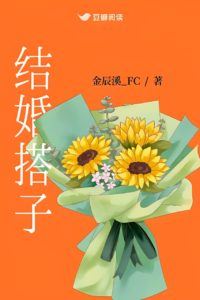
Wedding Partners
+Add to Custom List
Genres:
Novel Info

Summary

... Read More

Fu Qingquan is a thirty-one-year-old woman living in Jingbei City, China, who fits none of the local stereotypes of wealth or success. She resides in a cramped sixty-square-meter apartment with her parents, works a modest job at a foreign financial company with a low salary, and faces the constant threat of layoffs. Her primary source of stress is not her career or finances, but the relentless pressure from her second aunt to marry. Having been single for six years, Fu Qingquan has endured a long series of disastrous blind dates arranged by her family, featuring men who are either overweight, negative, or obsessed with their ex-partners. She maintains a side career as a restaurant blogger, a job that offers her creative freedom and a small additional income, though she remains humble about her influence.

The story begins with Fu Qingquan attending another blind date set up by her second aunt. The man, Mr. Shen, is significantly overweight and displays arrogant, misogynistic attitudes, claiming that a woman's only value lies in her ability to bear children. When he insults her self-worth, Fu Qingquan loses her temper and throws a teacup at him. Humiliated and enraged, she flees the restaurant and seeks solace in a newly opened coffee shop called 'Desert.' The shop, decorated with lush tropical plants, becomes a sanctuary for her. There, she meets the owner, Yuan Mo, a tall, stern-looking man with a fierce demeanor who contrasts sharply with the friendly staff she met the day before. Initially intimidated, Fu Qingquan is disarmed when Yuan Mo notices her disappointment over the delayed flower baskets and kindly informs her that roses will be available soon.

The following day, Fu Qingquan returns to the cafe, where she receives a barrage of angry messages from her second aunt and a warning from a colleague about impending layoffs. Overwhelmed by the convergence of familial pressure and professional insecurity, she breaks down in tears. In a moment of impulsive desperation, she looks at Yuan Mo and abruptly proposes marriage. Shocked but composed, Yuan Mo reveals that he is thirty-five, owns the cafe, and has also been pressured by his family to marry. He proposes a pragmatic arrangement: a two-month trial period to get to know each other before considering a marriage certificate. He offers to provide medical and background checks to prove his sincerity, including verifying his single status at a police station where his uncle works.

Fu Qingquan agrees to the arrangement, partly to escape her aunt's harassment and partly because she sees no better option. They proceed with the checks, during which Yuan Mo demonstrates care by helping her when she suffers from low blood sugar. They share a meal, and Yuan Mo reveals he is particular about hygiene, using serving chopsticks despite being healthy. As they spend more time together, visiting the hospital for tests and having meals, a genuine connection begins to form. Yuan Mo drives her to work daily, helping her counter workplace gossip about her single status, while Fu Qingquan helps Yuan Mo navigate the complexities of introducing him to her parents.

The relationship faces a test when Fu Qingquan's second aunt unexpectedly visits her home, demanding to know about the boyfriend Fu Qingquan claimed to have. To deflect her aunt's interference, Fu Qingquan lies about her brother's wife being pregnant, using a social media post to trick her aunt into leaving. Just as the aunt departs, Yuan Mo arrives to meet her parents. The meeting is tense but successful, with Yuan Mo displaying respect and courtesy. Throughout these interactions, Fu Qingquan's perspective on Yuan Mo shifts from seeing him as a convenient shield to recognizing his kindness and reliability. Meanwhile, Yuan Mo's feelings deepen, though he remains cautious about moving too fast. The narrative follows their gradual transition from a contractual arrangement to a budding romance, set against the backdrop of urban life, family expectations, and the challenges of finding stability in an uncertain world.

Latest Release
DateGroupRelease
2026-08-11shanghai fantasy c12
2026-08-11shanghai fantasy c11
2026-08-11shanghai fantasy c10
2026-08-11shanghai fantasy c9
2026-08-11shanghai fantasy c8
2026-08-11shanghai fantasy c7
2026-08-11shanghai fantasy c6
2026-08-11shanghai fantasy c5
2026-08-11shanghai fantasy c4
2026-08-11shanghai fantasy c3
2026-08-11shanghai fantasy c2
2026-08-11shanghai fantasy c1

Community Reviews

Rating(4.4 / 5.0, 5votes)
5 stars
3(60%)
4 stars
1(20%)
3 stars
1(20%)
2 stars
0(0%)
1 stars
0(0%)

Popular reviews

... Read More
I need to discuss the sunroom because it is hands down the most atmospheric space I've encountered in this novel. Let me set the scene for you: floor-to-ceiling windows, drapes filtering the sunlight, a rug, two beanbags, a small table, and then JUST PLANTS everywhere. And the description hits different because of ONE line. When Yuan Mo says 'I don't like them. I just think plants are more pitiful than pets,' I literally stopped reading and stared at the wall. Think about that. He's surrounded by these green things that need care, that can't leave, that depend entirely on someone else to survive. And he sees that as pitiful. But then he takes care of them anyway. Isn't that... isn't that kind of the whole thing with Fu Qingquan, too? She's the one who needs someone to notice she's struggling with a suitcase, and he notices. She's the one who would feel hollow without her rabbit dolls, and he makes sure they have a home in his space. The black warrior aesthetic of his apartment is also doing SO much work. The author keeps emphasizing how dark and deep the decor is, and then these rabbit dolls appear as 'scattered pops of color' that 'ignite a glimmer of light.' This isn't just set dressing, people. The entire apartment is a metaphor for Yuan Mo himself — dark, contained, carefully curated — and Fu Qingquan's presence is what's slowly turning it into a home. The rose-scented laundry detergent on the sheets, the spotless mirror he apparently wiped himself, the mattress chosen specifically because she had a herniated disc... every detail of this space is an act of love. And the sunroom itself? It's the most vulnerable space in the entire book. No furniture except beanbags and a rug, completely open to the sky, where she sits and just... breathes. It's where she feels comfortable enough to let her guard down. That's not accidental worldbuilding, that's craftsmanship.
... Read More
I've been thinking about the rabbit dolls for days and I need to get this down before I lose the thread. On the surface, they're just cute collectibles — gifts from a best friend, limited editions, blind box finds. But the author keeps returning to them, placing them in increasingly significant positions throughout Yuan Mo's apartment, and I think they're the central symbol of this entire section. Let me walk through the placement: one beside the monitor in the study, one on the leather sofa in the living room, one basking in the sunroom lounge chair. These aren't random placements. Each one is in a space that represents a different aspect of Yuan Mo's life — his work, his resting space, his most vulnerable, open space. And Fu Qingquan notices this arrangement and thinks of the idiom 'the cuckoo takes over the magpie's nest.' But it's not an invasion, is it? It's an act of devotion. He's literally building a world for her inside his own. The black decor of his apartment is important here too. It's described as 'deep and pure,' suited to his image, and at first Fu Qingquan worries it'll be depressing. But it's not — until she fills it with color. The rabbits are 'faint stars in the night sky,' and they 'ignite a glimmer of light in Yuan Mo's heart.' This is the story's central metaphor playing out in real time: two people who have built dark, contained lives around their own wounds, slowly letting each other in. And then there's Yuan Mo's line about plants being more pitiful than pets. I keep coming back to this. Plants can't leave. They can't run away from someone who hurts them. They have to stay and endure, hoping someone will water them, care for them, notice when they're struggling. Fu Qingquan is the plant in this metaphor — and Yuan Mo is the one who notices, who brings her into his space, who makes sure she has light and room to grow. The irony is that he doesn't even seem to realize he's doing it. He just... does it. That's what makes it so powerful.
... Read More
Let me just say this upfront: Yuan Mo has the best dialogue in this entire novel and I will die on this hill. The man speaks in these devastatingly soft statements that hit like freight trains, and the author has given him a voice that is instantly recognizable the moment he opens his mouth. Take the umbrella scene. Fu Qingquan is spiraling about their relationship, trying to figure out what to call it, and Yuan Mo just... tilts the umbrella toward her and says 'A deceitful woman and a victim.' That's it. That's the line. It's funny, it's self-deprecating, it's honest, and it's the most romantic thing I've read this year. He's not denying what happened, he's not making excuses, he's just... accepting it and reframing it in a way that makes her feel less guilty while simultaneously making her feel seen. And then there's the way he talks to her about the apartment. 'More than amazing, it's like we're destined to be together, Ms. Fu.' He's teasing her, but there's also this undercurrent of genuine affection that makes the line land differently the second time you read it. The author is playing with double meanings constantly, and Yuan Mo is the one delivering most of them. The dialogue between them also has this incredible natural rhythm. They don't explain their feelings to each other — they deflect, they joke, they change the subject. When she asks who cleans the floors and he says he'll hire a cleaning lady, and she insists on doing it herself, that's not just dialogue, that's character revelation through subtext. She's trying to find her place in this arrangement, to justify her presence there. And his response — 'I'll hire a cleaning lady' — is him saying, without saying it, that her worth isn't tied to her productivity. The author's narrative voice is also doing a lot of heavy lifting. It's warm, slightly wry, and has this perfect balance of humor and tenderness. When Fu Qingquan dives under the umbrella and apologizes, the narration doesn't mock her — it understands her. That's the voice of someone who loves these characters and wants you to love them too.
... Read More
Okay so I need to talk about the suitcase scene because I literally gasped when I read it. Fu Qingquan is just sitting on the floor, trying to lift this stupidly heavy bag, and the internal monologue is EVERYTHING. She rehearses three different ways to ask Yuan Mo for help, and each version reveals so much about who she is. The first is too blunt, the second is too... what did she call it, disgusting? And the third is weirdly motherly. She can't even figure out the right tone to use with this guy she's basically just started living with, and that's the most relatable thing I've read all year. But then Yuan Mo just... watches her. He doesn't push, doesn't make a big deal about it. He just sits down and starts helping her pack. And when he sees the rabbit dolls, his reaction is the softest thing. He doesn't mock her for keeping them, he doesn't say they take up too much space. He picks one up, holds it to his chest like it's something precious, and says he didn't expect her to take them either. That's when I knew this author understands male tenderness in a way most novels completely miss. What really got me though is the power dynamic shift. She's been so fiercely independent, so desperate not to owe him anything, and yet here she is, completely unable to carry her own suitcase. And he knows it. He doesn't exploit it, doesn't make her feel small for needing help. He just... helps. The fact that he later carries those rabbit dolls back and forth between the living room and study, arranging them like they're sacred artifacts, tells you everything about what kind of person he is. He sees what matters to her and treats it with reverence. I'm not crying, you're crying.
... Read More
So the pacing in this section is genuinely masterful and I want to break down why it worked so well for me. The chapter opens with this almost comedic scene — Fu Qingquan trying to rent an apartment by pretending to be in a relationship, getting caught, and then Yuan Mo casually revealing he has ANOTHER apartment. That's the setup. But instead of rushing into the moving-in moment, the author makes us WAIT. They let us sit in the car ride, in the awkward umbrella-sharing moment under the brutal afternoon sun, in Fu Qingquan's internal panic about what their 'relationship' actually is. The line 'A deceitful woman and a victim' came out of nowhere and completely shifted the tone. One second it's lighthearted comedy, the next it's this razor-sharp moment of honesty between two people who are both pretending at something. And then the chapter just... slows down. The suitcase scene takes up a significant portion, and it could have been rushed — she needs help, he helps, done. But the author makes us watch her struggle, watch her overthink, watch her finally give up, and watch Yuan Mo respond with this quiet, almost gentle patience. What I love about the structure is how the author uses the move-in as a turning point but doesn't treat it as a climax. It's just... a new normal. They establish the routine — she leaves at 6:30, he's up whenever, they divide household labor, she starts cleaning floors because she's embarrassed about her long hair falling everywhere. These tiny domestic details create a rhythm that makes the reader want to keep going, not because of dramatic tension but because they've become invested in this quiet, growing comfort between two people. The chapter ends on a seemingly random question about bookmarks, which is perfect because it mirrors how real life actually works — it doesn't end with a bang, it just... continues.
See all reviews

Characters

See all characters

Custom lists

See all custom Lists