We Have Broken Up - Reviews

We Have Broken Up
+Add to Custom List
Sort
Add review
... Read More
Okay I NEED to talk about this scene because my brain is still spinning. So Li Yu finally works up the courage to confess to Chen Qian after SIX YEARS of pining, right? And what does Chen Qian do? He doesn't even get angry or awkward about it—he just coldly says 'I only found out these past few days' and then hits him with the nuclear line: 'Why didn't you tell me earlier? Then I could have clarified things with you earlier.' This man is so brutally efficient with emotional warfare it's almost impressive. But then the REAL bomb drops. When Li Yu asks 'What has HE ever done for me?' Chen Qian goes out to the car and literally mutters to himself: 'Liu Fan didn't need to do anything. His mere existence gave meaning to everything Chen Qian did. He was like dawn to his night.' DAMN. This recontextualizes literally everything that happened before in the story. Liu Fan wasn't some abandoned ex who dumped Chen Qian when he was down—Chen Qian is the one who can't articulate how deeply Liu Fan matters, and he'd rather die than say it to Li Yu's face. Also the Liu Mengjiao subplot about buying a house feels deliberately grounded and domestic against the emotional chaos happening in the hospital. Classic parallel editing move. And Chen Qian calling her 'Liu Mengmeng' instead of 'Liu Mengjiao'—the detail about the ring on Liu Fan's finger getting noticed by everyone is also planting something huge for later.
... Read More
Okay so can we just talk about the vinegar scene because this is what I live for? The whole table ordering food and it seems totally normal but you keep looking closer and oh my god the subtext is screaming. Li Yu asks for vinegar and green chilli, says keep it light because you drank too much last night — that's care wrapped in command. Then Liu Fan deliberately avoids giving him the vinegar, adds the chili oil to his and Liu Mengjiao's sauces instead, says "you shouldn't eat raw green chilis if your stomach isn't feeling well." And Li Yu says "No need. I don't like eating vinegar." The translator literally flags this: eating vinegar = being jealous in Chinese culture. He didn't even say the word but everyone at that table felt it. Chen Qian passed it over with disdain, Li Yu made a statement, and Liu Fan — bless him — almost misunderstood before recovering. I read that exchange four times. Four. The way Li Yu's hand subtly tightened around the teacup when Chen Qian said he was thinking about where to go after this meal... that's not nothing. That's someone who thought he had exclusive access to another person's time and just got casually demoted. And then Liu Mengjiao pulls Liu Fan aside and says Li Yu looks like him — same dazzling delicate style, like dolls from the same series. "Exactly like that kind of pure first love, just waiting to turn evil." Liu Fan's response? He tells her to stop reading pornographic novel websites and read self-help books instead. This is a best friend. This is a real one. But also — can we acknowledge how much Liu Mengjiao nailed the atmosphere? She felt the exclusion between Liu Fan and Chen Qian, couldn't quite name it, and brought it up carefully. That's the kind of reader-insert friend we all need.
... Read More
Okay so this lunch meeting scene is honestly one of the most pivotal moments in the whole arc and I need to talk about it because the plot mechanics here are so clever. You have Chen Qian going into this situation completely set up to fail — he is outnumbered, outmatched, and Qian Feng clearly doesn't respect him. The text literally says Chen Qian himself admitted he is just there to foot the bill. That is a guy walking into a lion's den knowing he is the lamb. And then Liu Fan, who is basically just tagging along for a free meal, suddenly realizes this and makes the split-second decision to fake his way into being Chen Qian's assistant. Like the whole performance unfolds in real time and I am not even sure Chen Qian planned for this — you can see it in the text, Chen Qian stares at him disapprovingly but maintains polite warmth. He is probably thinking WHAT IS THIS IDs FIT. But Liu Fan just goes for it and absolutely nails it. The way he crafts this whole backstory on the fly, praising Qian Feng, talking about admiring him, drinking glass after glass — it is almost impressive how smooth he is. And the result? Fu Jiayan actually changes seats to sit next to him. The entire power dynamic at that table flips because one kid decided to bluff his way through a business negotiation. What I love about this plot move is that it also raises the stakes for Liu Fan's character because now he is fully in the deep end. He is not just Chen Qian's friend anymore, he is actively participating in the world of deals and lies and backroom negotiations. The translator even drops this note about LY possibly arranging this lunch to scheme against Chen Qian going out alone with Liu Fan. Which means this whole scene might have been manipulated from the start. The plot keeps layering on complications and I am here for it.
... Read More
I need to talk about Chen Qian for a minute because THIS man is written with such delicious restraint. "He was like a lion taking a nap — still majestic but much less aggressive." That line absolutely wrecked me. It's such a compact, perfect description. He's relaxed enough to be vulnerable in front of Liu Fan, but the predator is still there, just dormant. And Liu Fan notices it. He FEELS it. But what really got me was the history between these two. They shared meals — all four meals sometimes, including midnight snacks. Their tastes had aligned over time. Liu Fan orders dishes he knows Chen Qian likes without even checking, and Chen Qian's response is this half-hearted threat: "If it's bad, watch out for a beating." But his eyes are smiling. That's the kind of dialogue that doesn't need to shout to be devastating. It's the language of people who already know each other's rhythms. And then there's Tuan Tuan, this seemingly cold and quiet girl who turns out to have a gossip side. Liu Fan clicking into her profile and discovering their shared birthday detail — it's such a small moment but it completely reframes her. She's not just an assistant; she's someone who knows things, asks questions, watches. "You're going on a date?" Three times. First time casual, second time pressing, third time when Liu Fan admits it, she goes completely silent. Satisfied. Like she got confirmation of something she suspected. The Liu Mengjiao and Zheng Nian subplot at the dinner table is this quiet background hum of normalcy — Liu Mengjiao with band-aids on her heels from new shoes, Guo Yan snickering, Zheng Nian ignoring everything. It grounds the main relationship drama in real domestic texture. How does this all connect to the bigger picture, I wonder?
... Read More
The way this story builds romantic tension through a fucking chat interface is incredible. Tuan Tuan sends a panda avatar, gives Liu Fan her personal number, tells him to look carefully at files, changes the contract word count from 2000 to 10000 like she owns the place, and then drops 'Mr. Chen is not available during working hours' with the precision of someone who already knows Liu Fan will come running. Every message is a little needle prick. And Liu Fan? He's putting in extra hours, being 'responsible,' telling himself he has no psychological barriers — meanwhile he's scrolling through 200-page photo dumps of the guy he used to love. The contrast between his professional calm ('I'll handle this professionally') and the fact that he spent AGES looking at Chen Qian's personal photos is basically the entire emotional arc of this book condensed into one chapter. Chen Qian's files took up half the document with personal photos. HALF. Who does that? Who curates a professional file and is like 'you know what this needs, more pictures of me looking stern'?
... Read More
The central metaphor of this passage is fire. Chen Qian lives a life where 'trouble sought him out' — he's always in the middle of flames. Liu Fan is the 'designated firefighter,' the one who puts out the fires Chen Qian either started or stumbled into. But the real symbolism is in what Liu Fan realizes: he didn't choose to be this role, it activated AUTOMATICALLY after years apart. That's not habit, that's devotion. And Chen Qian — who never talks about anyone, who glares at everyone including the girl who liked his best friend, who frowns at sweetness — allows Liu Fan to keep bailing him out. The love letters are the ghost in this machine: objects meant to connect people that instead created distance. Letters meant to say 'I like you' became evidence that someone (Chen Qian?) was curating Liu Fan's world, removing competition, shaping his path. 'Sometimes I feel like you and Chen Qian didn't attend the same high school as the rest of us.' Yan Yi says this but she's describing a parallel universe where only two people matter. The school's 60th anniversary is backdrop — it's about TIME, about looking back at who you were and who you're still tied to. 'Cherishing those memories and cherishing who he was at that time.' Liu Fan isn't just nostalgic, he's mourning the version of himself that didn't know what it was to want someone this much.
... Read More
Okay so I need to discuss the absolutely vile way Zheng Nian writes in his WeChat messages because the author's choice to let us READ his actual words is so much more disturbing than any description could be. The shift from Liu Mengjiao's voice (hilarious, chaotic, 'Woof' as a response??) to Zheng Nian's cold calculated manipulation is jarring in the best way. His messages are so casually cruel: 'You think I'm as stupid as her? I just couldn't be bothered to care.' He knows she's helping Zhou Xiang and he frames it as if SHE'S the crazy one for confronting him. Then the classic abuser move—deflecting to attack her appearance. 'Are you trying to attract men to fuck you?' What a piece of work. But what I love about the writing here is how the narrative doesn't moralize for us. It just lays out his texts and lets Liu Mengjiao's chair-throwing reaction speak for itself. Liu Fan's internal panic—'Girl, what are you doing?!'—while simultaneously being proud of her is such a perfect best-friend voice. And Chen Qian's entire personality shines through that breakfast porridge scene: 'I couldn't decide between fish slice porridge and chicken porridge, so Chen Qian just bought both.' Domestic husband energy in three sentences.
... Read More
Can we just talk about how natural this dialogue is? Every character sounds exactly like themselves, and I never once had to reread a line to figure out who was speaking. Liu Fan's voice is unmistakable—'Good thing you were smart. Drink some soup. It has angelica to replenish your energy.' Casual, caring, slightly bossy in that 'I know what's good for you' way that makes him so lovable. And then his internal monologue about Li Yu: 'Liu Fan thought Li Yu was quite pitiful, unsure of what he'd been doing all those years with Chen Qian.' That observation comes out of nowhere and completely reframes everything. Chen Qian's lines are short, sharp, occasionally exasperated: 'You've got some nerve! Get that away!' followed immediately by drinking from the spoon. 'What nonsense are you thinking?' when Liu Fan asks if he's worried. This is a man who shows love through irritation and practical care—straightening Liu Fan's clothes, fanning him, accepting the soup while complaining about the ginger. But the most powerful dialogue in these chapters is the stuff that isn't said. 'No.' 'Stop it.' 'My family's'—and then nothing. Chen Qian shutting down when Liu Fan tries to reach him about his parents, and the sentence that dies mid-word. That's where the real voice of the book lives—not in what they say, but in what they can't bring themselves to finish.
... Read More
I want to unpack the sheer chaos of the office fight scene because honestly this is one of the most satisfying moments of violence I've read in a romance novel and I don't care who knows it. Liu Mengjiao hears what Zheng Nian wrote, processes it silently for approximately two seconds, and then picks up a PEN HOLDER and THROWS IT AT HIS FACE. Not a yell. Not a confrontation. Just immediate physical action. She drags her entire office chair around the desk and starts SWINGING IT. Liu Fan has to physically restrain her. She THEN aims a high-heeled kick at his face. A HI-HEEL KICK. And Liu Fan's internal monologue is just 'Her kicking posture is too perfect. If those high heels connect, Zheng Nian will be finished!' bro you are NOT helping. The stakes here are huge though—Zheng Nian is a scumbag who's been using Liu Mengjiao as an emotional spare tire while manipulating Zhou Xiang, and Liu Fan and Chen Qian risked their peace to expose him. If this goes wrong, their friendship with Zhou Xiang could be damaged, Liu Mengjiao could get fired for assault, everything could collapse. But watching her lose it in that glass-walled office while Guo Yan screams and Wu Shuang comes running? Cinematic. Purely cinematic. And then she just FOLDS HER ARMS and smiles at Zheng Nian with contempt afterward like she didn't just nearly commit felony assault at her place of employment.
... Read More
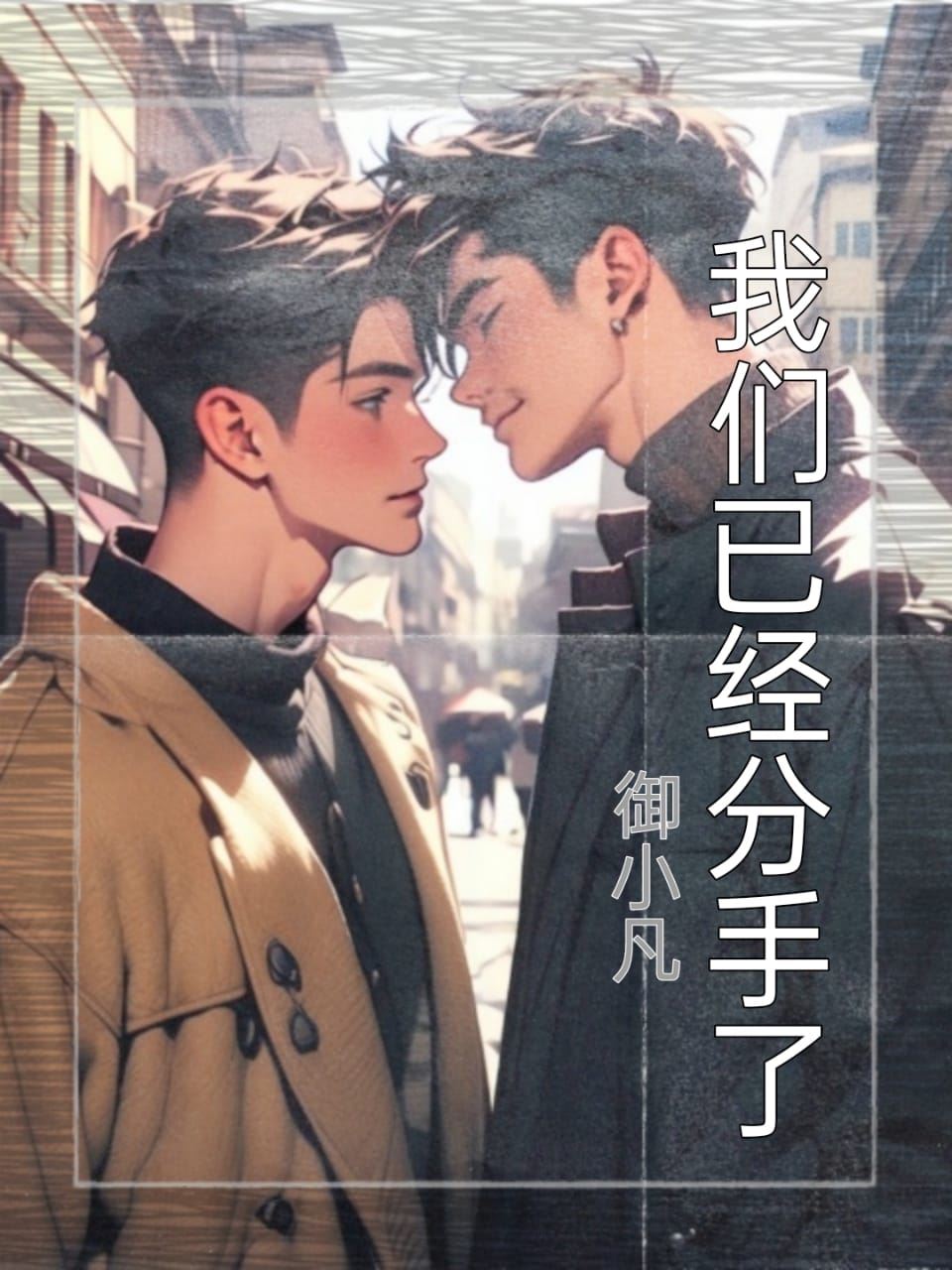
God, I love how these two speak to each other. It's not polished. It's not romantic in the conventional sense. It's messy, circular, and utterly authentic. Liu Fan's voice is that of someone who uses humor as both shield and spear—he'll teasingly feed Chen Qian lotus seed soup, then shove a spoon into his mouth when he tries to dodge. His internal monologue is chaotic, self-aware, occasionally panicked (“Who asked you to bring me here for skewers!”), but always affectionate. Chen Qian's voice, on the other hand, is all resistance and reluctant surrender. He complains about the soup, he glares, he mumbles “get lost” when he's overwhelmed—but his actions constantly betray him. He cleans Liu Fan up. He kisses him. He fetches water without being asked. Their dialogue is a dance of avoidance and approach, and every line feels lived-in. Take this exchange: “The underwear is too small.” / “It's yours.” That's not just flirtation; that's a whole relationship history compressed into three words. Liu Fan is commenting on the physical reality, but Chen Qian is answering on a psychological level—he's saying, ‘I'm wearing your clothes, I'm in your space, I'm yours.' And Liu Fan hears it. The narrative voice itself is wonderfully hybrid. It slips between Liu Fan's close third-person perspective and occasional omniscient commentary that feels like the author winking at us. The translator's notes are a joke, but the character voices are devastatingly serious. When Chen Qian says “Let's sleep,” after running his fingers through Liu Fan's hair, it's not dismissal. It's invitation. The subtext is so thick you could cut it with a skewer. I've never read dialogue that captures how long-term partners actually talk—half sentences, implied meanings, affection disguised as annoyance. It's hilarious, tender, and painfully real. How many more layers of meaning can two guys hide behind a conversation about laundry?
... Read More
Can we talk about how the author opens this chapter with an apartment building description that is SO specific and so mundane but somehow perfect? "Many people hadn't renovated their balconies, giving the building a quaint charm with various plants. Several families even grew bougainvillaea, which would spill out of their windows in lush clusters, looking as if they were reaching for the sky when in full bloom." I can literally SEE this. The image of bougainvillaea cascading down old apartment walls is such a vivid, almost nostalgic detail—it makes the whole setting feel lived-in and real, not like some sterile romance novel backdrop. And then immediately undercut it with the broken elevator. Because of COURSE one of the two elevators is broken. Because THIS is Liu Fan's life. Fourth floor, dark stairwell, lights out from second to fourth, property management hasn't fixed it yet. It's comedic in the most relatable way possible. The contrast between the warm, green, growing plants outside the windows and the dark, decaying stairwell inside is honestly kind of beautiful. It mirrors Liu Fan's whole situation—there's beauty and life happening around him but he's stumbling through the dark alone. Not that I'm emotional or anything.
... Read More
There's something so cinematic about the late-night scene where Chen Qian is leaving. The author describes it in this almost voyeuristic way - Liu Fan perking up his ears, trying to hear when Chen Qian actually left, the soft click of the door closing, the phone lighting up with that brief text. You can literally feel the silence of that apartment. And then the next morning - that cool, slippery sensation between his legs, the reluctant climb out of bed, the washing machine load that feels heavier than it should. The domesticity of it all is what gets me. This isn't some grand dramatic setting, it's just a guy doing laundry alone at home, staring at his reflection in the mirror and wondering why finding someone he likes is so difficult. The author has this incredible ability to make ordinary spaces feel loaded with unspoken emotion. Even the food delivery scene - the plastic bag on the doorstep, the receipt with Liu Fan's address, sitting down to a meal for one that stretches into day two. The world of this story feels so grounded and real because it's built from these specific, sensory moments rather than sweeping descriptions.

Leave a comment

You must be logged in to leave comments. or
