We Can't Let Go of Each Other
Novel Info
  • Author:
  • Status:Ongoing

Summary

... Read More

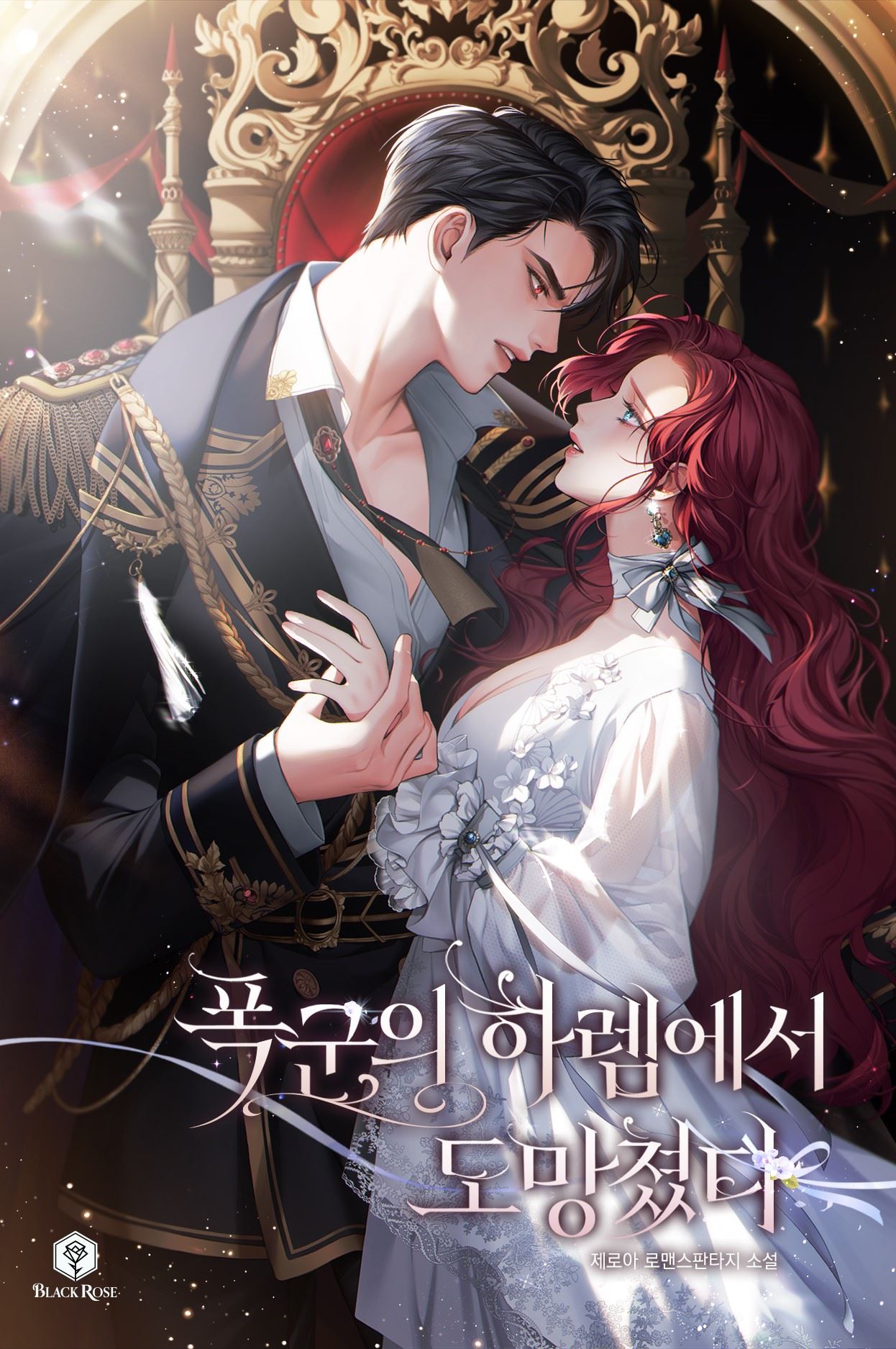
Rosalie Malève, twenty-nine, returns to her family’s decaying townhouse in Rodin after a long absence, confronting the ruin of a noble house once proud but now bankrupt. Her father invested disastrously in weapons trade, fell into despair, and died, leaving the Earldom to her brother Gérard, who inherits both the title and the mounting debts. Rosalie herself has carried the weight of a broken past for ten years: she once eloped with Hystein de Vallière, a commoner painter she loved passionately, but her brother intervened, brutally beating Hystein and separating them. Hystein vanished to the southern continent, where he eventually regained his health, proved his worth, and rose to become the wealthy and respected Duke of Vallière, while Rosalie remained branded as a scandalous runaway, isolated from society and unable to secure a match.

To save her family from financial collapse and ensure her younger brother Theo receives an education, Rosalie accepts a marriage of convenience proposed by Countess Aloua, the niece of the late king. The groom is Jeremy Aloua, the Countess’s only son, whose intelligence was regressed to that of a child after a fever and whose physical afflictions—limping and stuttering—have left him shunned by high society. Rosalie meets Jeremy at a ball hosted by the Countess, where his extreme shyness and social anxiety are immediately apparent. Despite his fears, Jeremy displays a quiet kindness, particularly through their shared love of history books, and gradually begins to open up to Rosalie, who finds herself forming a genuine affection for him even as her heart remains tethered to the memory of Hystein.

The story pivots when Rosalie and Jeremy attend a charity auction hosted by Princess Camille, where Hystein unexpectedly appears and bid 100,000 yura for a pair of royal earrings, drawing gasps from the assembled nobility. During the event, Rosalie encounters Hystein alone in a classroom, where he reveals he is unwell and that Inès, the princess’s lady-in-waiting, harbors romantic feelings for him. Hystein speaks harshly to Rosalie, telling her she is a past he wishes to hide, yet his behavior suggests internal conflict rather than indifference. After this encounter, Rosalie realizes that neither her marriage to Jeremy nor her lingering attachment to Hystein will bring peace without honest confrontation.

Jeremy, sensing Rosalie’s continued emotional entanglement with Hystein, expresses his own disappointment and insecurity, but also a quiet determination to be worthy of her. He asks her on a proper date to the opera, an effort that terrifies him due to his social anxieties but which he undertakes for her sake. At the opera, Rosalie encounters Inès again, who taunts her subtly about the earrings Hystein gifted, deepening Rosalie’s turmoil. She recognizes that Jeremy, despite his limitations, treats her with respect and generosity, qualities absent from her passionate but tragic romance with Hystein.

As the narrative progresses, Rosalie must navigate the competing demands of duty, past love, and emerging affection. The core conflict centers on whether she can find a path to happiness that honors her obligations to her family without sacrificing her own well-being. Jeremy’ gradual courage and Rosalie’ growing tenderness toward him suggest a potential future built on mutual support rather than the destructive intensity of her past. Meanwhile, Hystein’ sudden return to Rodin and his ambiguous behavior toward Rosalie introduce the possibility that unresolved feelings may surface again, threatening the fragile stability Rosalie is beginning to build. The story moves toward a reckoning in which Rosalie must decide whom she will choose and what kind of life she will accept.

Latest Release
DateGroupRelease
2026-10-03dusk blossoms c31
2026-10-03dusk blossoms c30
2026-10-03dusk blossoms c29
2026-10-03dusk blossoms c28
2026-10-03dusk blossoms c27
2026-10-03dusk blossoms c26
2026-10-03dusk blossoms c25
2026-10-03dusk blossoms c24
2026-10-03dusk blossoms c23
2026-10-03dusk blossoms c22
2026-10-03dusk blossoms c21
2026-10-03dusk blossoms c20

Community Reviews

Rating(0 / 5.0, 49votes)
5 stars
0(0%)
4 stars
0(0%)
3 stars
0(0%)
2 stars
0(0%)
1 stars
0(0%)

Popular reviews

... Read More
The structure of these chapters is so smart. We start in Chapter 5 with this incredibly intimate, quiet scene—Rosalie on her bed, Jeremy hovering at her door with a flower, the two of them talking about history books. It's slow, almost domestic, and we get to know these characters in a way that feels private. Then BAM—three days later, we're at a card game with the cousins gossiping, then suddenly Rosalie is getting an invitation to a royal tea party, then we're in a greenhouse full of judgment. The pivot from bedroom to ballroom happens so fast, and I think that's intentional. The author doesn't let us settle into this sweet little moment between Rosalie and Jeremy before thrusting Rosalie back into the social arena. It's like: sure, you had one nice interaction, now remember where you actually are. What I love about the pacing is that the tea party chapter never stops moving. First there's the worry about the dress, then the carriage ride, then the greenhouse reveal, then the sweating, then the questions about Hystein, then the murder mention, then the charity auction, then Countess Aloua's dramatic entrance. Each beat adds new information or tension, and by the time Countess Aloua accuses the princess of pranking Rosalie, I was completely invested. The author knows exactly when to compress time (three days pass in one sentence) and when to stretch it (every glance at the tea party feels eternal).
... Read More
I need to appreciate the structural genius of how these chapters move. The author doesn't waste a single beat. Let me walk through it: You open with Rosalie feeling embarrassed about judging Inès. There's tenderness. She's realizing her mistake. Then Jeremy's reading and you get this light, almost comedic moment about the biography. The opera scene — she teases him about covering her ears during the climax, he gets flustered, she smiles. This is the calm before everything detonates. And then: 'That night, fortunately or unfortunately, she didn't run into Hystein.' One sentence. That's it. One sentence that carries the weight of an entire unspoken history, and then — 'And the next morning, news spread.' No transition paragraph. No 'three days later.' Just a *** and straight into the newspaper boy shouting about the murder. The pacing after that is almost documentary-like. The newspaper headlines, Gerard reading with a hungover Lamon, the reporter chasing them down, the scolding wives, the return to domestic normalcy — all of this unfolds in real time, almost like we're living it alongside the characters. And then at the hotel lounge, the atmosphere shifts again. The staff is oddly quiet, the servants are avoiding eye contact, and Rosalie finds out about Inès through a third party while standing in a place that should be joyful. The scene where Rosalie pieces together the red-haired victim pattern is where the pacing becomes almost breathless. She brings up the tea party murder. Angela remembers the waitress. Rosalie mentions the slashed face. And then — 'Fiery red hair.' The sentence is short. Deliberate. It stops the momentum cold. What's remarkable is that the author controls tension so differently in each section. The Jeremy scenes are slow and warm. The newspaper discovery is urgent and fragmented. The hotel lounge scene is suffocating with unspoken dread. And the ending — Rosalie worrying about going to the bookstore tomorrow — has this low hum of impending danger underneath everyday life. That contrast is what makes the pacing work so well. The ordinary moments become terrifying because we know what's coming.
... Read More
If this batch had a heart, it would be Jeremy de Aloua's. We've spent so long watching him flinch, stammer, and retreat behind his mother's skirts. Here, for the first time, that spine straightens. The text doesn't announce his bravery with a fanfare; it shows it in the quiet, trembling details. He's pale enough to faint, his legs are stiff from sitting in a carriage, he's terrified of the duke. And yet, he gets out of the carriage alone. The moment he squeezes his eyes shut and tells himself, 'I can do this. I have to bring Rosalie back,' is a full character arc crystallized into a single sentence. What's fascinating is the catalyst. This isn't Jeremy the social-climbing fiancé, perfectly matched for political reasons. This is Jeremy the man who, as the narrator helpfully reminds us, discovered he was 'drawn to a woman' through shared hobbies and quiet moments. His motivation is pure, un-noble adoration, and it's what fuels him past his deep-seated fears. The relationship with his mother, Countess Aloua, undergoes a subtle but crucial shift. Initially, she's the overprotective force trying to shield him ('Do you realize how precious you are?'). But in a stunning reversal, it's *she* who confronts the duke. Her line, 'As his mother, I beg you...' is a pivot from coddling to alliance. She sees her son's resolve and chooses to support it, not stifle it. Their dynamic transforms from protector-protected to partners in a crisis. Meanwhile, the ghost of Rosalie and Hysteın's past hangs over every interaction. Jeremy's accusation hinges on that history: 'I heard you and Miss Rosalie were lovers.' Hysteın's deflection ('That's ancient history') feels less like a denial and more like a buried scar. Their entire relationship is a tangled knot of love, resentment, and unspoken power, and Jeremy is now tangling himself into it. The most poignant relational beat is Hysteın's final line to Jeremy: 'I never thought the Young Master of Aloua would be so taken with my former lover.' It's dripping with condescension, but also with a faint, grudging acknowledgment. He sees the change in Jeremy. The relationship between the two men isn't resolved; it's escalated from silent rivalry to open, tense confrontation.
... Read More
The dialogue in this passage is a masterclass in character distinction. You can close your eyes and tell who's speaking based on sentence structure alone. Jeremy's voice is built entirely from fragmentation. "Uh, n-nice to meet..." "M-mother... Is, is it done now?" "Ah, uh..." "Um, Jeremy, I'm feeling a bit warm. Would you mind showing me to a place where I can get some fresh air?" Each sentence starts, stalls, redirects. He never finishes a thought. When he finally works up the courage to visit Rosalie in her room, his first words are so fractured she can barely parse them: "E-e-e-excuse me... L-l-lady Rosalie... I came because I have something to say..." The triple-stutter on "excuse me" and the halting repetition of her title—it's almost unbearable to read because it's so真实 (genuinely) awkward. And yet he comes. That's the power of the voice. Hys is the exact opposite. His sentences are complete, sharp, and deployed like weapons. "Don't call my name so carelessly." "To me, you are nothing more, nothing less than a past I wish to hide." No stammers. No qualifiers. Every word lands with precision. The parallel structure of "nothing more, nothing less" is almost legalistic in its finality—he's not just rejecting her, he's drafting a contract of erasure. Rosalie's voice sits somewhere in between. She's trying to perform grace under impossible circumstances, so her dialogue is mostly polite deflections and forced cheerfulness. "The winters in Malève's estate are quite harsh." "I'm glad you know. I got this injury because of you." She's always one step away from saying what she actually feels. Even when she's hurting, her default mode is courtesy. That's who she is. Angela's voice is the warmest—protective, practical, slightly exasperated. "Why is my good little sister being so stubborn today?" Family shorthand. She doesn't need to explain anything; the reader understands the history between them in one line. And Countess Aloua? Her dialogue is performative warmth masking absolute calculation. "I knew I had an eye for people! With gentle Lady Rosalie, I knew my son would get along well." Said with genuine enthusiasm, which makes it infinitely more sinister. She's not planning a marriage—she's running an experiment. The narrative voice itself is also worth discussing. It's close third person, deeply embedded in Rosalie's consciousness, but it has moments of sharp observational clarity that cut through her self-pity. When she notices the Countess's golden hair streaked with white and thinks "Even with a grown son, the Countess still shone. Wearing a deep green dress, Rosalie felt that the Countess stood out more than she herself did." That's not just description—that's Rosalie's entire self-image collapsing in one sentence.
... Read More
I keep coming back to the atmosphere of this opening chapter. The way the author describes the townhouse — 'old-fashioned yet run-down, covered in untended ivy,' the hallway with lamps left unlit to save oil, the chipped fireplace they can't even afford to heat. It's not just set dressing, it's a character in itself. Early spring is supposed to be hopeful but indoors it's colder than outside. The contrast between the 'swelling flower buds and chirping birds' that Rosalie can't bear to look at and the dead, dark house she's returning to is just chef's kiss levels of miserable. And then the boutique scene — warm seats, flattered Madame, the crisp dialogue about custom orders — it feels almost too bright, too clean after the suffocating gray of the Malève estate. The rain on their clothes, the damp cold seeping in... I could physically feel the chill. This world feels lived-in and oppressive and I love it.
... Read More
Let me just say this one scene had me pressing my phone further away from my face like I was invading someone's privacy. Rosalie's external conflict is straightforward: she needs to maintain her engagement to Jeremy for her family's sake, navigate a society that despises her, and survive social events where everyone is either mocking her or using her. That's a full-time job with hostile management. But the INTERNAL conflict? That's where the real damage lives. She tells herself Jeremy is fine. She tells herself she should try harder for Gêrard and Angela. She tells herself Hystein is a past she should have forgotten. And then Hystein grabs her arm, pulls her into a dark classroom, presses his chest against her back, and covers her mouth with his hand while her potential rival paces outside the door. The physical stakes in this scene are absurdly high. If Inês or the other noblewomen find them — Rosalie, the disgraced lady, alone in a locked room with the most eligible duke in the country, in a position that looks absolutely compromised — her already-shredded reputation wouldn't just take another hit. It would cease to exist. She'd be erased completely. And Jeremy? He's waiting outside, terrified of crowds, clutching his cane, completely unaware that the woman he's performing courtship with is being pressed against a wall by a man who still smells like cologne from some remembered intimate moment. What makes this scene work so well is that the author never lets us forget how DANGEROUS this is for Rosalie. Every footstep approaching the door is a heartbeat of genuine terror. Hystein curses under his breath — "damn" — when he realizes people are coming back. He pulls her closer instead of letting her go. He could abandon her and save himself, but he doesn't. And then the external conflict gets LAYERED. Inês isn't just some random pursuer — she's the princess's lady-in-waiting, which means her interest in Hystein has political weight. The text tells us she was told she'd be a "perfect bride for the Duke" and she's devastated he didn't show up for HER event. So Hystein isn't just avoiding a romantic rival; he's avoiding a woman whose connection to the princess could make or break his social standing. Meanwhile Rosalie's heart is pounding so loud she's convinced Hystein can hear it through her back. She's trembling. She can't even speak his name without whispering it. And he covers her mouth and says just one word: "Shh." One syllable. One syllable contains every unspoken thing between them — the years of history, the reasons he's here and she's there, the fact that neither of them planned this but both of them are grateful and terrified that it happened. The noise outside fades. The moment stretches. And Rosalie realizes she doesn't want to be anywhere else in the world, even though by every rational standard she should be running. The stakes here aren't just romantic. They're existential. In this society, a woman like Rosalie has exactly one currency: her reputation. And in a dark classroom, with a duke's arm around her waist and footsteps in the hall, that currency is about to be spent on something she can't afford to lose.
See all reviews

Custom lists

See all custom Lists