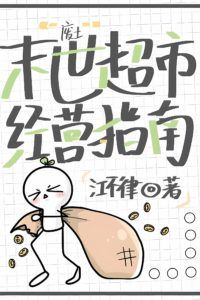
Wasteland Apocalypse Supermarket Management Guide
+Add to Custom List
Genres:
Novel Info

Summary

... Read More

Wen Yu is an ordinary office worker whose only solace is a business simulation game. After reaching the highest title of City Lord, she is killed in a traffic accident caused by an overloaded truck. Upon losing consciousness, a mechanical voice announces the loading of a supermarket management system, triggered by her exceptional enthusiasm for management games. She agrees to a contract with the system to transport her max-level game assets into various small worlds to fulfill tasks. Expecting a peaceful, high-safety world with strong consumer capacity, Wen Yu carefully selects an ancient alternate-world setting from the available options. However, during the transition, space-time turbulence causes significant energy loss, forcing an emergency landing in a harsh wasteland apocalypse world instead of the intended safe zone.

Wen Yu awakens inside a small, damaged convenience store in a desert scorched by nuclear radiation. A mutated bat, five meters long, crashes into the store’s glass, but the system reveals that the convenience store is an absolute safe zone, immune to radiation and external threats. The system compensates for the error by providing ten new player gift packages, which include purified water, food, anti-radiation suits, and basic appliances. Wen Yu names her store Oasis and sets prices for her goods, establishing a business model that accepts both currency and item pawning. She discovers that the local currency is silver coins, and while those inside the central base use money, survivors outside rely on bartering. Her first customer is Chen Zui, a survivor expelled from the central base because her mutation level exceeded the safety limit of thirty. Chen Zui is desperate, dehydrated, and hunted by mutated monsters. She enters Oasis, shocked to find zero radiation inside, and purchases purified water and an anti-radiation suit using mutated monster meat as collateral.

Chen Zui returns to the central base and realizes that consuming food with zero radiation lowers her mutation level, allowing her to re-enter the city. She shares this discovery with her neighbor, Hu Jiang, and they plan to return to the store with more supplies. Meanwhile, Wen Yu unlocks personal skills, choosing Purification to remove radiation from items and Taming to control mutated animals. She tames a Grade A Crimson Fox named Hongye, which becomes her loyal companion and guard. The store’s reputation begins to spread through the wasteland. Xu Yang, a survivor on the brink of death with a mutation level near sixty, is drawn by the scent of fried food. He enters the store and learns that the mutated meat sold there is purified and safe, giving him hope for survival. He leaves a five-star rating, further boosting the store’s positive feedback points.

The narrative expands to include Wang Chaoyun, a martial arts instructor and captain of a hunting squad. After being severely injured by a berserk mutated wild hare, his team carries him to Oasis. Wen Yu provides medical supplies and treats his wounds with medicine that heals far faster than anything available in the central base. She allows the team to rest in the safe zone and offers to buy the mutated hare they defeated. This transaction introduces a new economic dynamic, as survivors begin to bring their hunted goods to Oasis instead of the central base market. Wen Yu continues to upgrade her store, unlocking new products and skills, while Chen Zui and Hu Jiang save up to bring Grandma Liu and her granddaughter Tian Tian to the store. The story establishes a growing network of survivors who rely on Oasis as a sanctuary and trading hub in a hostile world.

The core conflict revolves around Wen Yu’s adaptation to this dangerous world and her role as a merchant who holds the key to survival for many. While she lacks combat prowess, her store’s absolute safety and her ability to purify radiation make her indispensable. The central base, ruled by the city lord You Ye, maintains strict control over its citizens, but the existence of Oasis challenges this monopoly by offering a way to reduce mutation levels. As more survivors discover the store, tensions rise between those who benefit from Wen Yu’s goods and the established powers in the central base. Wen Yu’s goal is to upgrade her convenience store into a larger supermarket, which will expand her capabilities and allow her to help more people. The story follows her daily operations, her interactions with diverse customers, and her gradual integration into the wasteland’s social fabric, setting the stage for future conflicts and expansions of her commercial empire.

Latest Release
DateGroupRelease
2026-08-11shanghai fantasy c14
2026-08-11shanghai fantasy c13
2026-08-11shanghai fantasy c12
2026-08-11shanghai fantasy c11
2026-08-11shanghai fantasy c10
2026-08-11shanghai fantasy c9
2026-08-11shanghai fantasy c8
2026-08-11shanghai fantasy c7
2026-08-11shanghai fantasy c6
2026-08-11shanghai fantasy c5
2026-08-11shanghai fantasy c4
2026-08-11shanghai fantasy c3

Community Reviews

Rating(4 / 5.0, 10votes)
5 stars
2(20%)
4 stars
6(60%)
3 stars
2(20%)
2 stars
0(0%)
1 stars
0(0%)

Popular reviews

... Read More
I need to talk about Qingmiao because honestly she stole my heart in this chapter. Like, an A-grade mutated fox is standing right there, potentially lethal, and her immediate thought is "can I touch its tail?" Zhang Yuan has to physically pull her back. But then when Wen Yu says "you need to ask Hongye," Qingmiao works up the courage, takes a step, then another, and gently strokes those three fluffy tails. The text says her eyes "suddenly brightened, too excited to speak." I felt that. I've been there with dogs, cats, anything fluffy. It's a deeply human moment of finding joy in a hopeless world. And Qingyuan? Same thing. She "struggled but ultimately could not resist the allure." These two kids, who just lost their captain and were terrified for their lives, find themselves on their knees petting an A-grade beast because the fur is really nice. It's such a specific, honest character detail. Then there's Wang Chaoyun, who's been through forty years of apocalypse and still bows politely to a young woman who saved him. "I am Wang Chaoyun. Before the apocalypse, I ran a martial arts school at the central base." He's trying to establish credibility, to be dignified, but he's also a guy who's deeply grateful and doesn't know how to repay kindness except through labor. And Wen Yu—she's gentle but not naive. She refuses their meat as payment, insists on paying market price. She's running a BUSINESS in the wasteland. The power dynamic between all these characters is fascinating. The hunters owe her, she owes them good treatment, and Hongye is just... the glue holding the emotional temperature of the place down.
... Read More
The stakes in this opening are genuinely high and they're established immediately. Chen Zui is walking through a desert at 75°C with a cracked radiation suit and half a bottle of water, and she's been exiled because her mutation level exceeded 30. That means if she tries to go back to the central base, she'll be turned away. She has nowhere to go and not much time left. The author doesn't soft-pedal any of this—we get the number 70 (radiation level that causes painful death in two weeks), the wildcat that killed her team, the 'Survive!!!' scream. It's brutal and it works. But the conflict isn't just external. Wen Yu has her own problems—her max-level city is gone, reduced to a single convenience store in a death world, and the system that brought her here is clearly unreliable. She's vulnerable too, just in a different way. The giant mutated bat outside the store is a constant threat, and the system only said the store is 'absolutely safe' from radiation, not from physical attacks. What makes the stakes compelling is that both characters are at their lowest points. Wen Yu lost her game progress. Chen Zui lost her team and her home. They're both starting from zero in a world that wants them dead. The convenience store is their only advantage, and the fact that it's the only safe place for miles makes it incredibly valuable—which also makes it a target. The tension is maintained well because the author doesn't resolve anything. Chen Zui gets water and a bun, yes, but she's still exiled, still radioactive, still alone. The anti-radiation suit is introduced as available but we don't know if she can afford it or if it'll solve her problems. The system error is never addressed. Every answer creates new questions. That's how you keep someone reading.
... Read More
The pacing in this chapter is genuinely impressive, and I want to break down why. It opens slow—Wang Chaoyun waking up, disoriented, the wound still aching. Very grounded, very sensory. Then we cut to Wen Yu at the counter, biting her pen, staring at a flyer design. This is a deliberate breather. The author knows we just had a dramatic rescue scene and gives us a moment of quiet worldbuilding. She's thinking about business strategy. "It is unsustainable to rely solely on these few scattered customers for business..." This is the kind of detail that makes the world feel real. Then—bam—we're back in the desert with the hunting team, tracking mutated cactus, lost, following bloodstains. The pace quickens. They find the hare, the moles appear, fire strategy, action sequence. Fast, efficient, no wasted words. Then the crimson fox arrives. The tension spikes to maximum. Wang Chaoyun's breathing grows rapid. The kids drop their game and grab their gear. And then—Wen Yu opens the door, pets the fox, calls it Hongye. The tension deflates instantly. It's like a rubber band snapping back. After that, the chapter settles into a warm, domestic rhythm: the kids petting the fox, Wen Yu processing meat, cooking dinner, playing a guessing game with beef jerky. The Xu Yang peek at the end is a perfect button—a small character moment that hints at more story to come without demanding attention. The structure of this chapter moves from disorientation → business planning → action → tension → comedy → domestic warmth → hook. That's a complete emotional arc for a single chapter, and it never feels rushed because each section gets exactly the space it needs.
... Read More
I need to talk about the moment Chen Zui drinks the water. Just... the way the author describes it. 'Her parched cells seemed to cry out in unison. Gulping it down in three large swigs, she felt herself come back to life.' I literally felt that. I've been so thirsty before and then finally got water and it was like this whole-body relief, and the author captured that perfectly. But what really got me was the contrast. Chen Zui is walking through a desert at 75 degrees Celsius with half a bottle of water, her radiation suit patched with hemp rope, and she just got exiled from the only home she's ever known after watching her whole team die. And then she walks into this cool, clean store with zero radiation and someone hands her water and a FREE bun. The fact that Wen Yu just gave it to her without being asked—'Since you're our first customer, here's a little something on the house'—that small act of kindness in a world that has none hit me harder than I expected. I also loved the detail about Chen Zui resisting the urge to drink until the transaction was complete. That's such a wasteland mindset—she's so used to scarcity and caution that even in a safe store, she can't just grab water. She has to follow the rules. It shows how broken her world is without ever saying 'her world is broken.' The emotional core here is really about two people who are both vulnerable in different ways. Wen Yu lost her max-level city and is starting from scratch. Chen Zui lost her team, her home, and is literally dying from radiation. They're both displaced. I'm already invested in whatever relationship develops between them.
... Read More
There's something deeply symbolic about a convenience store appearing in the middle of a wasteland desert, and I think the author knows it. A convenience store—from before the apocalypse—is literally a temple of normalcy. It represents everything the old world had: refrigerated food, sanitary products, snacks, the concept of choosing what you want and paying for it. Wen Yu stocking the store with chips, snow cakes, gummies, chicken wings, and specifically sanitary pads of different sizes—that last detail hit me hard. "After so many years in the wasteland apocalypse, who knew how girls had gotten by." This isn't just worldbuilding; it's a quiet act of rebellion against the apocalypse. The store is a small pocket of civilization, and Hongye, the A-grade mutated fox, is its guardian spirit. The fox represents the wild world being tamed, domesticated, made gentle through kindness. When Qingmiao touches its tail and her eyes brighten, it's not just about soft fur—it's about the human need for beauty and comfort even in the worst conditions. The flyer design scene is also symbolic. Wen Yu, the transmigration girl, uses her old-world skills (graphic design) to survive in the new world. She's literally printing advertisements for civilization. And the fact that the store has no advertisements, no social media, no marketing—just a hand-drawn flyer with a hamburger set for 29 silver coins—feels like a tiny flag planted in the sand saying: we are still here, we still have commerce, we still have community. The recurring motif of food is key too. Every interaction in this chapter revolves around food: medicine paid in meat, the team bringing game, Wen Yu cooking braised lion's head for Hongye, the beef jerky game, Xu Yang drawn by aroma. Food is the currency of connection in a world where everything else has broken down.
... Read More
Let me be straight with you—this chapter made me genuinely nervous, and I want to talk about why the stakes feel so real even when the tone is warm. On the surface, nothing catastrophic happens. A fox shows up, gets petted, goes inside. People buy snacks. But the underlying tension is absolutely there, and it's doing important work. The mutated moles—"extremely sharp teeth," "bloodthirsty nature," "traveling in packs," "could carry infectious diseases." The author doesn't let us forget what this world is. The fire strategy works, but only barely. Wang Chaoyun is a seasoned hunter, and even he had to coordinate a tactical encirclement with gasoline. These people are one bad day away from death. Then the crimson fox appears. A-GRADE. The text explicitly tells us: "The gap between each level of mutated creatures was significant." The team could handle a B-grade hare. An A-grade creature is a different universe of danger. Their muscle memory screamed at them to run, but they couldn't. That's the conflict—the instinct to survive versus the refusal to abandon someone. And then Wen Yu walks out and pets it like it's a house cat. Here's what keeps me up at night: what if she hadn't been able to control Hongye? What if the fox had attacked? The entire chapter's warmth is built on a knife's edge. Wen Yu's gentleness is real, but so is the danger. And Xu Yang at the end—surviving another day in an unfinished building with no door, mutation level teetering at 60, wondering if he should spend his last coins on food because "if he were to die, he might as well die well-fed." That line. That absolutely devastating line. The stakes aren't just about whether characters will win battles; they're about whether anyone gets to have a normal moment at all. And in this story, a normal moment—petting a fox, eating a burger, playing a guessing game—is itself a act of resistance
See all reviews

Characters

See all characters

Custom lists

See all custom Lists