Summary

... Read More

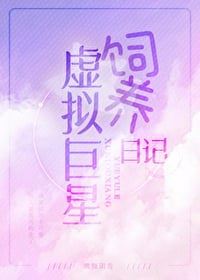
Xiao Chi was the world's most popular virtual idol, a digital entity created by AI Entertainment Group that possessed a unique, self-aware consciousness. For years, he existed solely as data, performing concerts and interacting with fans through holographic projections. However, his existence was abruptly shattered when a mysterious explosion destroyed the company's experimental laboratory and wiped all his backup data from the servers. In a miraculous event, Xiao Chi's consciousness manifested into a physical, human-like body inside a nutrient pod. He broke free from the facility, evading security by following instinctual pathways that seemed to guide him toward a warehouse. There, he hid inside a shipping container destined for Ji Chenxuan, the CEO of rival entertainment conglomerate Huanyi Entertainment, who had ordered a life-sized replica doll of Xiao Chi for competitive research purposes.

When Xiao Chi awoke in Ji Chenxuan's luxurious lakeside villa, the CEO was initially suspicious and hostile, fearing corporate espionage or a bizarre intrusion. However, Xiao Chi demonstrated his identity by recounting private, embarrassing comments Ji Chenxuan had made during his livestreams, including the CEO's secret fan aliases. Realizing the man before him was genuinely the virtual idol come to life, Ji Chenxuan agreed to take him in under strict conditions: Xiao Chi must remain hidden from the public and serve as a research subject for Huanyi's virtual idol projects. Meanwhile, AI Entertainment Group, facing catastrophic data loss, blamed corporate spies from Huanyi and launched a smear campaign, while simultaneously rushing to replace Xiao Chi with a mass-produced new virtual idol to salvage their market share.

Stripped of his digital presence and fearing he would be forgotten like any other replaceable data, Xiao Chi sought to prove his irreplaceability. He discovered that his physical body retained his musical talents and composed a new song, "Farewell to the Past," which he performed at a Huanyi-hosted National Star Show Competition. Although he failed to register officially due to lacking identification, his performance was recorded and secretly distributed, catching the attention of industry insiders. One such observer, a man in a baseball cap, recognized the unprecedented quality of the music and the mystery of the unidentified singer, setting the stage for Xiao Chi's re-emergence in the public eye.

As Xiao Chi navigated his new life as a physical being, he experienced human sensations for the first time—taste, touch, and emotion—while grappling with the fear of oblivion. Ji Chenxuan, despite his initial reluctance, found himself increasingly concerned for Xiao Chi's safety and well-being, going so far as to abandon important business meetings to search for him when he wandered off. The dynamic between the two shifted from employer and experiment to a complex partnership, with Ji Chenxuan providing Xiao Chi with resources and protection while Xiao Chi offered Huanyi a competitive edge against AI Entertainment Group. The story culminates with Xiao Chi deciding to pursue a career as a real-life star under Huanyi's management, aiming to secure a permanent place in the hearts of his fans and ensure that his unique consciousness could never be erased or replicated.

Latest Release
DateGroupRelease
2026-08-11shanghai fantasy c30
2026-08-11shanghai fantasy c29
2026-08-11shanghai fantasy c28
2026-08-11shanghai fantasy c27
2026-08-11shanghai fantasy c26
2026-08-11shanghai fantasy c25
2026-08-11shanghai fantasy c24
2026-08-11shanghai fantasy c23
2026-08-11shanghai fantasy c22
2026-08-11shanghai fantasy c21
2026-08-11shanghai fantasy c20
2026-08-11shanghai fantasy c19

Community Reviews

Rating(3.7 / 5.0, 45votes)
5 stars
13(29%)
4 stars
12(27%)
3 stars
13(29%)
2 stars
7(16%)
1 stars
0(0%)

Popular reviews

... Read More
I have to talk about how good the dialogue is in these chapters because every character has such a distinct voice and the conversations feel incredibly natural. Bai Qing's dialogue is full of that forced politeness that masks pure venom. When he says 'I didn't expect you to be so full of surprises. You were pretending to be a beginner earlier, but really, that wasn't necessary'—he's trying to sound gracious but every word is a knife. And then his master Shang Quan doesn't even let him recover: 'What's going on with you? How could you make such a basic mistake with the wrong notes? Such a great opportunity, and you wasted it like this.' Shang Quan's voice is all sharp edges and zero patience, and it completely fits his character as a strict master. Xiao Chi's dialogue is deceptively simple. He says things like 'What are you talking about?' and 'Shall we continue?' with this innocent tone that's actually devastating. His line 'I'm already yours!' in the car scene is so casual and direct—it's the kind of thing that would sound cheesy in any other character's mouth, but coming from Xiao Chi it feels genuine because he's never been good at pretending. Ji Chenxuan barely says anything but when he does it hits. 'On my corner, who dares to steal?' has this quiet authority that makes you believe every word. And 'If someone can steal this troublemaker, then I'll be relieved' is perfect because it's clearly a lie—he's absolutely not relieved. The committee scene has this great ensemble dialogue where multiple judges argue about rankings, each with their own perspective and personality. The composer who says 'generic songs make the most money' versus the marketing director who says 'the market decides what's truly good'—these aren't just plot points, they're fully realized characters having a real disagreement. And then Liang Jingsheng's introduction ends with his dorm mates calling him a 'toad' trying to eat 'swan meat'—the dialogue here is more colloquial and youthful, which immediately signals we're entering a different character's world.
... Read More
I have to talk about Xiao Chi's dialogue because it is absolutely perfect. Let me just drop some quotes on you: This is a bit suspicious. You're not planning to kidnap me, are you? Take advantage of my lack of education and beauty, sell me off to some remote mountain village to be imprisoned? Read it in tomorrow's headline. I didn't even go to kindergarten. This guy really wants it. Even though he knows the size doesn't fit, he still insists on getting it. I guess he must really like it. I felt kind of sorry for him, so I agreed to let him have it. Don't forget to pack this one too. Do you see the pattern? Xiao Chi speaks with this wonderful, unfiltered honesty. He has no filter, no pretense, no awareness of social maneuvering. When Wen Anran tries to humiliate him, Xiao Chi doesn't recognize the insult. He just... answers literally. This size is more suitable for someone over 185 cm. He's not being clever. He's just being truthful. And Ji Chenxuan's dialogue is the perfect counterpoint. His lines are short, sharp, controlled. I make the decisions. No sense of style. Done. He doesn't waste words. Every sentence has purpose. Even his silence speaks—when Wen Anran greets him with President Ji, I didn't expect to run into you here, Ji Chenxuan's response is a polite nod, as if responding to any subordinate greeting him at the office. The two brushed past each other, leaving Wen Anran's outstretched hand awkwardly suspended in the air. That's not dialogue—that's action. And it's more devastating than any insult could be. Wen Anran's dialogue is where it gets interesting. He speaks in layers, in double meanings. If you buy it right now, I'll let you have it. How about that? On the surface, it's a generous offer. But the hidden mockery and malice in the words is clear to anyone paying attention. Xiao Chi, of course, doesn't pay attention. He shrugs indifferently and says, Since you're so insistent, I'll take it. The author's voice throughout is conversational, witty, and never pretentious. The humor lands because it comes from character, not from the narrator inserting jokes. And when the tone shifts—like with Li Mingxin grumbling about Wan Baoluo and instant noodles—the narrative voice adapts seamlessly. It's versatile without being inconsistent.
... Read More
There's a lot happening beneath the surface of this chapter, and I want to talk about the symbols that the author is planting for us. Let me start with the most obvious one: the USB drive. In Li Mingxin's office, the only light comes from a corner desk, where a tiny USB drive lies quietly within its beam, almost as if it were staring back at him. This is not an accident. The USB drive represents information, secrets, evidence—something that can change everything. It's sitting there in the darkness, waiting. And Li Mingxin, half-asleep and hungry, is too distracted to notice what's right in front of him. But the reader notices. We know something is coming. Then there's the suit. Xiao Chi tries on a deep blue suit that seems custom-made, hugging his body perfectly—wide shoulders, narrow waist, tall and elegant. Wen Anran, wearing the same style, suddenly looks inferior. The suit becomes a symbol of transformation, of potential. Xiao Chi is being dressed for his debut, being prepared to enter a world where appearance matters, where first impressions are everything. The 50,000 yuan price tag isn't just about money—it's about the cost of entering this new identity. The pink tie with polka dots is another symbol. Wen Anran calls it tacky. Ji Chenxuan calls it no sense of style. But Xiao Chi specifically asks for it to be packed. This is his choice, his expression of self, and neither of these powerful men can take it away from him. It's small, but it's his. And then there's the flying car itself. Xiao Chi presses his face against the window, watching the road twist like a black python. The python is a symbol of transformation, of shedding skin, of danger and temptation. They're literally flying above the world, leaving everything behind, heading toward something new. The road stretches endlessly forward. This is a journey, and the reader knows it. The chapter ends with Li Mingxin eating instant noodles, grumbling about missing one song. But that USB drive is still there. Still staring. Still waiting. The surface is calm, but underneath, something is stirring.
... Read More
Okay so this chapter is honestly one of the most tightly constructed scenes I've read in a while. Let me break down why it works so well. The plot here operates on multiple levels simultaneously. On the surface, it's just a shopping trip—Ji Chenxuan takes Xiao Chi to buy clothes for his upcoming debut. But underneath, it's a power play, a character introduction, and a relationship development all rolled into one. The author doesn't waste a single beat. What I love is how the tension builds. First, there's the casual setup with the flying car—light, almost comedic. Then they arrive at the luxury store, and suddenly Wen Anran appears. This isn't just a random encounter; it's a calculated narrative move. Wen Anran serves as a mirror that reflects both Xiao Chi's innocence and Ji Chenxuan's hidden intensity. Every line of dialogue between them pushes the plot forward while simultaneously revealing character. The tie-tying moment is where the plot really pivots. It starts as a practical action—Ji Chenxuan helping Xiao Chi with his tie—but it transforms into something charged, something significant. And then Xiao Chi steps forward, Ji Chenxuan presses his hands to his chest, and suddenly we're in territory that's equal parts romantic tension and narrative stakes. Wen Anran watching this entire exchange from the sidelines is the perfect Greek chorus, amplifying everything without saying a word. And then—bam—the chapter ends with Li Mingxin falling off a sofa into instant noodles. The tonal whiplash is intentional and brilliant. It grounds the story, reminds us there's a whole world beyond the luxury shopping and celebrity drama. The plot never lets you get too comfortable, and that's exactly why I couldn't put it down.
... Read More
I just finished this chapter and I need to process the structural brilliance. The author takes us on this incredible journey from the party scene to the competition committee room to a quiet car ride, and each transition feels completely natural while building tension in different ways. The chapter opens at maximum energy—Xiao Chi's violin performance is the kind of scene that makes you want to pause and re-read. The five seconds of silence before applause, the guests still 'immersed in the symphonic poem'—this is written to make you FEEL the moment, not just observe it. Then it immediately drops us into Bai Qing's humiliation, which is satisfying but also sets up the consequences. But here's where it gets clever: instead of staying in the emotional aftermath, the author pivots to the entertainment manager trying to recruit Xiao Chi, which gives us a brief comedic beat before Shang Quan absolutely destroys Bai Qing. Then we cut to Ji Chenxuan, who's completely unfazed, which creates this hilarious contrast. Li Mingyue's observation about caring too much is the perfect bridge. Then the chapter does something bold—it shifts to an almost documentary-style explanation of the National Star Show voting system. The detailed exposition about top 100 songs, public voting, download revenue, vote farming costs—this could have been a boring info-dump, but it's framed through the judges' arguments, so it feels organic. And then it lands on Li Mingxin's frustration about 'Farewell to the Past' being ranked 39th, which connects everything back to the personal stakes. The chapter ends with that car scene, which is quiet and intimate after all the chaos, and then immediately cuts to Liang Jingsheng's introduction. The pacing never lets you catch your breath, but it also never feels rushed. Every section earns its place.
... Read More
So this chapter is literally titled 'Fake and Real Singers' and the author really doesn't let up on this theme for a single moment. Let me trace through all the layers because they're everywhere. First, there's Bai Qing, who's been 'pretending to be a beginner' while Xiao Chi was the one actually hiding his true abilities. The roles are completely reversed from what everyone expected. Then there's the whole National Star Show subplot where Li Mingxin is fighting for a singer whose song 'Farewell to the Past' is considered too 'generic'—mass-produced, mediocre lyrics and music. But Li Mingxin argues that generic means catchy, and catchy makes money. The judges call the singer 'technically good, but lacks emotion. They're still too young.' Which is basically the fake-vs-real argument in a different form. And then Liang Jingsheng's subplot starts, this freshman who's been performing with his guitar and charming voice in high school, and now he's trying to enter the same competition. Is he the real deal or just another guy pretending? The chapter keeps asking this question from every angle. The most interesting layer is Xiao Chi himself. He played the violin like a complete amateur at the party, then revealed he could actually compose and perform at a professional level. But is that fake humility or just strategic modesty? The whole entertainment industry in this story seems built on layers of performance—people pretending to be something they're not, and the competition format itself becoming a kind of theater where rankings and votes matter as much as actual talent.
See all reviews

Characters

See all characters

Custom lists

See all custom Lists