Violet Bloom
+Add to Custom List
Novel Info
  • Author:
  • Status:Ongoing

Summary

... Read More
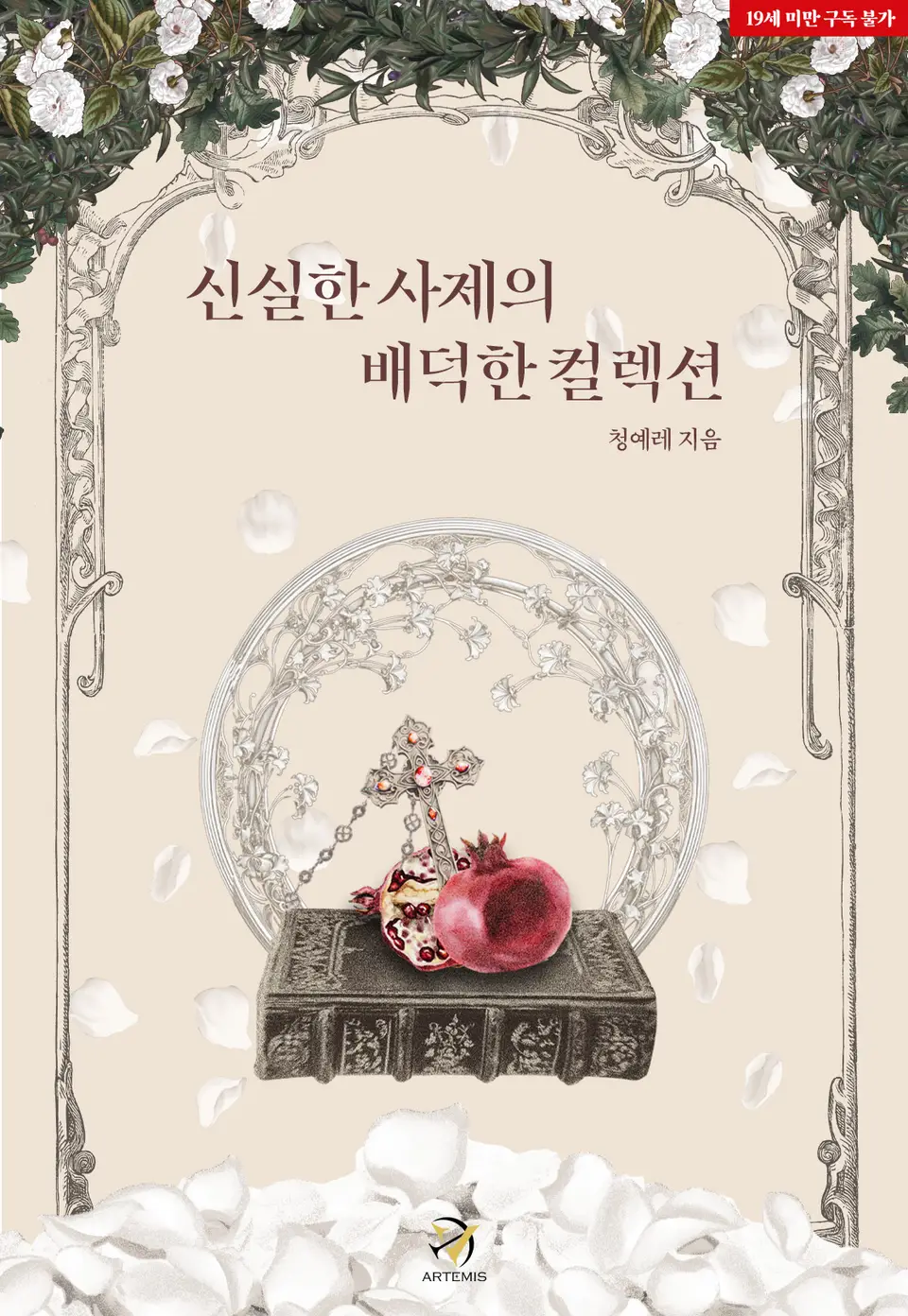
Ann Rosenthal is a twenty-six-year-old orphan who grew up in the Bluebilt Village slums of Rosbon, the capital of Las Palmada. Her father Pierre was murdered when she was an infant, and her mother Rianna died of tuberculosis when Ann was eight. Orphaned, Ann was taken in by her father's half-sisters, enduring abuse from Aunt Dora and servitude from Aunt Rosie. At fifteen, she entered the royal palace as a page and later became a maid to Queen Dowager Ingrid, eventually being transferred to serve King Lennox himself. Lennox, who had known Ann since childhood, insists she remains by his side despite her commoner status.Lennox is engaged to Charlotte, daughter of Marquis Beauve, in a politically arranged marriage. Yet he refuses to accept Ann's attempts to move on. When Ann agrees to meet Frederick Botloch, a new scribe appointed by the king, through an introduction by Countess Hervonne, Lennox becomes violently jealous. He confronts Botloch publicly in the Strophe Garden, humiliating him and asserting his claim over Ann as his personal maid.Ann harbors deep feelings for Lennox but recognizes the impossibility of their relationship. She is tormented by memories of their childhood, including a promise Lennox extracted when they were young that she would stay by his side forever, sealed with a kiss. She understands that Lennox's behavior toward her stems from possessive impulse rather than genuine understanding of her position. The impending royal wedding forces Ann to consider marriage with someone suitable to her station, yet every suitor the nobles propose is rejected by Lennox, who sabotages the arrangements.The queen dowager and her cousin Duchess Valenska attempt to marry Ann off before Lennox's wedding to Charlotte, hoping to remove Ann from his influence. Botloch confesses his feelings for Ann but breaks off the courtship, acknowledging that no man can compete with the king's authority. Lennox confronts Ann about the rejected suitor and accuses her of seeking other men, then attempts to kiss her. Ann pushes him away, and later reveals that she detests his advances. Lennox is shaken by her confession and questions whether his actions have repulsed her.Ann's past is revealed in detail: her parents' brief happiness, her father's murder at twenty, her mother's death from illness compounded by poverty, and the fire Ann accidentally caused while nursing her sick mother. These traumas shaped Ann's determination to secure her own future through marriage, even as she fears losing the only family she has ever known in the palace.The story follows Ann's struggle to maintain her dignity and independence while serving a king who views her as his possession. Lennox's obsession with keeping Ann close conflicts with his duty to marry Charlotte and produce an heir. The court gossip and political pressure mount as the wedding date approaches, forcing Ann to navigate between her love for Lennox and her need for self-preservation. The central tension revolves around whether Ann can escape the king's grip or if she will remain trapped in a relationship defined by class disparity and possessive devotion.
Latest Release
DateGroupRelease
2026-10-03dusk blossoms c7
2026-10-03dusk blossoms c6
2026-10-03dusk blossoms c5
2026-10-03dusk blossoms c4
2026-10-03dusk blossoms c3
2026-10-03dusk blossoms c2
2026-10-03dusk blossoms c1

Community Reviews

Rating(0 / 5.0, 27votes)
5 stars
0(0%)
4 stars
0(0%)
3 stars
0(0%)
2 stars
0(0%)
1 stars
0(0%)

Popular reviews

... Read More
Let's talk stakes because they are NOT trivial. Ann's external conflict is immediate: she's a commoner orphan elevated to royal maid, a position that makes her a target. The text explicitly states 'there were many who viewed Ann's existence unfavorably.' Duchess Valenska is openly demanding gifts, Countess Hervonne is comparing Ann to other maids, and now a suitor (Botloch) has been threatened by the King himself. If Ann steps out of line, she doesn't just lose her position - she loses everything. Her internal conflict is equally devastating: she loves Lennox but knows she can never have him. The stakes are personal survival versus emotional truth. Then there's Lennox's conflict - he's torn between his duty to Charlotte (political alliance, marriage pact since childhood) and his undeniable obsession with Ann. The text highlights this when it says 'he was generous in all matters—except when it involved someone he held dear.' The stakes here are political stability versus personal desire. What happens if he prioritizes Ann? He could undermine the alliance with Marquis Beauve, destabilize the kingdom, and potentially trigger war. But what if he ignores his feelings? He'll lose Ann forever, and his resentment might poison his rule. The author raises the stakes further with the 'incident' mentioned three years ago - whatever happened then clearly shaped their current dynamic. And let's not forget Charlotte. Her stakes are emotional devastation; she's being married off to a man who might love someone else. Every glance between Lennox and Ann is a threat to her future. The tension is maintained through constant reminders of consequences: Ann's precarious status, Lennox's growing temper, the court's scrutiny. The author doesn't let us forget that one wrong move could shatter everything. That's why I'm on the edge of my seat - the stakes are life-altering, the conflicts are deeply personal, and every character is walking a razor's edge. I'm genuinely scared for all of them.

... Read More
The imagery in these chapters is not accidental. Ann's bonnet is decorated with pure hawthorn flowers—hawthorn in literature almost always symbolizes hope, but also separation and bitter sorrow. She's wearing her tragedy as decoration while the people around her treat her like an object. And her eyes, repeatedly described as glass-like, pale, water-colored—glass is beautiful but it's also cold, brittle, and transparent. You can see through it but you can't really touch what's behind it. That's Ann. People see her beauty but no one sees HER. The midwife's prophecy that 'she'll make plenty of men cry' is another layer—Ann's beauty is cursed, it brings suffering to everyone who loves her, including herself. Even her name 'Ann' sounds almost like 'Amen,' a prayer or a burial song. Every time I read those descriptive passages about her appearance, I feel this deep ache because I know how this ends for her.
... Read More
I did NOT expect to fall in love with a slum backstory but here we are. The whole passage about Ann's parents—it reads like a completely different novel. Pierre and Rianna, two ordinary people who just... loved each other. Built a life. Lost a child. Found peace in another. The detail about Rianna embroidering every day because she was terrified of losing another baby? That broke me. And then Ann's name—the one she would've given her first child if it had been a girl. The author just drops that in casually and I'm sitting here with my heart in my hands. There's also something really striking about how the text contrasts the glittering, cruel court with this warm, aching memory of where Ann came from. Bluebilt Village isn't described with shame or poverty in a pathetic sense—it's described with love. Her mother's blistered fingertips, her father's dream of the largest brewery, the family of three falling asleep together. It makes Ann's current situation in the palace feel even more like a tragedy, because we know what genuine love looks like, and she's surrounded by people who only use her.
... Read More
The Queen Dowager literally says Ann must marry before Lennox's wedding. This isn't background detail—this is a ticking bomb. Every page turn I'm thinking: if Ann marries someone else, everything changes. If she stays, she gets crushed. If she leaves, she loses the only person she's ever loved. And Lennox? He's actively working against her happiness by refusing every suitor his mother picks, creating this impossible situation where Ann can't move forward but he won't give her permission to either. The stakes keep climbing. Botloch confessed his feelings to Ann while knowing the king wanted her—that's not just tragic, that's potentially dangerous. What happens when the king finds out? What happens when Charlotte finds out? The text hints at all of this without ever saying it outright, and that restraint is what makes it so tense. I cannot wait to see how this explodes.
... Read More
I read the part where Ann sees the boy bleeding on the ground and I literally stopped breathing for a second. Think about it. She's a ten-year-old orphan who survived by becoming invisible. 'Live like a dead mouse' is basically her entire philosophy. The girl under the trash pile warned her — lost sight in one eye for talking back. Ann herself said 'she couldn't bear that' about violence and abuse. She's traumatized. She's learned to survive by staying small. And then she sees this boy being tortured and what does she do? 'Like a moth rushing into flames.' That line absolutely wrecked me. She runs in front of Oliver — a boy who could have her killed — and lies through her teeth about some Baron Bensweed nobody even knows. 'I didn't know who Baron Bensweed was. She'd only heard that when she was at Aunt Dora's house, someone called Baron Bensweed had visited the mansion.' She made the whole thing up. Her hands were shaking so hard she clenched her fists to keep from wetting herself. And she did it anyway. After everything she'd been through — the beatings, the hunger, waking up behind trash piles — she still couldn't walk away. That's not bravery. That's something deeper. That's empathy that survived despite everything trying to kill it. The text says 'there was no movement, so she couldn't tell if he was dead or alive' and I kept waiting for her to check, for her to do something, and she just stood there trembling while dirt was thrown on him. I wanted to shake her. I wanted to tell her to fight harder. But then the other boy pulls her out of the pit and I literally exhaled. The relationship between Ann and Lennox hasn't even started yet and I already feel like I know exactly what it's going to become. She saved his life. She lied for him. She risked everything for a stranger. And he's lying in that pit unconscious, probably never even hearing her scream. I need a minute.
... Read More
Okay can we talk about how psychologically devastating Lennox is in these chapters? The man has zero self-awareness about his own feelings. He visits Tulip Palace specifically to see Ann, gets mad that she's avoiding him, then can't even articulate WHY he's mad. He throws accusations at her—'you don't even tell me when you're coming or going'—but what he really means is I feel you pulling away and it terrifies me. And then he physically grabs her and tries to kiss her and when she pushes him away, he's just... confused. Not angry, not respectful, just baffled like she owes him an explanation for rejecting him. Meanwhile Botloch is standing there watching the king he loves look at Ann the way a starving man looks at food, and Botloch can't do anything about it because he's a king first and a man second. The power dynamic here is so suffocating. Everyone in this scene is trapped—Ann by her feelings, Lennox by his ignorance, Botloch by his position. Three people, one room, zero escape.
See all reviews

Custom lists

See all custom Lists