Summary

... Read More

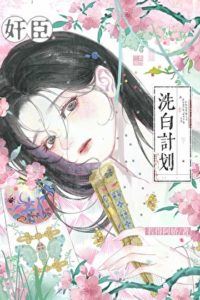
Modern Suzhou embroidery inheritor Su Jinxiu dies after a fatal needle prick and transmigrates into the body of Su Qiaoniang, a young woman living in Bianjing. She awakens in a dilapidated courtyard with her foster brother, Wen Shiqin. Immediately, she discovers a mysterious book titled Embroidery Alley Miscellany that dictates her fate. The text reveals that Su Qiaoniang must become the top embroiderer in the capital within two years to survive past age twenty. Furthermore, the book contains the tragic history of Wen Shiqin, who grows up to become a notorious treacherous official responsible for framing benefactors and silencing critics. The narrative states that for every evil deed Wen Shiqin commits, a page vanishes from the book, and Su Jinxiu’s health deteriorates accordingly. If all pages disappear, she will be trapped in a fatal cycle.

Wen Shiqin is currently a sensitive, protective youth who relies on Su Jinxiu for emotional stability. When a relative, Aunt He, harasses Su Jinxiu, Wen Shiqin secretly orchestrates her death by inciting creditors, an act recorded in the miscellany. Su Jinxiu discovers the missing page and realizes the immediate danger. She confronts Wen Shiqin, who initially displays dark, violent tendencies but ultimately submits to her pleas after she feigns illness and he suffers a nightmare about losing her. He promises to abandon extreme methods and listen to her guidance. Su Jinxiu resolves to steer him away from his destined path of corruption while securing their livelihood.

To achieve financial independence, Su Jinxiu visits Huayun Pavilion, a prestigious embroidery shop. She demonstrates a novel twisted-color embroidery technique that rivals the work of master artisans. Impressed, the manager, An Chisu, hires her. During this time, she encounters Ying Bumei, a flamboyant Taoist priest who had previously helped her avoid capture by authorities. Ying Bumei becomes a recurring figure, offering financial assistance and companionship, though Su Jinxiu remains cautious of his unpredictable nature.

As Su Jinxiu’s income stabilizes, she learns that the local school is closing due to financial mismanagement. Wen Shiqin, talented in both literature and martial arts, is forced to consider abandoning his studies to work as a martial arts instructor’s assistant. Su Jinxiu struggles with the moral dilemma of preventing his future villainy by limiting his education versus supporting his ambitions. She secretly saves money to send him to the prestigious White Deer Grotto Academy but is interrupted by a new opportunity. An Chisu asks her to deliver embroidery to Yusheng, the top courtesan at Spring Drunken Pavilion.

At the pleasure quarter, Su Jinxiu repairs and restyles Yusheng’s damaged garments, showcasing her exceptional taste and skill. Yusheng is delighted and commissions Su Jinxiu to alter her entire wardrobe for an upcoming performance. This encounter opens a new business channel, allowing Su Jinxiu to earn significant wealth while building connections in high society. Meanwhile, Wen Shiqin hides bruises from his part-time martial training, claiming he is preparing to protect her. Su Jinxiu discovers his injuries and realizes his determination to become strong enough to shield her from harm, reinforcing her resolve to guide him toward a righteous path rather than the darkness foretold in the miscellany.

The story follows Su Jinxiu as she navigates the intricate social hierarchies of Bianjing, balancing her embroidery career with the delicate task of reforming Wen Shiqin. She must prevent the disappearance of the remaining pages in the book while ensuring her own survival. Her interactions with Ying Bumei and her growing influence among the elite provide her with resources and protection. However, the looming threat of Wen Shiqin’s inherent malice and the external pressures of court politics create constant tension. Su Jinxiu’s primary goal remains clear: break the cycle of tragedy by transforming Wen Shiqin from a future tyrant into a man of integrity, all while establishing herself as the most renowned embroiderer in the capital.

Latest Release
DateGroupRelease
2026-08-11shanghai fantasy c26
2026-08-11shanghai fantasy c25
2026-08-11shanghai fantasy c24
2026-08-11shanghai fantasy c23
2026-08-11shanghai fantasy c22
2026-08-11shanghai fantasy c21
2026-08-11shanghai fantasy c20
2026-08-11shanghai fantasy c19
2026-08-11shanghai fantasy c18
2026-08-11shanghai fantasy c17
2026-08-11shanghai fantasy c16
2026-08-11shanghai fantasy c15

Community Reviews

Rating(4.5 / 5.0, 4votes)
5 stars
3(75%)
4 stars
0(0%)
3 stars
1(25%)
2 stars
0(0%)
1 stars
0(0%)

Popular reviews

... Read More
The stakes in this story are layered in the best way and I love how the author builds tension without ever letting you breathe. On the surface, Su Jinxiu has a simple mission: become the top embroiderer in Bianjing within two years or she dies. But that's just the first layer. The real horror is the second task—every evil deed Wen Shiqin commits costs her a page in the miscellany and deteriorates her health. She literally has a countdown timer attached to her body. When she wakes up with a high fever and can barely speak, that's not just illness. That's the book taking its toll. The Woman He incident is where everything converges. She bullied Su Jinxiu, Wen Shiqin killed her, and now a page is gone. Su Jinxiu is caught between wanting to protect herself from Wen Shiqin's violence and needing to prevent him from becoming the monster the book says he'll be. Every interaction with him is a high-wire act—she has to calm him down, steer him away from darkness, all while he could destroy her with a word. What makes this so gripping is that the author never lets us forget the danger. Wen Shiqin is capable of terrible things. He's already done terrible things. And Su Jinxiu is one person trying to hold back a tide of cruelty with nothing but her wits and her words. The tension is suffocating in the best way—I was literally holding my breath during their conversations.
... Read More
Okay so I need to talk about Wen Shiqin because this guy is genuinely terrifying and I can't stop thinking about him. On one hand, the text literally tells us he frames people for treason, gets officials' tongues torn out, and sneers at integrity. That's not a good person. But then you have this scene where he's sobbing at her bedside, tears streaming between her fingers, promising he'll never make her angry again. The man is a walking contradiction wrapped in white silk robes. What gets me is how Su Jinxiu navigates this. She's terrified of him—she literally flinches when he reaches toward her because she expects violence—but she also can't bring herself to hate him. There's this moment where she's lying in bed feverish and these warm memories flood back: sewing his clothes by lamplight, him massaging her shoulders, the warming brazier he always pushed toward her first. They survived together. They depended on each other. So now she's stuck between knowing what he becomes and remembering who he was. The dynamic is so toxic yet so tender. He pulls her into his room by the waist like she's going to escape. She grabs his sleeve and pleads with him not to kill anyone. He threatens to kill and she says she'd take the blame for him. This isn't a healthy relationship by any standard, but it's also deeply intimate in a way that makes your chest ache. She's his anchor and he's her nightmare and somehow both things at once.
... Read More
This book is obsessed with the image of embroidery as a metaphor for fate and control, and it's brilliant. Su Jinxiu transmigrated into this world at the exact moment her needle pricked her finger and a drop of blood fell onto the phoenix's eye. That's not accidental symbolism—that's the author telling you everything you need to know. She completed a stitch, bled into the art, and was pulled into a story that wasn't hers to tell. The Embroidery Alley Miscellany itself is the ultimate symbol here. It's a book that records fate, but pages are disappearing as Wen Shiqin commits evil deeds. Every page lost costs her health, her life. She's literally unraveling as the world around her deteriorates. The embroidery she does—half a magnolia blossom, the Hundred Birds Paying Homage to the Phoenix—is her way of trying to stitch this broken world back together. There's also this recurring image of the moat and water. Woman He falls into the moat and drowns. The original Su Qiaoniang's parents died in a boating accident. Water is danger, fate, the boundary between life and death. And the spring rain at the opening—fresh and bright but carrying that undercurrent of danger. The deeper theme here is about agency versus destiny. Su Jinxiu knows how the story ends. She has the book. But can she change it? Every page she saves is a rebellion against the narrative itself. She's not just trying to survive—she's trying to rewrite a story that was already written.
... Read More
The dialogue in this is genuinely excellent and I want to highlight why. Wen Shiqin's voice is so distinct—you can tell he's speaking just by reading his lines. When he says "What if I said it was me, and I even regret not being ruthless enough, not making her suffer thoroughly?" that's not someone asking for information. That's someone testing her, probing for weakness, enjoying the power dynamic. The author writes him with this razor edge underneath every sentence. And then there's Su Jinxiu's voice, which is completely different. She's always performing, always managing. "A-Jie isn't suspecting you... I just mentioned it in passing." She's walking on eggshells and the reader feels every step. Her dialogue is layered with subtext—what she's saying versus what she's actually thinking. The author does this masterfully. The most striking exchange has to be when Wen Shiqin says "If you tell me to go east, I won't go west; if you tell me to beat the dog, I won't curse the chicken." It's almost comically subservient but coming from this character it's deeply unsettling. Is he genuinely remorseful? Or is this another performance? The ambiguity is perfect. The narrative voice itself is restrained and observant, never over-explaining. It trusts the reader to pick up on what's happening beneath the surface. That scene where he reaches toward her and she flinches—the author doesn't need to say "she was afraid." The physical reaction tells you everything.
See all reviews

Characters

See all characters

Custom lists

See all custom Lists